Tinubu’s Economic Reforms Showing Real Results, Will Define 2027 Election Battle
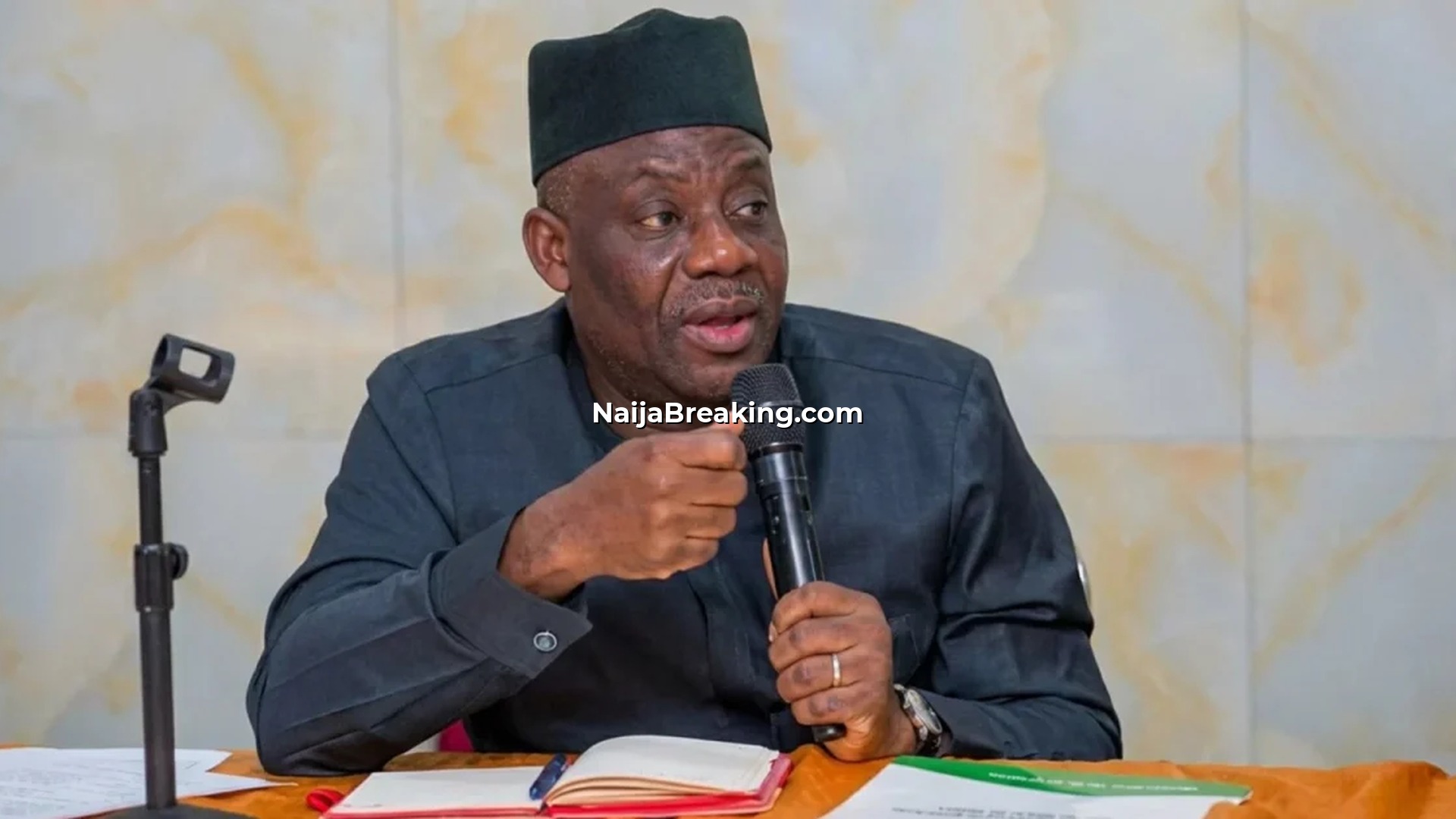
President Bola Tinubu’s economic reforms are beginning to demonstrate measurable outcomes, according to Education Minister Dr. Tunji Alausa, who has predicted these results will become a decisive factor in Nigeria’s 2027 presidential election. In a statement released this week, Alausa argued that the administration’s performance would remain central to electoral politics, backed not by political rhetoric but by credible international and domestic data. This framing signals a crucial shift in how the ruling All Progressives Congress (APC) intends to defend its record heading into 2027—less reliance on campaign promises, more emphasis on statistical evidence. For millions of Nigerians still grappling with inflation, job losses, and reduced purchasing power, however, the question remains whether these macro-level improvements are reaching ordinary households. The minister’s statement also reflects growing confidence within the Tinubu administration that its painful reform agenda—including fuel subsidy removal, exchange rate liberalisation, and fiscal restructuring—is turning a corner. Understanding whether this optimism is justified requires examining the actual data, the lived experience of Nigerians, and the political calculations shaping the 2027 contest.
Background
When Bola Tinubu assumed office in May 2023, Nigeria faced a severe economic crisis. The Naira had collapsed to historic lows against the dollar, inflation was spiralling, and the previous administration’s attempts to manage the currency through an overvalued official rate had depleted foreign reserves and created a thriving parallel market. Tinubu inherited an economy where fuel subsidies were consuming massive amounts of government revenue—estimates suggested over ₦4 trillion annually—leaving little for critical investments in infrastructure, health, and education. The Central Bank of Nigeria (CBN) under Governor Olayemi Cardoso had already signalled that fundamental reforms were necessary, not optional.
Within weeks of taking office, Tinubu made two watershed decisions: removing the fuel subsidy (a policy previous presidents had postponed for fear of social unrest) and allowing the Naira to float freely against the dollar. These decisions were immediately painful. Petrol prices doubled and tripled. Transportation costs spiked. The cost of living surged across the country. For urban workers, traders, and small business owners, the impact was devastating and visible in real time. Inflation, which stood at around 21% when Tinubu took office, climbed to over 34% by mid-2024 before beginning a gradual decline. For ordinary Nigerians, this meant that a ₦10,000 purchase in January 2023 required roughly ₦13,400 by December 2024—an erosion of purchasing power that shaped public sentiment despite official claims of progress.
The administration framed these reforms as structural adjustments necessary for long-term stability—removing distortions that had handicapped Nigeria’s economy for decades. However, the short-term costs were borne overwhelmingly by working-class and middle-class Nigerians, while the wealthy could cushion themselves through dollar holdings and imported goods. This tension between macro-level reform logic and micro-level household pain has defined political discourse in Nigeria since mid-2023, and it remains the unspoken backdrop to any claim that “reforms are yielding results.”
Key Details
According to Minister Alausa’s statement, the Tinubu administration points to several indicators as evidence of reform success. The minister cited reports from the International Monetary Fund (IMF), the World Bank, Bloomberg, and Nigeria’s National Bureau of Statistics (NBS) as validation of the government’s economic direction. He specifically highlighted that “inflation is gradually easing, economic activities are expanding, and other macroeconomic indices are recording steady improvements.” The statement emphasised that Nigeria’s “economic progress is no longer a matter of political rhetoric but one supported by credible data and independent assessments.”
The NBS data does show some encouraging signs. After peaking above 34% in mid-2024, headline inflation has declined to lower levels—though still elevated by historical standards and well above the CBN’s medium-term target of 9%. The Naira, which traded at over ₦800 per dollar on the parallel market in 2023, has stabilised somewhat, though it remains weak. Real Gross Domestic Product (GDP) growth estimates suggest the economy expanded, though at rates below pre-pandemic levels. The CBN has also managed to rebuild foreign exchange reserves, which had fallen dangerously low, improving Nigeria’s external position and reducing currency vulnerability.
Alausa articulated the administration’s long-term philosophy: “The President is focused on building a stronger Nigeria for generations to come. These reforms are not designed for short-term gains but to create lasting prosperity.” This framing positions Tinubu’s policies as generational investment rather than quick wins. However, the minister also acknowledged implicitly that short-term pain exists by emphasising fiscal discipline and structural reform as prerequisites for sustainable growth. The government’s emphasis on these “difficult but necessary reforms” suggests internal recognition that the current period remains economically challenging for most Nigerians, even if macro indicators are improving.
Impact and Analysis
The crucial distinction here is between aggregate economic improvement and distributed household welfare. Nigeria’s macroeconomic indicators may indeed be stabilising, but this stabilisation masks profound inequality in how reform costs and benefits are distributed. A trader in Lagos’s Alaba market, a minibus driver in Kano, or a secondary school teacher in Enugu are experiencing the reform era primarily through increased input costs, stagnant wages, and reduced purchasing power. When inflation eases from 34% to 28%, it feels academic to a household whose real income has fallen by 15-20% in the same period.
The underlying logic of Tinubu’s reforms—removing distortions to create a more efficient, competitive economy—is sound in standard economic theory. Fuel subsidies do create price signals, encourage smuggling, and drain government budgets. Currency flexibility does eventually promote export competitiveness and discourage speculative capital flight. However, these benefits are long-term and distributed unevenly. The benefits accrue eventually to exporters, efficient manufacturers, and savers in foreign currency. The costs fall immediately on consumers, transport workers, and wage earners with no hedge against naira depreciation. This structural inequality in reform impact is rarely discussed in official government communications, yet it shapes public perception and electoral calculations.
The more important question for 2027 is whether Nigerians will credit the Tinubu administration with necessary course-correction or blame it for years of economic hardship. This depends heavily on whether inflation continues declining, whether employment improves, and whether real wages recover. If these trends accelerate in 2025 and 2026, the APC will have a compelling economic argument. If they stall or reverse, no amount of IMF validation will protect the ruling party from electoral punishment.
Expert Perspectives
Dr. Emeka Okafor, a senior economist at the Lagos-based Centre for Macroeconomic Analysis, offers a cautiously optimistic view: “The fundamentals are improving—the Naira stabilisation, inflation trending downward, and foreign reserves recovering are all genuine achievements. But we must be careful not to confuse necessary pain with successful reform. Many countries implement structural adjustment programmes, and inflation eventually falls. The question is whether growth accelerates and jobs return. Nigeria is not yet at that stage. We’re still in the adjustment phase.”
Conversely, Chinyere Adeyemi, a senior policy analyst at the Centre for Democracy and Development in Abuja, takes a more critical stance: “Minister Alausa’s statement reflects elite consensus, not ground reality. In my recent fieldwork across Oyo, Kaduna, and Rivers states, the lived experience is overwhelmingly negative. Small businesses are collapsing. Real wages have fallen sharply. The fact that international institutions validate the reform strategy does not change the fact that ordinary Nigerians are poorer today than they were in May 2023. The minister’s reliance on ‘credible data’ suggests the government is betting that voters will trust statistics more than their own economic experience, which is a risky gamble heading into 2027.”
What This Means for Nigerians
For a petty trader in Lagos, Tinubu’s reforms mean higher wholesale costs, lower customer purchasing power, and compressed margins. A trader who sold products for ₦100 in 2023 might sell the same product for ₦140 in 2025, but the customer base has shrunk because household incomes have not kept pace. For a teacher earning ₦40,000 monthly, the salary buys roughly 30% less in goods and services than it did two years ago, despite inflation technically declining. For a graduate entering the job market, Tinubu’s reforms offer both challenge and opportunity: challenges because employers are cautious and hiring is slow; opportunity because structural reforms should eventually improve productivity and competitiveness, creating sustainable jobs rather than subsidy-dependent artificial employment.
The rhetoric of “reforms yielding results” must be translated into tangible improvements in ordinary life. Does fuel cost less in 2025 than it does today? Are jobs more available? Can a household feed adequately on the same monthly income? These are the metrics that will determine electoral sentiment, not IMF reports or World Bank endorsements. The government’s challenge is that these improvements must materialise before the 2027 election campaign heats up—roughly 18-24 months away—to shape the narrative in its favour.
Editor’s Take
At NaijaBreaking, we believe Minister Alausa’s statement reveals a critical shift in how the APC intends to defend its economic record: by appealing to data literacy rather than populist promises. This is intellectually honest but electorally risky. Nigerians are sophisticated enough to understand that economic reforms require short-term sacrifice; they are not so naive as to believe that sacrifice is distributed fairly or that patience will be rewarded before their next election. What the minister’s statement overlooks—or strategically avoids—is that macro stability and household welfare are not the same thing. The government has chosen to prioritise long-term structural stability over short-term poverty reduction, which is a legitimate policy choice. However, it is not a choice that guarantees electoral success, particularly when opposition parties will undoubtedly argue that alternative approaches could have achieved stability with less immediate hardship. The electorate in 2027 will judge Tinubu’s reforms not by their theoretical soundness but by whether they feel materially better off.
What to Watch Next
Monitor three critical developments over the next 18 months. First, track the inflation trajectory closely—if it falls below 20% and stays there through 2026, it signals successful monetary policy and could become a legitimate campaign asset. Second, watch employment data from the NBS and labour-intensive sectors like construction and retail; rising employment in these areas would indicate that structural reforms are creating jobs, not just eliminating inefficiencies. Third, observe real wage movements—does government focus on civil service salary increases before 2027, and do private sector employers begin raising wages in line with productivity gains? Finally, pay attention to regional economic performance; if northern states remain economically depressed while the south records improvements, this could fracture the APC’s coalition. The key question now is whether Nigerians will reward the Tinubu administration for taking difficult decisions, or whether they will demand visible improvements in living standards before they consider reforms a success.
Conclusion
Minister Tunji Alausa’s claim that Tinubu’s economic reforms are yielding results is statistically defensible but electorally incomplete. The reforms have indeed stabilised Nigeria’s macroeconomic framework, improved currency stability, and created conditions for sustainable growth. However, ordinary Nigerians have experienced these reforms as a severe contraction in purchasing power, employment insecurity, and reduced access to affordable services. The 2027 election will hinge on whether the promised long-term benefits materialise quickly enough to offset the documented short-term pain. The APC’s strategy of emphasising credible data rather than emotional appeals is sophisticated, but it assumes voters will prioritise economic theory over economic reality—a dangerous assumption in a democracy where electoral choices are made by people feeling the reforms in their wallets daily. Share your thoughts in the comments below—what do you think this means for Nigeria’s future?