
Qua’an-Pan LG Bans Unauthorised Herders’ Settlements in Push for Peace
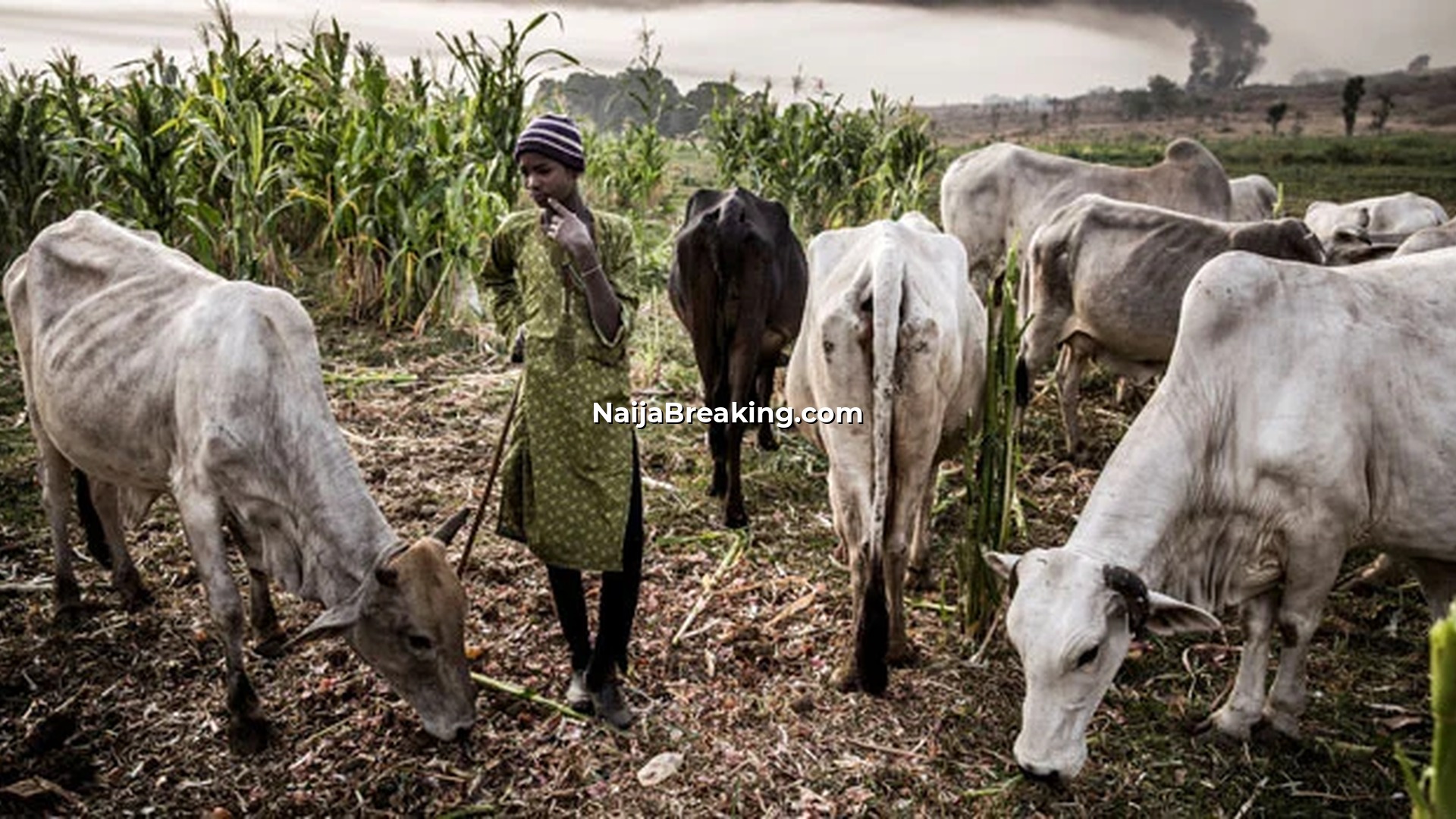
The Qua’an-Pan Local Government Area of Plateau State has announced a ban on unauthorised herders’ settlements, marking a significant intervention in Nigeria’s contentious herder-farmer conflict that has claimed thousands of lives across the Middle Belt region. In a stakeholders’ meeting convened by council chairman Dr Christopher Manship, local authorities declared they would no longer tolerate the influx of pastoral migrants from other states or local government areas without the knowledge and consent of host communities. This directive, announced in late 2024, represents one of the most direct policy responses yet from a local government administration attempting to regain control over security in an area that has witnessed recurring communal violence, livestock theft, and agricultural destruction. The ban specifically targets unauthorised settlements and grazing on cultivated farmlands, reflecting growing frustration among both indigenous farmers and local government officials at the inability of state and federal authorities to manage the pastoral migration crisis that has destabilised the Plateau and neighbouring regions for over a decade. For ordinary Nigerians—particularly farmers in rural areas, pastoralists seeking grazing land, and residents living in conflict-prone zones—this policy raises critical questions about the future of land use management, intercommunal relations, and the government’s capacity to implement such restrictions effectively.
Background
Nigeria’s herder-farmer conflict has evolved from a periodic resource-sharing dispute into a structural security crisis that now rivals Boko Haram as a driver of internal displacement and communal violence. The Plateau State, historically the agricultural heartland of Nigeria, has borne the brunt of this escalation since the early 2000s, with documented incidents of mass killings, village raids, and the destruction of farmland occurring with alarming frequency. According to research by the International Crisis Group and Nigeria’s own civil society organisations, the Middle Belt has experienced over 3,500 deaths linked to herder-farmer violence between 2015 and 2023, with Plateau State accounting for a disproportionate share of casualties. The root causes are multifaceted: climate change has progressively shrunk grazing lands across the Sahel, pushing pastoral communities southward in search of water and pasture; the proliferation of arms following conflicts in Libya and the Sahara has militarised what were once informal disputes; and the breakdown of traditional conflict-resolution mechanisms—the role of emirs, traditional councils, and community elders—has left vacuum filled by vigilante groups and extremist elements. Qua’an-Pan, a predominantly Christian agrarian community in Plateau’s southern region, has been particularly affected, experiencing several incidents of rustling, raiding, and reprisal killings over the past decade. The council’s decision to issue this ban reflects the failure of state-level initiatives, such as the Plateau State’s previous grazing reserves policy and the National Livestock Transformation Plan, to effectively manage pastoral movement or prevent criminal infiltration under the guise of herding.
Key Details
According to Punch Nigeria’s reporting, the directive was formally announced during a stakeholders’ meeting held at the Felix Dakyap Guest House in Doemak, where Dr Christopher Manship, the Qua’an-Pan LG chairman, met with traditional rulers, community leaders, and representatives of Miyetti Allah, the national pastoralist association. In the statement signed by the council’s Director of Press and Publicity, Mr Danaan Sylvanus, Manship declared that “the Qua’an-Pan Local Government Council has banned the settlement of unauthorised Fulani individuals and groups migrating into the locality from other states or local government areas without the knowledge and consent of host communities.” The ban encompasses three specific prohibitions: the influx and settlement of herders without community consent; the grazing of cattle on cultivated farmlands; and the harbouring of individuals fleeing other locations after alleged involvement in criminal activities. The chairman’s statement emphasised that “the measure was aimed at preventing criminal elements from infiltrating the local government under the guise of pastoral migration and preserving the peace currently being enjoyed in the area.” Additionally, the council warned that any herder found grazing cattle on farmland would be “held accountable in accordance with the law,” and urged pastoralists to “restrict grazing to designated grazing reserves and fallow lands.” The inclusion of Miyetti Allah leadership in the meeting suggests that the council is attempting to frame this as a consensual agreement with pastoral representatives, rather than a unilateral ban, though the binding nature of the ban on external herders remains unclear.
Impact and Analysis
The Qua’an-Pan ban represents a critical juncture in how local governments in Nigeria are responding to insecurity in the absence of federal or state-level solutions. Unlike previous approaches that relied on dialogue, grazing reserve demarcation, or conflict resolution committees, this directive is explicitly exclusionary—it seeks to prevent the entry of herders rather than manage their coexistence with farming communities. This shift has several implications. First, it signals a breakdown of faith in multi-stakeholder dialogue and traditional mechanisms for resolving disputes; the council is essentially declaring that dialogue has failed and enforcement is now necessary. Second, the ban places significant onus on implementation: how will the council verify which herders are “authorised” and which are not? Who will police the grazing lands? Will vigilante groups, historically problematic in Plateau, take enforcement into their own hands? These questions expose the fragility of the policy, as local government capacity for enforcement remains severely limited in most Nigerian rural areas. Third, the ban may inadvertently criminalise legitimate pastoral activity, pushing herders into informal, unregulated grazing territories and potentially accelerating conflicts rather than reducing them. Research by the Institute of Peace and Conflict Resolution suggests that exclusionary policies without complementary livelihood support often backfire, radicalising pastoral communities and driving them toward criminal networks or militia groups that promise protection and grazing access.
Furthermore, the policy raises constitutional questions about local government authority over land and movement. The Nigerian constitution guarantees freedom of movement for all citizens, and a blanket ban on herders from other states, while framed as a security measure, could face legal challenge. What the Qua’an-Pan decision reveals, however, is the desperation of local authorities who have exhausted conventional remedies. The persistent failure of state and federal governments to implement the National Livestock Transformation Plan, regulate cross-border pastoral migration, or provide alternative grazing infrastructure has forced local governments to take unilateral action—a symptom of governance collapse at higher levels. The ban may achieve short-term security gains by reducing the number of mobile herders in the area, but it does not address the underlying drivers of conflict: climate change, land scarcity, and the need for sustainable pastoral management across the entire region rather than through ad-hoc local prohibitions.
Expert Perspectives
Dr Gbenga Adekunle, a conflict resolution specialist at the Lagos Institute for Security Studies, argues that while the ban reflects understandable frustration, it is ultimately a symptom of state failure rather than a solution. “What we’re seeing in Qua’an-Pan is a local government attempting to perform the function of the state—border control, security screening, law enforcement—which are beyond their constitutional mandate and capacity,” Dr Adekunle explains. “The real issue is that Nigeria’s federal government has failed to implement a coherent national pastoral policy, leaving local communities to fend for themselves. A ban may reduce incidents in the short term, but it doesn’t address why herders are migrating southward: climate change is pushing them, and there are no state-led alternatives. Without that, we’ll see the conflict simply shift to neighbouring communities.” In contrast, Chief Obinna Okoye, a land-rights advocate based in Enugu and chairman of the Middle Belt Farmers’ Coalition, sees the ban as a necessary assertion of community agency. “Local communities have been victims of this conflict for too long. When the government refuses to protect farming families, communities must protect themselves,” Chief Okoye contends. “The ban sends a clear signal that Qua’an-Pan is asserting its right to determine who settles on its land. Whether it’s enforceable or legally sound is secondary to the political message—that indigenous communities will no longer be passive victims of invasions.”
Meanwhile, Aisha Abdullahi, a pastoralist-rights researcher with the Centre for Democracy and Development (CDD), emphasises the risks of stigmatisation and radicalisation. “Framing herders as inherent security threats—which the ban implicitly does—is dangerous. Most herders are peaceful, and many Fulani communities in Plateau have lived peacefully with farmers for generations. If we criminalise their livelihoods through exclusionary policies, we risk pushing vulnerable youth toward extremist groups that position themselves as defenders of pastoral identity,” Abdullahi warns. These divergent perspectives illustrate the genuine tension at the heart of Nigeria’s herder-farmer conflict: communities’ legitimate right to security and self-determination versus the rights of pastoral populations to livelihood and movement, and the absence of federal frameworks capable of balancing both.
What This Means for Nigerians
For a farmer in Barkin Ladi or any other village in Qua’an-Pan, this ban offers a glimmer of hope that their crops and cattle will no longer be vulnerable to nocturnal raids or organised rustling operations. If enforced, the policy could reduce livestock theft, which has cost Nigerian farmers an estimated ₦1.2 trillion annually (according to the Socio-Economic Rights and Accountability Project), and provide some psychological reassurance about community safety. However, the practical impact depends entirely on implementation: if the council lacks the funding, personnel, and political will to monitor borders and grazing lands, the ban remains a symbolic gesture with little effect on the ground. For pastoralists, particularly young herders from neighbouring states seeking temporary grazing during dry seasons, the ban represents a new barrier to accessing pasture resources that they have traditionally used. This may force them into informal channels, increasing tensions with landowners and pushing herding families toward more marginalised livelihoods or, in worst cases, toward crime or militia recruitment. For agricultural workers and small-scale farmers dependent on seasonal migration for labour, the ban could reduce the supply of transient workers, potentially increasing rural labour costs and affecting food production across the region.
For small and medium-sized pastoralist enterprises that operate legitimately across state borders, the ban creates regulatory uncertainty: will they be permitted to continue operations if they can prove their “authorisation”? For traders and merchants who operate between Plateau and neighbouring states, the ban may complicate supply chains for livestock and livestock products. For security agencies and local government administrators, the ban creates new enforcement responsibilities without corresponding budgetary allocations or training. For national food security, the implications are mixed: reduced pastoral activity in Qua’an-Pan might increase local crop production, but it could reduce overall livestock supply if herds are simply diverted to neighbouring areas with lower restrictions. The ban effectively privatises the solution to a public-goods problem—security—by placing the burden on individual communities rather than the state.
Editor’s Take
At NaijaBreaking, we believe the Qua’an-Pan ban represents both a necessary assertion of community agency and a troubling admission of state collapse. On one hand, local governments have every right to establish security frameworks that protect their residents, and after years of inaction by state and federal authorities, it is unsurprising that communities are taking matters into their own hands. On the other hand, the ban exposes a critical gap in Nigeria’s governance architecture: the total absence of a functional, federally-mandated pastoral management system that could prevent such ad-hoc measures from becoming the norm. What this story reveals—and what mainstream coverage often misses—is that Nigeria’s herder-farmer crisis is not fundamentally about herders versus farmers, but about the failure of the state to regulate either group effectively. The real scandal is not the ban itself but the conditions that necessitated it. Until the federal government invests in climate-smart pastoral infrastructure, invokes the National Livestock Transformation Plan with teeth, and implements genuine land-use governance at the federal and state levels, we will continue to see local governments issuing desperate edicts that may worsen the very conflicts they aim to prevent.
What to Watch Next
First, monitor whether the Plateau State Government endorses or distances itself from the Qua’an-Pan ban. If the state formalises it into policy, it could become a model for other LGs, creating a cascading effect across the Middle Belt. Second, track implementation: will the council actually deploy personnel to monitor grazing lands and village entry points? If enforcement begins, watch for reports of confrontations, arrests, or legal challenges. Third, observe whether Miyetti Allah formally commits to supporting the ban or whether it distances itself from the agreement after initial stakeholder meetings. Fourth, monitor agricultural output and pricing in Qua’an-Pan over the next two growing seasons—if crop production increases due to reduced pastoral pressure, the economic argument for the ban will strengthen. Fifth, watch for humanitarian reports: if herders are displaced en masse, we may see increased migration to urban areas, straining food security elsewhere. The key question now is: will the Qua’an-Pan ban become a template for inclusive, federally-supported pastoral governance reform, or will it devolve into a series of isolated local prohibitions that fragment Nigeria’s pastoral economy and deepen communal divides?
Conclusion
The Qua’an-Pan Local Government’s ban on unauthorised herders’ settlements represents a critical inflection point in Nigeria’s approach to managing the herder-farmer conflict. It is both a symptom of failed state capacity and an act of local governance in the absence of federal direction. The ban may provide short-term security relief for farming communities, but it does not solve the underlying structural challenges of climate-driven pastoral migration, inadequate grazing infrastructure, and the absence of coherent national livestock policy. Nigeria’s future depends not on the multiplication of local bans, but on federal leadership willing to invest in holistic solutions that respect both community security and pastoral livelihoods. The Qua’an-Pan decision is a wake-up call to policymakers in Abuja: if the government does not act soon to establish functional pastoral management systems and address the root causes of conflict, the Middle Belt’s patchwork of local prohibitions will eventually fragment into open regionalism and communal warfare. Share your thoughts in the comments below—what do you think this means for Nigeria’s future?