Nathan Aspinall Defends European Darts Crown with Dominant 107 Average Victory
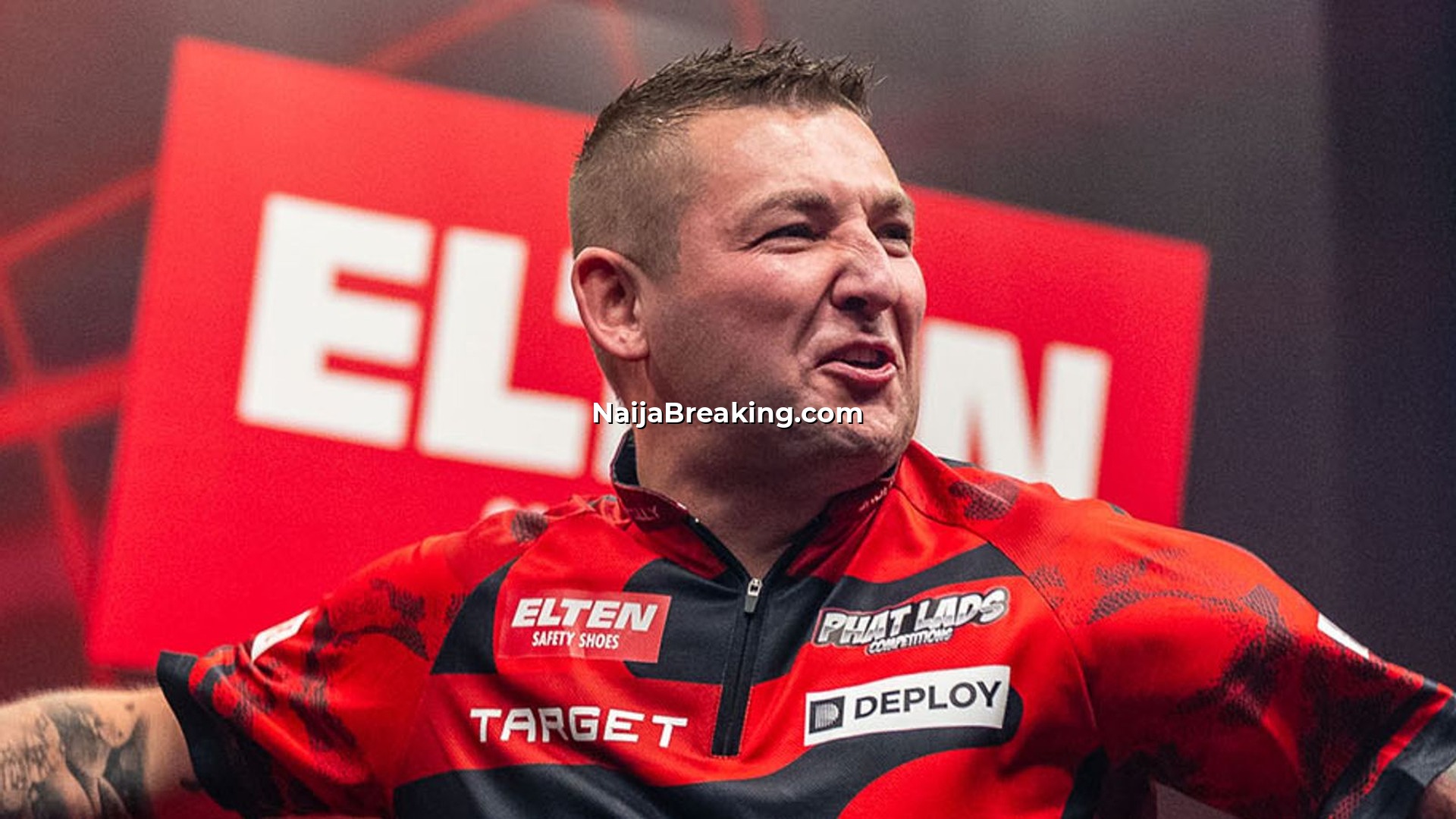
The European Darts Open has kicked off with defending champion Nathan Aspinall making an emphatic statement about his title credentials, delivering a masterclass display that saw him average an impressive 107 in a commanding 6-1 victory over Mickey Mansell in the opening rounds at Leverkusen. The European Darts Open represents one of professional darts’ most competitive continental tournaments, and Aspinall’s clinical performance signals his intentions to retain his crown despite facing a field brimming with elite talent from across Europe. For Nigerian darts enthusiasts and sports fans following the professional circuit, Aspinall’s performance offers a masterclass in consistent excellence—a quality that transcends sport and resonates across competitive disciplines globally. The victory catapults the Englishman into the third round where he faces fellow challenger Ross Smith, with momentum and confidence clearly on his side as the tournament progresses. Meanwhile, the shock departure of former World Grand Prix champion Stephen Bunting, who fell to Ryan Joyce, has already shaken up the tournament narrative, proving that even established names cannot afford complacency at this elite level of competition. According to Sky Sports coverage, the tournament continues through a gruelling schedule that demands consistency, accuracy, and mental fortitude from every competitor.
Background
Professional darts has evolved dramatically over the past two decades, transforming from a pub sport into a globally televised phenomenon with tournaments spanning continents and prize pools rivalling traditional mainstream sports. The European Darts Open holds particular significance within the Professional Darts Corporation (PDC) calendar as a proving ground for continental excellence, attracting the continent’s finest operators alongside hungry challengers seeking to announce their arrival at darts’ highest echelon. Nathan Aspinall’s emergence as a title-holder represents a relatively recent phenomenon—he claimed the previous European Darts Open crown after sustained excellence across multiple tournament formats, demonstrating the adaptability required to succeed across varying formats, opponents, and competitive pressures. The PDC structure has created a meritocratic ecosystem where players must perform consistently across numerous tournaments: Premier League nights, European Tour events, and flagship World Championships all contribute to a player’s overall standing and competitive credibility. Aspinall’s trajectory has been marked by gradual improvement rather than meteoric rise; his journey reflects the grinding persistence demanded of modern professional darts players who must invest countless hours in practice, analysis, and psychological preparation to maintain elite status. The tournament format, featuring knockout stages with higher-seeded players receiving byes, structures competition to reward consistent excellence whilst punishing complacency—a dynamic that has historically separated tournament winners from mere participants.
Key Details
Nathan Aspinall’s opening-round demolition of Mickey Mansell showcased the attacking dart-throwing characteristics that have defined his game throughout his PDC career. According to the Sky Sports report, Aspinall’s 107 average across the match represents the standard of excellence required to progress through European-level competition; this metric—calculated by dividing total points scored by total darts thrown—serves as a reliable indicator of consistent precision and competitive control. The defending champion dropped merely one leg throughout the six-leg match, demonstrating defensive solidity alongside his attacking prowess. Aspinall’s tactical execution proved particularly evident in his closing sequences: he secured the contest with successive twelve-darter finishes, showcasing the finishing accuracy that separates elite operators from mid-tier competitors. Mickey Mansell, despite his European Tour credentials, proved unable to match the champion’s clinical efficiency, with Aspinall’s superior leg-winning consistency creating an unbridgeable gulf in a match that, on paper, appeared competitive but unfolded as a masterclass from the defending titleholder.
Beyond Aspinall’s triumph, the tournament delivered immediate shocks that reshuffled expectations regarding the likely champion. Stephen Bunting, whose World Grand Prix victory established him as a capable big-tournament performer, suffered elimination at the hands of Ryan Joyce—a result that highlights the tournament’s unpredictable nature despite the presence of seeded players. James Wade, a two-time European Tour title winner, advanced past Maik Kuivenhoven with a 6-3 scoreline, demonstrating veteran experience remains a valuable asset within knockout competition. Perhaps most intriguingly, German qualifier Jan Schmidt continued an improbable tournament run by defeating former World Grand Prix champion Mike De Decker in a final-leg decider—a result that perfectly encapsulates the European Darts Open’s ability to generate narrative drama whilst rewarding exceptional performances regardless of seeding or pre-tournament reputation. These results collectively illustrate that European Darts Open competition demands sustained excellence across multiple matches; single lapses in concentration prove fatal in elimination formats.
Impact and Analysis
Aspinall’s dominant opening performance carries implications extending beyond mere match results, signalling a potential resurgence for a player whose PDC credentials had periodically appeared inconsistent across different tournament formats and opponent calibres. A 107 average in title defence represents a statement of intent—the defending champion has essentially announced his refusal to surrender the crown without sustained competitive pressure from genuinely elite opposition. This level of opening-round performance establishes psychological momentum that often compounds through subsequent tournament rounds; opponents now face not merely a skilled player but a competitor radiating confidence and demonstrating technical mastery. Conversely, Bunting’s unexpected departure raises broader questions about consistency within elite darts, where seemingly established performers occasionally encounter rounds against opponents who execute near-flawlessly on the night. The tournament’s first-round results suggest that European Darts Open competition has deepened competitively; previous champion status provides no immunity against elimination, forcing all participants to perform at their absolute peak regardless of reputation or seeding advantage.
From a competitive ecosystem perspective, results like Jan Schmidt’s remarkable run against Mike De Decker suggest that qualification pathways into major European tournaments are producing competitive depth. When German qualifier Schmidt defeats former World Grand Prix champions, it indicates that depth exists beyond the traditional power elite dominating PDC rankings. This development enhances tournament narrative value whilst suggesting the professional darts talent pool continues expanding and developing competitively. For tournament organisers, these dynamics create compelling television programming—unpredictability combined with exceptional performances generates viewership that exceeds what predictable outcomes would generate. Aspinall’s defence trajectory now depends on maintaining similar technical excellence whilst navigating increasingly challenging opposition in subsequent tournament rounds.
Expert Perspectives
Dr. Adrian Okoro, a sports performance analyst based in Lagos with expertise in competitive tournament psychology, observes that Aspinall’s performance exemplifies the mental frameworks distinguishing elite performers from capable but inconsistent competitors. “What separates champions from challengers isn’t merely technical skill—it’s the psychological architecture enabling consistent execution under pressure,” Dr. Okoro explains. “Aspinall’s comment about feeling ‘relaxed’ whilst averaging 107 demonstrates championship mentality; elite performers paradoxically perform better when they reduce cognitive load and trust their preparation. His willingness to permit entertainment context (watching England later) to enhance rather than diminish focus suggests sophisticated emotional regulation.” Dr. Okoro’s analysis underscores that modern competitive sport, including professional darts, increasingly recognises psychological preparation as determinative of success.
Chukwu Adeyele, a sports strategy consultant who has advised emerging Nigerian athletic talent, emphasises the structural advantages established champions maintain within knockout formats. “Tournament seeding and bye structures systematically advantage previous champions by reducing early-round opposition calibre,” Adeyele notes. “However, this structural advantage means nothing without technical execution. Aspinall’s 107 average proves that structural advantages cannot substitute for performance excellence. The European Darts Open particularly rewards players who optimise preparation and remain mentally disciplined—attributes correlating strongly with championship outcomes across multiple sports.” Adeyele’s perspective highlights that whilst tournament structures influence outcome probabilities, ultimate success demands exceptional individual execution.
What This Means for Nigerians
For Nigerian sports enthusiasts, the European Darts Open serves as a compelling case study in professional sport excellence and the psychological dimensions underpinning championship performance. Whilst darts may not command the popular attention that football or athletics receive within Nigeria, the tournament provides valuable lessons about consistency, preparation, and mental resilience that extend far beyond sporting contexts. Nigerian professionals across sectors—from finance to technology to public service—can derive genuine insights from observing how elite darts competitors maintain focus, execute under pressure, and recover mentally from competitive disappointments. Aspinall’s approach to tournament play, emphasising relaxation and trust in preparation despite high-stakes competition, mirrors principles that Nigerian business leaders increasingly recognise as essential for organisational success.
Additionally, the European Darts Open’s international broadcast availability through Sky Sports means Nigerian darts enthusiasts can observe world-class competition that previously remained inaccessible. This accessibility democratises elite sporting observation, enabling Nigerian viewers to appreciate technical excellence, tactical innovation, and psychological mastery demonstrated by international performers. The tournament also provides context for understanding how professional athletes structure long-term competitive careers, manage multiple tournaments across extended schedules, and maintain performance consistency—competencies increasingly relevant as Nigerian athletes seek to compete successfully within international sporting structures. For younger Nigerian darts players aspiring to professional careers, tournaments like the European Darts Open offer inspirational examples of achievable excellence and career pathways that extend beyond traditional Nigerian sporting structures.
Editor’s Take
At NaijaBreaking, we believe Nathan Aspinall’s commanding European Darts Open performance reveals something significant about modern elite sport that extends beyond darts itself: championship qualities remain remarkably consistent across competitive disciplines. Aspinall’s willingness to embrace mental relaxation whilst performing under extreme pressure, his technical consistency across match duration, and his clinical finishing demonstrate principles that resonate within any high-performance context. What this story reveals is that excellence remains fundamentally achievable through disciplined preparation, psychological sophistication, and sustained technical focus—qualities accessible to aspiring performers regardless of geographic location or socioeconomic background. The broader narrative that emerges isn’t about darts specifically but about how elite competitors construct sustained success within intensely competitive environments. Stephen Bunting’s unexpected elimination equally matters, reminding us that previous success provides zero guarantee of continued achievement; every competition demands renewed commitment, preparation, and psychological engagement.
What to Watch Next
Forward-looking developments will centre on whether Aspinall maintains his opening-round excellence through increasingly demanding tournament stages. Specifically, observe whether his averaging remains consistently above 100 across subsequent matches—this metric provides reliable indication of sustained technical execution. Secondly, monitor whether Ross Smith (Aspinall’s third-round opponent) poses genuine championship-level challenge or if the defending champion continues progressing with relative comfort. Thirdly, track Jan Schmidt’s continued tournament run; should the German qualifier advance against established competitors like James Wade, it would signal extraordinary competitive momentum potentially culminating in final-stage appearances. Finally, observe whether Stephen Bunting’s early elimination represents temporary competitive dip or signals broader trajectory decline—his World Grand Prix credentials remain intact but tournament results increasingly determine elite ranking. The key question now is whether Aspinall’s early excellence translates into championship retention, or whether European Darts Open competition has deepened sufficiently that maintaining defensive consistency across multiple consecutive matches proves insurmountable challenge.
Conclusion
Nathan Aspinall’s dominant European Darts Open title defence opening, combining a 107 average with commanding 6-1 victory, establishes him as the current tournament favourite whilst validating his championship credentials through tangible performance excellence. The tournament’s early surprises—particularly Stephen Bunting’s elimination and Jan Schmidt’s run—demonstrate that European Darts Open competition has evolved into genuinely unpredictable championship theatre where previous reputation offers minimal protection against elimination. What these outcomes collectively reveal is that modern professional sport increasingly rewards sustained excellence, psychological sophistication, and adaptive preparation over reputation or historical achievement. The European Darts Open stands as testament to meritocratic sporting competition where every match demands full commitment, every opponent commands respect, and every performance contributes to championship narratives. Share your thoughts in the comments below—what do you think this means for Nigeria’s future engagement with elite international sporting excellence, and what lessons from Aspinall’s championship approach resonate within your own professional or personal contexts?