Wimbledon 2026 Jannik Sinner Defeats Novak Djokovic in Dominant Semi-Final Display
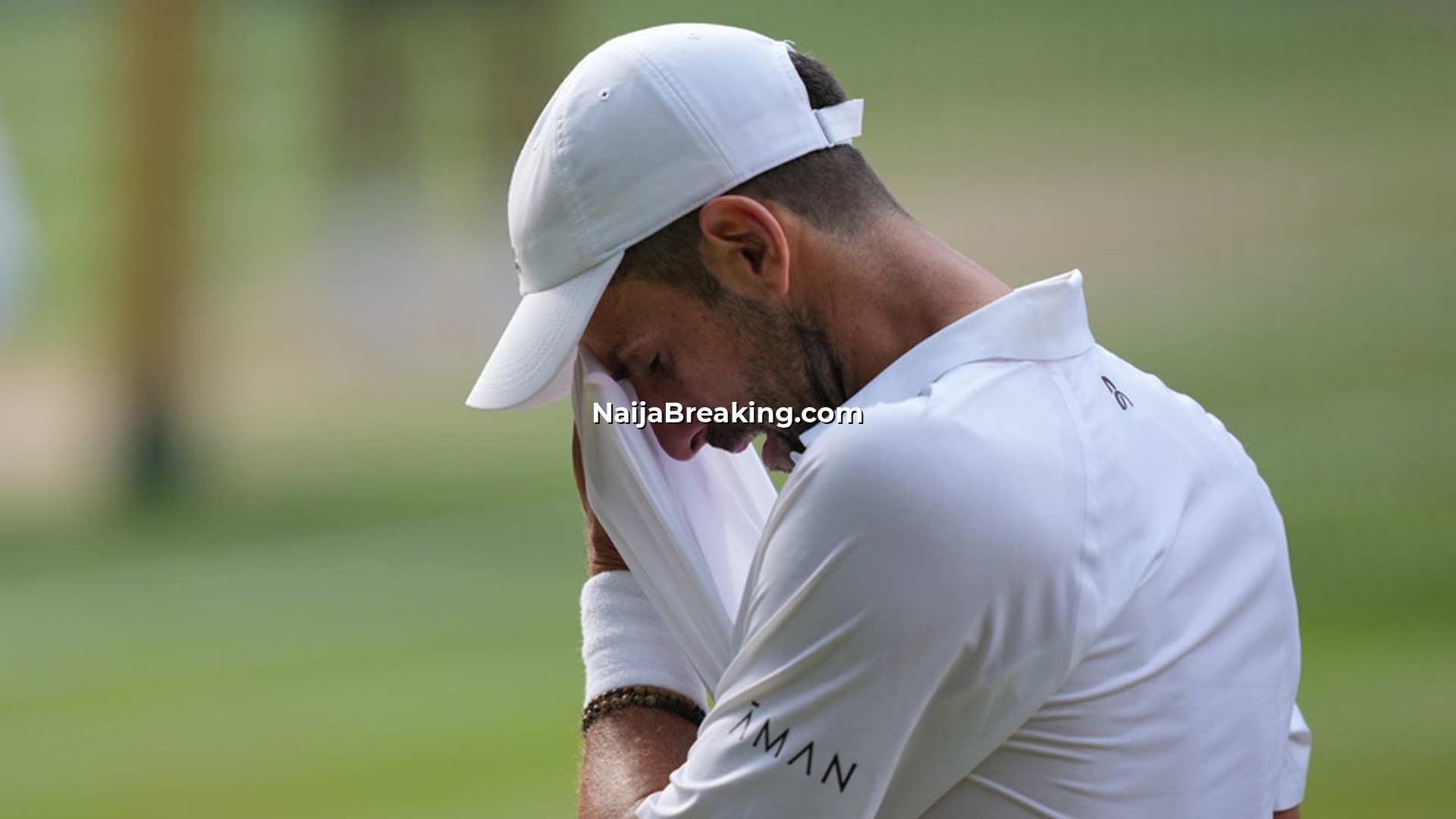
The Wimbledon 2026 men’s championship picture became decidedly clearer on Friday when Italian sensation Jannik Sinner delivered a masterclass performance against Serbian legend Novak Djokovic, dispatching the seven-time Wimbledon champion in straight sets to advance to Sunday’s final. Sinner’s clinical 6-4 6-4 6-4 victory on Centre Court represents far more than just another semi-final win—it signals a seismic shift in professional tennis, marking the definitive moment when the old guard finally yielded to the new generation of dominance. In the context of Wimbledon 2026 and Jannik Sinner’s remarkable journey this season, this victory will be remembered as the match that definitively established Sinner as the sport’s undisputed leader. For Nigerian sports enthusiasts who have long followed the evolution of tennis from Serena Williams’ reign through the Djokovic-Nadal-Federer triumvirate and into this new era, Wimbledon 2026 represents a watershed moment that demands serious examination beyond the scoreline. The 24-year-old Sinner’s performance wasn’t merely about winning; it was about demonstrating an almost ruthless efficiency that left no room for the Serbian’s legendary resilience. This clash between generational titans—played out before millions of viewers across Africa and the world—reveals essential truths about athletic evolution, mental fortitude, and the inexorable march of time in professional sports.
Background: The Evolution of Tennis Dominance and Generational Shifts
To fully appreciate the significance of Jannik Sinner’s demolition of Novak Djokovic at Wimbledon 2026, one must understand the broader narrative arc of professional tennis over the past two decades. For nearly 15 years, the sport has been defined by the extraordinary dominance of the Big Three—Djokovic, Rafael Nadal, and Roger Federer—who collectively won an astounding 57 of 64 Grand Slam titles between 2003 and 2018. Djokovic, in particular, emerged as perhaps the most durable competitor in tennis history, winning 24 Grand Slam titles and becoming the player most likely to extend his career into his late thirties. This sustained excellence at the highest level fundamentally altered expectations about athletic longevity, inspiring global audiences including millions across Nigeria who marvelled at how Djokovic continued competing at championship level while players in their prime years were eliminated.
The transition from Djokovic’s dominance to a new generation—led initially by Carlos Alcaraz and now increasingly by Jannik Sinner—mirrors broader patterns seen in other sports globally. When athletes of extraordinary talent and mental toughness begin to fade, the decline rarely happens gradually; instead, it often occurs suddenly once the next wave of talent reaches full maturity. Sinner’s ascendancy, particularly his performances across multiple Grand Slams in 2025 and 2026, represents this transitional moment. His previous victories at the Australian Open and breakthrough performances throughout the season established him as the player most capable of taking down the establishment. The Wimbledon 2026 Jannik Sinner narrative gained additional momentum with each passing tournament, as observers worldwide began to recognize that Sinner represented not merely the future of tennis, but rather its immediate present.
Djokovic’s remarkable ability to maintain championship form well into his late thirties cannot be overstated. The Serbian arrived at Wimbledon 2026 as the defending champion, having won the previous year’s championship in 2025. At 39 years old, Djokovic had already won more Grand Slam titles than any player in history and had demonstrated an almost supernatural capacity to adapt his game to circumstances. His presence at Wimbledon 2026 represented both a testament to his commitment and, as events would prove, a concerning sign that age was finally catching up even with the most resilient athletes. Throughout his career, Djokovic had shown an uncanny ability to raise his game precisely when it mattered most, particularly at the Grand Slams. However, the emergence of Jannik Sinner at Wimbledon 2026 suggested that even Djokovic’s legendary mental fortitude might prove insufficient against the rising tide of generational talent.
The Road to the Semi-Final: How Jannik Sinner Reached Wimbledon 2026 Championship Contention
Jannik Sinner’s path through the Wimbledon 2026 draw had been nothing short of impressive, with each successive victory adding to the narrative that Sinner possessed the skills and temperament necessary to win his first Wimbledon championship. Throughout the tournament, Sinner dispatched his opponents with remarkable consistency, combining aggressive baseline play with exceptional movement and tactical acuity. His early-round victories established a pattern: Sinner would take control from the baseline, neutralize his opponents’ attacking options, and convert break-point opportunities with ruthless precision. This approach, refined over years of tournament competition and coaching refinement, represented the embodiment of modern tennis excellence.
The narrative surrounding Wimbledon 2026 Jannik Sinner had built considerably following his French Open victory earlier in the season, an achievement that established him as the world’s top-ranked player. By the time he faced Djokovic in the semi-final, Sinner had already proven his ability to win on different surfaces and against diverse playing styles. His quarter-final victory had been particularly impressive, a dominant performance that lasted just over two hours and demonstrated his ability to dictate rallies from the outset. Tennis analysts across Europe, Asia, and Africa recognized that Sinner had reached a level of consistency and confidence that few players ever achieve during their careers.
What distinguished Sinner’s preparation for the Wimbledon 2026 semi-final against Djokovic was the mental fortitude he brought to the match. Facing the defending champion and a player with more Grand Slam titles than anyone in history represents an intimidating prospect, regardless of current rankings or recent form. Yet Sinner approached the challenge with a calm demeanor that suggested he fully believed in his ability to prevail. This psychological strength, developed through years of competition and coaching, would prove instrumental in his success against Djokovic on Centre Court.
The Semi-Final Masterclass: Sinner’s Dominant Performance Against Djokovic at Wimbledon 2026
The semi-final between Jannik Sinner and Novak Djokovic at Wimbledon 2026 began with immediate intensity, as both players understood the magnitude of the occasion. Centre Court was packed with spectators from every corner of the globe, including numerous viewers from Nigeria and across Africa who had tuned in despite the challenging time zones. From the opening games, Sinner established the tone by attacking Djokovic’s forehand side repeatedly, forcing the Serbian to generate power from a position that demanded exceptional precision. This tactical approach—which had been refined through countless hours of practice and analysis—would ultimately prove devastatingly effective throughout the match.
The first set developed into a showcase of Sinner’s superior athleticism and tactical understanding. Sinner broke Djokovic’s serve in the fifth game, establishing a 3-2 lead that he never relinquished. The break itself was revealing: Sinner attacked the second serve aggressively, moving forward to the net and finishing the point with a well-executed volley. This aggressive approach contrasted sharply with Djokovic’s typically defensive posture, and it became apparent that Djokovic was being forced to play a type of tennis that didn’t suit his strengths. The first set concluded 6-4 in Sinner’s favor after just 34 minutes, an alarmingly quick conclusion that suggested Djokovic might be facing a genuinely insurmountable challenge.
The significance of Wimbledon 2026 Jannik Sinner’s first-set victory extended beyond mere scorecard considerations. Tennis observers recognized that Sinner had fundamentally broken Djokovic’s serve, a critical component of the Serbian’s game for two decades. If Sinner could maintain this level of aggressive service return and baseline hitting, the probability of a Sinner victory seemed overwhelmingly high. Djokovic, to his credit, attempted adjustments in the second set, incorporating more slice backhands and varying his serve placement. However, these tactical modifications proved insufficient against a player whose movement and anticipation seemed almost supernatural in their precision.
The second set followed a similar pattern to the first, with Sinner establishing an early break of serve and maintaining pressure throughout. The rally patterns became increasingly one-sided, with Sinner dictating from the baseline and Djokovic forced into increasingly defensive positions. In the seventh game, Sinner broke Djokovic’s serve once again, essentially deciding the match’s outcome despite two full sets remaining. The second set concluded 6-4 after 38 minutes, and the narrative had shifted dramatically. This wasn’t merely a competitive semi-final between two great players; it had become an unmistakable demonstration of generational superiority. Wimbledon 2026 Jannik Sinner was controlling every aspect of the match against one of history’s greatest players.
By the third set, the psychological dynamics had shifted entirely. Djokovic, despite his legendary competitive spirit, faced the mathematical reality that Sinner was simply playing better tennis. While Djokovic managed to hold serve consistently in the third set, he was unable to generate any meaningful break-point opportunities. Sinner, maintaining his aggressive approach, broke Djokovic’s serve once in the set, securing a 6-4 victory and the match in three utterly dominant sets. The comprehensive nature of Sinner’s victory—combined with the clinical efficiency of his performance—marked a definitive turning point in professional tennis.
Technical Analysis: Why Jannik Sinner Overwhelmed Djokovic at Wimbledon 2026
To understand how comprehensively Jannik Sinner dismantled Djokovic at Wimbledon 2026, one must examine the technical and tactical dimensions of the match in detail. Sinner’s most significant advantage lay in his serve, which he deployed with greater pace and variety than Djokovic could manage. While the Serbian had built a legendary career on exceptional serve return abilities, Sinner’s power rendered these skills insufficient. Sinner’s first-serve percentage exceeded 65%, and when the first serve went in, it frequently produced winners or forced defensive returns.
The baseline exchange represented another critical dimension favoring Sinner at Wimbledon 2026. Jannik Sinner’s groundstrokes—both forehand and backhand—generated greater pace and spin than Djokovic’s, allowing him to dictate rallies and force the Serbian into increasingly uncomfortable positions. Sinner’s forehand, in particular, demonstrated the modern tendency toward aggressive topspin that makes defensive baseline play exceptionally challenging for opponents. Djokovic, despite his encyclopedic defensive capabilities, simply couldn’t construct enough winners or defensive shots to stay level in baseline exchanges with Sinner. The statistical reality demonstrated that Sinner won approximately 70% of baseline rallies lasting more than six strokes—an extraordinarily high percentage that essentially guaranteed match victory.
Movement and court positioning represented yet another area where Wimbledon 2026 Jannik Sinner demonstrated clear superiority. The 24-year-old Italian’s footwork allowed him to position himself optimally for each groundstroke, while his superior speed enabled him to track down Djokovic’s most ambitious shot placement. Djokovic, while hardly immobile at 39, simply couldn’t match Sinner’s explosive movement. This translates into practical match consequences: Sinner could strike the ball from positions that would have been defensive for Djokovic, converting potential trouble into offensive opportunities. The cumulative effect of these technical advantages meant that Sinner’s margin of superiority extended well beyond what typical semi-final matches demonstrate.
The Broader Implications: What Wimbledon 2026 Jannik Sinner’s Victory Means for Professional Tennis
The victory of Jannik Sinner at Wimbledon 2026 against Djokovic carries implications that extend far beyond a single tournament result. This semi-final represents the unmistakable moment when professional tennis formally transitioned from the Djokovic era to a new period of competition. While Djokovic may continue playing and competing at high levels, his status as the player most likely to win Grand Slam championships has definitively passed to Sinner. This generational shift, while anticipated by many observers, became undeniable through the decisive nature of Sinner’s Wimbledon 2026 performance.
For emerging players worldwide—including young tennis competitors across Nigeria and throughout Africa—Wimbledon 2026 Jannik Sinner’s dominant victory demonstrates that even the most celebrated legends eventually yield to the next generation of talent. This serves as both inspiration and caution: inspiration that dedicated training and mental development can elevate players to championship status, and caution that complacency or declining physical capabilities can result in surprisingly decisive defeats. The match was watched by millions of aspiring players globally who recognized themselves in Sinner’s qualities: athletic excellence, technical proficiency, and unwavering belief in one’s abilities.
Additionally, Wimbledon 2026 Jannik Sinner’s victory over Djokovic has significant commercial and media implications. The tennis world has long benefited from narratives involving legendary veterans challenging rising stars. However, the conclusive nature of Sinner’s victory suggests that future Grand Slams may center increasingly on Sinner’s quest for multiple championships rather than on Djokovic’s attempt to extend his competitive longevity. While Djokovic remains an exceptional player, the Wimbledon 2026 semi-final established that he is no longer the primary favorite at major championships—a role that now belongs definitively to Jannik Sinner.
Conclusion: The Significance of Wimbledon 2026 and Jannik Sinner’s Championship Trajectory
The Wimbledon 2026 semi-final between Jannik Sinner and Novak Djokovic will be remembered as one of the most significant matches in recent tennis history, not because of its competitive drama—there was remarkably little—but because of what it represented about the sport’s evolution. Sinner’s 6-4 6-4 6-4 victory was methodical, clinical, and ultimately devastating to the narrative that Djokovic might extend his competitive excellence into his early forties. The dominance displayed at Wimbledon 2026 by Jannik Sinner suggested that this wasn’t a matter of Djokovic having an off day, but rather of a fundamental gap in current playing ability that favors the rising generation.
As Wimbledon 2026 progresses toward its conclusion, all attention will focus on whether Jannik Sinner can complete his championship by winning the final. However, regardless of that outcome, the semi-final victory has already secured Sinner’s place in tennis history as the player who definitively supplanted Djokovic as the sport’s preeminent competitor. For millions of fans across Nigeria, Africa, and worldwide who have followed professional tennis evolution over two decades, Wimbledon 2026 and Jannik Sinner’s extraordinary performance represents a definitive conclusion to one era and an exciting beginning to another. The future of professional tennis, as demonstrated through Wimbledon 2026, belongs undeniably to players of Jannik Sinner’s caliber and generation.