FCC Drone Ban Enforcement Against DJI Front Companies: What Nigeria’s Tech Regulators Must Learn
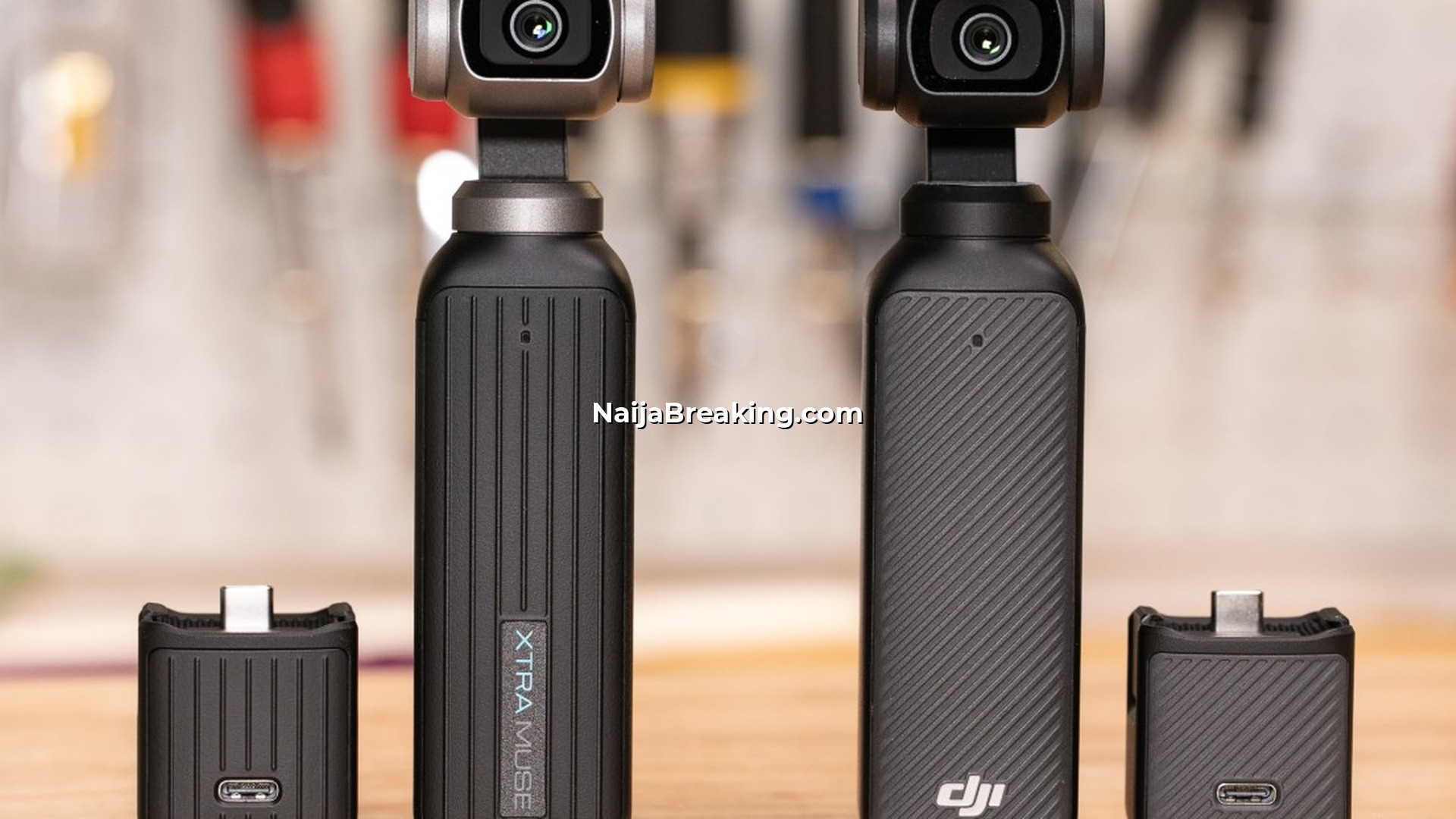
The United States Federal Communications Commission (FCC) is demonstrating aggressive FCC drone ban enforcement against eight companies allegedly acting as front operations for Chinese drone manufacturer DJI, which has been blocked from the American market over national security concerns. On July 10th, the FCC issued $25,000 fines to each of these shell firms and gave them just 10 calendar days to respond before further regulatory action—a deadline that underscores the urgency of closing loopholes in global tech regulation and establishing robust FCC drone ban enforcement mechanisms. According to The Verge, the companies targeted include Xtra Technology, Skyrover (run by SZ Knowact), Cogito Tech, Fixaxo Technology, Lyno Dynamics, Skyhigh Tech, Spatial Hover, and WaveGo Tech—all suspected of circumventing America’s foreign drone restrictions by rebranding and reselling DJI products. For Nigeria, this FCC drone ban enforcement action reveals a critical gap in how African nations regulate technology imports and spectrum allocation, particularly as Chinese tech companies increasingly target emerging markets with sophisticated evasion strategies.
As Africa’s largest tech hub and a nation grappling with persistent cybersecurity vulnerabilities, Nigeria should take serious note of how regulatory capture and weak enforcement allow foreign companies to operate unchecked. The Nigerian Communications Commission (NCC) and the Federal Ministry of Communications and Digital Economy (FMCDE) have limited oversight mechanisms compared to their American counterparts, leaving Nigerian consumers and critical infrastructure exposed to devices that may pose undisclosed data collection or security risks. Understanding why the FCC felt compelled to act with such forceful FCC drone ban enforcement—and how these companies managed to evade detection for so long—offers practical lessons for Nigeria’s own tech governance. The sophistication of these evasion attempts demonstrates that regulatory bodies cannot be passive; they must proactively investigate supply chains, monitor import documentation, and coordinate internationally to prevent technological threats from reaching their markets.
Background: The US Foreign Drone Ban and Why It Matters Globally
The United States’ crackdown on foreign drone manufacturers, particularly DJI, is rooted in a decade-long debate about technology sovereignty and national security. In December 2022, the FCC formally designated all foreign drone companies—a category that explicitly includes Chinese manufacturers—as ineligible for equipment authorisation. This classification followed mounting pressure from US lawmakers concerned that DJI drones could transmit sensitive infrastructure data (images of power plants, military installations, bridges, and critical facilities) back to Chinese servers, creating an espionage vulnerability that could compromise American national defence. The Trump and Biden administrations both treated Chinese technology companies as potential intelligence threats, viewing the drone ban as part of a broader decoupling strategy in US-China tech relations that extends far beyond consumer devices into military, commercial, and industrial applications.
However, what makes this policy significant for Nigeria is the regulatory loophole it exposed: once a product receives FCC authorisation, the agency must rely on market surveillance and consumer complaints to catch violations. DJI exploited this gap by establishing what the FCC calls “apparent shell companies”—entities with minimal corporate infrastructure that purchase DJI drones, repackage them under new brand names, and resell them to American retailers and consumers. These resold drones remain functionally identical to original DJI models, transmitting the same data and operating under the same Chinese control architecture, but the rebranding created sufficient legal ambiguity that retailers could claim they were selling domestic or uncontrolled products. This supply chain manipulation represents a sophisticated challenge that many developing nations, including Nigeria, are unprepared to address.
The FCC’s response to these shell companies signals a shift toward more aggressive FCC drone ban enforcement. Rather than waiting for complaints, the commission began investigating company registration documents, import records, and supply chain documentation. They discovered that these eight firms—despite claiming to be independent technology distributors—were purchasing inventory directly from DJI subsidiaries in bulk quantities inconsistent with legitimate small business operations. Financial records showed payments flowing through multiple shell entities, a common technique in sanctions evasion and technology circumvention schemes. What is particularly telling for Nigerian regulators is that the FCC had to expend significant resources and legal authority just to identify and penalise these companies, suggesting that many more similar operations may continue to operate undiscovered in less-regulated markets.
How DJI Front Companies Evaded Detection: A Blueprint for Regulatory Failure
Understanding the methodology behind DJI’s evasion strategy is essential for Nigeria to prevent similar circumvention schemes in its own technology sector. The eight companies under FCC drone ban enforcement used several tactics that could easily replicate in African markets with weaker regulatory oversight. First, these firms created legitimate-sounding brand names that suggested American or international origins—names like “Spatial Hover” and “Skyhigh Tech” evoke domestic innovation rather than foreign manufacturing. They then obtained proper business registration in the United States, rented office addresses, and established minimal customer-facing operations that would pass cursory regulatory inspection.
Second, these companies leveraged the complexity of global supply chains to obscure the true origin of their products. Rather than selling drones with obvious DJI branding, they repackaged the devices with minimal modification, sometimes adding generic firmware or cosmetic changes that didn’t alter the fundamental technology. They then marketed these rebranded drones on e-commerce platforms like Amazon, eBay, and specialty drone retailers, where algorithms and human reviewers struggle to identify that supposedly different products are actually identical items from the same Chinese manufacturer. For Nigerian regulators, this demonstrates that relying on import documentation alone is insufficient—actual product inspection and technical analysis are necessary to verify that imported devices match their stated specifications and origins.
Third, and most insidiously, these shell companies used their supposedly “independent” status to obtain FCC authorisation through different regulatory pathways. Rather than attempting to gain direct FCC approval for DJI drones (which would be instantly rejected due to the foreign drone ban), they submitted applications for generic consumer electronics or communication devices, omitting critical information about the actual technology contained within their products. They exploited regulatory gaps where devices sold as “remote-controlled vehicles” or “surveillance tools for commercial use” could slip through approval processes designed for traditional consumer electronics, not military-relevant dual-use technology. The FCC discovered these deceptions only through intensive investigation, which suggests that many such violations occur daily in countries with even less regulatory capacity than the United States.
The FCC Drone Ban Enforcement Action: Implications for Regulatory Authority
The FCC’s decision to impose FCC drone ban enforcement penalties and demand rapid responses from these companies reflects an important principle in technology regulation: regulatory authority must be exercised proactively and visibly to deter future violations. The $25,000 fines may seem modest compared to the profits these companies generate from repackaging and reselling DJI products, but they serve a crucial signalling function. By making the FCC drone ban enforcement action public, documenting the methods used by these shell companies, and holding individuals accountable, the FCC is communicating to similar operations that evasion attempts will be discovered and punished.
Furthermore, the FCC’s enforcement action includes provisions that go beyond simple financial penalties. The agency is requiring these companies to provide detailed information about their supply chains, including the identity of all suppliers, the quantity of devices sold, the names of retailers who purchased their products, and the geographic distribution of their sales. This intelligence-gathering component of FCC drone ban enforcement is crucial because it allows regulators to trace downstream distribution networks and potentially intercept devices before they reach consumers. The FCC is also coordinating with US Customs and Border Protection to flag future importation attempts by these companies or their affiliated entities, making it harder for them to resume operations under slightly modified legal structures.
For Nigeria specifically, this enforcement model reveals that regulators cannot rely solely on passive monitoring of markets. The NCC has authority to conduct investigations, issue sanctions, and coordinate with customs authorities, yet the agency often lacks the resources, political support, or legal frameworks to pursue technology companies with the same vigour the FCC demonstrates. The typical Nigerian regulatory approach involves issuing cease-and-desist orders or temporary suspensions that are sometimes circumvented through appeals, bribery, or registration of new entities under different names. The FCC model—combining financial penalties, supply chain transparency requirements, and future import restrictions—creates multiple layers of deterrence that make long-term evasion exponentially more difficult and expensive.
Nigeria’s Technology Regulation Gap: Why DJI and Similar Companies Target African Markets
Nigeria’s vulnerability to the same circumvention schemes that the FCC is combating stems from fundamental gaps in its technology regulation framework. The NCC, while technically competent in traditional telecommunications oversight, operates with limited authority over imported consumer electronics and has minimal resources for supply chain investigation. The agency’s primary mandate focuses on spectrum allocation, cellular network licensing, and telecommunications quality of service—areas where Chinese technology companies have already gained significant market share through legitimate imports. However, the regulatory oversight of devices with dual-use capabilities (such as drones, satellite communication equipment, and advanced surveillance tools) remains fragmented across multiple agencies without clear coordination or enforcement mechanisms.
Chinese technology companies recognize this regulatory gap and deliberately target African markets, including Nigeria, with products that would face immediate regulatory scrutiny in developed nations. The market for consumer drones in Nigeria has grown rapidly as agricultural entrepreneurs use them for crop monitoring, real estate professionals use them for property surveys, and media companies use them for video production. Yet no agency has conducted a comprehensive audit of which drone models are operating in Nigeria, where they originate, what data they collect, or whether any of these devices pose security risks to Nigerian infrastructure. This absence of regulatory visibility is precisely what DJI exploited in the American market, and it represents an existential regulatory challenge for Nigeria.
Moreover, Nigeria’s infrastructure for technical device inspection is severely limited. The NCC has no dedicated laboratory or testing facility specifically designed to verify that imported electronics match their declared specifications. Customs officers at Nigerian ports lack training in identifying sophisticated counterfeits or repackaged foreign technology. There is no coordinated mechanism for reporting potentially dangerous or non-compliant devices, and no legal framework that allows regulators to conduct field investigations of businesses selling technology products. Compare this to the FCC, which maintains regional offices with technical staff, conducts unannounced inspections of manufacturers and distributors, and has legal authority to seize non-compliant equipment. Nigeria’s regulatory capacity is orders of magnitude less sophisticated, making it an attractive target for companies seeking to avoid enforcement.
Supply Chain Security: A Critical Vulnerability in Nigerian Tech Governance
The FCC drone ban enforcement action against DJI shell companies highlights a critical weakness in Nigeria’s supply chain security framework. When physical devices enter Nigeria through ports in Lagos, Port Harcourt, or other entry points, they undergo customs inspection focused primarily on duty collection, not technical compliance verification. Customs officers are trained to assess duty classifications and check for restricted items like weapons or explosives, but they lack the expertise or authority to verify that technology products meet FCC, CE, or other international safety and compliance standards. A repackaged DJI drone could easily enter Nigeria with fraudulent documentation claiming it is a generic “remote-controlled surveillance device” manufactured in Malaysia or Taiwan, when in fact it is a banned Chinese product with embedded espionage capabilities.
Nigeria’s solution to this supply chain vulnerability requires multiple coordinated interventions. First, the NCC must establish a technical testing laboratory capable of dismantling, analyzing, and reverse-engineering imported electronic devices to verify their true origin and functionality. This laboratory would conduct spot checks on randomly selected imports, maintain a database of device fingerprints and specifications, and flag any products that appear to contain undisclosed telecommunications or data transmission capabilities. Second, Nigeria must establish formal information-sharing agreements with regulatory bodies in advanced economies like the United States, European Union, and United Kingdom to receive alerts about companies and products known to violate foreign regulations. When the FCC discovers a shell company reselling banned technology, that information should immediately flow to the NCC so Nigerian customs can intercept identical imports.
Third, Nigeria must strengthen its legal framework for technology regulation by establishing clear authority for spot-check inspections, supply chain investigations, and device seizure. Currently, the NCC lacks explicit statutory authority to conduct unannounced inspections of technology retailers or demand detailed documentation of import origins. This legal gap prevents the agency from replicating the FCC model of aggressive investigation and enforcement. New telecommunications and technology legislation should grant the NCC and relevant agencies the power to investigate suspected violations, subpoena business records, and impose substantial penalties on companies that knowingly import or resell non-compliant devices.
The National Security Dimension: Why Nigerian Government Should Care About FCC Drone Ban Enforcement
Beyond consumer protection, FCC drone ban enforcement against DJI and similar companies has direct implications for Nigerian national security. Drones equipped with advanced surveillance capabilities could be used to monitor sensitive government facilities, military installations, or critical infrastructure without the knowledge or permission of Nigerian authorities. A drone transmitting real-time video and sensor data to Chinese servers creates a persistent surveillance channel that could be exploited by state or non-state actors for espionage, intelligence gathering, or coordination of criminal activities. The security services in Nigeria—the State Security Service (SSS), the Defence Intelligence Agency (DIA), and the military branches—have expressed periodic concerns about unauthorised aerial surveillance, yet they lack a coherent regulatory framework for detecting and eliminating such devices from Nigerian airspace.
Furthermore, the proliferation of drones with embedded data transmission capabilities in Nigeria could compromise critical infrastructure security. Power facilities, telecommunications networks, water treatment plants, and financial institutions are all vulnerable to reconnaissance conducted by drones. An adversary equipped with a fleet of repackaged DJI drones could systematically photograph and map Nigerian critical infrastructure, identifying vulnerabilities that could be exploited in a future physical or cyber attack. The fact that these drones might simultaneously transmit data to Chinese servers (whether controlled by DJI corporation, the Chinese military, or other entities) represents an uncontrolled intelligence leakage that Nigeria’s government should find deeply troubling. The FCC’s enforcement action, therefore, is not merely a commercial or consumer protection issue—it is a national security imperative that Nigeria should mirror through its own technology regulation mechanisms.
Lessons Nigeria Must Implement: A Practical Regulatory Framework
Based on the FCC drone ban enforcement action and its underlying methodology, Nigeria should immediately implement several regulatory reforms. First, establish a technology import registry that requires all importers of significant quantities of electronics—particularly drones, surveillance equipment, and communications devices—to provide detailed documentation of product origin, manufacturer information, end-user destination, and technical specifications. This registry should be maintained by the NCC and accessible to relevant security agencies. Second, establish a rapid alert system that monitors international regulatory actions; whenever the FCC, European Medicines Agency, or other bodies identify problematic products or companies, Nigeria should immediately cross-check its imports against these lists. Third, allocate sufficient budget and personnel to create a technical testing capability within the NCC or establish a partnership with universities or private laboratories to conduct verification testing of imported technology devices.
Fourth, Nigeria should strengthen legal penalties for importing non-compliant technology to levels that actually deter violations. The fine currently imposed by the FCC on each shell company ($25,000) represents only a fraction of the profits from reselling banned drones. Nigerian penalties should be substantial enough to make evasion economically irrational—perhaps 200% of the value of confiscated goods, plus imprisonment for directors of companies engaged in systematic evasion. Fifth, establish formal information-sharing agreements with the FCC, UK telecommunications authority (Ofcom), European Electronic Communications Office (EECO), and other regulatory bodies to ensure that violations discovered in developed markets are rapidly communicated to Nigerian authorities. Finally, train customs officers in basic electronics verification, teaching them to identify inconsistencies between packaging claims and actual device specifications, and empower them to detain and test suspicious shipments.
Conclusion: Nigeria’s Regulatory Future Depends on Learning from FCC Drone Ban Enforcement Success
The FCC’s aggressive FCC drone ban enforcement against DJI shell companies demonstrates that determined regulatory action can significantly disrupt technology circumvention schemes, even when perpetrators use sophisticated supply chain manipulation tactics. For Nigeria, the implications are clear: without similarly robust regulatory frameworks, the country will continue to serve as a dumping ground for technology products deemed unacceptable in developed markets. DJI drones, surveillance equipment with undisclosed data transmission capabilities, and other non-compliant devices will proliferate in Nigerian markets, exposing consumers to privacy violations and compromising national security.
The FCC drone ban enforcement action is not simply an American regulatory matter—it is a global signal that technology circumvention is increasingly costly and risky. Nigeria must recognize this signal and act accordingly by strengthening its technology regulation capacity, establishing international information-sharing mechanisms, and imposing meaningful penalties on companies that attempt to evade compliance. The government should task the NCC with developing a comprehensive technology import oversight framework modelled on the FCC approach, investing in technical testing capabilities, and coordinating with security agencies to address the national security dimensions of technology regulation. Only through such comprehensive reform can Nigeria protect its citizens from non-compliant, potentially dangerous technology products, and prevent its territory from becoming a haven for the circumvention schemes that advanced economies are successfully combating through aggressive FCC drone ban enforcement and similar regulatory actions.