Free Digital TV Platform Nigeria: Federal Government’s Revolutionary Launch and Economic Impact
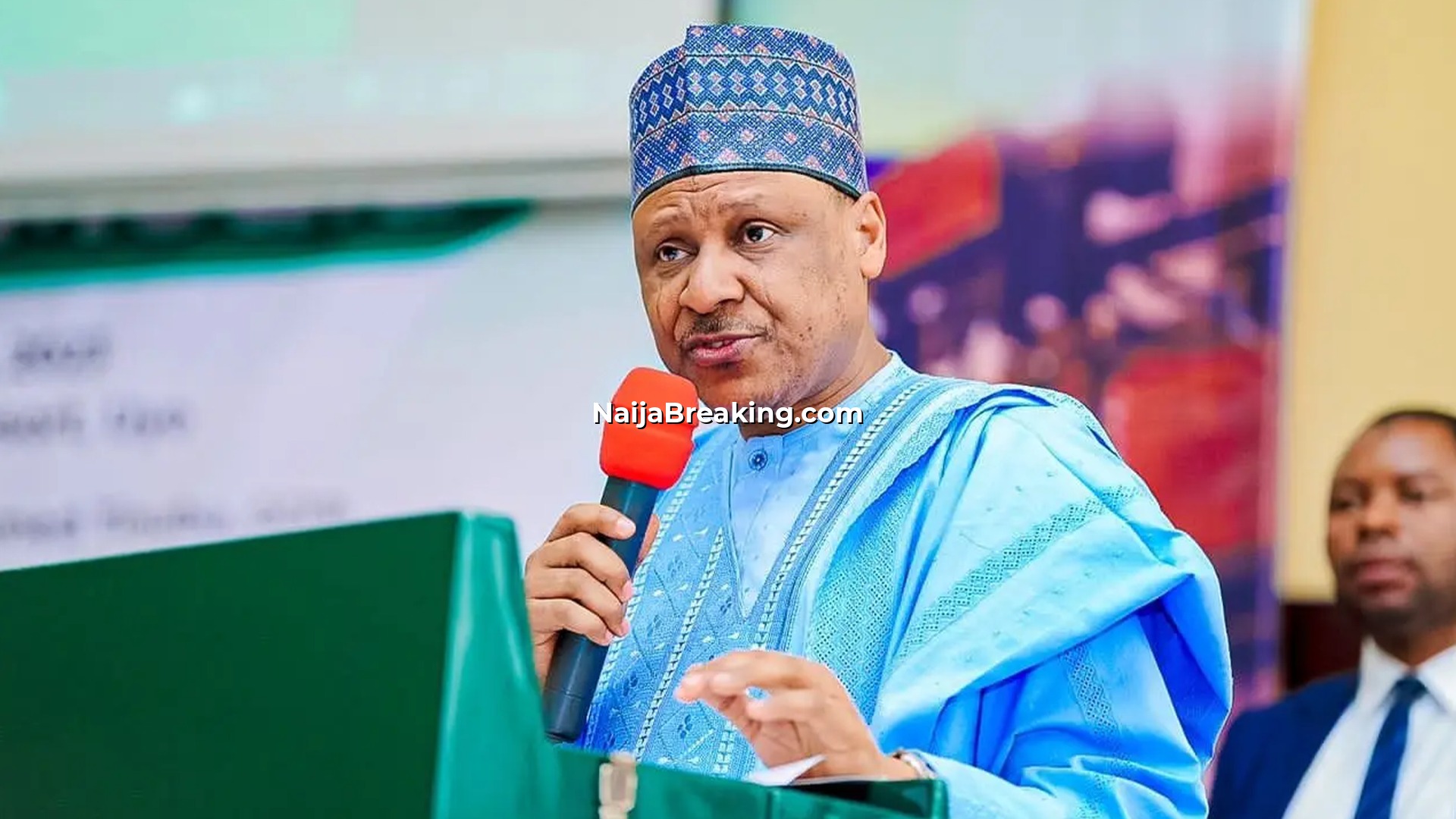
The Federal Government has officially unveiled a groundbreaking free digital TV platform Nigeria initiative designed to revolutionise broadcasting access across the nation and unlock significant economic potential in the creative and digital economy. This transformative free digital TV platform Nigeria project represents far more than a technical upgrade—it signals the Tinubu administration’s unwavering commitment to structural transformation of Nigeria’s media landscape and digital infrastructure. The comprehensive platform promises to catalyse unprecedented job creation, stimulate local manufacturing of digital receivers, expand content production opportunities, and unlock entirely new revenue streams for broadcasters and independent content creators across the nation. Minister of Information and National Orientation Mohammed Idris presided over the official launch at NIGCOMSAT headquarters in Abuja, bringing together distinguished stakeholders from broadcast, communications, advertising, and regulatory sectors. For ordinary Nigerians, this free digital TV platform Nigeria development carries profound implications: it could democratise access to quality broadcasting services, significantly reduce the cost of television consumption, and create pathways into creative industries employment at a time when Nigeria’s unemployment crisis remains persistently acute and requires innovative solutions.
The introduction of a free digital TV platform Nigeria represents a watershed moment in the nation’s technological and economic evolution. Understanding the full scope of this initiative requires examining its genesis, its technical architecture, its economic implications, and its potential to transform not just broadcasting, but entire adjacent industries and labour markets. This comprehensive guide explores every dimension of this transformative development, from the policy framework driving its implementation to the practical benefits Nigerian households and entrepreneurs can expect to realise in the coming months and years.
Historical Background and Context for Digital Television in Nigeria
Nigeria’s broadcasting sector has operated within legacy analogue infrastructure inherited from the colonial and post-independence eras, creating substantial bottlenecks in modernisation efforts, regulatory efficiency, and audience reach capabilities. This outdated technological foundation has constrained the sector’s growth potential and prevented Nigeria from fully capitalising on emerging opportunities in digital media and content distribution. The transmission of television signals through analogue technology, while functional, represents an inefficient use of valuable radio frequency spectrum and limits the quantity and quality of channels that can be transmitted simultaneously.
The transition to digital broadcasting has featured prominently on Nigeria’s development agenda since the early 2000s, when the Nigerian Communications Commission (NCC) and subsequently the National Broadcasting Commission (NBC) began laying essential groundwork for the Digital Switch Over (DSO) project. These regulatory bodies conducted extensive stakeholder consultations, commissioned technical studies, and developed comprehensive implementation frameworks designed to guide Nigeria’s migration from analogue to digital broadcasting standards. However, implementation progress has been notably sluggish, hampered by multifaceted challenges including insufficient funding allocations, entrenched stakeholder resistance to change, critical gaps in technical capacity, competing budgetary priorities in an economy managing multiple simultaneous crises, and the sheer complexity of coordinating such a massive sector-wide transition.
The delay in implementing digital broadcasting has placed Nigeria at a competitive disadvantage relative to regional peers. Across Sub-Saharan Africa, countries including South Africa, Kenya, Ghana, and Uganda have already completed or substantially advanced their digital transitions, establishing themselves as technological leaders in continental media markets. These nations have begun reaping tangible benefits from digital broadcasting infrastructure, including improved broadcasting quality, expanded channel capacity, enhanced emergency broadcast capabilities, and new opportunities for innovative services and content delivery mechanisms. Nigeria’s lag in this crucial transition has created pressure to accelerate implementation and avoid further technological obsolescence that could undermine the nation’s standing in the competitive continental media landscape.
The Creative Economy as Strategic Priority for Nigeria’s Development
The creative economy has emerged as an exceptionally strategic pillar in Nigeria’s economic diversification agenda, particularly as traditional oil revenues face mounting structural uncertainty and intensifying pressure from global energy transition imperatives. The petroleum sector, which has historically dominated Nigeria’s export revenues and government finances, confronts a secular decline as the world progressively shifts toward renewable energy sources and reduced fossil fuel consumption. This inexorable energy transition necessitates that Nigeria develop alternative economic engines capable of generating foreign exchange, creating employment, and driving sustainable development.
The National Bureau of Statistics (NBS) has documented through rigorous analysis that Nigeria’s creative sector contributed approximately ₦11.46 trillion to GDP in 2021, demonstrating conclusively that this sector constitutes the second-largest economic contributor after agriculture. The creative industries encompass film and television production, music, visual arts, publishing, software development, advertising, design services, and cultural heritage tourism—sectors that collectively demonstrate remarkable resilience and growth potential. Nigeria’s Nollywood film industry, in particular, has achieved continental and global recognition, generating billions in revenue annually and establishing Nigeria as a creative powerhouse on the African continent and increasingly in global markets.
Despite these impressive achievements, broadcasting—a critical foundational component of the creative ecosystem—remains substantially underutilised as an economic engine. This underutilisation stems partly from infrastructure limitations imposed by analogue technology and the resulting fragmentation of distribution channels. A free digital TV platform Nigeria would directly address these constraints by providing modern, efficient infrastructure that enables content creators, broadcasters, and service providers to reach larger audiences more cost-effectively and reliably. By removing technological barriers and reducing distribution costs, digital broadcasting infrastructure would unlock tremendous latent potential within Nigeria’s creative sector and stimulate economic activity across interconnected industries.
The Tinubu Administration’s Vision for Digital Transformation
President Bola Ahmed Tinubu’s administration inherited the unfinished business of digital broadcasting transition and strategically positioned it as a cornerstone of the government’s broader digital transformation agenda. The administration recognises that modernising Nigeria’s broadcasting infrastructure constitutes an essential prerequisite for unlocking value creation across multiple sectors of the economy and improving service delivery to Nigerian citizens. By advancing the free digital TV platform Nigeria initiative, the government demonstrates commitment to comprehensive modernisation of critical national infrastructure systems.
The Tinubu administration’s approach to broadcasting modernisation reflects sophisticated understanding of interconnections between technological infrastructure, economic development, and social welfare. Decision-makers recognise that a modern broadcasting system can serve multiple critical functions simultaneously: it can deliver educational content and public health information to remote communities, provide emergency broadcasting capabilities during crises, support cultural preservation through expanded local language programming, facilitate civic participation through expanded news and current affairs coverage, and generate substantial economic activity and employment across interconnected sectors.
Understanding the Free Digital TV Platform Nigeria Technical Architecture
A free digital TV platform Nigeria operates fundamentally differently from traditional analogue broadcasting systems. Digital broadcasting utilises sophisticated compression algorithms and advanced modulation techniques to transmit substantially more information within the same frequency spectrum. This technological capability means that where an analogue television channel historically occupied specific bandwidth, a digital transmitter can deliver multiple channels within identical spectrum allocation, enabling dramatic expansion of available programming options. This technical advantage translates directly into economic benefits by increasing the quantity and diversity of content that broadcasters can offer to audiences.
The free digital TV platform Nigeria utilises standardised technical specifications ensuring compatibility across devices and transmission systems. Implementation of standardised digital broadcasting specifications—typically following international standards such as DVB-T2 (Digital Video Broadcasting—Terrestrial, second generation)—ensures that consumers can utilise compatible receiving equipment across different regions and from various manufacturers. This standardisation principle is crucial for achieving rapid, cost-effective platform adoption, as it prevents technological fragmentation and enables economies of scale in receiver manufacturing.
The transition to digital broadcasting also enables implementation of sophisticated conditional access systems that allow broadcasters to offer both free-to-air and subscription services through unified infrastructure. This flexibility represents a significant advantage over analogue systems, as it enables broadcasters to diversify revenue sources and implement business models that respond to market opportunities and consumer preferences. Some content may be distributed entirely free to all viewers, while premium content can be offered on subscription basis, and advertising can support additional channels—all operating seamlessly across the same digital infrastructure.
Economic Benefits and Job Creation Potential
The launch of a free digital TV platform Nigeria will catalyse substantial economic activity and employment creation across multiple interconnected sectors. The immediate benefits include direct job creation in platform operation, technical maintenance, content production, and customer support services. Broadcasters will require expanded technical teams to manage digital transmission systems, conduct regular equipment maintenance, monitor broadcast quality, and implement system upgrades and enhancements. These technical positions typically command competitive compensation and require skilled workers with specialised training.
Manufacturing of digital television receivers represents another significant employment opportunity. While Nigeria currently imports the vast majority of television receivers from foreign manufacturers, implementation of a free digital TV platform Nigeria provides opportunity and market incentive for local assembly and manufacturing operations. Establishing digital receiver manufacturing facilities would create employment across production, quality control, logistics, sales, and after-sales service functions. These manufacturing operations would also stimulate demand for electronic components, supporting associated supply chain activities.
Content creation represents perhaps the most significant long-term employment opportunity associated with digital broadcasting expansion. Digital platforms enable production of substantially greater quantities of locally-produced content, creating employment for scriptwriters, producers, directors, cinematographers, editors, sound engineers, lighting technicians, and numerous supporting roles. The availability of expanded distribution channels creates market incentives for independent content creators and production companies to develop original programming, documentaries, educational content, entertainment series, and cultural programming tailored to diverse audience preferences.
The advertising industry will experience significant growth as expanded channel capacity and larger audiences attract substantial increases in advertising investment. Media planning agencies, advertising production companies, digital marketing specialists, and advertising sales personnel will all experience increased demand for their services. The broader media and communications ecosystem will benefit from complementary growth in associated services including printing and publishing, outdoor advertising coordination, and integrated marketing communications.
Democratisation of Broadcasting Access and Consumer Benefits
For ordinary Nigerians, the most immediate and tangible benefit of a free digital TV platform Nigeria initiative involves expanded access to quality broadcasting services at reduced cost. The term “free” in the platform description reflects the commitment to provide basic broadcasting services without subscription fees, ensuring that cost does not constitute a barrier to accessing broadcast media. This democratisation of access proves particularly significant for lower-income households and rural communities that have historically experienced limited broadcasting access due to geographic or economic constraints.
Digital broadcasting offers superior picture and sound quality compared to analogue transmission, providing consumers with substantially improved viewing experience. This quality improvement derives from the nature of digital signal transmission, which transmits discrete data packets that can be error-corrected and reconstructed with perfect fidelity, contrasting sharply with analogue signals that degrade progressively with distance and interference. Consumers will observe clearer, sharper images and dramatically improved audio quality across all programming.
The expanded channel capacity enabled by digital transmission means consumers will access substantially greater programming diversity. Instead of the limited number of channels available through analogue broadcasting, digital platforms support dozens or hundreds of channels simultaneously. This expansion enables programming targeted at diverse audience segments: dedicated children’s channels with age-appropriate content, educational channels supporting formal and informal learning, cultural and heritage channels preserving traditional languages and customs, international channels providing global perspectives, and entertainment channels offering films, series, and speciality programming. The sheer diversity of available programming empowers viewers to customise their media consumption according to individual preferences and interests.
Infrastructure Development and Regional Implications
Implementation of a free digital TV platform Nigeria necessitates substantial investment in transmission infrastructure, network development, and signal distribution systems across the entire nation. These infrastructure investments benefit not only broadcasting but also contribute to broader telecommunications and digital connectivity development. The transmission towers, microwave links, optical fibre networks, and associated infrastructure developed for digital broadcasting often support additional telecommunications services and can facilitate rural connectivity expansion in regions lacking adequate communications infrastructure.
Rural and remote communities stand to benefit substantially from digital broadcasting expansion, as the expanded channel capacity and improved signal quality enable cost-effective extension of broadcasting services to previously underserved regions. Digital transmission technology proves more efficient than analogue alternatives in delivering signals across challenging terrain, mountains, and remote areas where population density makes infrastructure investment particularly expensive. This efficiency improvement means that extending broadcasting services to rural communities becomes economically viable, narrowing the digital divide between urban and rural areas.
Regulatory Framework and Implementation Governance
The successful launch and operation of a free digital TV platform Nigeria requires robust regulatory framework establishing clear rules, technical standards, operational procedures, and accountability mechanisms. The National Broadcasting Commission (NBC), as the primary regulatory authority for broadcast media in Nigeria, bears responsibility for developing and enforcing technical standards ensuring consistent quality, preventing interference, protecting consumer interests, and managing the transition process from analogue to digital broadcasting. The NBC must establish clear timelines for analogue broadcast termination, ensuring that consumers and broadcasters have adequate notice and time to complete necessary transitions.
Coordination among multiple regulatory bodies and government agencies proves essential for successful implementation. The Nigerian Communications Commission (NCC) maintains responsibility for spectrum management and allocation, while the Ministry of Information oversees broader media policy. NIGCOMSAT, the national satellite operator, plays crucial infrastructure roles in supporting national distribution capacity. Effective coordination ensures that technical standards align across agencies, frequency allocations support operational requirements, and infrastructure investments complement rather than duplicate existing capabilities.
Conclusion: A Transformative Initiative for Nigeria’s Future
The launch of a free digital TV platform Nigeria represents a pivotal development with far-reaching implications extending well beyond the broadcasting sector itself. This initiative symbolises the government’s commitment to modernising critical national infrastructure, supporting the creative economy, generating employment opportunities, and democratising access to quality broadcasting services for all Nigerians regardless of income or geographic location. As implementation proceeds, the platform promises to catalyse economic activity, stimulate innovation, and position Nigeria as a continental leader in digital broadcasting technology and creative content production. For Nigerian citizens, broadcasters, content creators, and the broader economy, this free digital TV platform Nigeria initiative offers unprecedented opportunities for growth, development, and prosperity in coming years.