Lagos Government Launches Waste Police Task Force to Combat Indiscriminate Waste Dumping Lagos
The Lagos State Government has taken a significant administrative step by inaugurating a Special Task Force specifically designed to monitor and eliminate indiscriminate waste dumping Lagos across the entire metropolis, a crisis that has festered for years despite repeated government pronouncements and intervention efforts. The problem of indiscriminate waste dumping Lagos has become increasingly urgent as the city grapples with mounting environmental challenges. This innovative initiative, unveiled on Saturday at Alausa, brings together transport unions—the National Union of Road Transport Workers (NURTW) and the Road Transport Employers Association of Nigeria (RTEAN)—in an unprecedented collaboration to position union members as environmental monitors and waste police across the state’s transport hubs, markets, and commercial centers. This development comes at a critical time when Lagos, already struggling with the infrastructure demands of a city of over 15 million residents, faces escalating environmental degradation from indiscriminate waste dumping Lagos that directly threatens public health, property values, and the city’s aspirations to become a competitive global megacity. The creation of this task force signals recognition by state authorities that the traditional top-down approach to waste management has fundamentally failed—a candid admission that solving Lagos’s waste crisis requires grassroots participation from those most directly positioned to observe and report violations. For ordinary Lagosians—commuters, small business owners, residents of densely populated neighbourhoods—this initiative offers a glimmer of hope that the refuse mountains obstructing streets and contaminating waterways might finally diminish.
Understanding the Scope of Indiscriminate Waste Dumping Lagos
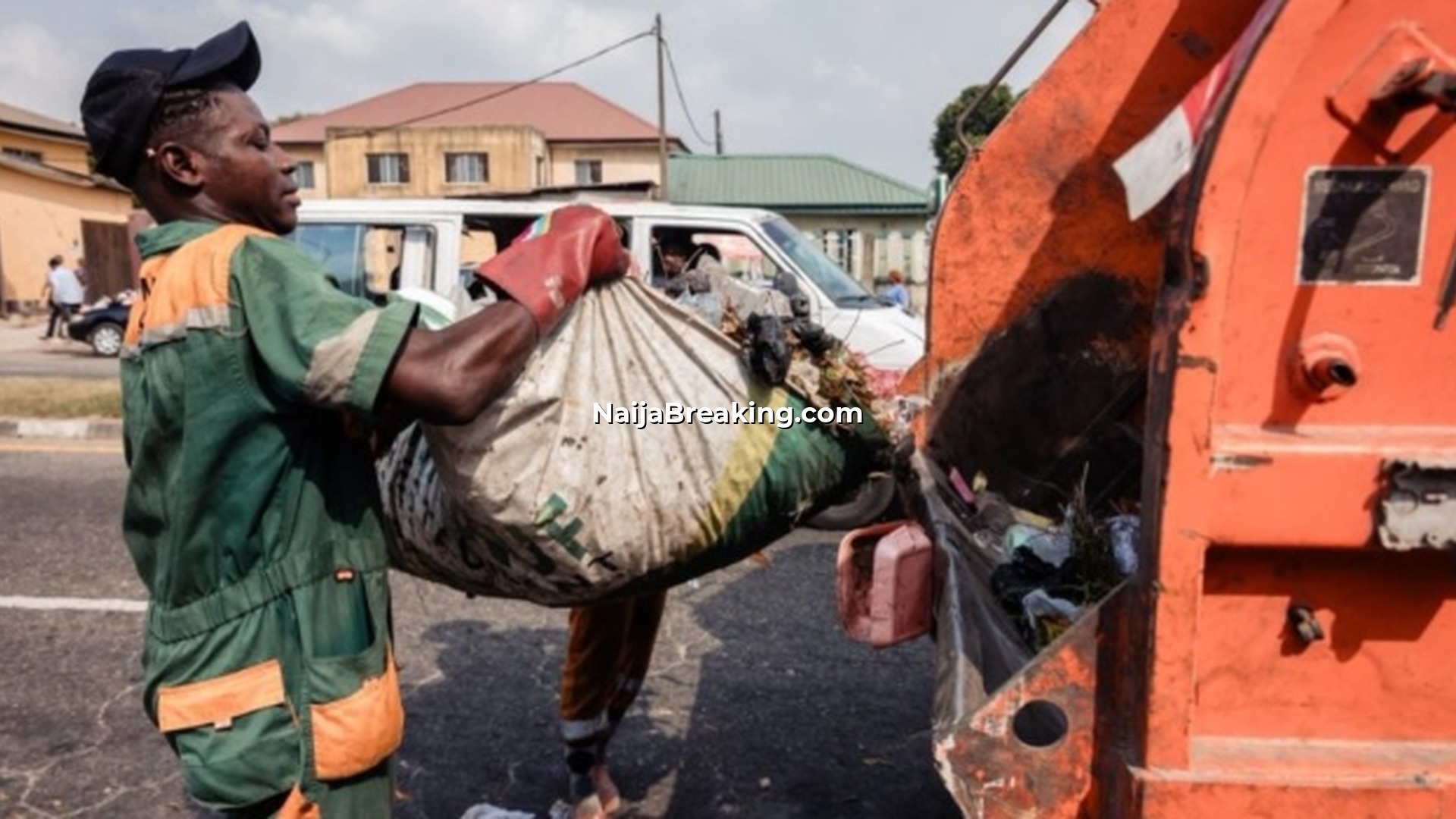
Lagos State’s waste management challenge represents one of the most pressing environmental and public health crises facing Nigeria’s largest city. The problem of indiscriminate waste dumping Lagos is not merely an aesthetic concern; it represents a systemic failure in urban planning, infrastructure development, and civic responsibility. Over the past two decades, the rapid urbanization of Lagos has far outpaced the capacity of formal waste collection systems, leaving the Lagos Waste Management Authority (LAWMA) perpetually overwhelmed and unable to manage the volume of refuse generated daily. The city generates approximately 13,000 tonnes of waste daily, yet according to data from the Lagos State Ministry of the Environment and Water Resources, only about 40 percent of this waste is collected through official channels operated by LAWMA and licensed private waste management companies.
This substantial collection gap—representing approximately 7,800 tonnes of waste daily—has created a dangerous vacuum that is being filled by illegal dumpers including residents, traders, commercial operators, and informal waste handlers who dispose of refuse at night along roadsides, in drainage channels, at bus stops, railway lines, and in abandoned spaces throughout the city. The phenomenon of indiscriminate waste dumping Lagos worsened dramatically following the COVID-19 pandemic, when economic pressures forced many residents to cut costs by avoiding official waste collection services altogether. Small business operators, market traders, and informal sector workers who form the backbone of Lagos’s economy simply cannot afford the monthly fees charged by formal waste collection services, particularly when their profit margins are minimal.
Additionally, the informal economy’s dominance in Lagos—with millions of traders operating from street corners, bus stops, market stalls, and makeshift shops—has generated localized waste hotspots that formal collection schedules cannot adequately address. The indiscriminate waste dumping Lagos phenomenon is particularly acute in commercial areas such as Lekki, Ikoyi, Yaba, Surulere, Lagos Island, and Bariga, where commercial activity generates concentrated waste streams that exceed the infrastructure’s capacity to handle. Bus terminals such as Berger, Ojota, and Mile 2 have become notorious dumping grounds where refuse accumulates for weeks.
The Failure of Previous Interventions
Previous government interventions aimed at addressing indiscriminate waste dumping Lagos have been largely ineffective, disappointing citizens and environmental advocates. The monthly environmental sanitation exercise, though reintroduced in recent years, remains sporadic and relies heavily on voluntary participation that is often inadequate. Enforcement mechanisms have been weak, with fines for indiscriminate dumping rarely enforced and frequently uncollected even when imposed. Between 2015 and 2022, the Lagos State Environmental Protection Agency (LASEPA) recorded thousands of cases of indiscriminate waste dumping Lagos but lacked the personnel and resources to pursue prosecution effectively.
The previous approach relied primarily on education and awareness campaigns, assuming that if residents understood the health and environmental consequences of indiscriminate waste dumping Lagos, they would voluntarily change their behavior. However, this assumption proved fundamentally flawed in a city where economic hardship and inadequate waste infrastructure create powerful incentives to engage in illegal dumping. When an individual faces a choice between paying 5,000 naira monthly to LAWMA or dumping refuse at a nearby lay-by at night for free, economic rationality often wins, regardless of awareness about environmental consequences.
Furthermore, the absence of a coordinated surveillance system meant that most indiscriminate waste dumping Lagos incidents occurred without witnesses or accountability mechanisms. LASEPA inspectors cannot be everywhere simultaneously, and even dedicated officers cannot patrol the thousands of kilometers of roads, drainage channels, and potential dumping sites across Lagos’s sprawling geography. This enforcement gap essentially created immunity for illegal dumpers, as the probability of being caught remained minimal.
The New Waste Police Task Force Strategy
The newly launched Waste Police Task Force represents a paradigm shift in addressing indiscriminate waste dumping Lagos through community-based monitoring and enforcement. Rather than relying solely on government agencies, this innovative approach mobilizes transport unions—organizations with significant presence, infrastructure, and influence across the city’s transportation network—to serve as the eyes and ears of environmental enforcement. The NURTW and RTEAN collectively represent tens of thousands of transport workers who operate from bus terminals, parks, and lay-bys throughout Lagos, positioning them ideally to monitor and report indiscriminate waste dumping Lagos incidents.
The task force will focus on key hotspots where indiscriminate waste dumping Lagos occurs most frequently: bus terminals and transport parks, major roadsides and highways, drainage channels and water bodies, market areas and commercial centers, and lay-bys and abandoned spaces. Transport union members will be trained to identify, document, and report illegal dumping activities to appropriate authorities, creating a distributed surveillance network that would be impossible for government agencies alone to establish. This represents a significant expansion in the capacity to detect and respond to indiscriminate waste dumping Lagos across the city.
The collaboration also signifies recognition that indiscriminate waste dumping Lagos occurs significantly at transport hubs and along transportation routes, where passengers, drivers, and traders dispose of waste generated during travel or commercial activities. By positioning union members to monitor these specific locations, the task force targets enforcement precisely where the problem is most concentrated and visible to the traveling public.
Implementation and Expected Outcomes
The implementation of this Waste Police Task Force will involve several coordinated components designed to combat indiscriminate waste dumping Lagos effectively. First, union members will receive training in waste management protocols, environmental regulations, and documentation procedures to ensure professional enforcement of laws against indiscriminate dumping. Second, a reporting mechanism will be established—potentially utilizing mobile technology and WhatsApp reporting systems—that allows task force members to rapidly report incidents of indiscriminate waste dumping Lagos to LASEPA and other environmental authorities. Third, incentive structures may be developed to encourage union members’ active participation, potentially including rewards for successful reports leading to prosecution of illegal dumpers.
The expected outcomes from this initiative include a significant reduction in visible indiscriminate waste dumping Lagos in transportation hubs and along major routes, improved environmental quality in commercial areas, reduced health risks associated with refuse accumulation, and enhanced public perception of the government’s commitment to environmental sanitation. Additionally, the project demonstrates how public-private collaboration and community engagement can address infrastructure challenges that government agencies alone cannot solve.
However, successful implementation will require sustained political will, adequate funding for training and coordination, effective integration with existing enforcement agencies, and careful management of union-government relations to ensure that the task force remains focused on environmental protection rather than becoming a mechanism for harassment or extortion by union members against traders.
Challenges and Considerations
While the Waste Police Task Force represents progress in combating indiscriminate waste dumping Lagos, significant challenges remain. The fundamental issue of inadequate waste infrastructure persists—until LAWMA and private waste handlers can collect substantially more than the current 40 percent of daily waste, citizens will continue facing pressure to engage in illegal dumping. The task force addresses symptoms rather than root causes of indiscriminate waste dumping Lagos.
Additionally, enforcement against indiscriminate waste dumping Lagos will require sustained commitment and resources. Initial enthusiasm often wanes when political priorities shift or funding becomes constrained. The success of similar initiatives in other cities has varied significantly based on whether supportive infrastructure, adequate compensation for monitors, and strong accountability mechanisms were maintained over time.
Conclusion
The Lagos State Government’s launch of the Waste Police Task Force represents a meaningful step toward addressing the persistent crisis of indiscriminate waste dumping Lagos. By mobilizing transport unions as environmental monitors, the initiative recognizes that solving environmental challenges requires community participation beyond traditional government agency structures. However, this task force must be complemented by continued infrastructure investment, expansion of waste collection capacity, and support for residents and traders who currently cannot access formal waste management services. Only through this comprehensive approach can Lagos truly overcome the environmental degradation caused by indiscriminate waste dumping Lagos and progress toward becoming the modern, sustainable megacity its residents deserve.