UK Court Acquits Alison-Madueke but Damages Remain: Nigeria’s Petroleum Minister Vindicated After 13-Year Legal Battle
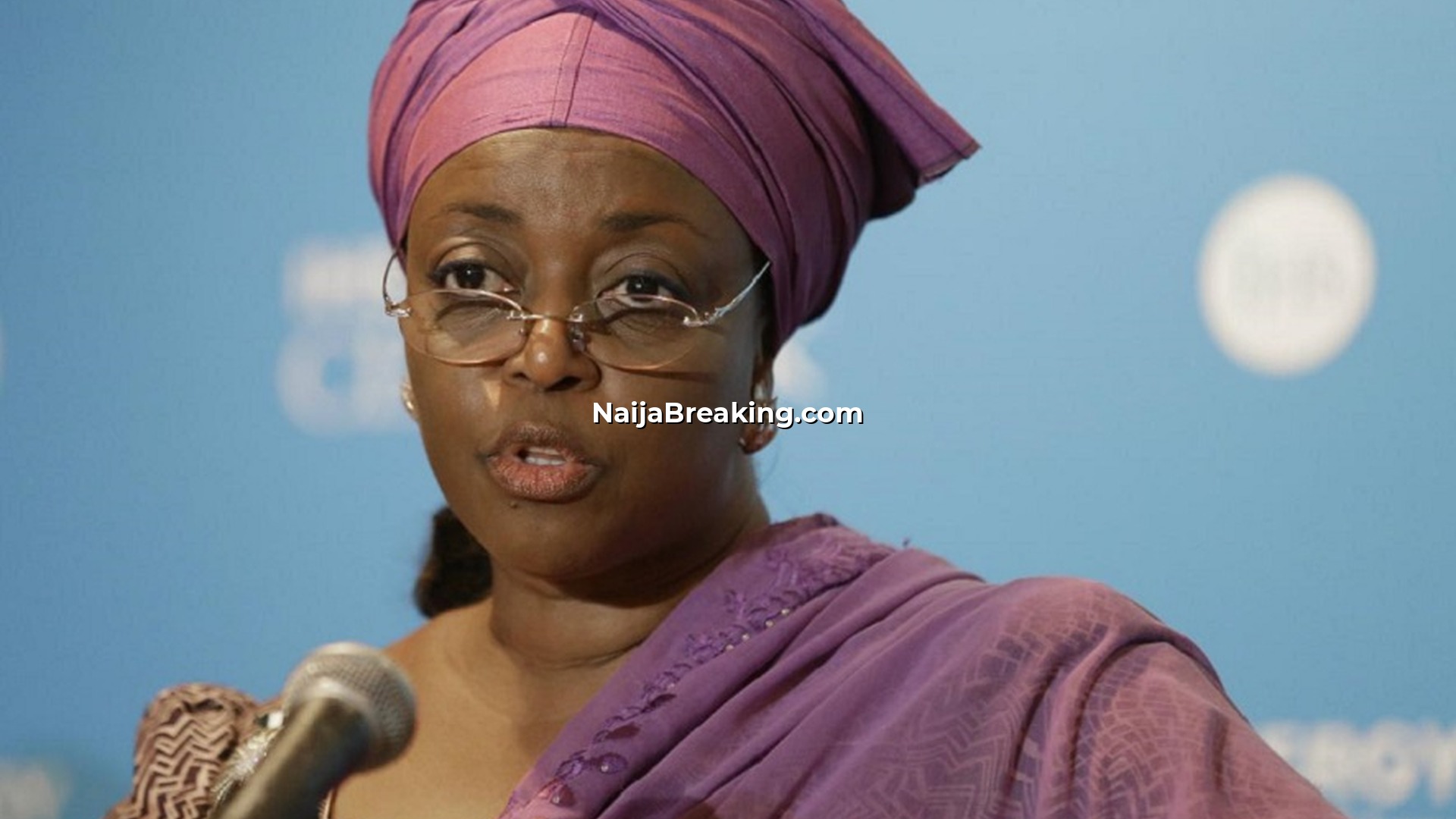
Former Petroleum Resources Minister Diezani Alison-Madueke’s acquittal by a Southwark Crown Court jury represents a significant turning point in one of Nigeria’s most high-profile international corruption cases, yet it simultaneously exposes deep fractures in how transnational justice operates and the collateral damage inflicted on individuals during protracted prosecutions. The Alison-Madueke acquittal comes after more than a decade of investigation and prosecution, during which the former minister faced five counts of accepting bribes and conspiracy to commit bribery linked to her time leading Nigeria’s petroleum sector between 2010 and 2015. In an emotional BBC interview following her Wednesday acquittal, Alison-Madueke painted a portrait of personal devastation: restricted travel, inability to work, and a reputation “destroyed” by authorities who, her legal team argued, failed to present compelling evidence of wrongdoing. For Nigerian observers, the case raises uncomfortable questions about how our former officials are treated abroad, the integrity of investigations conducted by foreign intelligence agencies, and whether the pursuit of accountability has inadvertently undermined justice itself. This acquittal demands that Nigerians reassess not just what happened in the courtroom, but what the 13-year ordeal reveals about governance, institutional accountability, and the psychological toll exacted on public servants caught between competing legal jurisdictions.
Background
To understand the significance of Alison-Madueke’s acquittal, one must trace the petroleum sector’s trajectory during her tenure as minister and the broader context of international corruption investigations targeting Nigerian officials. Diezani Alison-Madueke served as Petroleum Resources Minister under President Goodluck Jonathan from 2010 to 2015—a period marked by significant oil revenue instability, the rise of oil theft and pipeline vandalism, and allegations of widespread graft within the Nigerian National Petroleum Corporation (NNPC) and its allied agencies. During this same period, crude oil prices collapsed from over $110 per barrel in 2011 to below $40 by early 2015, creating a fiscal crisis that heightened scrutiny of how petroleum revenues were managed. Alison-Madueke became the first female president of the Organisation of the Petroleum Exporting Countries (OPEC) in 2014—a historic achievement that elevated her international profile but also made her a visible figure in global energy politics.
Her arrest in October 2015, just months after leaving office, occurred amid a broader wave of investigations into senior Nigerian officials under former President Muhammad Buhari’s administration. The UK’s National Crime Agency (NCA) launched its investigation in 2012, initially focusing on suspected money laundering and illicit financial flows connected to petroleum contracts. According to court documents and media reports, investigators alleged that Alison-Madueke received benefits including luxury goods, chauffeur-driven vehicles, and access to high-value London properties from oil businessmen holding Nigerian government contracts. The case appeared to embody the international community’s commitment to tackling corruption in Nigeria’s extractive sector—an area where the World Bank estimated annual losses exceeded $5 billion during the 2010s.
However, the timeline itself reveals significant procedural anomalies that have troubled observers. Alison-Madueke was arrested in 2015 but was not formally charged until 2023—an eight-year gap during which she remained under restrictive conditions. This extraordinary delay raises questions about investigative rigour, prosecutorial strategy, and the adequacy of evidence available to prosecutors. The National Bureau of Statistics (NBS) and various independent audits of Nigeria’s petroleum sector during this period documented systematic governance weaknesses, but none singularly implicated Alison-Madueke in the scale of misconduct alleged by UK authorities.
Key Details
The case against Alison-Madueke centred on allegations that she accepted approximately £2.3 million in bribes and benefits from businessmen with interests in Nigerian oil contracts, according to reporting by Punch Nigeria. Prosecutors alleged that she received luxury goods, high-end real estate access, and other benefits between 2012 and 2015, during her time as Petroleum Minister. The jury at Southwark Crown Court, however, returned a “not guilty” verdict on all five counts, effectively clearing her of the charges brought by the UK’s National Crime Agency following their 13-year investigation.
In her BBC interview following acquittal, Alison-Madueke provided specific details about the toll the case exacted on her life. “I’ve not been allowed to travel. I’ve not been allowed to work. They destroyed my reputation and my integrity,” she stated. She described the experience as “painful and traumatic,” acknowledging that losing her freedom had created “a very deep impact upon you psychologically.” Critically, she also alleged that crucial documentary evidence had been removed from her Abuja residence in 2015 by Nigerian intelligence forces—documents she claimed would have demonstrated her innocence by showing that certain payments made on her behalf had been reimbursed by her personal funds. This allegation introduces a second dimension to her complaint: that both Nigerian and UK authorities mishandled evidence or failed to properly investigate her side of the narrative.
The prosecution’s case rested heavily on financial transaction evidence and testimony from alleged co-conspirators, particularly oil businessmen who supposedly facilitated the alleged bribes. However, the jury’s unanimous acquittal verdict suggests that reasonable doubt existed regarding whether Alison-Madueke knowingly accepted these benefits in exchange for favourable treatment. The trial lasted several months, during which the defence team systematically challenged the prosecution’s evidence and its interpretation of her financial dealings. Her legal team argued that many expenses attributed to her were legitimate business arrangements or personal expenditures explained by her ministerial status and international business connections. The acquittal represents a rare victory for a Nigerian official in a high-profile international corruption prosecution—most Nigerian cases in foreign courts result in convictions or guilty pleas.
Impact and Analysis
The acquittal creates a complex narrative that extends far beyond a single courtroom victory. At face value, it exonerates Alison-Madueke of specific charges; at a deeper level, however, it illuminates troubling patterns in how investigations into Nigerian officials are conducted, managed, and prosecuted across borders. The 13-year investigation followed by an eight-year gap before formal charges raises uncomfortable questions about investigative competence and prosecutorial prudence. If the case was strong enough to arrest someone in 2015, why did it take until 2023 to charge her? If the evidence was circumstantial enough that a jury acquitted her, did the UK authorities adequately burden-test their allegations before pursuing such a lengthy, costly prosecution?
From a Nigerian governance perspective, the case also exposes vulnerabilities in how our country cooperates with foreign law enforcement on corruption investigations. The alleged removal of documentary evidence from Alison-Madueke’s Abuja residence by Nigerian intelligence raises questions about institutional coordination and respect for due process by Nigerian authorities themselves. If documents potentially exonerating a Nigerian citizen were indeed confiscated and subsequently made unavailable to a foreign court, this suggests that Nigeria’s own security agencies may have inadvertently obstructed justice—an irony when fighting corruption is ostensibly a national priority. The Economic and Financial Crimes Commission (EFCC), Nigeria’s primary anti-corruption body, was not directly involved in the UK prosecution but the case reflects broader institutional weaknesses in how Nigeria handles complex financial investigations involving senior officials.
Economically, the acquittal arrives amid Nigeria’s continued struggle to recover from petroleum sector mismanagement. The crude oil production that Alison-Madueke oversaw has since declined dramatically, from peaks of 2.4 million barrels per day during her tenure to below 1.5 million barrels daily in recent years. Allegations and prosecutions—whether ultimately successful or not—create reputational damage that can deter investment in the sector and undermine institutional credibility. The NNPC, which Alison-Madueke coordinated with as minister, has undergone multiple restructuring attempts since her departure, suggesting that governance challenges extended beyond any individual officer.
Expert Perspectives
Dr. Emeka Okonkwo, a Lagos-based legal analyst specialising in transnational corruption cases, offers a critical perspective on the acquittal’s broader implications: “What the Alison-Madueke case reveals is a fundamental weakness in how international investigations operate when they span a decade or more. The UK authorities invested enormous resources in this prosecution, yet a jury still found reasonable doubt on all counts. This suggests that either the evidence was insufficient from the outset, or investigative techniques and standards applied by the NCA were not aligned with evidentiary standards expected in British courts. For Nigerian officials facing similar scrutiny, this case should prompt serious questions about how we cooperate with foreign jurisdictions and whether we adequately protect the interests of our citizens abroad.”
Conversely, Chioma Adeleke, a Johannesburg-based governance researcher who has tracked corruption cases across African nations, offers a cautionary interpretation: “An acquittal does not necessarily mean no wrongdoing occurred—it means the prosecution failed to prove guilt beyond reasonable doubt. The jury’s verdict is about the strength of evidence in a particular legal system, not an absolute vindication of Alison-Madueke’s conduct during her tenure as minister. What is troubling, however, is the institutional dysfunction it suggests: missing evidence, investigative delays, and the apparent removal of documents by Nigerian authorities. These problems are systemic and affect not just this case but Nigeria’s entire approach to accountability.”
What This Means for Nigerians
For ordinary Nigerians struggling with fuel scarcity, electricity insecurity, and naira volatility—all legacies partly traceable to petroleum sector dysfunction—the Alison-Madueke acquittal carries practical but subtle significance. It does not magically restore the billions allegedly lost to corruption or reverse the decline in crude oil production; it does, however, raise questions about whether Nigerian and foreign authorities have been strategic in their pursuit of accountability or whether efforts have been scattered and counterproductive. A young Nigerian engineer seeking to invest in the energy sector, for instance, may view the protracted prosecution and subsequent acquittal with scepticism—what does it say about the stability and predictability of Nigeria’s institutional environment when a former minister can be investigated for 13 years and then exonerated? Such uncertainty may deter private investment precisely in sectors where Nigeria desperately needs capital infusion.
For families of other arrested Nigerian officials awaiting trial abroad—and several still remain in limbo—the acquittal offers limited comfort. It proves that prosecution can fail, but it does not resolve the years-long restrictions on travel, employment, and freedom that defendants endure while cases proceed. A Lagos business owner with relatives facing similar charges understands that vindication comes at an enormous personal and financial cost. The psychological toll that Alison-Madueke described—losing years of productive working life, enduring public suspicion despite innocence—is not unique to her but represents a pattern affecting several prominent Nigerians prosecuted internationally. For workers in Nigeria’s petroleum sector, the case reflects broader institutional fragility: when senior management is under investigation or facing reputational damage, it creates uncertainty that filters down to hiring decisions, investment strategies, and operational confidence.
At the household level, Nigerians experiencing fuel shortages and inflation may legitimately ask whether investigative resources and prosecutorial energy would have been better directed toward prosecuting lower-level corruption that directly affects daily service delivery. The £2.3 million in alleged bribes investigated over 13 years represents a fraction of proven losses in Nigeria’s petroleum sector during the same period, raising questions about prosecutorial priorities and whether international investigations have optimal impact on actual accountability.
Editor’s Take
At NaijaBreaking, we believe the Alison-Madueke acquittal reveals uncomfortable truths about how Nigeria engages with international accountability mechanisms. While fighting corruption is essential, the case demonstrates that protracted investigations without adequate evidence do not advance justice—they corrupt it. An innocent person enduring 13 years of investigation and eight years of formal charges faces a travesty regardless of eventual acquittal. The allegation that Nigerian intelligence removed documentary evidence compounds the injury: if true, it suggests our own security agencies sabotaged a Nigerian citizen’s defence. We must ask whether Nigeria’s approach to transnational accountability cooperation adequately protects our citizens’ rights or merely defers to foreign legal systems without scrutiny. The acquittal is not a victory in any meaningful sense; it is an indictment of institutional failures spanning both countries.
What to Watch Next
First, monitor whether Alison-Madueke pursues civil litigation against UK authorities for damages—her comments about destroyed reputation suggest this is possible, and such a case would establish precedent for Nigerian officials mistreated by foreign prosecutions. Second, watch for Nigeria’s response: will the EFCC or other bodies investigate the alleged removal of evidence from her residence, or will this claim disappear without inquiry? Third, observe whether her acquittal influences how other Nigerian officials facing similar charges in foreign jurisdictions approach their defences—the jury verdict may embolden others to contest rather than settle. Fourth, track whether the NCA provides public explanation for the 13-year investigation and eight-year charging gap, as this affects confidence in international law enforcement cooperation. Finally, monitor Nigeria’s petroleum sector recovery: does the acquittal reduce reputational stigma and encourage investment, or does broader institutional distrust persist? The key question now is whether this case becomes a catalyst for systemic reform in how Nigeria and its international partners conduct transnational corruption investigations, or whether it remains an isolated legal footnote while underlying governance failures continue unaddressed.
Conclusion
Diezani Alison-Madueke’s acquittal by a UK court closes one chapter in Nigeria’s ongoing struggle with accountability but opens difficult questions about how that accountability is pursued. The 13-year investigation and subsequent vindication do not erase the damage inflicted on her life, nor do they retroactively justify the institutional failures—missing evidence, investigative delays, restrictive conditions—that characterised the case. What the acquittal truly reveals is that Nigeria’s relationship with international accountability mechanisms remains asymmetrical and insufficiently protective of citizens’ rights. For Nigeria to build a credible anti-corruption framework, it must demand reciprocal standards from foreign partners: rigorous evidence, timely prosecution, and respect for due process. Until then, cases like Alison-Madueke’s will continue to deter talented Nigerians from public service and undermine trust in institutions meant to protect collective interest. Share your thoughts in the comments below—what do you think this means for Nigeria’s future engagement with international accountability efforts, and how should Nigeria better protect its citizens facing charges abroad?