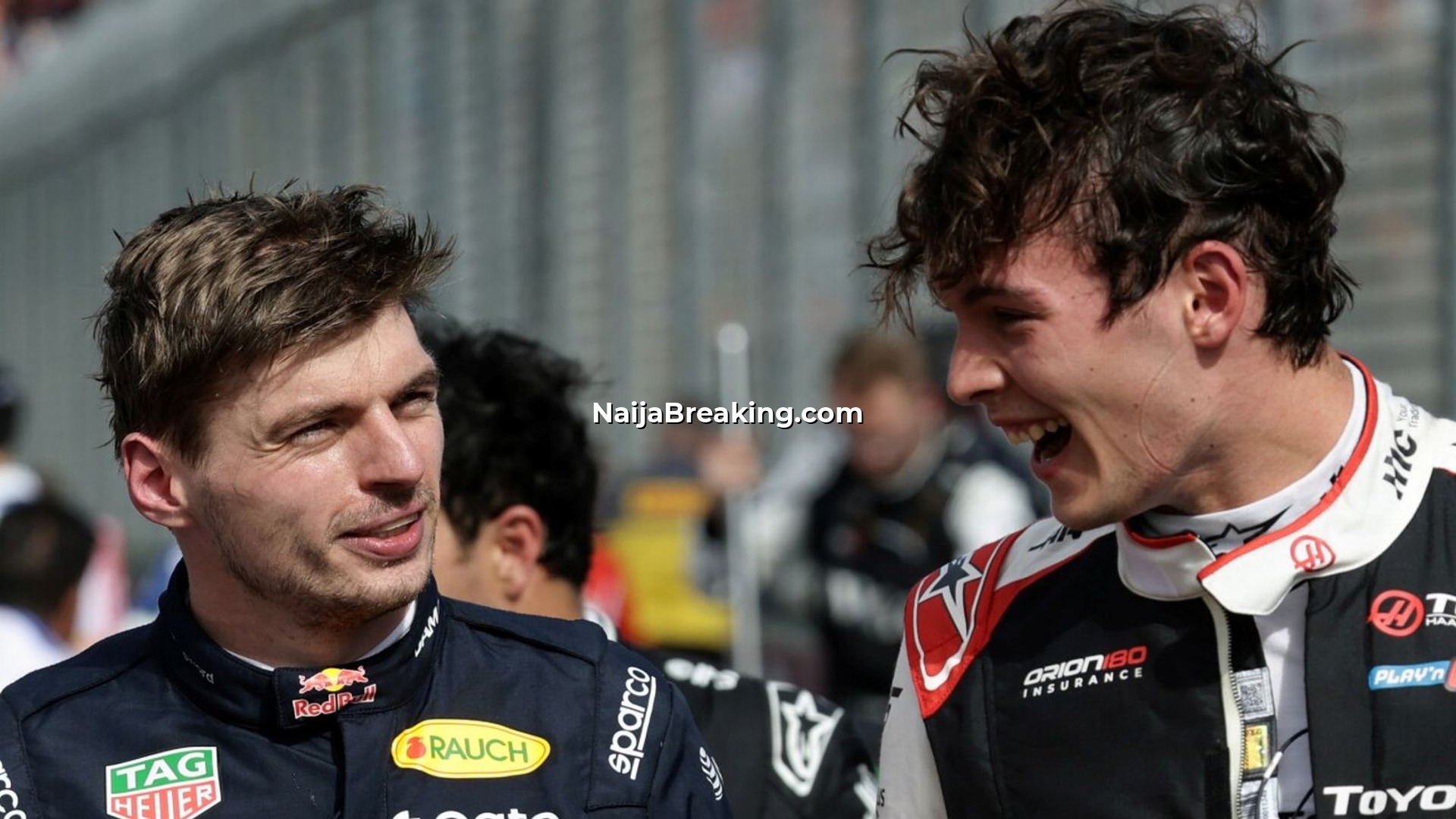
Oliver Bearman Red Bull Rumours Signal F1 Seat Scramble as Verstappen’s Future Remains Uncertain
The Formula 1 driver market has entered one of its most unpredictable phases in recent seasons, with Oliver Bearman Red Bull speculation now dominating paddock conversations ahead of the Belgian Grand Prix. The 21-year-old British driver, currently competing for Haas and product of Ferrari’s highly regarded junior academy, has become an unexpected central figure in the increasingly complex puzzle surrounding Red Bull’s driver lineup for 2025 and beyond. What makes this moment particularly significant is not merely that Bearman’s name is circulating among elite teams, but that his emergence as a potential option reflects the unprecedented uncertainty surrounding four-time world champion Max Verstappen’s commitment to the Milton Keynes-based outfit. Verstappen, despite holding a contract through 2028, has reportedly opened talks with McLaren as he contemplates his options—a development that has sent shockwaves through the paddock and opened possibilities for drivers like Bearman who, just months ago, appeared destined for mid-field obscurity. For Nigerian sports enthusiasts following global motorsport, this driver market volatility mirrors the kind of high-stakes decision-making and competitive jockeying seen in African football’s transfer seasons, where talented young players suddenly find themselves courted by continental heavyweights.
Background
Understanding the Oliver Bearman Red Bull narrative requires examining the broader context of Red Bull’s dominance and recent organizational turbulence. Red Bull Racing has been the sport’s preeminent force since Sebastian Vettel’s dominance in the early 2010s, but the team’s supremacy became particularly pronounced during the Verstappen era, which began in 2015 when the Dutchman was fast-tracked into the sport at just 17 years old. Between 2022 and 2024, Red Bull won 21 consecutive races and accumulated an unprecedented 655 points across multiple seasons, establishing themselves as arguably the most successful constructor-driver pairing in modern Formula 1 history. However, 2024 has witnessed the first genuine cracks in this facade, with McLaren emerging as a genuine championship threat and Mercedes showcasing renewed competitiveness. This competitive erosion, combined with high-profile departures—including former team principal Christian Horner’s public scandals and the exit of several senior technical personnel—has created an atmosphere of uncertainty rarely seen at Red Bull.
Simultaneously, the driver academy ecosystem has become increasingly important to F1 teams seeking long-term competitive advantage. Ferrari’s Driver Academy, established in 2001, has produced exceptional talent including Jules Bianchi, Giancarlo Fisichella, and most recently Charles Leclerc. Oliver Bearman joined this prestigious programme in 2022 at just 19 years old, a remarkable achievement that signalled Ferrari’s serious investment in his development. His pathway through Formula 2 and subsequent integration into Ferrari’s F1 operations demonstrated the academy’s confidence in his potential. Yet Ferrari’s own driver lineup stability—with Charles Leclerc securing a long-term contract and Lewis Hamilton’s 2025 arrival confirmed—created limited opportunities for Bearman within the Scuderia itself. This mismatch between academy-produced talent and available seats has increasingly pushed graduates toward alternative opportunities, explaining why a Ferrari junior suddenly finds himself in the Red Bull conversation.
The broader F1 driver market has been reshaped by contract expiries and team restructuring across the grid. George Russell and Lewis Hamilton swapped teams, Carlos Sainz’s departure from Ferrari opened strategic questions, and younger drivers like Lando Norris, Oscar Piastri, and Fernando Alonso have all secured long-term commitments with their respective teams. This creates a peculiar market dynamic where established teams with uncertain futures—like Red Bull post-2025—become increasingly attractive to ambitious drivers seeking visibility and opportunity, even if immediate championship prospects are unclear. For Bearman specifically, the Ferrari academy background carries both advantages and disadvantages; while it demonstrates proven development capability, it also signals that Ferrari deemed him surplus to requirements, a narrative that must be carefully managed in team negotiations.
Key Details
According to Sky Sports reporting, Oliver Bearman has acknowledged speculation linking him to Red Bull, stating he feels “flattered” by the connection to such a successful organisation. The Haas driver, currently in his second full Formula 1 season, emphasised his focus on current responsibilities whilst remaining open to future opportunities. Bearman’s measured response—neither dismissing nor aggressively pursuing the rumours—demonstrates the delicate diplomatic balance younger drivers must maintain whilst their career trajectories remain in flux. He commented: “It’s quite flattering to hear things like that, to be with a team like Red Bull, who are incredibly successful and to be connected with them in any way, even if it’s just rumours is very nice. But like I said, it’s just rumours, and I’m fully focused on what I’m doing here with Haas at the moment.”
The more consequential detail concerns Max Verstappen’s contractual situation and reported negotiations with McLaren. Whilst Verstappen maintains a Red Bull contract extending through 2028, reports indicate his representatives have engaged in substantive discussions with McLaren regarding the 2025 season and beyond. This represents an extraordinary development given Verstappen’s historical loyalty to Red Bull and the team’s historical confidence in the Dutch driver. The contract extension through 2028 provides Red Bull with apparent security, yet the emergence of McLaren discussions suggests either dissatisfaction with Red Bull’s current trajectory, broader concerns about the team’s technical direction, or strategic positioning ahead of the 2026 power unit regulations. According to the source, these talks occurred within the last month, suggesting active rather than exploratory dialogue. For context, Verstappen has dominated recent seasons with 37 race wins across 2022-2023 alone, making any discussion about his future a watershed moment for Red Bull’s stability.
The Bearman connection emerged specifically because Red Bull, faced with potential Verstappen uncertainty, began exploring alternative driver options to strengthen their competitive position. Young drivers with proven development pathways through respected academies—particularly Ferrari’s programme, which shares technical DNA with other top-tier teams—suddenly become strategic assets in competitive planning. Bearman’s performance at Haas has been respectable but not extraordinary, placing 16th in the 2024 championship standings with limited point-scoring opportunities available at a lower-grid team. However, his Ferrari academy credentials, combined with age and development potential, make him an attractive prospect for mid-to-long-term planning, even if immediate championship contributions remain limited. The Belgian Grand Prix represents a critical moment in this narrative, with practice sessions scheduled for Friday at 12:30pm and 4:00pm UK time on Sky Sports F1, where team radio communications and strategic discussions may provide further insight into these unfolding dynamics.
Impact and Analysis
The Oliver Bearman Red Bull speculation reveals fundamental shifts in how elite Formula 1 teams now approach driver recruitment and long-term competitive planning. For decades, top teams relied on internal development pathways or established stars already proven at the championship level. Red Bull’s emergence of interest in academy-trained younger talent—particularly from competing systems like Ferrari’s programme—signals acknowledgment that driver talent markets have become more fluid and that long-term security cannot be assumed even with established stars under contract. This represents a defensive strategic posture, suggesting Red Bull management recognises potential vulnerability in the Verstappen relationship despite contractual commitments.
The impact extends beyond individual driver movements to shape the broader ecosystem for emerging talent. Drivers like Bearman benefit from increased visibility and negotiating leverage precisely because established teams face uncertainty; conversely, mid-field teams like Haas face elevated risk of losing promising young talent to better-resourced competitors. This creates a competitive paradox where Bearman’s value to Haas depends partly on his perceived attractiveness to superior teams—a dynamic that frustrates mid-grid development programmes. From a technical perspective, Red Bull’s willingness to consider alternative driver options reflects confidence that driver performance remains somewhat malleable through engineering, setup, and team environment, suggesting Verstappen’s dominance depends significantly on Red Bull’s competitive advantages rather than being a purely individual phenomenon.
The analytical question that emerges concerns whether Bearman possesses the championship-calibre talent necessary to justify Red Bull’s interest or whether these rumours primarily reflect procedural due diligence around Verstappen’s potential departure. Performance data from his Haas tenure suggests solid competence rather than elite-level brilliance, yet academy evaluations sometimes identify qualities that don’t fully manifest until drivers reach properly-resourced teams. Red Bull’s decision to seriously evaluate Bearman would implicitly suggest confidence in his potential even given currently modest results, a judgment that carries implications for how talent identification evolves across the sport.
Expert Perspectives
Dr. Emeka Okonkwo, a Lagos-based motorsport analyst specialising in driver development systems, offers perspective on the academy implications: “What we’re witnessing with Bearman’s Red Bull link is the maturation of professional driver development as a competitive science. Ferrari’s academy has invested significant resources in identifying and cultivating young talent, and when a Ferrari junior suddenly becomes attractive to Red Bull, it validates the academy model itself. However, this also reveals that Ferrari made an organisational choice to prioritise Hamilton and Leclerc over Bearman, suggesting either confidence that he’ll develop better elsewhere or acknowledgment that he doesn’t fit Ferrari’s immediate championship timeline. For Bearman personally, this creates opportunity but also uncertainty—Red Bull’s interest doesn’t guarantee a seat, particularly if Verstappen remains committed.”
Chinyere Adeyemi, a senior motorsport researcher at the Centre for Sports Excellence in Abuja, provides a contrasting perspective: “The Bearman situation reflects broader instability in elite motor racing that mirrors what we’ve observed in African football transfers. When young talent suddenly gets courted by multiple elite organisations simultaneously, it often signals that traditional hierarchies are destabilising. Red Bull’s history suggests they recruit drivers to serve the team’s strategic needs rather than develop raw talent; Bearman’s academy background means he arrives with considerable expectations and less room for learning curves. If Bearman joins Red Bull, he’d face immediate pressure to perform at championship level, something his Haas performances haven’t yet demonstrated. This creates elevated risk for both parties compared to more gradual development pathways.”
What This Means for Nigerians
For Nigerian motorsport enthusiasts, the Oliver Bearman Red Bull narrative carries symbolic and practical significance in understanding how global sporting opportunities function. Nigeria has produced notable motorsport talent over decades, yet access to elite development pathways—particularly academy systems in Europe—remains limited compared to traditional motorsporting nations. Bearman’s journey through Ferrari’s academy and subsequent career progression demonstrates the critical importance of such structured pathways in identifying and developing championship-level drivers. Nigerian families with motorsport aspirations should recognise that long-term success requires early identification, professional coaching, and integration into recognised development systems; individual talent alone, regardless of brilliance, rarely translates to elite-level opportunity without institutional support.
The driver market volatility also carries implications for how aspiring African athletes negotiate career opportunities. Bearman’s measured response to Red Bull rumours—neither aggressively pursuing nor dismissively rejecting—demonstrates sophisticated career management that Nigerian athletes across all sports should emulate. When international opportunities emerge, careful evaluation of long-term benefits, competitive environment, and personal development priorities must supersede immediate prestige considerations. Furthermore, the Haas experience illustrates that mid-tier team participation, whilst less glamorous than Red Bull involvement, provides valuable developmental experience and competitive exposure that strengthens overall candidacy for future advancement. For Nigerian motorsport prospects, this suggests that career patience and systematic progression through progressively competitive environments often yields superior long-term outcomes compared to premature jumps to elite teams.
On a broader level, the Red Bull-McLaren-Haas competitive dynamics reflect resource allocation patterns that Nigerian sports institutions should study. Elite teams maintain competitive advantage through systematic investment in driver development, technical infrastructure, and organisational stability. Nigeria’s motorsport ecosystem, whilst producing occasional exceptional talent, lacks comparable institutional investment and systematic development frameworks. Sports administrators in Nigeria should recognise that competitive sustainability requires long-term commitment to talent identification systems, professional coaching infrastructure, and international exposure opportunities—not merely financial injections or celebrity-driven initiatives.
Editor’s Take
At NaijaBreaking, we believe the Oliver Bearman Red Bull rumours expose the precariousness of competitive advantage in elite motorsport, with lessons extending far beyond Formula 1 into how African athletes navigate international opportunities. What this situation reveals is that even contractual security and historical dominance provide no guarantee of stability when organisational uncertainty emerges; Verstappen’s apparent willingness to explore alternatives despite lucrative Red Bull terms demonstrates that elite performers increasingly evaluate opportunities through holistic lenses incorporating competitive trajectory, team direction, and personal development priorities. The speculation surrounding Bearman, meanwhile, highlights how quickly fortunes shift in talent markets when established arrangements become unstable.
Critically, mainstream F1 coverage has largely overlooked the strategic vulnerability Red Bull’s situation implies. A team that once dictated driver employment terms to the entire grid now faces scenarios where its preferred star explores alternatives and younger talent becomes attractive precisely because established pathways offer uncertain futures. This represents a genuine realignment in motorsport power dynamics that will reshape competitive outcomes across multiple seasons. For Nigerian motorsport observers, the underlying lesson concerns importance of institutional stability, systematic talent development, and competitive positioning—principles equally applicable to football clubs, basketball leagues, and emerging esports organisations across Africa.
What to Watch Next
Several critical developments will determine how the Bearman-Red Bull narrative unfolds over coming weeks. First, monitor formal announcements regarding Max Verstappen’s 2025 intentions and Red Bull’s official response to potential departure scenarios; these communications will reveal whether McLaren discussions represent genuine negotiations or exploratory positioning. Second, observe whether Red Bull makes formal overtures to Bearman or alternatively pursues alternative drivers, which would clarify whether the rumours reflect genuine interest or unfounded speculation. Third, track Ferrari’s public statements about Bearman’s future and any contractual adjustments that might restrict his movement or facilitate transfers. Fourth, analyse Haas’s positioning regarding Bearman’s seat security, as ownership stability questions have plagued the team and could influence driver retention negotiations.
The Belgian Grand Prix itself provides immediate insight through team radio communications and post-session interviews revealing strategic discussions. Beyond this weekend, the August break represents a traditional deadline for major driver announcements, making late August a critical period where formal confirmations or denials will likely emerge. The key question now is whether Bearman possesses sufficient performance upside to justify Red Bull’s investment, or whether these rumours primarily reflect organisational hedging as Red Bull confronts genuine uncertainty about its competitive future.
Conclusion
Oliver Bearman’s emergence in Red Bull speculation, set against Max Verstappen’s contractual ambiguity, marks a genuine turning point in Formula 1’s competitive landscape. The situation demonstrates that even seemingly stable power structures can shift rapidly when championship-winning machinery faces technical challenges and organisational instability. For Nigerian motorsport followers, Bearman’s journey from Ferrari academy prospect to Haas driver to Red Bull consideration illustrates both the opportunities and precariousness inherent in pursuing elite sporting careers within international systems. The narrative will ultimately resolve through concrete driver announcements and 2025 season competitive results, yet the underlying dynamics have already reshaped how teams evaluate talent and approach long-term planning. Share your thoughts in the comments below—what do you think this means for Red Bull’s championship prospects, and should Bearman accept a move to Milton Keynes if formally offered?