Imo School for the Deaf Neglect: How State Abandonment Became a Political Crime Against Disabled Students
The Imo School for the Deaf neglect crisis represents one of Nigeria’s most damning indictments of state failure—a place where nearly 150 children with hearing impairments battle not just their disability, but systematic abandonment, physical decay, and alleged sexual violence with virtually no protection from the authorities charged with their welfare. This is not simply an educational crisis; it is a governance failure that exposes how Nigeria’s most vulnerable citizens—those already marginalised by disability—are rendered completely invisible when it comes to budget allocation, security oversight, and basic human dignity. The Imo School for the Deaf neglect situation demonstrates that when politicians fail their constitutional duty to protect children, the consequences are devastating and far-reaching. According to recent investigations by Punch Nigeria, the institution has descended into conditions that would shame any functioning state apparatus. Yet this story matters far beyond Imo State—it represents a systemic failure in how Nigeria’s political leadership prioritises (or refuses to prioritise) inclusive education and child protection across the country.
The Imo School for the Deaf neglect crisis did not emerge overnight. It is the culmination of years of systematic underfunding, administrative incompetence, and political indifference that have transformed what was once a beacon of hope for deaf children into a warehouse of human suffering. Understanding this crisis requires examining not just the immediate conditions at the school, but the broader context of how Nigeria treats its disabled population and the structural inequities embedded in the country’s education system. For parents who have entrusted their deaf children to this institution, the Imo School for the Deaf neglect situation represents a betrayal of the most fundamental kind—a failure by the state to honour its promise to provide safe, dignified education for all children, regardless of ability.
Background: The Foundation of Educational Neglect
Nigeria’s commitment to inclusive education and disability rights exists primarily on paper. The National Policy on Education (2013) explicitly mandates that special education facilities receive adequate funding and oversight, yet the reality for students with hearing and visual impairments across the country tells a starkly different story. The Imo School for the Deaf was established decades ago with noble intentions—to provide a pathway to secondary education for children with hearing impairments who would otherwise be locked out of the mainstream education system. At its peak, the facility represented hope: a place where deaf students could learn Nigerian Sign Language, academic subjects, and vocational skills that might lead to employment or further education.
However, the trajectory of public education funding in Nigeria over the past fifteen years has systematically starved special education facilities. The Universal Basic Education Commission (UBEC) receives consistent federal allocations, but state governments have discretionary control over how much additional funding flows to special education schools. In Imo State, as in many states across the federation, this discretion has translated into gross underfunding. Political cycles have meant that even when administrations change, the institutional memory and commitment required to sustain these vulnerable facilities simply does not exist. A state government focused on high-visibility projects—road construction, government buildings, urban development—finds it easier to ignore a school for deaf children, particularly when there are no vocal constituencies demanding accountability and no mainstream media pressure forcing action.
The tragedy of the Imo School for the Deaf neglect situation is compounded by the fact that deaf students and their parents are among the most marginalised groups in Nigerian society. Unlike other advocacy groups that can mobilise through traditional media and political networks, deaf communities face unique communication barriers that make collective action and public consciousness-raising more difficult. Parents often lack the networks and resources to demand accountability from state officials. Teachers at the school, despite their dedication, are frequently unpaid for months and lack the professional support systems necessary to provide quality education. In this environment of systemic neglect, the Imo School for the Deaf deteriorated from an under-resourced institution into a crisis zone.
Understanding the Scope of the Crisis: Physical Conditions and Infrastructure Decay
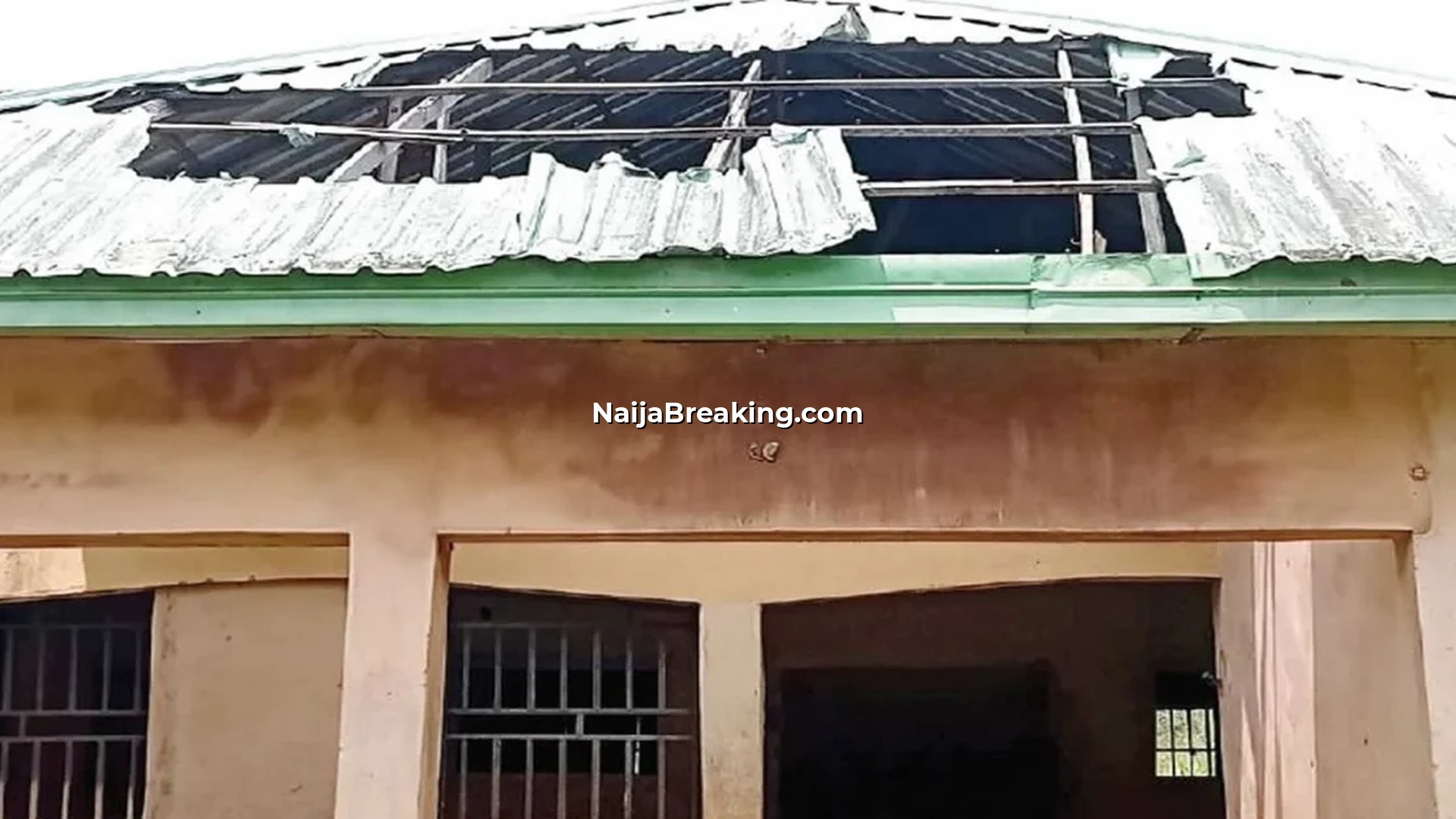
When investigative journalists visited the Imo School for the Deaf to document the neglect crisis, they encountered conditions that resembled an abandoned facility rather than an active educational institution. The buildings themselves show signs of severe disrepair—roofs leak during the rainy season, walls are cracked and unpainted, and basic sanitation facilities are non-functional or inadequate. For students with hearing impairments who already face significant challenges accessing quality education, these physical conditions create an additional barrier to learning. The Imo School for the Deaf neglect extends to educational materials, with classrooms lacking textbooks, writing materials, and the specialised resources necessary for teaching deaf students, such as proper lighting for sign language instruction and visual learning aids.
The infrastructure problems at the Imo School for the Deaf neglect crisis go beyond mere discomfort—they directly impact students’ educational outcomes and health. During rainy seasons, students have reported water seeping into dormitories, damaging the few belongings they possess and creating unsanitary conditions that promote disease transmission. The school’s water supply is erratic, meaning students often lack access to clean drinking water and proper washing facilities. Electricity supply is inconsistent, making it impossible to use computers or other electronic learning resources that might otherwise compensate for the shortage of traditional textbooks. In a modern educational context where technology increasingly supports learning, the Imo School for the Deaf neglect of basic infrastructure effectively locks these students out of contemporary educational opportunities.
The feeding situation at the school exemplifies the depth of institutional neglect. Students report that meals are sparse and nutritionally inadequate, with many days passing without balanced nutrition. Parents have had to supplement with provisions sent from home, creating an inequitable situation where wealthier families can ensure their children receive adequate nutrition while poorer families cannot. The Imo School for the Deaf neglect has become so severe that students frequently go hungry, affecting their concentration in classes, their physical health, and their emotional wellbeing. Staff members have reported that they sometimes use their personal resources to feed students, an unsustainable and heartbreaking situation that should never exist in a state-funded institution.
The Sexual Violence Crisis: When Neglect Becomes Criminal Abuse
Beyond the visible infrastructure decay, the Imo School for the Deaf neglect crisis includes allegations of sexual violence and abuse that represent perhaps the most serious consequence of institutional failure. Students have reported incidents of sexual harassment and assault, yet the school lacks adequate security measures, complaint mechanisms, or counselling services to protect vulnerable youth or address trauma when abuse occurs. The Imo School for the Deaf neglect of security systems means that predators—whether within the school community or from outside—can access students with relative ease. The absence of CCTV cameras, inadequate lighting in dormitories and common areas, and insufficient staff supervision create an environment where abuse can occur with near-complete impunity.
The particular vulnerability of deaf students to sexual violence must be understood within the context of broader patterns of abuse against people with disabilities. Disabled children globally face elevated risks of sexual abuse because perpetrators recognize that these children may have difficulty communicating what has happened to them. In Nigeria, where disability stigma is profound and disability rights advocacy is weak, deaf students are especially vulnerable. The Imo School for the Deaf neglect means that when students do attempt to report abuse—whether through sign language to trusted teachers or through written statements—there is often no institutional mechanism to investigate complaints or protect complainants from retaliation. This creates a climate of silence where abuse continues unchecked.
The psychological impact of operating in an environment where the Imo School for the Deaf neglect has created conditions enabling sexual violence cannot be overstated. Students report anxiety, depression, and post-traumatic stress symptoms. Yet the school has no school psychologist, no counsellor, and no mental health support services. Teachers, already struggling with their own professional challenges, are expected to provide emotional support without training, resources, or institutional backing. This compounds the trauma for students and creates moral injury for dedicated teachers who want to help but lack the means to do so.
The Role of Political Leadership: Neglect as Policy Choice
The Imo School for the Deaf neglect crisis cannot be separated from the political choices made by successive administrations in Imo State. While individual government officials might claim ignorance of conditions at the school, this claim rings hollow given that multiple reports and allegations have been brought to the attention of state authorities. The reality is that politicians have chosen to prioritise other spending commitments over the welfare of deaf students. This choice reflects broader patterns of how Nigeria’s political class treats disability issues—as peripheral concerns unworthy of serious budget allocation or policy attention.
Imo State governors over the past decade have had opportunities to address the Imo School for the Deaf neglect through executive action, budget reallocation, or public advocacy. Inspectorates are supposed to conduct regular quality assurance visits to schools and file reports about conditions. Yet these oversight mechanisms appear to have failed entirely or, worse, may have functioned but been ignored by political leadership. The Ministry of Education at the state level bears direct responsibility for the welfare of students and staff at the school, yet there is little evidence of serious engagement or intervention. The Imo School for the Deaf neglect represents not an inevitable consequence of poverty or resource scarcity, but a deliberate choice to abandon a vulnerable population.
This political failure must be understood as a violation of Nigeria’s constitutional obligations. The Nigerian Constitution guarantees every child the right to free, compulsory education. It also contains provisions protecting citizens from discrimination on the basis of disability. The Imo School for the Deaf neglect represents a clear breach of these constitutional commitments. Furthermore, Nigeria is signatory to international conventions including the Convention on the Rights of the Child, the Convention on the Rights of Persons with Disabilities, and the African Charter on the Rights and Welfare of the Child, all of which impose obligations on the state to protect children and persons with disabilities from abuse and neglect.
Teacher Welfare and Professional Collapse
The Imo School for the Deaf neglect crisis extends to the teachers and support staff who work at the institution. Many teachers report going months without receiving salaries, creating impossible situations where educators must choose between financial survival and remaining at their posts. The Imo School for the Deaf neglect means that teachers lack access to professional development, training updates, or support for the specialised skills required to teach deaf students effectively. Teachers trained in Nigerian Sign Language and deaf pedagogy are already scarce in Nigeria; retaining them requires offering competitive compensation and professional respect. Instead, the state’s neglect has driven experienced teachers away, replaced by less-qualified staff attempting to teach deaf students without adequate preparation.
The emotional toll on teachers working within the Imo School for the Deaf neglect environment cannot be ignored. Teachers witness daily the suffering of their students—the hunger, the poor living conditions, the vulnerability to abuse—and feel powerless to address these problems within their professional capacity. This creates a crisis of professional morale and potentially drives out the most conscientious educators who cannot bear the moral weight of working in such an environment. The Imo School for the Deaf neglect thus represents not just a failure toward students, but also toward the educators committed to serving those students.
Parental Perspectives and Community Impact
Parents who have enrolled their deaf children at the Imo School for the Deaf face an agonizing situation. Many made the decision to send their children to the school as a means of accessing secondary education, believing that state education would provide both academic and social benefits. Learning of the conditions prevailing at the school—the Imo School for the Deaf neglect that exposes their children to abuse, hunger, and inadequate education—represents a profound betrayal. Yet many parents lack the resources or alternatives to remove their children from the school. Mainstream secondary schools in Imo State are largely unprepared to accommodate deaf students, lacking sign language interpreters or visual accommodation adjustments. The Imo School for the Deaf neglect thus traps families in an impossible situation: keep children in an unsafe environment or attempt to provide education through alternative arrangements that may be unavailable or financially prohibitive.
Families in more prosperous circumstances have found ways to compensate for the Imo School for the Deaf neglect by hiring private tutors, sending children to private schools, or arranging education in other states. This creates a two-tier system where wealthy deaf children receive better education while poor deaf children suffer the consequences of state failure. The Imo School for the Deaf neglect thus becomes not just a crisis of institutional management, but a crisis of educational equity and social justice.
Systemic Barriers to Accountability and Reform
Why has the Imo School for the Deaf neglect continued unchecked despite years of reports and allegations? Several systemic factors protect institutional neglect in Nigeria’s public sector. First, there is the weakness of internal accountability mechanisms. State education inspectorates may lack the resources, authority, or political will to enforce standards on government institutions. Second, there is a shortage of external accountability. Most mainstream Nigerian media focuses on stories with broader political salience or that directly impact more numerous populations. A crisis affecting 150 deaf students is easy for media outlets to overlook, particularly when covering it requires specialised understanding of disability issues and education policy.
Third, there is the weakness of disability rights advocacy in Nigeria. While disability rights organisations exist, they typically focus on broader policy advocacy rather than investigating specific institutional crises. The Imo School for the Deaf neglect has not generated the kind of public outcry that might force political action because the victims are a small, marginalised population whose voice is not easily heard in public discourse. Fourth, there are structural incentives within Nigeria’s political system that discourage investment in special education. Education budgets are often competed for by multiple stakeholders; politicians gain more credit for opening a new mainstream secondary school than for upgrading facilities at a special education school.
The Path Forward: Accountability and Reform
Addressing the Imo School for the Deaf neglect requires action at multiple levels. First, the Imo State government must conduct a comprehensive assessment of conditions at the school and develop an immediate action plan to address crisis needs: feeding students adequately, repairing critical infrastructure, and implementing security measures to protect against abuse. Second, there must be an investigation into allegations of sexual violence, with appropriate prosecutions and victim support services. Third, teacher compensation must be prioritised to prevent further loss of experienced educators.
Beyond immediate crisis response, systematic reform is necessary. The Imo School for the Deaf must receive sustained, adequate budget allocation that reflects the actual cost of providing quality education to deaf students. This requires not just good intentions but structural budget commitments that persist across political administrations. The school needs qualified leadership, professional staff development, and accountability mechanisms to ensure that improvements are maintained. Nigeria’s special education system as a whole requires reinvention, with increased federal support, state government prioritisation, and disability community participation in decision-making.
The Imo School for the Deaf neglect crisis must become a catalyst for broader conversations about how Nigeria treats its most vulnerable citizens and what it means to claim commitment to inclusive education while allowing institutions serving disabled children to collapse into chaos and abuse.