
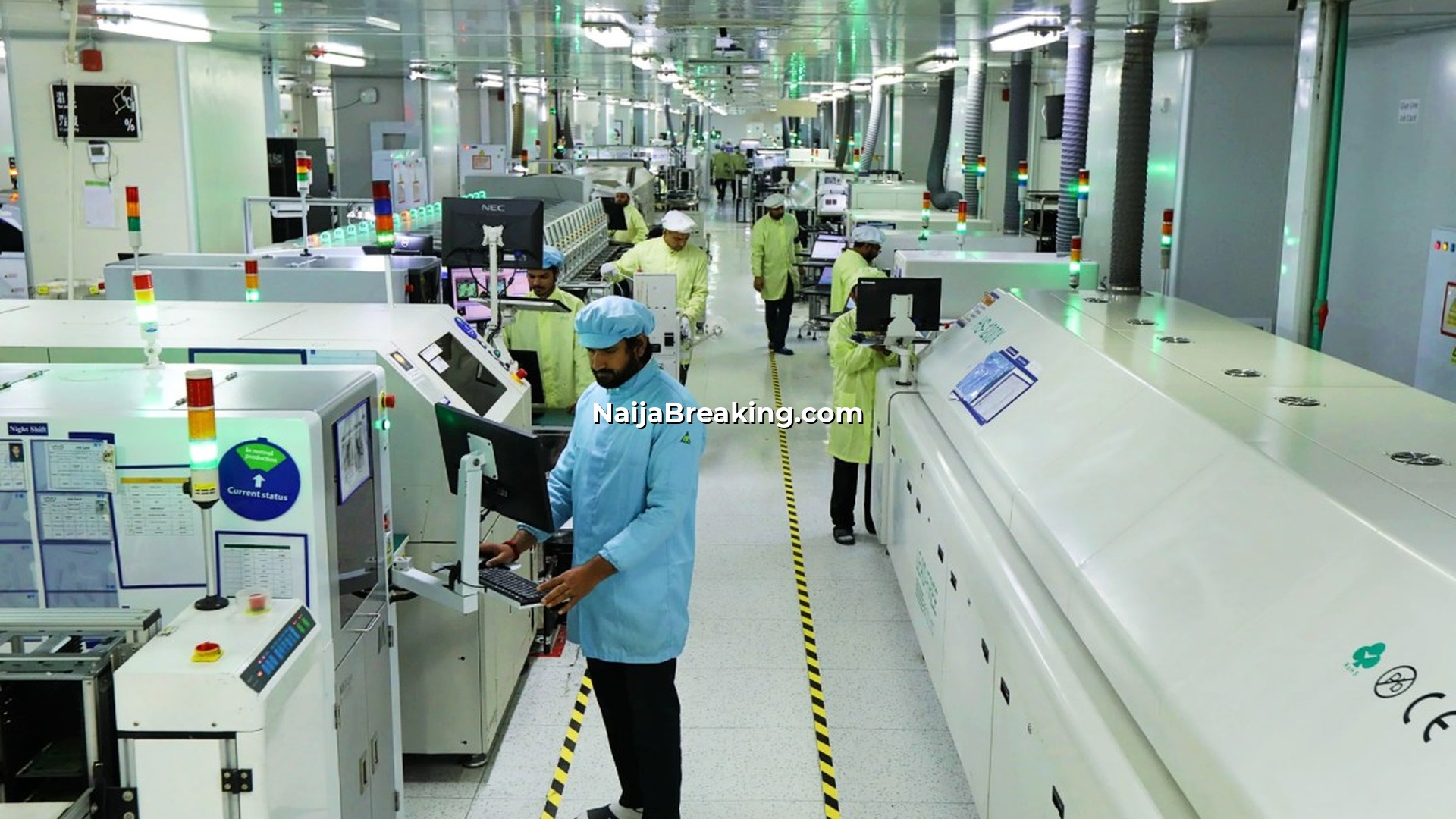
Smartphone Manufacturing India: How Vivo’s JV Signals Opportunities and Lessons for Nigeria’s Tech Future
India’s approval of a smartphone manufacturing joint venture between Chinese firm Vivo and local manufacturer Dixon Technologies marks a critical inflection point in global electronics production—and offers uncomfortable lessons for Nigeria’s own ambitions in the sector. The development of smartphone manufacturing India has become the focal point of global tech conversations, particularly as emerging markets seek to establish their own manufacturing capabilities. The deal, announced this week, represents not just another manufacturing partnership, but a comprehensive template for how developing nations can harness foreign capital while maintaining domestic control over high-value production. As Nigeria struggles to build a credible electronics manufacturing base despite possessing one of Africa’s largest consumer markets, India’s success story in smartphone manufacturing India reveals both the opportunities Nigeria is missing and the strategic policy choices that separate thriving tech ecosystems from stagnant ones. The smartphone manufacturing sector has become a proxy for technological sovereignty in the 21st century, and India’s methodical approach—combining foreign investment with strict regulatory guardrails and local partnership requirements—offers a blueprint that Nigeria’s government and private sector desperately need to study and adapt. Understanding this development in smartphone manufacturing India isn’t merely academic; it directly impacts Nigeria’s economic diversification prospects, job creation potential, and the purchasing power of 230 million citizens who currently depend entirely on imported smartphones.
The Strategic Importance of Smartphone Manufacturing India
India’s emergence as a global powerhouse in smartphone manufacturing India represents one of the most significant economic transformations of the past decade, driven by a combination of deliberate government policy, multinational investment, and competitive labour costs. Since 2014, when the Indian government launched the “Make in India” initiative under Prime Minister Narendra Modi, the country has systematically positioned itself as an alternative to China’s manufacturing dominance. The government introduced production-linked incentive (PLI) schemes in 2020 specifically targeting electronics manufacturing, offering subsidies and tax benefits to companies that met local value-addition thresholds. This wasn’t accidental policy-making; it was a strategic response to geopolitical tensions with China and recognition that over-reliance on a single supplier nation posed systemic risks to global supply chains. The success of smartphone manufacturing India has become a case study in how government intervention, properly designed, can catalyze industrial transformation without creating inefficient industries.
Apple, facing mounting pressure to diversify its supply chains beyond China and seeking to tap India’s massive consumer market of over 1.4 billion people, became the flagship investor in smartphone manufacturing India. The technology giant started with contract manufacturing partnerships through established players like Foxconn and Wistron, and gradually expanded to direct assembly operations through new partnerships. By establishing manufacturing footprints in India, Apple reduced its exposure to geopolitical risks while simultaneously building relationships with local suppliers and manufacturers. This strategic diversification wasn’t driven purely by cost considerations; it reflected Apple’s recognition that smartphone manufacturing India represented both a defensive strategy against supply chain concentration and an offensive strategy to capture market share in one of the world’s fastest-growing smartphone markets.
By 2023, India had captured approximately 12% of global smartphone production, a remarkable achievement for a country that produced virtually no smartphones a decade earlier. This transformation didn’t happen overnight; it required sustained government support, regulatory clarity, and the willingness to make long-term bets. The Indian government invested heavily in infrastructure development, particularly in manufacturing clusters like those in Karnataka, Tamil Nadu, and Maharashtra. These regions received special attention, with improved logistics, dedicated power supply, and tax incentives to attract manufacturers. The success of smartphone manufacturing India has created employment for hundreds of thousands of workers, generated significant tax revenue, and positioned India as a critical player in global electronics supply chains. Companies like Samsung, Realme, OnePlus, and numerous other manufacturers have established or expanded operations in India, recognizing the economic viability and strategic importance of smartphone manufacturing India.
The Vivo-Dixon Joint Venture: A Turning Point
The Vivo-Dixon Technologies joint venture represents a sophisticated evolution in smartphone manufacturing India strategy. Dixon Technologies, a Mumbai-headquartered electronics manufacturer with decades of experience, has long served as a contract manufacturer for various brands. However, partnering directly with Vivo—one of China’s leading smartphone manufacturers—signals a shift toward deeper integration and knowledge transfer. This joint venture model allows Dixon to leverage Vivo’s technological expertise, design capabilities, and brand presence while Vivo gains access to Dixon’s established manufacturing infrastructure and understanding of Indian regulatory requirements. The partnership exemplifies how smartphone manufacturing India has matured from simple assembly operations to more complex manufacturing arrangements involving genuine value creation.
What makes this development particularly significant is the regulatory approval process itself. The Indian government’s vetting of the joint venture demonstrates how seriously it takes the development of smartphone manufacturing India. Regulators evaluate proposed manufacturing partnerships not just on financial merits, but on their contribution to domestic value addition, employment generation, and technology transfer. This rigorous approach has prevented the emergence of purely extractive manufacturing arrangements where multinational companies would simply assemble imported components with minimal local benefit. Instead, the Indian model of smartphone manufacturing India increasingly emphasizes the development of local supply chains, component manufacturing, and technical expertise.
The Vivo-Dixon partnership will likely produce smartphones primarily for the Indian market, though some exports are possible. This domestic focus reflects the reality that smartphone manufacturing India has largely oriented itself toward serving India’s 1.4 billion consumers. While India is certainly capable of competing globally in smartphone manufacturing, the enormous domestic market provides sufficient scale and growth opportunities to justify substantial manufacturing investments. The partnership will create thousands of direct manufacturing jobs while also generating employment in logistics, quality control, packaging, and distribution. Additionally, the presence of smartphone manufacturing India facilities creates demand for component suppliers, encouraging the development of upstream industries in semiconductors, display technology, and other critical inputs.
Nigeria’s Electronics Manufacturing Deficit
Nigeria, by contrast, has pursued a fragmented and largely unsuccessful approach to electronics manufacturing despite possessing advantages that rival or exceed India’s when the latter began its transformation. With Africa’s largest economy, a consumer market exceeding 230 million people, and abundant resources, Nigeria seemed positioned to become a regional electronics manufacturing hub. However, the country has failed to develop meaningful smartphone manufacturing capacity, remaining almost entirely dependent on imports for consumer electronics. This failure represents both an economic opportunity cost and a strategic vulnerability.
The reasons for Nigeria’s failure in electronics manufacturing are well-documented but persistently unaddressed. First, the country lacks consistent government policy prioritizing electronics manufacturing as a strategic sector. While India’s Make in India initiative provided clear direction and financial incentives, Nigeria has no equivalent comprehensive strategy. Second, infrastructure deficiencies—particularly unreliable electricity supply, poor transportation networks, and inadequate telecommunications—make manufacturing in Nigeria significantly more expensive than alternative locations. A manufacturer considering a Nigerian facility must budget for backup power generation, which adds 20-30% to operational costs compared to countries with reliable grid electricity. Third, Nigeria’s regulatory environment, while improving, remains less predictable and transparent than India’s, creating uncertainty for potential investors planning multi-year, capital-intensive manufacturing operations.
Fourth, and perhaps most critically, Nigeria has not invested in the foundational industries that support electronics manufacturing. Smartphone assembly requires reliable suppliers of components ranging from circuit boards to display screens to mechanical assemblies. India developed entire supply chains supporting smartphone manufacturing India through deliberate industrial policy. Fifth, Nigeria faces a skills challenge; the country lacks sufficient workers trained in precision manufacturing, quality control, and electronics assembly. While Nigeria has a young, growing population, translating demographic advantage into manufacturing advantage requires substantial investment in vocational training and technical education. Sixth, the presence of duty-free imports and lack of protective tariffs means that locally-manufactured products struggle to compete with cheap imported alternatives, undermining incentives for local production.
Learning from Smartphone Manufacturing India
If Nigeria is serious about developing a competitive electronics manufacturing sector, smartphone manufacturing India offers crucial lessons. First, government must commit to a long-term, clearly articulated strategy with sustained financial support. India’s PLI schemes didn’t deliver immediate results; they required three to five years of consistent implementation before manufacturers began substantial investments. Nigeria’s government must be willing to commit resources for at least a decade, recognizing that industrial transformation is inherently a multi-year process.
Second, Nigeria must address infrastructure fundamentals. No manufacturing sector can thrive without reliable electricity, functional transportation networks, and efficient telecommunications. Nigeria’s manufacturing renaissance must be built on a foundation of infrastructure investment. The government should designate specific zones for electronics manufacturing and ensure these zones have dedicated, reliable power supply; modern port facilities; and high-speed internet connectivity. The cost of these investments would be substantial, but the economic returns from a thriving electronics manufacturing sector would justify the expense many times over.
Third, Nigeria should actively court joint venture partnerships with established manufacturers, similar to how India attracted Apple, Samsung, and other global players. The government could offer incentive packages to multinational electronics manufacturers willing to establish operations in Nigeria, similar to India’s PLI schemes. Such partnerships would bring technological expertise, brand recognition, and market access that purely domestic efforts would struggle to develop independently. The Vivo-Dixon model demonstrates how joint ventures can combine multinational sophistication with local understanding.
Fourth, Nigeria must invest in developing supply chains supporting electronics manufacturing. This means encouraging component manufacturers, creating specialized industrial zones, and developing technical schools specifically focused on electronics manufacturing. Countries like India and Vietnam didn’t simply host final assembly operations; they developed complete ecosystems of suppliers and supporting industries that made those countries attractive locations for manufacturing. Nigeria must pursue the same comprehensive approach.
Fifth, Nigeria needs protective trade policy that allows nascent domestic manufacturers to gain market share without being undercut by established foreign competitors. This doesn’t mean permanent protectionism; rather, it means temporary tariffs or duty structures that protect infant industries while they develop competitive capabilities. As domestic manufacturers mature and become globally competitive, these protections can be gradually removed. This is precisely the approach that South Korea, Taiwan, and other successful East Asian manufacturers followed during their industrial development phases.
The Broader Implications
The success of smartphone manufacturing India has implications far beyond India itself. It demonstrates that manufacturing can still be a viable economic strategy for developing nations despite globalization and automation pressures. Smartphone manufacturing India has created quality employment, generated government revenue, and established India as a critical node in global electronics supply chains. This success proves that countries with clear strategies, supportive policies, and basic infrastructure can compete successfully in manufacturing despite higher labor costs than the lowest-cost alternatives. For Nigeria and other African nations, this lesson is profound: manufacturing isn’t obsolete, but it requires intelligent policy and sustained commitment to execute successfully.
The geopolitical diversification occurring through smartphone manufacturing India also reflects broader trends in global supply chain reorganization. Companies increasingly seek to reduce concentration risk by developing suppliers and manufacturing capacity in multiple regions and countries. This creates opportunities for additional countries to develop manufacturing sectors if they can position themselves effectively. Nigeria, with its location on Africa’s Atlantic coast, could theoretically serve not just its own 230 million consumers, but also other West African nations, potentially addressing the needs of over 400 million people. A successful electronics manufacturing sector in Nigeria could transform the entire West African region’s relationship with technology.
Furthermore, the success of smartphone manufacturing India demonstrates the importance of political will and long-term vision in industrial policy. India’s manufacturing success wasn’t the result of market forces alone; it was the result of deliberate government policy maintained across multiple election cycles and political administrations. In India, there was broad political consensus that manufacturing competitiveness was strategically important, and this consensus survived political transitions that could have disrupted the strategy. Nigeria needs similar political consensus around electronics manufacturing, with commitment that transcends individual political administrations or leaders.
Conclusion
The approval of the Vivo-Dixon joint venture in smartphone manufacturing India represents another milestone in India’s methodical transformation into a global manufacturing powerhouse. More importantly for Nigeria, it serves as a clear demonstration of how strategic policy, government commitment, and partnership approaches can build competitive manufacturing sectors even in developing nations. Nigeria possesses resources, market size, and geographic advantages that could support a world-class electronics manufacturing industry. What it currently lacks is not potential, but rather clear strategy, sustained government commitment, and coherent industrial policy focused on manufacturing competitiveness. If Nigeria’s government can learn from India’s success in developing smartphone manufacturing and apply those lessons contextually to Nigeria’s circumstances, the country could begin transforming from a consumer of electronics to a producer. This transformation would create hundreds of thousands of jobs, generate substantial tax revenue, and reduce Nigeria’s vulnerability to supply chain disruptions affecting its 230 million consumers. The time for such transformation is not unlimited; other African nations are beginning to pursue similar strategies, and the window for establishing competitive advantage in electronics manufacturing will eventually close. Nigeria must act now to capture the opportunity that smartphone manufacturing India demonstrates is genuinely achievable.