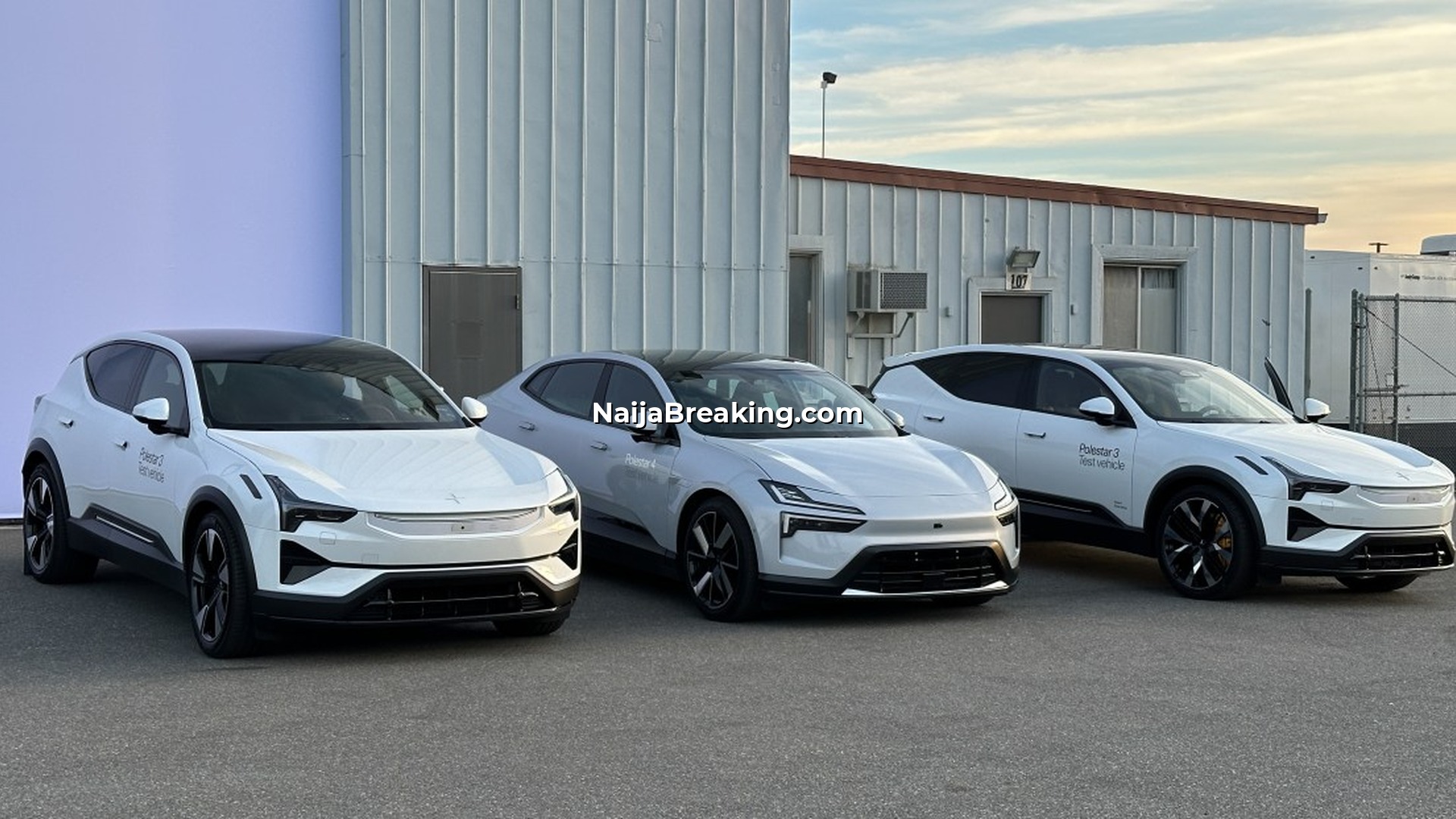
Polestar’s US Exit: EV Market Collapse and Lessons for Nigeria’s Auto Future
The electric vehicle (EV) market collapse that forced Polestar to exit the United States last month represents a watershed moment for the global automotive industry—and a cautionary tale that Nigeria’s emerging tech and auto sectors must urgently heed. When Swedish EV manufacturer Polestar, majority-owned by China’s Geely, announced it would stop selling vehicles in America following US federal government restrictions on Chinese-connected vehicle software, thousands of owners suddenly found themselves with depreciating assets, uncertain warranty support, and no clear path to service their vehicles. The decision, coming after years of aggressive EV expansion, exposes the fragility of electric vehicle markets when they depend on geopolitical stability, regulatory approval, and consumer confidence. For Nigeria—a nation with ambitious plans to transition toward sustainable transport and attract automotive manufacturing investment—the Polestar case study reveals critical vulnerabilities that policymakers at the Federal Ministry of Trade, Investment, and Industry must carefully examine before opening the floodgates to foreign EV manufacturers.
Background
To understand the Polestar collapse, we must first grasp the broader context of global EV market volatility and regulatory nationalism. Over the past three years, the electric vehicle sector has experienced unprecedented growth, fueled by government subsidies in the US, Europe, and China, combined with environmental mandates and consumer enthusiasm for zero-emission vehicles. However, this growth masked fundamental structural weaknesses: oversupply, razor-thin profit margins, and intense geopolitical tension between the United States and China over technology control and data sovereignty.
In 2023-2024, the US federal government began tightening restrictions on vehicles with Chinese-origin software and connected systems, citing national security concerns. This move reflected broader American anxiety about Chinese technological dominance and data collection capabilities. Polestar, despite being headquartered in Sweden, fell under scrutiny because its majority shareholder is Geely, a Chinese automotive conglomerate with links to Volvo (which Geely owns) and Chinese supply chains. The Biden administration’s restrictions were part of a larger strategy to “reshoe” American manufacturing and limit Chinese influence in critical sectors—a policy that has only intensified under subsequent administrations.
Nigeria’s context is markedly different but equally instructive. The country has zero domestic EV manufacturing capacity and imports virtually all vehicles, whether petrol, diesel, or electric. The Central Bank of Nigeria (CBN) has implemented multiple forex restrictions that make vehicle imports prohibitively expensive for ordinary Nigerians. At the same time, the Federal Government has made vague commitments to promoting electric and renewable energy adoption without establishing clear regulatory frameworks, import protocols, or consumer protection mechanisms. The Polestar case demonstrates that without robust regulatory infrastructure, consumer protection laws, and transparent import standards, Nigeria could easily become a dumping ground for failed or unsupported EV models—leaving Nigerian consumers with expensive paperweights and no recourse.
Key Details
According to The Verge’s reporting, Polestar announced in late 2024 that it would cease all new vehicle sales in the United States starting with the 2027 model year, following federal government denial of authorization to continue operations. The company cited US regulations banning vehicles with Chinese-made connected vehicle software as the primary reason for withdrawal. Approximately 50,000 Polestar owners currently hold vehicles in the US market, with dozens of authorized dealers facing sudden closure or transition.
The immediate consequences for existing owners have been severe and multifaceted. DL Byron, a Washington state inventor and content creator who purchased a certified pre-owned Polestar 2 just days before the announcement, expressed the sentiment shared by thousands: “It feels like we’re the ones left holding the bag, with no compensation for the sudden loss in market value on cars we just bought or leased.” Polestar vehicles, which typically retail between $55,000 and $75,000, are now experiencing rapid depreciation—early reports suggest values have dropped 15-25% in weeks. This depreciation hits particularly hard for lease holders, who remain obligated to pay full monthly payments on rapidly devaluing assets.
The company has committed to honouring software updates and basic warranty coverage through 2035, but the practical reality is murkier. With authorized dealers shutting down and no domestic service infrastructure, owners face uncertain prospects for repairs, maintenance, and technical support. The National Automobile Dealers Association (NADA) reports that approximately 47 Polestar dealerships across the US are now exploring exit strategies or seeking to transition to other brands. This dealer exodus mirrors historical patterns seen when other automotive brands (notably Fisker and Lordstown Motors) collapsed—owners are left with vehicles that become increasingly difficult to service and impossible to resell at reasonable prices.
Impact and Analysis
The Polestar collapse reveals several critical truths about the electric vehicle market that extend far beyond American borders. First, the EV sector remains fundamentally dependent on government support and regulatory stability. When policy shifts—whether due to geopolitical tensions, election cycles, or security concerns—entire market segments can evaporate overnight. Second, the industry has normalized a business model where manufacturers prioritize rapid market expansion over long-term customer value and service infrastructure. Polestar entered the US market aggressively just five years ago, promised decades of support, and exited with minimal warning or compensation.
For Nigerian consumers and policymakers, this pattern should trigger alarm bells. Nigeria’s automotive sector has historically been characterized by poor after-sales service, spare parts shortages, and limited consumer recourse when manufacturers abandon local markets. The Polestar case demonstrates that even premium international brands will prioritize shareholder returns and geopolitical risk avoidance over customer loyalty. If Nigeria opens its borders to Chinese EV manufacturers without first establishing robust consumer protection frameworks, warranty enforcement mechanisms, and mandatory service network commitments, Nigerian buyers could face identical abandonment scenarios—but with even less regulatory recourse. The CBN’s forex controls, while ostensibly protective, have already created artificial scarcity in the vehicle market; premature EV adoption without regulatory guardrails could simply shift that scarcity problem into a new technological domain.
Expert Perspectives
Dr. Emeka Okafor, a Lagos-based automotive sector analyst and senior researcher at the Nigerian Institute of Policy Research, observes: “The Polestar exit should serve as a wake-up call for Nigeria’s government. We’re being courted by multiple Chinese EV manufacturers who promise jobs, technology transfer, and modern manufacturing capacity. But the Polestar case shows that international commitments mean very little when geopolitical winds shift. Nigeria needs binding legal agreements with foreign manufacturers—including mandatory service network minimums, warranty enforcement mechanisms backed by local courts, and penalty clauses for premature market exit. Without these protections, we’re simply inviting the same predatory behaviour that’s now devastating American Polestar owners.”
Conversely, Chioma Adeyemi, a tech policy specialist at the Centre for Democracy and Development in Abuja, argues for cautious optimism: “Nigeria cannot afford to reject EV technology or foreign automotive investment out of fear. The Polestar case is extreme—it involved direct geopolitical conflict between superpowers. More commonly, brands expand and consolidate based on profitability and market demand. If Nigeria can build transparent regulatory frameworks, establish clear import standards, and create genuine domestic demand for EVs through infrastructure investment and incentive programs, we’ll attract more stable manufacturers. The real issue isn’t foreign brands—it’s Nigeria’s lack of coherent automotive policy.”
What This Means for Nigerians
For the average Nigerian consumer in Lagos, Abuja, or Kano, the Polestar collapse has two immediate and one long-term implication. Immediately, it underscores why used imported vehicles remain Nigeria’s only viable option for most buyers—the new vehicle market is structurally broken by forex controls and import duties that make new cars prohibitively expensive. A Polestar 2, even before depreciation, would cost 20-30 million Naira in Nigeria due to import tariffs, making it a luxury item accessible only to the ultra-wealthy. When such vehicles are abandoned by manufacturers, only the wealthy suffer the loss; ordinary Nigerians cannot access new EVs at any price.
Second, the Polestar case demonstrates why Nigeria’s CBN import restrictions, while frustrating for consumers, may actually be protective. By making new vehicle imports expensive and difficult, Nigeria inadvertently shields its market from short-lived fads and abandoned product lines. Chinese EV manufacturers eyeing Nigeria will think twice before entering a market with restrictive forex policies—they need scale and long-term market access to justify entry. This reduces the risk of flash-in-the-pan brands entering, capturing early enthusiasts, and then exiting.
Long-term, the real implication is this: Nigeria must build domestic EV manufacturing capacity and establish independent service ecosystems before relying on imported vehicles—whether from Polestar, Tesla, or BYD. Nairobi’s recent partnership with Fosera to develop a 5,000-unit-per-year EV assembly plant offers a model worth studying. Nigeria could push foreign investors to assemble vehicles locally, train local technicians, and establish service networks as conditions for market access. This approach protects consumers while still attracting investment.
Editor’s Take
At NaijaBreaking, we believe the Polestar collapse exposes a uncomfortable truth about global capitalism: consumer welfare ranks below shareholder returns and geopolitical strategy. Polestar didn’t exit the US because it failed technically or because Nigerians bought poorly—it exited because the US government decided Chinese software posed a security threat worth sacrificing 50,000 customers over. What this story reveals is that Nigeria cannot afford to be naive about foreign investment in critical infrastructure sectors like automotive manufacturing. Our government must demand binding performance guarantees, meaningful local content requirements, and enforcement mechanisms with real teeth—not just hopeful speeches about “partnering for growth.” The auto sector shapes employment, transportation access, and manufacturing capacity for decades. We cannot treat it as a charity case where foreign companies dictate terms.
What to Watch Next
Three developments will determine whether the Polestar case becomes a cautionary tale or a watershed moment for Nigerian automotive policy. First, monitor the Federal Ministry of Trade’s response: Will they commission a formal impact assessment of the Polestar case and its implications for Nigeria’s automotive sector? Second, watch for regulatory clarity on EV imports and Chinese vehicle manufacturer standards—will Nigeria establish binding service and warranty requirements before licensing new EV brands? Third, track whether any Nigerian dealerships attempted to import Polestar vehicles or whether the brand ever gained meaningful market presence here. If Polestar attempted Nigeria entry and failed, we need to understand why; if it never tried, we need to ask whether forex restrictions or lack of EV infrastructure deterred it. The key question now is: Will Nigeria’s government use this moment to build a protective regulatory framework, or will it continue allowing market forces to determine whether foreign companies see Nigeria as a genuine long-term market or merely a dumping ground for surplus inventory?
Conclusion
Polestar’s sudden US exit—affecting 50,000 owners, dozens of dealerships, and threatening billions in residual value—reveals that the global EV market remains unstable, geopolitically fragile, and indifferent to consumer welfare. For Nigeria, the lesson is clear: premature opening to foreign EV manufacturers without robust regulatory guardrails could replicate this disaster on Nigerian soil. Nigeria’s automotive sector stands at a crossroads. The Federal Government can either build coherent manufacturing and import policies that prioritize consumer protection and domestic capacity, or it can continue improvising responses to each new foreign brand arrival. The Polestar case shows that the cost of the latter approach—in consumer harm, economic disruption, and lost trust—is far too high. Share your thoughts in the comments below—what do you think this means for Nigeria’s future in automotive manufacturing and EV adoption?