Lagos Government Accuses Influencers of Spreading False Flood Images: Understanding the Digital Misinformation Crisis
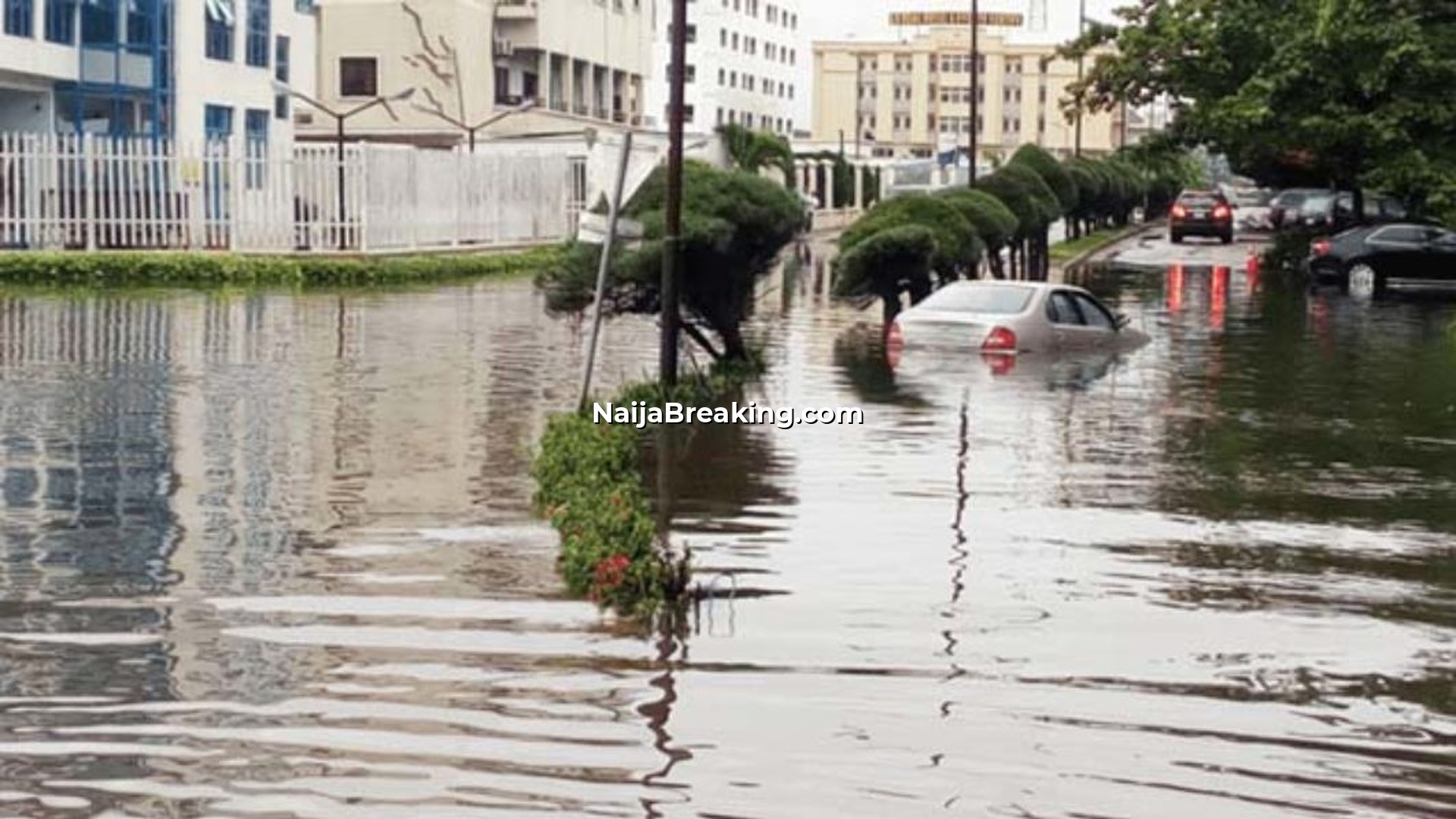
The Lagos State Government has launched an aggressive public campaign against what officials describe as deliberate and systematic disinformation by social media influencers and content creators, with specific accusations that these digital personalities have been sharing false flood images to advance destructive political narratives about the state’s environmental challenges. Environment Commissioner Tokunbo Wahab made the allegation through a prominent post on X (formerly Twitter), claiming that influencers and bloggers have systematically circulated flooding photographs sourced from other Nigerian states and international locations while deliberately falsely attributing them to Lagos. This significant accusation raises critical and complex questions about the intersection of digital media responsibility, governance accountability, transparent communication, and the rapid spread of misleading content in Nigeria’s increasingly crowded and contested information ecosystem. For residents and business owners genuinely struggling with recurring flooding issues in Lagos, the government’s notable focus on attacking media personalities and content creators rather than addressing fundamental systemic drainage failures and infrastructure deficits presents a concerning and troubling pattern of deflection from core issues. The incident also highlights how false flood images Lagos has become a powerful tool for both political grandstanding among rival factions and clickbait engagement by opportunistic social media personalities, leaving ordinary citizens deeply uncertain about what environmental crises actually require urgent intervention and resources.
Background: Understanding Lagos’s Chronic Flooding Challenge
Lagos State has battled catastrophic and recurring flooding for several decades, a persistent problem rooted fundamentally in rapid, unplanned urbanisation without corresponding investment in critical infrastructure, inadequate and deteriorating drainage systems, illegal encroachment on waterways, and the blocking of natural water channels. The state’s inherent geographic vulnerability—surrounded by the Atlantic Ocean, the expansive Lagos Lagoon, and numerous interconnected rivers and waterways—makes it naturally susceptible to water-related disasters, but poor urban planning decisions and decades of governmental neglect have exponentially worsened the annual flooding severity and frequency. Between 2020 and 2023 alone, documented flooding incidents displaced thousands of residents from their homes, destroyed property and infrastructure worth billions of Naira, disrupted critical economic activity across multiple sectors, and created humanitarian crises that stretched emergency response resources thin. The National Bureau of Statistics (NBS) and various international and local NGOs working on disaster management have comprehensively documented these recurring crises, yet meaningful solutions remain frustratingly elusive despite multiple successive government administrations at state and federal levels making repeated promises of comprehensive drainage rehabilitation and climate adaptation programmes.
The infrastructure deficit underlying Lagos’s flooding problem is staggering in scale and scope. Most drainage systems in the state were constructed decades ago and have not been adequately maintained or upgraded to accommodate the explosive population growth and urban expansion that Lagos has experienced. Lagosians have increased from approximately 5 million in 1991 to over 15 million today, creating unprecedented pressure on drainage infrastructure never designed for such density. Additionally, widespread illegal construction in flood-prone areas, deliberate obstruction of drainage channels by property developers seeking to maximise land use, sand mining that destabilises riverbanks, and pollution of water bodies have all contributed to the worsening situation. Local government areas particularly affected include Lagos Island, Surulere, Isolo, Alimosho, Ikorodu, and Epe, where residents have become accustomed to annual flooding that destroys homes, contaminates water supplies, and spreads disease.
The Rise of Social Media as an Information Source About False Flood Images Lagos
In recent years, particularly since 2015 onwards, social media platforms have become the primary and most immediate medium through which Lagosians share real-time reports, photographic evidence, and video documentation of flooding incidents. This significant shift represents a democratisation of information that bypasses traditional media gatekeepers and government communication filters. Platforms like X (Twitter), Instagram, TikTok, WhatsApp, and Facebook have enabled ordinary citizens to document losses, share experiences, and demand government response directly from their phones within minutes of disasters occurring. This capability has been invaluable for disaster response coordination, allowing residents in different areas to alert each other about dangerous conditions and for NGOs to mobilise emergency relief resources quickly.
However, this democratisation of information has simultaneously created substantial risks and opportunities for the spread of unverified and misleading content. The ease with which images and videos can be shared, reposted, and amplified on social media has created an environment where verification takes a backseat to speed and emotional impact. Opportunistic influencers with large followings have discovered that dramatic flood imagery—particularly if it appears catastrophic—generates significant engagement, views, and shares that can be monetised through advertising revenue, sponsorships, and brand partnerships. The financial incentives are substantial: an influencer with one million followers can earn significant sums from a viral post about flooding, even if the images are misleading or sourced from entirely different geographic contexts. Some influencers have been documented sharing false flood images Lagos that actually depict flooding from other Nigerian cities like Benin City, Port Harcourt, or Ibadan, or even international locations in countries like Ghana, Cameroon, or India.
Commissioner Wahab’s Accusations: The Government’s Response to False Flood Images Lagos
Environment Commissioner Tokunbo Wahab’s public accusation against influencers came amid a period of particular concern about misinformation’s impact on public discourse around Lagos’s environmental challenges. Wahab specifically called out what he termed “social media merchants of doom” who he claimed were deliberately amplifying false narratives about flooding in Lagos to destabilise public confidence in the government and advance political agendas. The commissioner provided examples of false flood images Lagos that had been circulated with Lagos tags despite originating from other sources, challenging influencers to exercise greater responsibility in content verification.
The government’s response reflects growing frustration with how climate change impacts and infrastructure challenges are being discussed in public forums. Officials argue that sensationalised and false reporting undermines genuine efforts to manage environmental risks and can create unnecessary panic among residents. There is merit to this concern: when residents constantly see catastrophic flood images attributed to Lagos but originating elsewhere, it can distort perceptions of actual risk levels and create fatigue that reduces genuine emergency preparedness. Additionally, exaggerated narratives can deter investment and worsen the state’s economic prospects if potential investors believe conditions are unmanageable.
The Double-Edged Sword: Legitimate Concerns on Both Sides
While the government’s concerns about false flood images Lagos warrant consideration, the framing of this issue as primarily a problem of influencer irresponsibility rather than governmental accountability represents a problematic deflection. Critics argue that the government’s emphasis on attacking media personalities conveniently shifts focus away from substantive questions about what Lagos authorities have actually done to address drainage infrastructure failures, illegal building in flood-prone areas, and the pollution of waterways. The government’s own agencies have been slow to implement comprehensive solutions, with drainage rehabilitation projects often delayed, inadequately funded, or abandoned midway through implementation.
Furthermore, the distinction between “false” flood images Lagos and “exaggerated” reports becomes blurry in practice. Some images shared by influencers might depict real flooding in Lagos but from previous years, not current events, making them outdated but not necessarily “false” per se. Others might show flooding in Lagos but from areas less severely affected, creating misperceptions about the scale of damage. The government’s response has sometimes been so focused on attacking messengers that it has failed to engage substantively with the underlying environmental crisis that generates genuine concern and reportage, including legitimate false flood images Lagos that spread precisely because actual flooding problems are real and recurring.
Political Dimensions: Elections, Narrative Control, and False Flood Images Lagos
Understanding the accusation about false flood images Lagos requires engaging with its political context. Lagos State elections are scheduled for 2027, and opposition parties have been seeking to build narratives criticising the APC administration’s performance on environmental management and infrastructure development. Flood narratives are particularly potent politically because they affect millions of ordinary voters directly, destroy property, and highlight government capacity deficits in concrete, visible ways. Different political actors have incentives to either amplify concerns about flooding (opposition parties seeking to delegitimise the ruling government) or to downplay and reframe flood narratives as exaggerated (the ruling party seeking to protect its image).
This political dimension means that accusations about false flood images Lagos cannot be separated from broader struggles for political power and narrative control. The government’s campaign against influencers, while framed as protecting truth, simultaneously serves the political interest of discrediting criticism and controlling environmental narratives. Opposition-leaning influencers and media personalities may be more likely to be accused of spreading false flood images Lagos than those with closer ties to government. This raises important questions about whether the government’s intervention is driven primarily by concern for truth or by interest in managing political risk.
The Broader Information Ecosystem Challenge
The issue of false flood images Lagos reflects larger challenges in Nigeria’s digital information ecosystem. As traditional media has struggled financially and lost audience trust, social media has become dominant, but without corresponding development of professional editorial standards or fact-checking mechanisms. Many Nigerians now get news primarily from social media platforms where verification is difficult, algorithmic promotion favours sensational content, and financial incentives encourage exaggeration rather than accuracy. Unlike traditional journalism, where reporters can be held accountable through professional codes of conduct and legal liability, social media influencers often operate without any institutional accountability mechanisms.
Additionally, the proliferation of false flood images Lagos is enabled by global image databases and search engines that make it easy to find dramatic flooding photos regardless of their actual source or date. An influencer seeking to illustrate a story about flooding in Lagos can quickly find powerful images online without extensive verification of their origins. The technical ease of doing this, combined with platform algorithms that reward engagement regardless of accuracy, creates systemic incentives toward spreading false flood images Lagos even without deliberate malice or political motivation.
Solutions and Recommendations: Moving Beyond Blame
Addressing the false flood images Lagos problem requires approaches that go beyond simply attacking influencers or attempting government narrative control. First, media literacy education is essential: helping Nigerians, particularly young people who consume content on social media, develop skills to verify sources, check image origins, and assess credibility would reduce the spread of false information through organic social media sharing rather than just deliberate amplification. Second, social media platforms themselves must implement better tools for source verification and for flagging misleading content, though this must be done carefully to avoid enabling authoritarian censorship.
Third, and perhaps most importantly, the government must address the underlying environmental crisis that generates concern and discussion about flooding in Lagos. By substantially improving drainage infrastructure, enforcing zoning regulations to prevent building in flood-prone areas, cleaning waterways, and implementing climate adaptation strategies, the government can reduce the genuine environmental challenges that fuel both accurate reporting and false flood images Lagos. When real problems are addressed, sensationalism becomes less credible and less effective.
Fourth, the government should engage more transparently with independent media and residents about flooding challenges rather than attempting to suppress discussion. Demonstrating genuine commitment to solutions builds credibility and reduces incentives for opposition narratives. Finally, influencers and content creators must develop stronger internal standards for verification and acknowledge when they cannot confirm information sources, accepting that some viral content opportunities are not worth the reputational and social cost of spreading false flood images Lagos.
Conclusion: The Complex Reality of Misinformation in Lagos
The Lagos government’s accusations against influencers for spreading false flood images Lagos raise legitimate concerns about information quality in the digital age, but they also reveal how governments can use misinformation narratives to deflect from substantive accountability. Both legitimate flooding concerns and deliberately false flood images Lagos exist simultaneously in Lagos’s information environment. Addressing this complex challenge requires simultaneously holding influencers accountable for verification standards while also demanding that government agencies address the real environmental infrastructure failures that make false flood images Lagos resonate with audiences who have experienced genuine disasters. Until Lagos’s flooding problem is substantively solved through infrastructure investment and proper urban planning, narratives about catastrophic flooding—whether accurate or exaggerated—will continue to circulate and find receptive audiences.