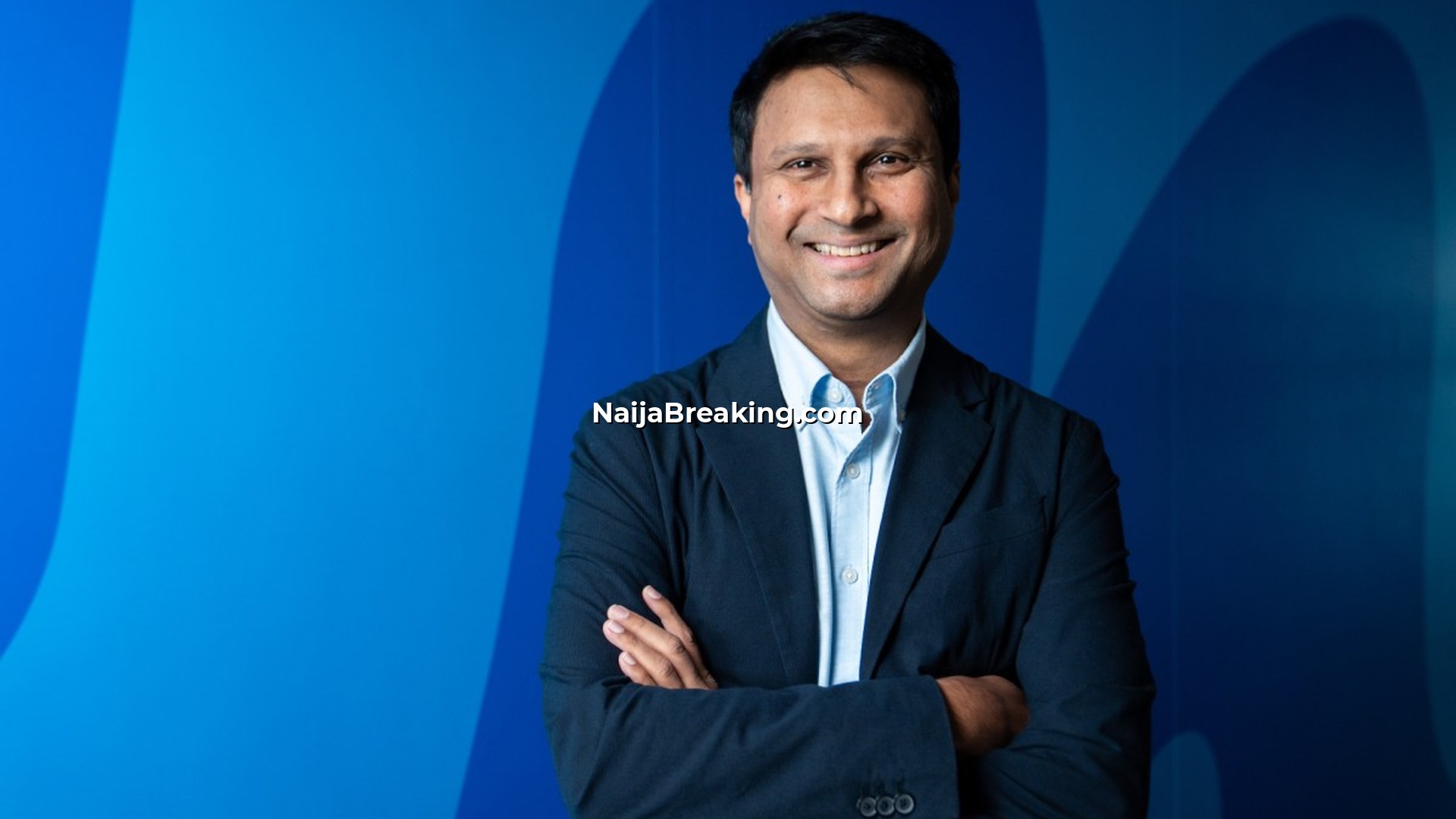
Alaa Hamadto: Building African Agritech Through Conflict and Crisis
The story of Alaa Hamadto, founder and CEO of SolarFoods, a Sudanese agritech startup using solar-powered drying technology to preserve agricultural produce, offers a sobering but inspiring lens on African agritech entrepreneurship at a time when Nigeria and the continent face unprecedented food security challenges. Based on an interview published on TechCabal, Hamadto’s journey reveals truths about building technology companies in regions marked by conflict, political instability, and resource scarcity—challenges that resonate deeply with Nigerian entrepreneurs navigating their own precarious operating environment. What makes her story particularly relevant to Nigeria is not merely her technical innovation, but her philosophy: that the most difficult things are worth doing, especially when a nation’s food security depends on them. In a continent where nearly 278 million people face hunger according to recent World Food Programme estimates, and where post-harvest losses in Nigeria alone cost the agriculture sector ₦2.5 trillion annually, the emergence of sustainable preservation technology becomes not just a business opportunity but a national imperative. Hamadto’s willingness to abandon a secure career in dentistry to pursue solar-powered food preservation, and then to risk her life returning to Sudan during an active civil war to rebuild her factory, demonstrates a commitment to solving Africa’s structural food challenges that transcends conventional entrepreneurship. For Nigerian policymakers, investors, and tech entrepreneurs, understanding how Hamadto navigates uncertainty while maintaining focus on scalable agricultural solutions offers crucial lessons as Nigeria attempts to transform its food system and reduce its dependence on imports.
Background
The context of Alaa Hamadto’s entrepreneurial journey cannot be separated from the broader African agricultural crisis and the emergence of climate-tech as a survival imperative across the continent. Sudan, like Nigeria, possesses vast arable land and agricultural potential—yet both nations struggle with post-harvest losses, inefficient supply chains, and vulnerability to climate shocks. According to the Food and Agriculture Organization (FAO), Sub-Saharan Africa loses approximately 37 percent of fruit and vegetable production to spoilage before reaching markets, representing a staggering economic and food security disaster. In Nigeria specifically, the Central Bank of Nigeria (CBN) estimates that post-harvest losses cost the agricultural sector between ₦2 trillion and ₦2.5 trillion annually—funds that could instead support rural development, create employment, and stabilize food prices. These losses occur because smallholder farmers, who represent approximately 90 percent of Nigeria’s agricultural producers according to the National Bureau of Statistics (NBS), lack access to modern preservation technologies, cold chain infrastructure, and storage solutions. The civil war that began in Sudan in April 2023 forced millions to flee, including Hamadto, but it also created what some analysts might call a “crisis of opportunity”—a moment when conventional business models collapse and innovative solutions become essential for survival. Nigeria has not experienced the same level of armed conflict as Sudan, but it faces comparable institutional fragility, electricity shortages that make refrigeration-dependent preservation impractical in rural areas, and a growing climate crisis that threatens agricultural yields. Hamadto’s decision to develop solar-powered drying technology directly addresses these constraints: it requires no grid electricity, can be deployed in rural communities, and transforms perishable agricultural products into shelf-stable goods that can reach distant markets. Her journey from dentistry into agritech mirrors a broader global trend where African entrepreneurs recognize that traditional professions offer individual wealth but technological innovation offers collective prosperity.
Key Details
Alaa Hamadto left dentistry in 2014 to establish SolarFoods, abandoning a secure professional career that her relatives had invested years encouraging her to pursue. She built a business model centred on solar-powered agricultural drying technology—machines that use the sun’s energy to dehydrate fruits, vegetables, and other produce, extending shelf life from days to months without refrigeration or chemical preservation. When Sudan’s civil war erupted in April 2023, Hamadto initially fled to Cairo with her daughters like millions of other internally displaced Sudanese. However, five months later, driven by a conviction she articulates clearly in the TechCabal interview, she made the decision to return to Sudan—not because security conditions had improved, but because she believed she could not ask other Sudanese to rebuild their nation if she herself had abandoned it. During her return journey, she drove back into Sudan while drones flew overhead, endured 36 hours of travel without food or water because the roads were too dangerous to stop safely, and arrived at her factory only to discover that nearly everything of value had been stolen. Despite these challenges, she continued operating, training farmers on her technology and maintaining her commitment to building sustainable agricultural solutions. The nickname “Alaa the Brave” emerged from her community in Sudan, reflecting local recognition of her willingness to return and rebuild during an active conflict. Her business model addresses a specific market failure: smallholder farmers in Sudan, like their counterparts across Africa, lose 40-50 percent of their harvest to spoilage because they lack affordable preservation technology. SolarFoods’ approach is particularly valuable in regions where grid electricity is unreliable or nonexistent, making her innovation directly applicable to rural areas across Nigeria, Cameroon, and other Sub-Saharan nations facing similar infrastructure constraints.
Impact and Analysis
What Hamadto’s story reveals, beyond the surface-level inspirational narrative, is a critical gap in how African tech and investment ecosystems understand risk, sustainability, and impact. The agritech sector across Africa is attracting increasing capital—the continent received approximately $1.6 billion in agritech funding in 2023 according to various venture capital reports—yet most of this funding remains concentrated in relatively stable countries with better infrastructure and regulatory clarity. Sudan, and indeed much of the Sub-Saharan region, remains starved of capital precisely because investors perceive these regions as too risky. Hamadto’s persistence challenges this logic: she demonstrates that the “risk” of operating in conflict-affected regions may be outweighed by the massive market opportunity and the urgency of the problem being solved. In Nigeria’s context, the parallel is stark. Despite being Africa’s largest economy with a GDP exceeding $477 billion, Nigeria’s agricultural productivity remains hamstrung by the same post-harvest losses and preservation challenges that plague Sudan. Yet Nigerian agritech startups often struggle to access capital at the same multiples as their counterparts in Kenya, South Africa, or even Ghana. The institutional risk perceived by international investors translates into a funding gap that slows innovation in the very sector most critical to Nigeria’s food security and rural employment. Furthermore, Hamadto’s choice to return to Sudan during active conflict reveals something about founder conviction that venture capital alone cannot manufacture: a deep belief that the problem being solved transcends personal financial gain. This distinction matters because sustainable agricultural transformation in Africa requires entrepreneurs who are willing to stay invested—literally and emotionally—for the long term, even when short-term conditions are unfavourable. Many African agritech founders, particularly those with international education and networks, face pressure to either scale rapidly for exit opportunities or relocate to more stable jurisdictions. Hamadto’s decision to remain embedded in Sudan’s agricultural ecosystem, despite its perils, suggests a different model: one where founders see themselves as permanent stakeholders in their communities’ futures.
Expert Perspectives
Dr. Chioma Okonkwo, a senior agricultural economist at the Lagos Institute for Economic Research, observes that Hamadto’s solar-powered preservation model addresses what she calls “the last-mile problem in African agriculture.” She notes: “Most African governments focus on input subsidies and mechanisation for large-scale farming, but they neglect the infrastructure needed to move produce from farm to market without spoilage. Hamadto’s approach is elegant because it places the technology at the source—with farmers themselves—rather than relying on centralised cold chains that are prohibitively expensive in rural areas. For Nigeria, this is particularly relevant because our rural areas lack consistent grid electricity, making solar-powered solutions not just an innovation but a practical necessity.” Okonkwo adds that the regulatory environment for agricultural technology in Nigeria could either accelerate or hinder the adoption of such innovations, depending on how government agencies classify and tax solar agricultural equipment. Conversely, Tunde Abiodun, a venture capitalist and founder of a Lagos-based agritech fund, takes a more market-focused perspective: “What Hamadto demonstrates is that the agritech market in conflict-affected regions may actually move faster than we think. When governments fail to provide services and infrastructure, entrepreneurs step in, and they often build more resilient systems because they account for scarcity from day one. The challenge for Nigeria is that our entrepreneurs don’t have the same crisis-driven urgency because the state, however inefficient, still provides basic infrastructure. This can create a false sense that the current system is sustainable when in fact it’s deeply fragile. Hamadto’s story is a reminder that the best African entrepreneurs are those who build as if the formal system will fail—because often, it does.” Abiodun’s point highlights a strategic difference between entrepreneurs operating in active conflict zones, who have no choice but to assume institutional failure, and those in relatively stable but chronically underperforming economies like Nigeria, where institutional failure is chronic but gradual.
What This Means for Nigerians
For ordinary Nigerians—farmers, traders, consumers, and workers in the agriculture value chain—Hamadto’s solar drying technology and her philosophical approach to entrepreneurship carry immediate practical implications. Consider the plight of a cassava farmer in Abeokuta, Ogun State, who currently loses 30-40 percent of her harvest to rot and pest damage within two weeks of harvest, forcing her to sell at depressed prices just to avoid total loss. A solar-powered drying system, deployed and maintained by a trained local technician, could preserve that cassava as high-value gari or cassava chips, extending the selling window from two weeks to several months and enabling access to urban markets where prices are 60-80 percent higher. For a smallholder producing on one hectare, this difference translates from earning roughly ₦80,000-₦150,000 during the glut harvest season to potentially ₦250,000-₦400,000 by staggering sales over a longer period. At the consumer level, Nigerians face consistently high food prices partly because supply is concentrated in brief harvest windows, forcing processors and traders to pay premium prices for scarce produce during off-seasons. Solar-powered preservation technology, deployed across thousands of rural communities, could stabilise produce availability and reduce seasonal price spikes that devastate poor households’ purchasing power. According to NBS data, the poorest 40 percent of Nigerian households spend 65-70 percent of their income on food; any mechanism that stabilises food prices directly improves their real income and food security. For agricultural traders and small food processors—a significant informal sector employer—access to reliably preserved agricultural materials would enable business expansion and employment creation. A woman running a food processing business in Lagos could, if guaranteed year-round supply of dried peppers and tomatoes from rural partners, expand her operation, hire additional workers, and scale distribution to supermarkets and export markets. Yet the challenge remains capital access: importing or manufacturing solar drying equipment requires upfront investment of ₦500,000 to ₦2 million per unit, beyond the reach of most smallholders. This is where Hamadto’s example becomes policy-relevant: if Nigerian governments and development finance institutions catalysed solar agricultural technology adoption through subsidised credit, tax incentives, or direct procurement for farmer cooperatives, the multiplier effects would ripple across rural incomes, food security, and rural employment.
Editor’s Take
At NaijaBreaking, we believe Hamadto’s story exposes a troubling contradiction in how Nigeria discusses its food security crisis. The rhetoric from government, international organisations, and policy circles emphasises the need for “agricultural transformation” and “climate adaptation,” yet the entrepreneurs actually doing the hard work of building solutions—particularly in conflict-affected or resource-constrained regions—receive minimal support and visibility. Hamadto did not wait for a CBN agricultural credit window, a government subsidy, or a World Bank programme to exist. She identified a structural problem, developed a solution, and then demonstrated the willingness to live with the consequences of her choices. What this story reveals is that Nigeria’s agricultural future will not be secured by top-down policy announcements or imported technologies, but by entrepreneurs like Hamadto who embed themselves in the problem and build resilience into their business models. We also note that international media and investor attention flows disproportionately to African founders with diaspora networks, international education, and English-language fluency. Hamadto’s profile on TechCabal is valuable precisely because it centres a non-anglophone African entrepreneur whose innovation is immediately practical rather than algorithmically sophisticated. Nigeria’s tech and investor ecosystems should ask themselves: how many Hamaduos—Sudanese, Nigerian, Cameroonian—are building critical agricultural solutions in rural areas without any international recognition or capital access? What systematic barriers prevent their stories from reaching platforms where investment and policy support concentrate?
What to Watch Next
Several developments will determine whether Hamadto’s model catalyses broader regional agritech transformation or remains a compelling individual story. First, monitor whether SolarFoods achieves unit economics at scale—specifically, whether she can reduce the cost per solar dryer to a point where smallholder farmers or farmer cooperatives can access it through microfinance or government agricultural credit facilities. Second, watch whether any Nigerian government (federal or state) adopts solar agricultural technology as part of its food security or climate adaptation strategy. If the Lagos State government, for instance, procures 1,000 solar dryers for distribution to farmer groups, this signals policy-level belief in the model and could catalyse similar initiatives across Nigeria. Third, observe whether international climate finance institutions—the Green Climate Fund, the African Development Bank, bilateral donors—begin specifically funding solar agritech solutions in Sub-Saharan Africa, moving beyond their current concentration on large-scale irrigation and mechanisation projects. Finally, pay attention to regulatory clarity: does the CBN, through its Agricultural Credit Guarantee Scheme or Agricultural Lending Stimulus, explicitly support solar agricultural equipment financing? Does FIRS provide tax incentives for domestic manufacture of solar agricultural technology? The key question now is whether Hamadto’s demonstrated success translates into systemic policy change and capital reallocation toward climate-resilient, distributed agricultural preservation technologies—or whether she remains an outlier, celebrated for her courage but not replicated at scale.
Conclusion
Alaa Hamadto’s journey from dentistry to agritech entrepreneurship, and her decision to return to Sudan during civil war to rebuild her factory, illustrates a fundamental truth about African development: the most critical innovations often emerge from entrepreneurs who have chosen to stake their futures on solving problems that institutions have neglected or failed to address. Her solar-powered agricultural preservation technology is not revolutionary in a technical sense—solar dehydration is well-established globally—but its deployment in resource-constrained, conflict-affected regions represents a radical rethinking of where and how solutions are built. What her story reveals about Nigeria’s trajectory is that food security cannot be achieved through imports, subsidy regimes, or aspirational “transformation” rhetoric alone. It requires thousands of entrepreneurs embedded in rural communities, supported by accessible capital, regulatory clarity, and policy frameworks that treat agricultural technology adoption as a national priority equivalent to electricity access or healthcare. The question Nigerians should ask themselves is not whether Hamadto is brave, but whether their own institutional systems enable or constrain the emergence of equivalent innovators within their own borders. Share your thoughts in the comments below—what do you think this means for Nigeria’s future in food security and agricultural innovation? How can Nigerian policymakers and investors create conditions for more entrepreneurs like Hamadto to build and scale sustainable solutions?