
Indian Tech Billionaire Bets $30M on AI Office Suite to Challenge Microsoft and Google
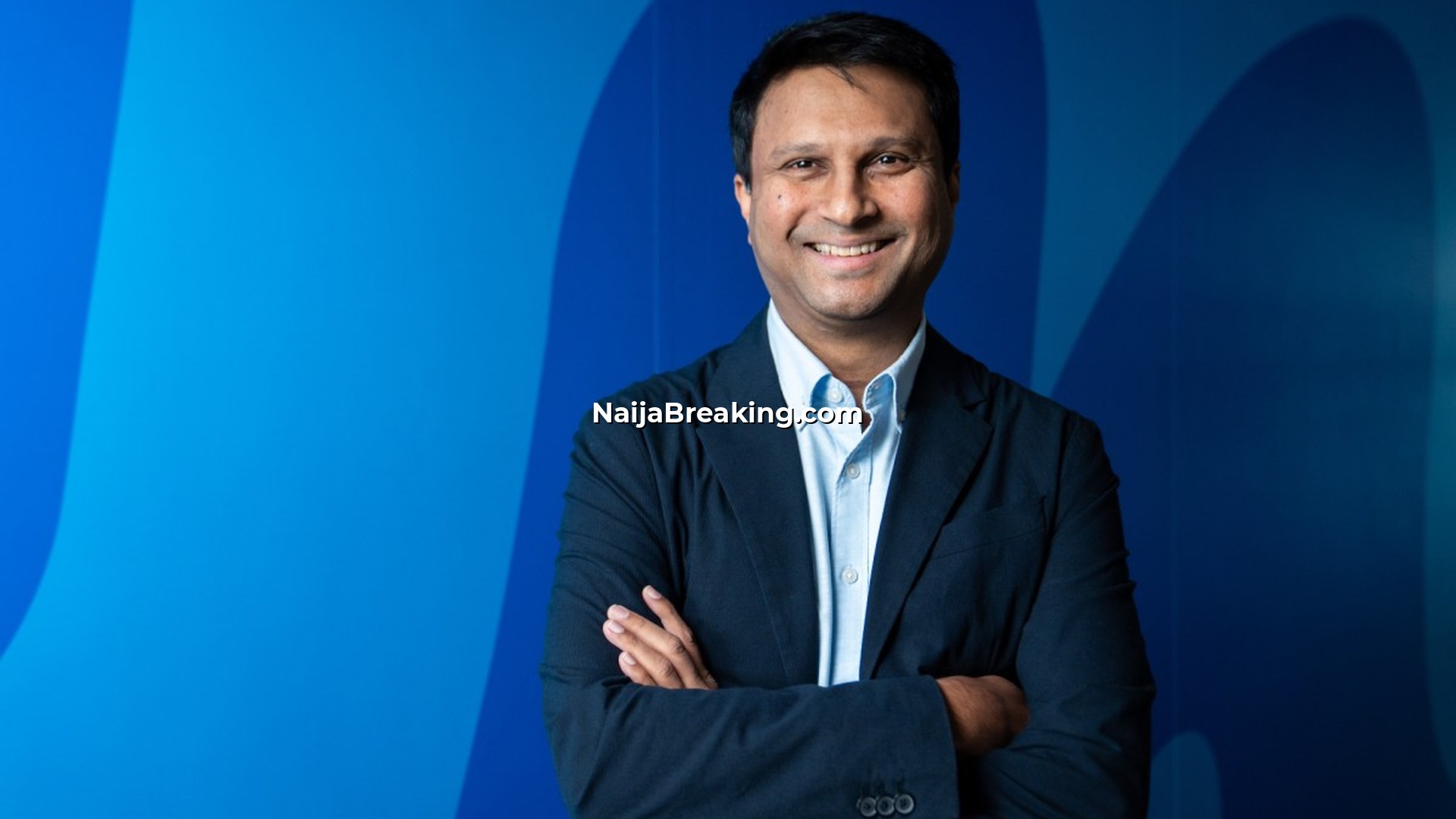
Indian serial entrepreneur Bhavin Turakhia is making headlines globally with a $30 million personal bet on AI enterprise software designed to fundamentally challenge Microsoft Office and Google Workspace. His new venture, Neo, represents a significant shift in how workplace software is being conceptualised in the age of artificial intelligence. For Nigerian tech professionals, digital entrepreneurs, and corporate decision-makers, this development signals that the enterprise software landscape—long dominated by established Western players—is about to undergo radical transformation. Understanding what Turakhia is building, and why he’s willing to stake his own capital at this scale, is crucial for Nigerian businesses currently locked into expensive Microsoft or Google subscriptions. The implications extend beyond mere software choice; they touch on digital sovereignty, cost efficiency, and how African enterprises can leapfrog outdated technology infrastructure to access cutting-edge AI enterprise software solutions designed natively for intelligence augmentation rather than retrofitted with chatbots.
Background
To understand the significance of Turakhia’s move, we must first recognise the structural problem he’s attempting to solve. Microsoft Office has dominated workplace productivity for over three decades, initially through dominance in personal computing and later through enterprise lock-in. Google challenged this with web-based alternatives, but both Microsoft and Google inherited architectural assumptions from the pre-AI era. These platforms were designed when artificial intelligence was either science fiction or confined to specialist research labs. The addition of AI features—like Microsoft’s Copilot or Google’s Duet AI—represents what technologists call “bolting on” capabilities rather than architectural redesign.
In Nigeria specifically, this matters profoundly. The average Nigerian enterprise still relies heavily on Microsoft Office, often purchased through expensive licensing agreements that drain foreign exchange reserves. According to the National Bureau of Statistics (NBS), Nigeria’s information and communications technology sector contributes approximately 13% of GDP, yet most of this value is captured by multinational corporations rather than local businesses. The cost of software licensing for Nigerian small and medium enterprises (SMEs) remains prohibitive, representing between 5-15% of operational budgets for knowledge-intensive businesses in Lagos and other tech hubs. When a Nigerian startup or financial services company needs to scale from 10 employees to 100, the software costs climb exponentially, and companies often resort to pirated or grey-market licenses to manage expenses.
Turakhia’s previous ventures—including Directi, Radix, and most notably Zeta, his banking software platform—have all been built with the understanding that emerging markets and enterprises worldwide are underserved by Silicon Valley incumbents. His choice to bootstrap Neo with $30 million of personal capital, rather than immediately seeking venture funding, suggests he views this as a generational opportunity where the timing of AI maturity finally permits genuine architectural innovation. This reflects a broader pattern: successful Indian tech entrepreneurs have increasingly recognised that AI represents a moment where legacy advantage can be disrupted if the right team executes flawlessly.
Key Details
According to reporting from TechCrunch, Neo was launched internally in April 2026 and combines project management, document collaboration, file storage, and artificial intelligence into a unified platform. The core premise is distinctive: rather than treating AI as an optional assistant, Neo positions artificial intelligence as an active participant in daily work processes. Turakhia’s articulation of the problem is particularly compelling: “If you want to build an iPhone, you can’t take the parts of a Nokia and somehow convert it into an iPhone.” This metaphor encapsulates why he believes wholesale platform redesign, rather than incremental feature addition, is necessary.
The $30 million personal investment is significant because Turakhia has a documented track record of bootstrapping ventures before accepting external capital. Directi, his web infrastructure company, operated profitably for years before any external investment. This capital structure signals deep founder confidence and suggests he anticipates a multi-year runway before seeking Series A funding. For context, this investment exceeds the typical Series A round for most African tech startups—indicating the scale of capital required to build competitive enterprise software infrastructure in the AI era.
Neo’s model-agnostic architecture is another critical detail. Rather than embedding dependence on a single AI model provider (as Microsoft has with OpenAI), Neo is designed to allow enterprises to switch between different AI models. This addresses a genuine enterprise concern: over-reliance on any single AI provider creates vendor lock-in risk. In Nigeria’s context, where enterprises are already wary of data sovereignty issues with Western cloud providers, this flexibility could prove attractive. The platform reportedly allows organisations to deploy with their preferred AI backbone, whether that’s OpenAI, Anthropic, open-source models, or future entrants. This flexibility becomes increasingly valuable as the AI landscape continues fragmenting and enterprise requirements become more sophisticated.
Impact and Analysis
The broader enterprise AI software market has indeed become intensely competitive, with Microsoft, Google, and Salesforce all embedding generative AI across their product suites. However, there exists a genuine architectural gap that Neo is positioned to exploit. Existing enterprise software, built over the past 10-20 years, treats AI as an additive layer—useful but not fundamental to core functionality. This creates inefficiencies: users must context-switch between document work and AI assistance, losing productive flow. Neo’s promise is that AI remains embedded throughout the workflow itself, reducing friction and amplifying productivity gains.
For Nigerian enterprises, the impact analysis requires considering several dimensions. First, pricing dynamics: if Neo achieves meaningful traction, competitive pressure on Microsoft and Google could translate to reduced licensing costs in African markets. Currently, Nigerian companies often pay premium prices for enterprise licenses due to currency arbitrage and market-size penalties. Second, technological sovereignty: a successful AI-native alternative reduces dependence on Microsoft’s infrastructure and OpenAI partnerships, creating options for Nigerian companies concerned with data residency and privacy. The Central Bank of Nigeria (CBN)’s increasing emphasis on digital infrastructure resilience and cybersecurity makes this particularly relevant. Third, skill development: if Neo gains adoption, it could catalyse local expertise in cloud-native, AI-integrated software development, strengthening Nigeria’s software engineering capabilities.
The risk analysis is equally important. Turakhia’s venture competes against extraordinary resource concentration—Microsoft spent billions acquiring Activision and maintains unmatched enterprise sales relationships. Neo’s success depends on achieving adoption breakthrough before incumbents fully optimise their AI integration. In Nigerian markets specifically, the switching costs from Microsoft Office are substantial: training, workflow integration, and file compatibility all create friction. However, for greenfield deployments and enterprises frustrated with pricing, Neo presents genuine appeal. The historical precedent here is Google Workspace, which gained significant traction by positioning as lower-cost alternative to Microsoft in emerging markets. Neo could follow similar trajectory, particularly if pricing is positioned aggressively for African markets.
Expert Perspectives
Dr. Emeka Okafor, a Lagos-based technology economist and researcher at the Institute for Future Studies, offers important perspective: “Turakhia’s bet represents recognition that AI isn’t merely an enhancement layer but a fundamental shift in how enterprise software should be architected. For Nigeria specifically, what’s significant is that this innovation is coming from someone who understands emerging markets deeply. Most enterprise software innovation still assumes wealthy-country deployments first. Neo’s success could establish a template where AI-native tools are designed with global markets in mind from day one, rather than adapted afterwards. The question is whether Neo can achieve the enterprise trust and integration depth that Microsoft has built over decades.”
Chinyere Adeyemi, senior technology policy researcher at the Centre for Democracy and Development, adds a more cautious perspective: “While Neo’s architectural innovation is compelling, the real challenge isn’t technical elegance—it’s sales and distribution. Enterprise software adoption in Nigeria follows specific patterns: enterprises trust brands they know, deployment requires local support infrastructure, and switching involves significant friction. Turakhia’s previous ventures succeeded because they targeted pain points where alternatives didn’t exist. In enterprise productivity software, alternatives do exist—Google Workspace, LibreOffice, and others. For Neo to gain foothold in Nigeria, it will need to demonstrate clear cost advantages, seamless migration from Microsoft formats, and local customer support. The technology is likely excellent, but go-to-market execution will determine success.”
What This Means for Nigerians
For the average Nigerian knowledge worker—whether in Lagos financial services, Abuja government agencies, or remote entrepreneurs—Neo’s emergence creates potential opportunity and interesting timing. Currently, many Nigerians working for multinational companies access Microsoft Office through corporate subscriptions, but individual entrepreneurs and small business owners often face genuine software costs. A ₦15,000-25,000 annual Microsoft subscription, when multiplied across even a small 10-person team, becomes ₦150,000-250,000 annually—meaningful money for Nigerian SMEs operating on tight margins. If Neo achieves competitive positioning and offers significantly lower pricing for emerging markets, the savings could be substantial.
The practical implications for specific Nigerian scenarios: A Lagos-based marketing agency managing client projects might use Neo’s integrated project management and AI document collaboration to reduce tool sprawl (currently juggling Microsoft Office, Asana or Monday.com for project management, and separate AI tools). The consolidated platform could improve workflow efficiency while reducing subscription costs. A Nigerian financial services startup might appreciate Neo’s flexibility to use locally-compliant AI models rather than being locked into OpenAI infrastructure, addressing data residency concerns increasingly important to the Central Bank of Nigeria’s regulatory framework. Educational institutions like the University of Lagos or Lagos Business School might find Neo attractive for collaborative research and teaching, particularly if educational pricing is offered competitively.
However, realistic considerations apply. Neo’s success in Nigeria depends on several factors currently uncertain: Will local technical support be available? Will file compatibility with existing Microsoft Office documents be seamless? What’s the pricing strategy for African markets? Will adoption in Nigeria require critical mass elsewhere first? These practical questions matter more than architectural elegance for typical Nigerian business users. The pattern suggests that if Neo succeeds globally, particularly in India’s substantial market, pricing benefits will eventually flow to Nigeria. But this requires patience and cannot be assumed.
Editor’s Take
At NaijaBreaking, we believe Turakhia’s $30 million bet reveals something crucial about technology leadership that mainstream coverage often misses: the most consequential innovations increasingly come from entrepreneurs who understand emerging markets intimately, not from Silicon Valley incumbents assuming global homogeneity. Turakhia’s previous success with Zeta (banking software for emerging markets) proves he understands the specific constraints of operating in regions where Microsoft’s premium-priced global strategy doesn’t align with local economic realities.
What deserves scrutiny is whether Neo will genuinely serve African markets or whether it remains another venture eventually captured by Silicon Valley capital and priorities. The distinction matters. If Neo succeeds and maintains architectural commitment to flexibility, data sovereignty, and emerging-market affordability, it becomes transformative. If Neo succeeds and subsequently pivots toward wealthy-country enterprise markets (the typical venture capital trajectory), the benefits for Nigeria remain marginal. We should watch not just whether Neo succeeds, but how it positions Africa and emerging markets in its narrative and pricing as adoption grows. The technology is less important than the business model’s commitment to serving markets where software costs actually constrain economic productivity.
What to Watch Next
Several critical developments will determine Neo’s trajectory and relevance for Nigerian enterprises. First, watch for enterprise customer announcements in the next 6-12 months. Will Neo attract marquee customers in India, Southeast Asia, or Africa? Which specific sectors adopt first? Second, monitor pricing strategy unveiling—the reveal of Neo’s subscription model and geographic pricing variations will signal whether this genuinely targets emerging markets or primarily wealthy enterprises. Third, observe Microsoft and Google’s competitive response. Do they aggressively counter Neo’s positioning, or do incumbents attempt acquisition? Fourth, track regulatory developments: as Nigeria’s CBN implements stricter data localisation requirements, Neo’s model-agnostic, infrastructure-flexible approach becomes more strategically valuable. Fifth, monitor talent: does Neo successfully recruit world-class engineering and product leadership? Architectural vision means nothing without execution excellence.
The key question now is: Will Neo become the enterprise productivity software that finally breaks Microsoft’s 30-year stranglehold on workplace tools, or will it remain an interesting innovation that eventually gets absorbed into the incumbent power structure? The answer will reveal whether technology innovation genuinely democratises access or merely redistributes advantage among those already positioned to capture value.
Conclusion
Bhavin Turakhia’s $30 million personal investment in Neo represents more than one entrepreneur’s bet on AI-native architecture—it signals that the enterprise software landscape, seemingly settled and dominated by Microsoft and Google, remains genuinely contestable. For Nigerian businesses and workers, the significance lies not in the software’s technical features but in whether a successful alternative can reduce costs, improve flexibility, and create genuine choice in tools that remain essential to modern work.
This story reveals that emerging markets increasingly host entrepreneurs capable of building world-class technology infrastructure, not merely adopting Western solutions. As Nigeria positions itself within a rapidly shifting global technology landscape—with ambitions around digital economy leadership and tech sector growth—the emergence of genuinely competitive alternatives to incumbent software becomes strategically important. If Neo succeeds, the template suggests that other critical software categories might similarly be reconceptualised. Share your thoughts in the comments below—what do you think this means for Nigeria’s future in digital infrastructure and software accessibility?