Tokenised Assets Nigeria: Paga’s Revolutionary Strategy for Reshaping Wealth Access
Paga, one of Africa’s oldest and most resilient fintech companies, is executing a transformative strategic pivot that promises to fundamentally reshape how ordinary Nigerians access investment opportunities previously reserved for the wealthy and internationally connected elites. The company’s groundbreaking partnership with blockchain infrastructure startup TBook represents far more than a simple business collaboration—it signifies a seismic shift in how tokenised assets Nigeria will be distributed, managed, and democratised across the nation. Through this alliance, Paga is leveraging its formidable payments infrastructure to bring tokenised real-world assets (RWAs) directly to consumers and businesses throughout the African continent, with Nigeria serving as the critical growth engine. This move holds extraordinary significance for Nigeria because it addresses a persistent and deeply frustrating gap in our financial ecosystem: the structural absence of accessible, investment-grade products for the rapidly growing middle class and aspiring entrepreneurs who have been systematically locked out of traditional wealth-building vehicles. With Nigeria’s inflation rate hovering around 34% according to the National Bureau of Statistics’ most recent data, and the Naira facing relentless devaluation pressure that erodes purchasing power monthly, ordinary Nigerians are increasingly desperate for alternative stores of value and investment channels that can realistically outpace currency erosion. Paga’s innovative tokenised assets Nigeria strategy, built on sophisticated blockchain infrastructure, offers a potential lifeline for millions seeking wealth preservation and growth—but it simultaneously raises critical and pressing questions about financial regulation, consumer protection mechanisms, and whether Nigeria’s regulatory framework is genuinely prepared for this transformative shift toward digital asset tokenisation.
Understanding Tokenised Assets and Their Relevance to Nigeria
Before examining Paga’s specific strategy, we must establish a comprehensive understanding of what tokenised assets actually are and why they matter so profoundly for Nigeria’s financial future. Tokenised assets represent a revolutionary approach to financial democratisation where real-world assets—whether physical real estate, agricultural commodities, art, equity stakes, or government securities—are converted into digital tokens on blockchain networks. Each token represents a fractional ownership stake in the underlying asset, enabling investors to purchase far smaller portions than traditional financial products typically allow. This fractional ownership model, enabled by blockchain technology, fundamentally transforms the investment landscape by dramatically reducing minimum investment thresholds and dramatically improving liquidity for asset classes that have historically been illiquid.
The implications for tokenised assets Nigeria are particularly profound. In traditional Nigerian finance, purchasing real estate in Lagos requires millions of Naira—often five to ten million or far more. Stock market participation requires opening brokerage accounts with minimum investments and dealing with complex processes that intimidate ordinary citizens. Agricultural commodity investments remain confined to wealthy traders and institutional investors with established supply chain relationships. Tokenisation demolishes these barriers entirely. Through tokenised assets Nigeria platforms, a nurse earning ₦500,000 monthly can invest ₦50,000 in a fractional ownership stake of premium Lagos real estate. A small business owner can diversify into agricultural futures worth ₦100,000 instead of requiring millions. This democratisation of investment access represents nothing less than a structural revolution in how Nigerian wealth gets built and distributed across income levels.
The blockchain technology underpinning tokenised assets Nigeria also introduces transparency and immutability that Nigeria’s traditional financial systems have struggled to provide. Every transaction, every ownership change, every dividend distribution gets recorded on an immutable ledger that all parties can access and verify. For a nation where opacity, fraud, and regulatory capture have corroded public trust in financial institutions for decades, this transparent infrastructure carries profound cultural and economic significance.
Background: Paga’s Evolution in Nigeria’s Fintech Ecosystem
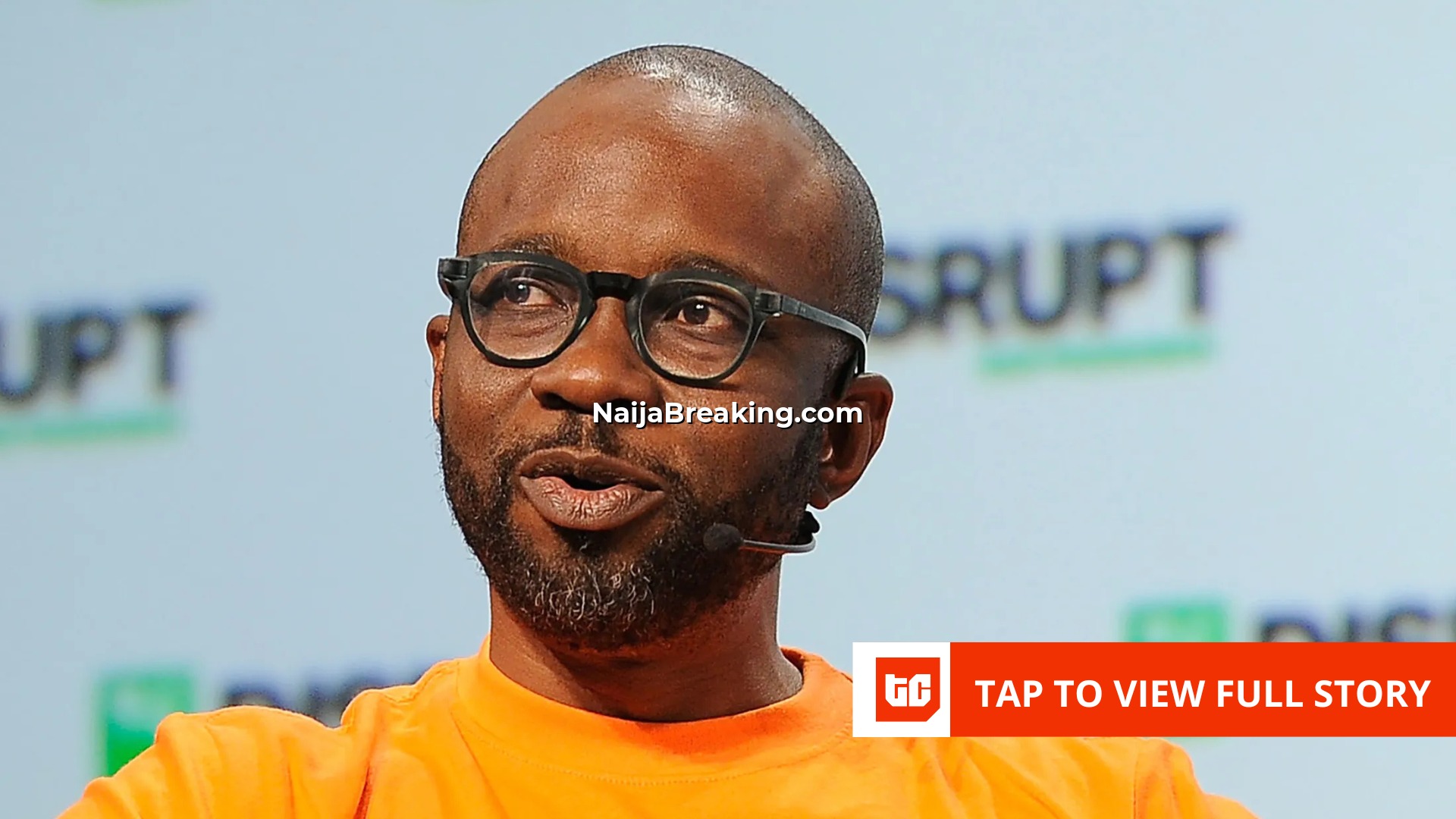
To fully appreciate why Paga’s latest move toward tokenised assets Nigeria represents such a pivotal strategic pivot, we must rewind through the company’s remarkable journey and the transformation of Nigeria’s entire fintech landscape. When Paga was founded in 2009 by Tayo Oviosu, Nigeria’s financial infrastructure presented a genuinely bleak picture for ordinary citizens. The traditional banking sector was dominated by massive institutions operating with creaking legacy systems, astronomical fees, and a physical branch presence concentrated exclusively in urban centres. Mobile money and fintech solutions barely existed in any meaningful form. The vast majority of Nigerians—potentially 60% of the adult population—lacked even basic bank accounts. Financial exclusion was not an exception but rather the devastating norm.
Paga’s original mission arrived at precisely the right historical moment: to democratise payments and financial services across Africa by circumventing the traditional banking infrastructure that had failed so many. The company built its revolutionary reputation by processing payments through USSD technology—the basic text-based protocol available on the most basic feature phones—thereby making financial services genuinely accessible to Nigerians who lacked smartphones or internet connectivity. In a country where millions of adults possessed mobile phones but had zero access to bank accounts or digital payments, Paga’s technology proved revolutionary. The company processed remittances, bill payments, and merchant transactions, establishing itself as an essential piece of Nigeria’s emerging digital finance infrastructure.
Over the past 15 years, Paga has witnessed the Nigerian fintech landscape transform with breathtaking speed. The Central Bank of Nigeria began issuing banking licences to digital banks like Access Bank, First Bank, and dozens of others. Revolutionary fintech companies emerged: Flutterwave transformed cross-border payments, becoming Africa’s first unicorn. Opay disrupted the transportation sector and expanded into financial services. Fintech startups proliferated across Lagos, attracting billions in venture capital funding from global investors who recognised Nigeria’s massive addressable market. Yet amid this explosive growth and innovation, Paga recognised a critical, unaddressed problem: most fintech companies were solving transactional problems—moving money, paying bills, purchasing airtime—but they were conspicuously failing to address Nigeria’s deeper wealth-building problem.
Nigerians could now transfer money easily and instantly. They could pay electricity bills through their phones. They could purchase data bundles without visiting physical shops. But when it came to investing that money productively—building wealth that would compound over decades and create genuine financial security—ordinary Nigerians remained locked out of meaningful opportunities. Real estate investments in desirable Lagos neighbourhoods required massive capital outlays of millions of Naira that only the wealthy could muster. Stock market participation remained dismally low, with only approximately 1.2 million active accounts on the Nigerian Exchange Group (NGX) in a nation of 200 million people. Agricultural commodity investments remained confined to wealthy traders with established supply chain relationships and capital reserves. Pension assets were locked away, inaccessible to workers seeking alternative investments. The infrastructure for wealth-building remained fundamentally broken for ordinary Nigerians despite the fintech revolution transforming their payment capabilities.
The TBook Partnership and Tokenised Assets Nigeria Initiative
Recognising this critical market gap, Paga approached the challenge with characteristic boldness by partnering with TBook, a blockchain infrastructure startup focused on tokenising real-world assets. This partnership represents a calculated strategic bet that tokenised assets Nigeria will become the dominant investment paradigm for the next generation of Nigerian investors. Rather than building blockchain infrastructure from scratch—a pathway that would have consumed enormous capital and distracted from Paga’s core competencies—the company leveraged TBook’s technical expertise while contributing its massive distribution network, regulatory relationships, and consumer trust. This partnership model proves far more efficient than building independently.
The practical implementation of tokenised assets Nigeria through this partnership works as follows: Paga identifies real-world assets worth tokenising—premium real estate portfolios, agricultural commodities, government securities, equity stakes in established businesses. TBook converts these assets into digital tokens on blockchain networks, with each token representing a precise fractional ownership stake. Paga then distributes these tokenised assets Nigeria products to its millions of customers through its existing payments and fintech infrastructure. Customers can purchase tokenised asset tokens using their Paga wallets, receiving digital proof of ownership on the blockchain. The partnership handles all compliance, custody, and regulatory coordination required to operate legally within Nigeria’s emerging regulatory framework for digital assets.
For ordinary Nigerians, the experience proves remarkably straightforward. Imagine a Lagos trader who uses Paga daily for business payments, bill settlements, and customer collections. Through the same Paga app interface they already trust, they could invest ₦50,000 in tokenised real estate units from premium Lagos properties, receiving fractional ownership stakes that appreciate as property values increase. When rental income gets collected, their portion gets automatically distributed through smart contracts—transparent, instant, and without intermediaries taking massive cuts. They could diversify into agricultural tokenised assets Nigeria products, gaining exposure to cocoa futures or palm oil production in ways that previously required millions and established trader connections. They could hold government securities tokenised on blockchain, improving liquidity and enabling smaller investment amounts than traditional bonds require.
How Tokenised Assets Nigeria Solves Persistent Financial Exclusion
The transformative power of tokenised assets Nigeria lies in how comprehensively it addresses multiple dimensions of financial exclusion that have plagued Nigerian development for decades. First and foremost, tokenisation dramatically reduces capital requirements for wealth-building investments. Traditional real estate requires millions upfront. Tokenised assets Nigeria brings this down to tens of thousands, making property ownership accessible to teachers, nurses, skilled craftspeople, and small business owners who have been entirely excluded from the real estate wealth accumulation that forms the foundation of Nigerian prosperity for the wealthy.
Second, tokenised assets Nigeria improves liquidity for historically illiquid assets. Traditional real estate sales require months, involving brokers, lawyers, and complex legal processes. Tokenised assets Nigeria on blockchain networks can be traded instantly—24/7, without intermediaries, with perfect price transparency. A worker who suddenly needs emergency funds can liquidate their tokenised real estate holdings in minutes rather than months, fundamentally changing the risk-return calculus that has made real estate ownership seem prohibitively risky for ordinary Nigerians.
Third, tokenised assets Nigeria platforms eliminate corrupt intermediaries that have traditionally captured enormous value along the chain. When you purchase real estate traditionally in Nigeria, layers of intermediaries—estate agents, lawyers, government officials—each extract substantial percentages. Blockchain-based tokenised assets Nigeria dramatically reduces these intermediation layers through smart contracts and automated processes, returning value to actual owners rather than capturing it in rents paid to middlemen.
Fourth, tokenised assets Nigeria provides genuine inflation hedging for Nigerian savers desperately seeking stores of value that preserve purchasing power. Traditional savings in Naira have proven catastrophically inadequate given inflation rates of 34% or higher. Real assets—real estate, commodities, productive business equity—inherently maintain value during inflation. Tokenised assets Nigeria democratises access to real assets, enabling ordinary citizens to hedge inflation in ways previously reserved for the wealthy who could afford to purchase property or business stakes directly.
Regulatory Landscape and Compliance Challenges
Despite the extraordinary promise of tokenised assets Nigeria for democratising wealth, the regulatory landscape presents genuine complexity and ongoing challenges that could either accelerate or significantly impede this transformation. Nigeria’s Central Bank of Nigeria (CBN) and the Securities and Exchange Commission (SEC) have not yet established comprehensive regulatory frameworks specifically for tokenised real-world assets. This regulatory ambiguity creates both risks and opportunities. The risks are obvious: without clear regulatory guidance, companies operating in tokenised assets Nigeria space face potential enforcement actions, customer protection gaps, and legal uncertainty that could undermine consumer confidence. The opportunities, however, are equally significant: first-mover companies like Paga that establish compliant, transparent operations could shape regulatory development in their favour while building consumer trust through superior practices.
Paga’s approach to navigating this regulatory environment appears sophisticated and forward-thinking. Rather than operating in regulatory grey areas, the company has engaged extensively with CBN and SEC officials, attempting to establish clear compliance frameworks before scaling tokenised assets Nigeria distribution aggressively. This cautious, collaborative approach differs markedly from some cryptocurrency companies that have operated defiantly against regulatory guidance, ultimately inviting enforcement actions that damaged the broader ecosystem’s credibility.
The critical regulatory questions that will determine tokenised assets Nigeria’s success include: How will dividend distributions and capital gains be taxed? Will tokenised assets Nigeria holdings receive the same investor protections as traditional securities? How will custody arrangements function to prevent theft or platform collapse from compromising ownership rights? What disclosure requirements will apply to asset originators? How will market manipulation be prevented? These questions remain partially unanswered, creating execution risk for early-stage tokenised assets Nigeria platforms like the Paga-TBook partnership.
Market Opportunity and Growth Potential for Tokenised Assets Nigeria
The addressable market for tokenised assets Nigeria is genuinely staggering when examined carefully. Nigeria’s middle class continues expanding despite economic challenges, with approximately 20-25 million Nigerians now earning sufficient income to participate in investment products. This cohort has been systematically locked out of traditional wealth-building vehicles by high minimum investments and complex processes. Yet these 20-25 million potential investors collectively possess hundreds of billions of Naira seeking productive investment homes. Even conservative estimates suggest that if tokenised assets Nigeria captures just 5-10% of this purchasing power, it would represent a ₦5-10 trillion market opportunity over the next decade.
Beyond consumer investors, institutional investors—pension funds, insurance companies, investment firms—are increasingly interested in tokenised assets Nigeria as an efficient way to access diversified real asset exposure. As tokenised assets Nigeria platforms establish regulatory credibility and track records, institutional capital flows could massively accelerate market development.
International investor interest in tokenised assets Nigeria also presents significant opportunities. Global investors seeking African exposure have limited vehicles for accessing Nigerian real assets given the complexity, risks, and capital requirements of traditional approaches. Tokenised assets Nigeria could provide global investors direct, transparent, efficient exposure to Nigeria’s most productive asset classes, potentially attracting billions in foreign investment that strengthens the entire ecosystem.
Conclusion: The Transformative Promise and Necessary Caution
Paga’s strategic pivot toward tokenised assets Nigeria through its TBook partnership represents nothing less than an attempt to complete the financial inclusion revolution that payments fintech began. By democratising access to real-world assets through blockchain tokenisation, Paga could fundamentally reshape how ordinary Nigerians build wealth, hedge inflation, and secure their financial futures. The opportunity is genuinely transformative—enabling teachers, nurses, traders, and skilled workers to participate in real estate appreciation, agricultural commodities, and business equity in ways that previous generations of Nigerians could only dream about. However, success requires navigating genuine regulatory risks, establishing bulletproof consumer protections, building institutional trust through transparency and reliability, and demonstrating measurable returns that reward early adopters appropriately. If Paga executes flawlessly on tokenised assets Nigeria and regulatory frameworks develop supportively, this initiative could become a defining development in Nigerian fintech. If execution stumbles or regulation becomes hostile, the opportunity could be squandered and consumer confidence could suffer durably. The coming years will prove decisive in determining whether tokenised assets Nigeria becomes a transformative force for financial inclusion or a cautionary tale of promising technology meeting regulatory resistance.