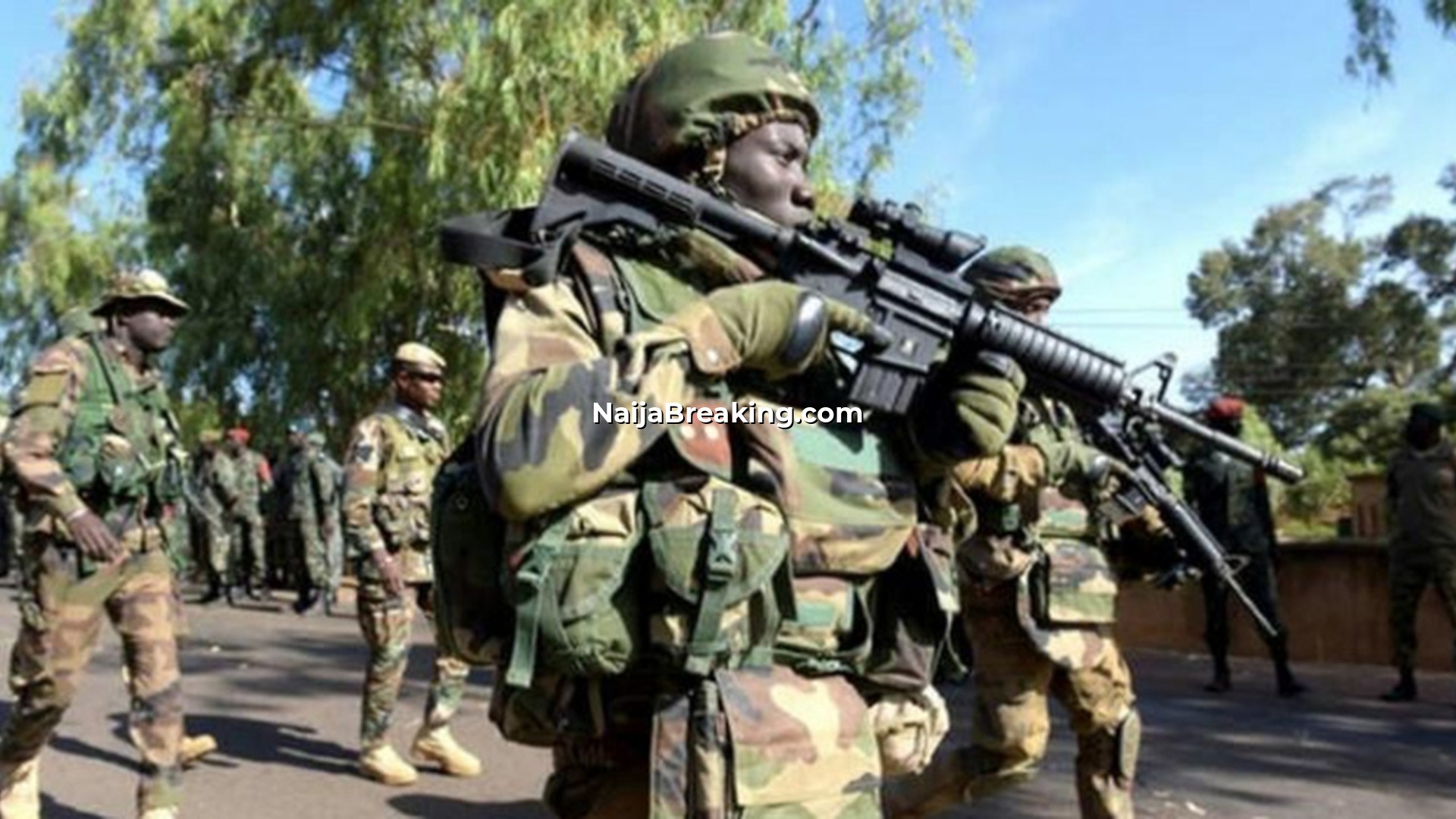
Nigerian Army Pledges Sustained Counter-Insurgency Momentum Against Insecurity in Taraba
The Nigerian Army has renewed its commitment to combating the escalating insecurity in Taraba State, with the Commander of 6 Brigade Nigerian Army/Sector 3 Operation Whirl Stroke (OPWS), Brigadier General Chukwuemeka Michael Akaliro, promising relentless military operations until the state achieves lasting peace and stability. The pledge came during an interdenominational church service marking the 163rd Nigerian Army Day Celebration (NADCEL) in Taraba, signalling the military’s determination to address the multifaceted security challenges plaguing the northeast region. This commitment matters urgently to Nigerians because Taraba State has become a epicentre of multi-dimensional insecurity—spanning kidnapping, banditry, communal conflicts, and livestock rustling—that threatens lives, disrupts commerce, and destabilises entire communities. The state’s security situation directly impacts Nigeria’s ability to achieve sustainable development and regional peace, making the Army’s operational momentum in the region critically important to national stability and economic recovery. With Nigeria’s security sector already stretched across multiple theatres of conflict, the Army’s declared resolve in Taraba represents a test case for whether sustained military engagement can break the cycle of violence that has claimed thousands of lives and displaced hundreds of thousands of residents across the northeast corridor.
Background
Taraba State’s descent into chronic insecurity did not happen overnight; it is rooted in decades of structural neglect, resource competition, and the intersection of local ethnic and religious tensions with transnational criminal networks. The state, located in Nigeria’s northeast and comprising over 16 local government areas with diverse ethnic groups including Tiv, Fulani, Kuteb, Jukun, and Mambila peoples, has historically served as a flash point for herder-farmer conflicts driven by climate change, desertification, and competition for grazing and agricultural land. The Sahel’s expanding desert has pushed pastoral communities southward into farmland, creating friction that pre-dates the current security crisis but has been weaponised by organised criminal gangs. When Boko Haram and Islamic State West Africa Province (ISWAP) expanded their operations beyond northeast strongholds into Taraba during the mid-2010s, they found fertile ground for recruitment and operations in communities already fractured by economic hardship and marginalisation.
Operation Whirl Stroke, established in 2015 by the Nigerian military to tackle insurgency and banditry across Taraba, Benue, and Nasarawa States, has recorded mixed results. Initial operations contained militant activities to manageable levels, but resurgent banditry and kidnapping—often for ransom—have overwhelmed military capacity, particularly as armed gangs adopted decentralised tactics and shifted from ideological messaging to pure profit-seeking criminal enterprise. The army’s challenges in Taraba reflect broader limitations: insufficient personnel coverage across vast rural terrain, inadequate intelligence-sharing with civilian agencies, and competition for resources with operations in Borno, Yobe, and other critical theatres. Taraba’s remoteness, porous borders with Cameroon, and the proliferation of small arms from regional conflicts have enabled criminal actors to operate with relative impunity. The state has suffered an estimated 3,000+ deaths and over 500,000 internally displaced persons in recent years, according to local civil society organisations, making it one of Nigeria’s most destabilised regions outside the core insurgency zones.
Key Details
During the NADCEL commemoration ceremony held in Taraba State, Brigadier General Akaliro articulated the 6 Brigade’s strategic commitment to sustained operations against criminal elements, emphasising that military action would continue “until the state is safe and secure for all peace-loving residents.” He expressed gratitude to Governor Agbu Kefas and the people of Taraba for their cooperation with military operations, acknowledging that civilian support remains essential to counterinsurgency success. Akaliro also praised the Chief of Army Staff (COAS), Lieutenant General Waidi Shaibu, for what he described as visionary leadership and commitment to troop welfare—a subtle but significant reference to morale challenges the military has faced in sustaining operations in harsh, under-resourced deployment areas.
Governor Agbu Kefas, who took office in 2023 after his predecessor Darius Ishaku’s tenure, characterised the Nigerian Army as “the central pillar in promoting national unity and safeguarding Nigeria’s territorial integrity across generations.” Kefas used the NADCEL occasion to pivot away from security sector criticism that dogged his predecessor’s administration, instead positioning his government as a supportive partner to the military. He framed military service as a calling demanding “discipline, courage, loyalty, endurance and sacrifice,” language that elevated the security narrative beyond technical military operations to a moral and patriotic discourse.
The 2026 NADCEL theme, “Protecting the Nation and Serving the People: A Way Forward for the Nigerian Army,” reflects institutional messaging about civil-military relations and constitutional order. Governor Kefas emphasised that the Army’s strength lies not solely in operational firepower but in “professionalism, discipline and commitment to constitutional order”—a statement that carries weight given Nigeria’s history of military intervention in politics and ongoing debates about security sector oversight. According to media reports on the ceremony, military leadership also highlighted the importance of synergising with civilian agencies, though specific modalities for such coordination were not detailed. The commemoration occurred amid reports that banditry and kidnapping in Taraba had slightly decreased in early 2026 compared to the previous year, though attacks on communities and extortion remain endemic.
Impact and Analysis
The significance of the Army’s pledge in Taraba extends beyond ceremonial rhetoric. It signals institutional acknowledgment that the security situation in the state requires long-term commitment rather than ad-hoc operations, a recognition that could reshape resource allocation within the Nigerian military’s strategic calculus. However, pledges without measurable outcomes have become a recurring pattern in Nigeria’s security discourse: government officials routinely promise operational momentum, citizens experience temporary improvement, then violence resurges when attention shifts elsewhere or operations are scaled back due to budget constraints or reassignment of personnel to other theatres.
The real challenge lies in sustaining operations without addressing root causes: poverty, youth unemployment, weak governance, and land disputes that fuel recruitment into criminal networks. A young man in rural Taraba earning ₦5,000-₦10,000 monthly as a farmer faces genuine economic desperation; when criminal syndicates offer ₦50,000-₦100,000 per kidnapping operation or ₦20,000 monthly as armed gang members, the rational economic choice becomes clear. The military can kill or arrest criminals, but without simultaneous government investment in job creation, education, and dispute resolution mechanisms, new recruits will continuously replace arrested or fallen gang members. This cycle is evident in Borno and Yobe States, where years of military operations have not eliminated Boko Haram or ISWAP despite thousands of casualties.
Furthermore, the Army’s operational effectiveness in Taraba is constrained by systemic issues: intelligence gaps regarding gang movement and financing, insufficient troops relative to geographical terrain, limited air support compared to Borno operations, and the challenge of distinguishing civilian herders engaged in legitimate pastoral migration from armed bandits. The military’s counter-insurgency doctrine, developed primarily to combat ideologically-motivated insurgents like Boko Haram, may not optimally address criminalised, profit-driven banditry that responds to market incentives rather than political ideology. Success will require adaptation of tactics, closer intelligence coordination with the Department of State Security (DSS) and EFCC, and civilian agency capacity-building—areas where the current statement provides no concrete commitments.
Expert Perspectives
Dr. Kunle Togun, a senior security analyst at the Lagos Institute for Strategic Studies, offers cautious optimism about the Army’s Taraba commitment. “The pledge itself is positive because it indicates institutional recognition that the northeast needs sustained rather than episodic military presence. However, the critical issue is whether the Nigerian military has adequate resources—personnel, equipment, intelligence capacity—to sustain simultaneous high-intensity operations in Borno, Yobe, Kaduna, Niger, and now focus on Taraba. We’ve seen operational momentum build and collapse multiple times in Nigeria’s counter-insurgency history. What’s needed is not just military commitment but a whole-of-government approach combining security operations with economic stimulus programmes and governance reforms.”
Conversely, Chioma Okafor, a policy researcher at the Centre for Development and Democratic Governance in Abuja, raises structural concerns: “The problem with statements like this is they individualise responsibility—putting the burden on a military commander—when the real challenge is systemic. Taraba State’s insecurity is rooted in failed land dispute resolution, youth unemployment at over 35%, and minimal government presence in rural areas. The military can provide security but cannot address economic desperation that drives crime. Governor Kefas has made excellent rhetorical gestures toward the military, but has the state government matched this with robust civilian infrastructure investment, community policing programmes, or rehabilitation centres for gang members willing to surrender? Without these, military operations alone will prove cyclical.”
What This Means for Nigerians
For a businessman operating across Taraba—perhaps trading in agricultural commodities, livestock, or manufacturing goods—the Army’s commitment translates to potential improvement in security conditions that directly affects his bottom line. Improved military presence could mean fewer kidnappings of goods in transit, reduced extortion payments to armed gangs at checkpoints, and more predictable movement of products to northern markets. If even modest security gains are achieved, wholesale prices in Taraba markets could stabilise, reducing the security premium that currently inflates costs for ordinary consumers. A family in Jalingo (Taraba’s capital) currently experiences restricted movement after sunset and school closures in affected areas; improved security conditions could restore normal commercial and social rhythms.
However, for young men in rural Taraba communities with limited economic opportunity, the Army’s operational escalation poses immediate danger. If military operations intensify—and history suggests they often do with collateral consequences—civilian casualty risks increase, particularly in communities where distinguishing combatants from non-combatants proves difficult. The declaration of sustained operations may also trigger temporary displacement as residents flee areas anticipating military-criminal clashes. For pastoralists, increased military checkpoints often mean harassment and extortion by soldiers themselves, a perverse outcome where securitisation paradoxically increases insecurity through corrupt or brutal state actors. The Army’s promise is thus a double-edged development: security for some, but potential hardship and danger for vulnerable populations caught in operational zones.
For Nigerians in other regions watching this unfold, Taraba serves as a bellwether for whether sustained military commitment can address the insecurity that depresses Nigeria’s GDP growth and deters foreign investment. If the Army succeeds in measurably reducing violent crime in Taraba within 12-18 months, it validates the doctrine of long-term military engagement and may support arguments for expanded military budgets. Conversely, if insecurity persists despite the pledge, it reinforces the critique that military spending alone cannot solve Nigeria’s security crisis, strengthening the case for rebalancing toward development spending and judicial reform.
Editor’s Take
At NaijaBreaking, we believe this story reveals a critical gap between institutional rhetoric and operational reality in Nigeria’s security architecture. The Army’s pledge to sustain momentum against insecurity in Taraba is welcome, but what disturbs us is the implicit assumption that military commitment alone will solve problems that are fundamentally economic, political, and social. We’ve heard these pledges before—after NADCEL ceremonies in previous years, during military operations in Boko Haram strongholds, following high-profile attacks. The pattern is consistent: initial momentum, some successes, then gradual decline as budgets tighten or military leadership turns attention elsewhere.
What is being overlooked in mainstream coverage is the role of state government capacity. Governor Kefas made eloquent remarks about the Army’s professionalism and constitutional order, but where is the corresponding state-level strategy for economic recovery, youth employment, and civilian intelligence networks? Taraba State’s government budget is constrained; without federal government support or development partner funding, praising the military while starving civilian agencies of resources is performative governance. Nigerians should demand that security pledges be paired with measurable deliverables, accountability mechanisms, and integrated civilian strategies, not just military operations.
What to Watch Next
Over the coming months, monitor these specific developments: First, track quantifiable security metrics—kidnapping incidents, armed robbery reports, and community displacement figures—released monthly by the Nigerian Police Force and civil society monitors. If these decline 30-50% within six months, the pledge shows substance; if flat or rising, it’s empty rhetoric. Second, watch for resource allocation announcements: Does the Federal Government increase funding to 6 Brigade OPWS for logistics, equipment, and personnel? Does Taraba State government launch complementary civilian programmes—youth employment schemes, community policing, agricultural extension services? Third, observe civil-military relations indicators: Are there documented cases of military units working with DSS and EFCC on intelligence-led operations, or do operations remain siloed? Finally, follow community reception: Do local leaders and residents report improved security or increased military harassment and collateral damage?
The key question now is whether this pledge represents authentic strategic commitment or ceremonial performance in advance of a potential military drawdown. What mechanisms exist to hold the military accountable if operations fail to improve security outcomes within defined timeframes?
Conclusion
Brigadier General Akaliro’s pledge to sustain military momentum against insecurity in Taraba State is an important institutional commitment, but it must be tested against outcomes, not accepted on rhetoric alone. The Army’s role in Nigeria’s counter-insurgency strategy is essential, yet military force alone cannot address the poverty, governance failures, and economic desperation that fuel organised crime and banditry across the northeast. What this story reveals is the government’s persistent tendency to weaponise military operations as a substitute for comprehensive development strategy—a pattern that has left Borno, Yobe, and Adamawa destabilised despite decades of armed intervention.
Taraba State stands at a critical juncture: security operations can buy space for economic recovery and governance reform, but only if those gains are seized by state and federal governments to rebuild institutions, create jobs, and restore public confidence in the state’s capacity to protect citizens. The next 12 months will determine whether the 163rd NADCEL pledge becomes a turning point for Taraba or merely another ceremonial moment forgotten by election cycles and budget cycles. Nigerians watching from Lagos to Kano should demand transparency, measurable outcomes, and integrated civilian strategies alongside military operations.
Share your thoughts in the comments below—what do you think this means for Nigeria’s future? Can military operations alone stabilise Taraba, or must security pledges be paired with economic and governance reforms to succeed?