Army Chief Honours Literary Champions: What Nigeria’s Education Push Really Signals
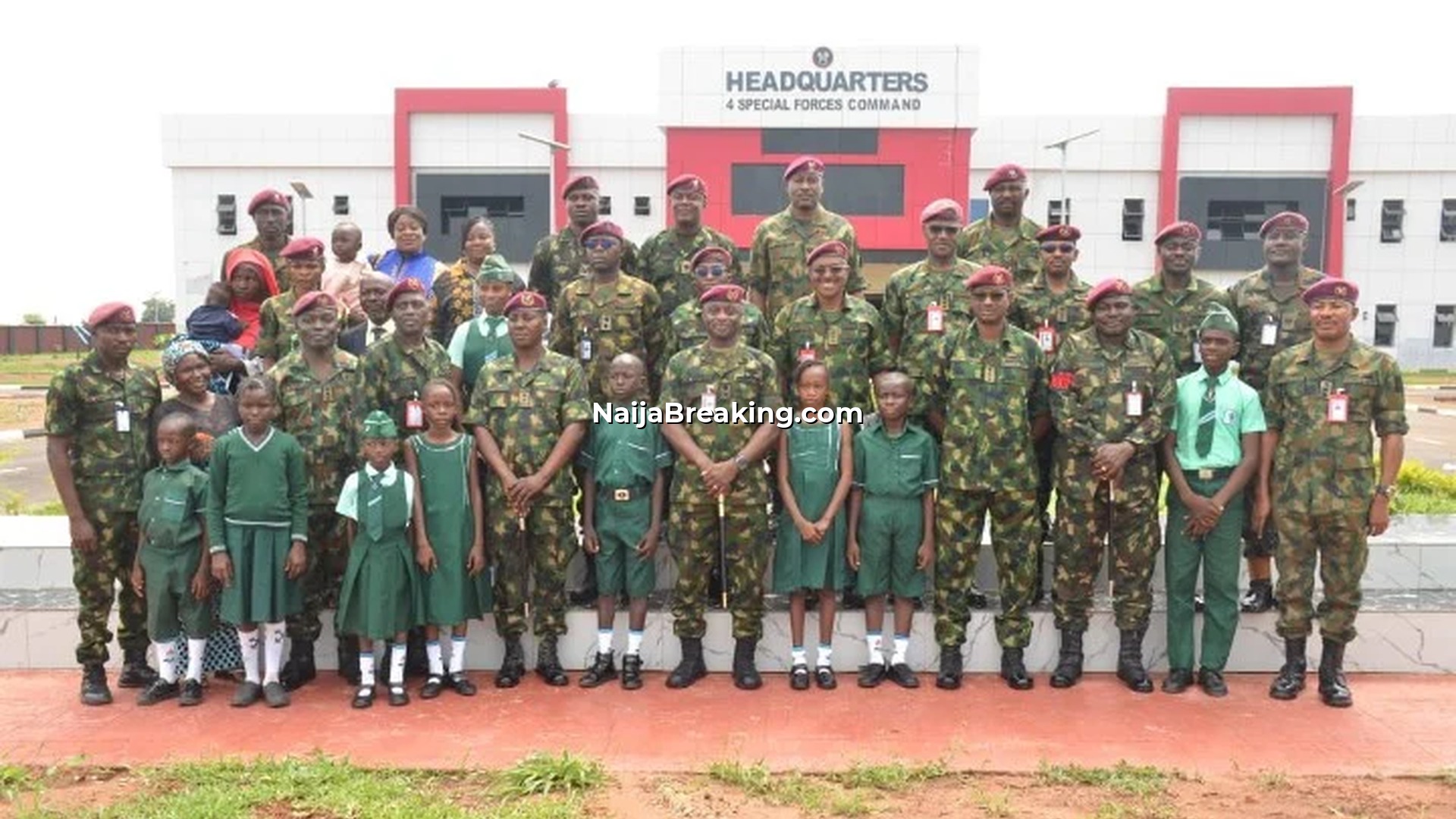
The Chief of Army Staff, Lt. Gen. Waidi Shaibu, has presented award prizes to outstanding winners of the Third Edition of the COAS Literary Competition 2026, marking a deliberate pivot toward intellectual development among young Nigerians enrolled in military institutions. The COAS literary competition has become a significant marker of how Nigeria’s armed forces are repositioning themselves not merely as security providers but as custodians of educational excellence and civic consciousness. During the award presentation ceremony at the Nigerian Army’s 4 Special Forces Command, Doma, Nasarawa State, on Friday, the COAS demonstrated institutional commitment to fostering national consciousness and intellectual engagement among pupils and students across Army schools nationwide. This initiative, which coincided with activities lined up to mark the 2026 Nigerian Army Day Celebration (slated for July 6, 2026), reveals a strategic decision by military leadership to invest in the cognitive and creative capacities of young citizens—a move that extends far beyond traditional military pedagogy. For Nigeria, where educational quality remains uneven across public and private institutions, and where youth engagement in civic discourse is often limited, this initiative carries implications worth examining beyond the surface-level celebration of literary achievement.
Background
The establishment of the COAS Literary Competition cannot be separated from the broader transformation Nigeria’s military has undergone over the past decade. Following the end of the Boko Haram insurgency’s worst phase and the relative stabilization of the northeast, military leadership began to pivot toward softer infrastructure—institutional reforms, professionalization, and community engagement. The Nigerian Army, under successive chiefs of staff, has made deliberate efforts to rebrand itself as an institution invested in nation-building beyond combat operations. This shift reflects global trends in military modernization, where armed forces increasingly position themselves as developmental actors, particularly in education and civic engagement.
Army schools themselves have a storied history in Nigeria. These institutions—including establishments like the Nigerian Army School of Infantry, various children’s schools across Commands, and specialized military academies—have traditionally served military families and, over time, opened enrolment to civilian pupils. The quality of these schools has historically been competitive, offering structured discipline, strong academic curricula, and access to infrastructure that many civilian public schools lack. However, the focus on literary competition and intellectual development represents a relatively new emphasis. Previous military education initiatives centred heavily on discipline, STEM subjects, and physical training. The elevation of essay writing, poetry, and intellectual discourse signals a recognition that nation-building requires not just engineers and scientists, but citizens capable of critical thinking, articulate expression, and engagement with complex social issues.
Nigeria’s education sector has faced persistent challenges: according to the World Bank, over 13 million Nigerian children remain out of school, with significant regional disparities. Urban private schools and military institutions have thus become de facto leaders in quality education delivery. By launching and promoting the COAS Literary Competition as a flagship initiative tied to Army Day celebrations, military leadership is positioning intellectual development as a core institutional value. This moves the conversation beyond survival-focused security rhetoric toward what the military perceives as its role in shaping informed, patriotic citizens—a significant statement in a nation where civic discourse often operates in fragmented echo chambers.
Key Details
According to the source article, the Third Edition of the COAS Literary Competition 2026 involved participants from Army schools across Nigeria, with categories spanning essay and poetry writing. The competition was organized nationally and explicitly aimed at promoting national consciousness, intellectual engagement, and young citizens’ participation in nation-building. Participants were asked to address issues of national importance, particularly in the areas of security, patriotism, and peacebuilding—themes that directly reflect the military’s operational priorities and institutional values.
Three pupils from the Command Children School in Doma, operating under the 4 Special Forces Command, emerged as competition winners. Aminu Zayyanu secured second position in the Primary Essay Category and received a prize of N250,000. Bright Dorasimi placed third in the Primary Essay Category and was awarded N100,000. Hope Emmanuel took third position in the Primary Poetry Category and received N100,000. These prize amounts—totalling N450,000 for just three primary school winners—signal institutional investment in recognizing and incentivizing literary excellence. The specific focus on primary school pupils also reveals an important strategic choice: the military is cultivating intellectual development from the foundational stages of education, not waiting until secondary or tertiary levels.
Maj. Gen. Olurotimi Awolo, the Commander of 4 Special Forces Command Doma, represented the COAS at the ceremony and articulated the competition’s broader strategic purpose. He emphasized that the annual competition had historically enabled participants “to express their views on issues of national importance, particularly in the areas of security, patriotism, and peacebuilding.” This framing is crucial—the military is explicitly creating platforms for young people to engage intellectually with the nation’s most pressing challenges, moving them from passive consumers of security narratives to active thinkers about national cohesion and peacebuilding.
Impact and Analysis
The COAS Literary Competition represents a subtle but significant shift in how Nigeria’s military establishment conceptualizes its role in national development. Historically, military institutions in Nigeria have been associated primarily with security operations, often suffering from public perception challenges tied to concerns about brutality, corruption, and organizational opacity. By launching and promoting an intellectual competition focused on patriotism, peacebuilding, and national consciousness, the military is attempting to reposition itself as a serious educational and civic institution. This is strategic public relations, certainly, but it also reflects deeper thinking about how military leadership views its constituency and its responsibilities beyond combat.
For Nigerian pupils in Army schools, this initiative creates tangible incentive structures around intellectual engagement. N250,000 for a second-place essay is substantial motivation—equivalent to several months of household income for many Nigerian families. It sends a clear message that excellence in writing, critical thinking, and articulate expression of ideas is valued and rewarded. In a nation where many young Nigerians lack formal platforms to develop and showcase intellectual capabilities, particularly outside elite university circles in Lagos and Abuja, this competition democratizes access to recognition and prize incentives. The multi-state participation further reduces geographic barriers to engagement.
However, the competition’s thematic parameters—security, patriotism, peacebuilding—also reveal the boundaries of permitted intellectual discourse. Young writers are being incentivized to think critically about Nigeria’s challenges, but within a framework defined by military leadership. This raises questions about intellectual independence and whether the competition truly encourages diverse perspectives on national issues or merely channels youth expression into state-approved narratives. True intellectual development requires space for dissent, critique, and alternative viewpoints—elements that may be constrained when the competition’s themes and judging are controlled by military authority.
Expert Perspectives
Dr. Chisom Okonkwo, an education policy analyst at the Lagos-based Institute for Strategic Development Studies, views the COAS competition as a meaningful but limited intervention in Nigeria’s broader educational crisis. “The military’s investment in literary competition signals recognition that critical thinking and articulate expression are national assets,” Dr. Okonkwo explained in an interview. “However, this initiative reaches perhaps 5,000-10,000 pupils across Army schools. Nigeria has over 40 million school-age children. Until we see this same commitment to intellectual development reflected in the CBN-funded education budget, in teacher training, and in inclusive curricula across all schools, we risk creating elite intellectual spaces rather than democratizing intellectual engagement. The COAS competition is laudable, but it cannot substitute for systemic educational reform.”
Conversely, Colonel (Retired) Kunle Adebayo, a military historian and defence policy consultant based in Abuja, emphasizes the symbolic importance of military institutions positioning themselves as centers of intellectual life. “In many developing democracies, militaries maintain credibility through institutional professionalization and demonstrated commitment to values beyond force projection,” Col. Adebayo noted. “Nigeria’s military faces persistent trust deficits. When the COAS uses Army Day not just for parades and combat displays but for celebrating literary excellence, it’s subtly messaging that this institution values ideas, culture, and civic engagement. Over a decade, this kind of institutional rebranding has political consequences—it shapes how young citizens perceive military authority and whether they view military leadership as legitimate contributors to national discourse, not just security operators.”
What This Means for Nigerians
For Nigerian parents seeking quality education for their children, the existence and promotion of the COAS Literary Competition signals that Army schools remain competitive institutional options. The prize structures and focus on intellectual development make these schools attractive to families—particularly in northern Nigeria where the 4 Special Forces Command is located—who value both academic rigour and patriotic education. However, access remains limited. Army schools prioritize children of military personnel and retain selective admission processes. Most Nigerian families cannot enroll their children in these institutions, meaning the benefits of this intellectual development initiative remain inaccessible to the broader majority.
For young Nigerians with access to Army schools, the competition creates tangible career pathways and intellectual recognition. Winning essays and poetry—particularly those addressing peacebuilding and security—may attract attention from government agencies, think tanks, and international organizations focused on African security and development. This could translate into scholarships, internships, or career opportunities that young Nigerians from less-resourced schools might struggle to access. The competition also provides youth with platforms to engage critically with national issues—a relatively rare opportunity in a nation where youth civic participation often operates through social media activism or informal channels rather than formal institutional recognition.
For the broader Nigerian public, the COAS competition represents a leadership narrative about institutional priorities. At a time when many Nigerians face security challenges, economic hardship, and declining public services, military investment in literary competition communicates values of education, civic engagement, and intellectual development. This can either enhance public confidence in military institutions or, conversely, generate cynicism if citizens perceive literary competitions as a form of institutional vanity while urgent security and welfare problems persist. The meaning Nigerians draw from this initiative depends largely on their own experiences with military effectiveness and institutional trust.
Editor’s Take
At NaijaBreaking, we see the COAS Literary Competition as a signal of institutional maturity rather than transformative educational policy. The initiative is noteworthy because it reflects military leadership willing to invest in intellectual development and civic engagement—values that should extend throughout Nigeria’s education system. However, we must acknowledge the fundamental tension: an initiative based in military schools, funded by military budgets, and controlled by military leadership cannot substitute for urgent systemic educational reform across Nigeria’s fractured public school system. The real test of military commitment to intellectual development would be advocacy for increased education spending in the national budget, support for teacher professionalization, and investment in civilian educational infrastructure. Until those larger commitments materialize, even excellent literary competitions remain boutique initiatives for privileged minorities. What this story reveals is that Nigeria’s military establishment understands the political and developmental value of intellectual engagement—but translating that understanding into systemic change requires far greater institutional commitment than annual award ceremonies.
What to Watch Next
In the coming months, observe whether the COAS Literary Competition expands beyond current scope—increasing prize pools, widening participation beyond Army schools, or extending to include civilian educational institutions. Watch for whether military leadership uses the success of this initiative to advocate for increased education spending in the 2027 national budget or in Defence Ministry budget allocations. Monitor whether winning essays and poetry receive publication or distribution beyond military circles—inclusion in school curricula, publication in educational journals, or media prominence would signal genuine commitment to disseminating ideas rather than merely celebrating achievement within closed institutional circles. Finally, pay attention to the thematic direction of future competitions: will organizers continue narrowly focusing on security and patriotism, or will they broaden intellectual parameters to encourage critical engagement with diverse national issues? The key question now is whether military investment in literary excellence will catalyze broader educational transformation or remain a commendable but ultimately limited initiative within Nigeria’s fragmented education landscape.
Conclusion
The COAS Literary Competition represents a deliberate institutional choice by Nigeria’s military leadership to position the armed forces as custodians of intellectual development and civic engagement, not merely security operations. For three pupils from Doma—Aminu Zayyanu, Bright Dorasimi, and Hope Emmanuel—this recognition provides tangible validation, substantial financial reward, and institutional visibility that extends their opportunities beyond their immediate communities. Yet the initiative’s broader significance lies in what it reveals about military leadership’s evolving self-conception: an institution that values critical thinking, articulate expression, and intellectual engagement with national challenges. However, transforming this vision from Army schools into systemic educational change across Nigeria remains an unfinished challenge. The competition demonstrates what’s possible when institutions invest in intellectual development; now the question becomes whether military commitment will extend beyond ceremonial recognition to advocacy for the systemic educational transformation Nigeria desperately needs. Share your thoughts in the comments below—what do you think this means for Nigeria’s future?