Silicon Valley’s Robotaxi Pit-Stop Startup Raises $10M: Why Nigeria Should Care About Autonomous Vehicle Infrastructure
A Redwood City, California-based startup called Aseon Labs has just raised $10 million to solve one of the autonomous vehicle industry’s most stubborn problems: the dead-mileage challenge that’s killing robotaxi profitability. The robotaxi infrastructure startup, which emerged from Y Combinator’s 2026 spring cohort, has designed parking space-sized automated pods that clean, charge, and inspect self-driving vehicles without human intervention. While this innovation is happening in Silicon Valley, Nigeria’s emerging tech ecosystem and growing interest in autonomous mobility solutions make this development directly relevant to Nigerian entrepreneurs, policymakers, and investors watching the global autonomous vehicle market. The $10 million seed round—led by Crane Venture Partners and backed by Uber co-founder Garrett Camp’s Expa venture firm—signals that the autonomous vehicle support infrastructure market is attracting serious capital. For Nigeria, where mobility challenges plague urban centres like Lagos and Abuja, understanding this technology trend is essential as the country positions itself as an African tech hub.
Background
The autonomous vehicle revolution has captured global imagination for over a decade, but the industry has consistently stumbled on one unglamorous reality: the economics of empty miles. When robotaxis in cities like San Francisco cruise streets waiting for passengers or travel to distant depots for maintenance and charging, they’re burning operational costs without generating revenue. This “deadhead miles” problem—an industry term that emerged from ride-hailing analytics—represents one of the biggest barriers between robotaxi companies and the profitability they promised investors. Traditional ride-hailing services like Uber and Lyft have long wrestled with this issue, even with human drivers who can pick up passengers between destinations. For fully autonomous vehicles, the problem compounds because there’s no human driver willing to wait idle or make detours.
Nigeria’s entrepreneurial ecosystem has begun tracking global autonomous vehicle developments closely, particularly as Lagos’ notorious traffic congestion and Abuja’s rapid urban growth create natural laboratories for mobility solutions. The Central Bank of Nigeria (CBN) and the National Bureau of Statistics (NBS) have documented that transportation costs consume significant portions of household budgets across urban Nigeria, making any efficiency gain in mobility systems economically meaningful. Over the past five years, Nigerian tech startups have increasingly focused on logistics optimization, delivery networks, and last-mile solutions—all sectors that could benefit from autonomous vehicle infrastructure breakthroughs happening in Silicon Valley. The emergence of Aseon Labs represents a maturation of the autonomous vehicle ecosystem, moving beyond just building the cars themselves toward building the supporting infrastructure that makes operations viable.
Several Nigerian venture capital firms and tech accelerators—including Techstars Africa participants and CBN-supported fintech initiatives—have begun exploring autonomous vehicle applications in agricultural logistics, last-mile delivery, and urban transportation. The success of startups like Aseon Labs validates the infrastructure-first approach that some Nigerian entrepreneurs have advocated. Understanding how Silicon Valley is solving these foundational problems gives Nigerian innovators a roadmap for what infrastructure challenges to anticipate and solve locally, rather than waiting for international players to build these systems in Africa.
Key Details
Aseon Labs, co-founded by veterans from battery-swapping startup Pushme, has developed what the company calls “robotic pit stops”—compact automated facilities designed to fit into urban parking spaces. According to TechCrunch’s report, the seed round of $10 million was led by Crane Venture Partners, with participation from Y Combinator, Expa (Uber co-founder Garrett Camp’s venture firm), Robin Hood Ventures, and Founders Capital. The funding round also attracted prominent angel investors, including former Google executive Adrian Aoun, Mercury founder and CEO Immad Akhund, and Zimride co-founder Rajat Suri, alongside team members from notable companies like Anthropic, Nuro, Turo, and Revolut.
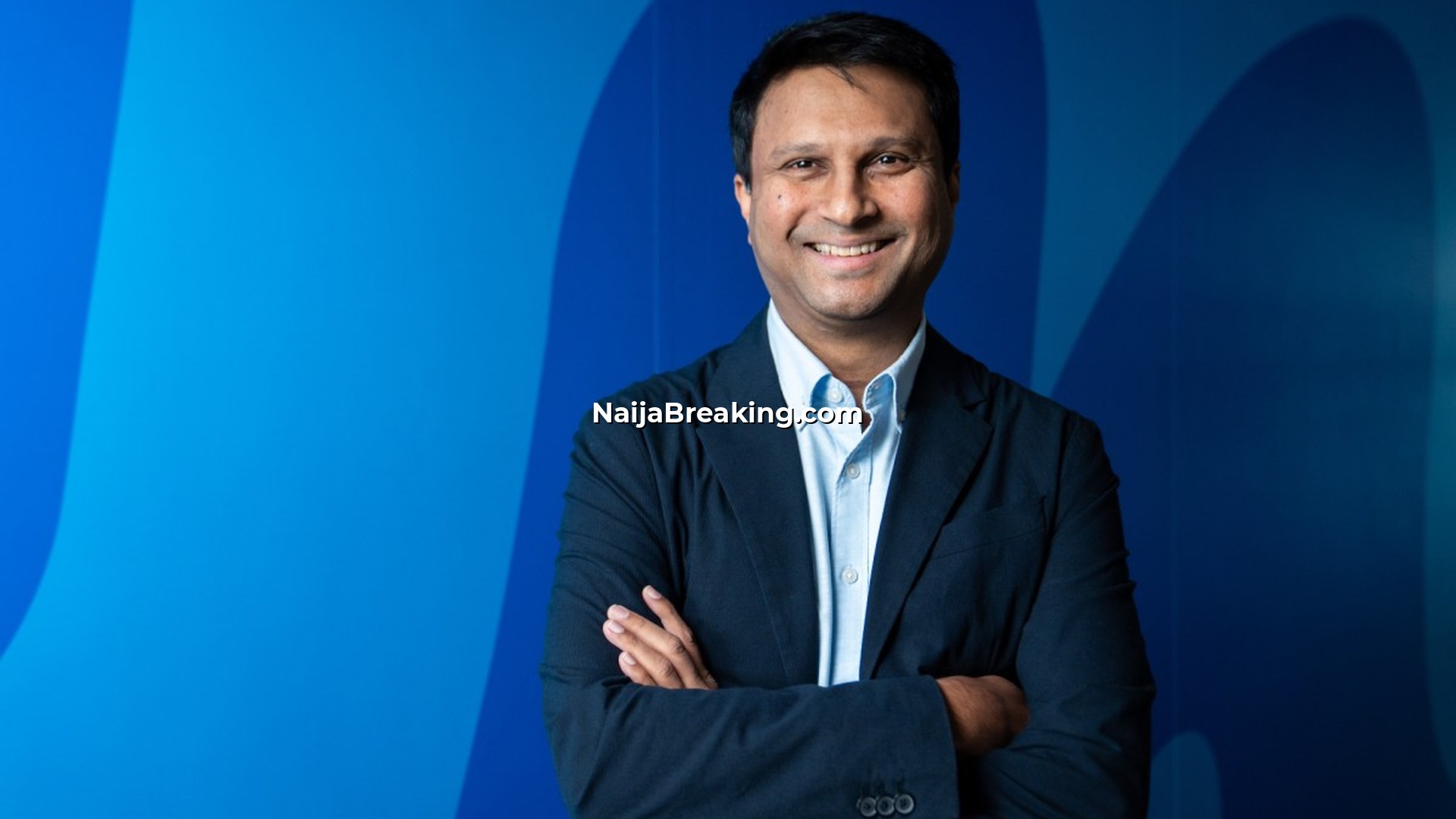
The company remains in early-stage development, with the seed capital earmarked for three strategic priorities: building five prototypes of the automated pods, expanding the engineering team from six to approximately twelve people, and securing real estate partnerships to establish a distributed network across cities. CEO George Kalligeros explained the core value proposition: “In order to reach economic parity with ride-hailing—which is where we need to get with self-driving cars—and to stop really subsidizing the cost, you need the utilization to go up. You need the robotaxi in continuous operation during the entirety of the demand curve of the day.” This statement underscores the fundamental problem that Aseon Labs is targeting. By eliminating the need for robotaxis to travel to distant service depots, the company projects that vehicles can remain in revenue-generating service for longer periods, directly improving the per-mile economics that have constrained robotaxi profitability projections.
The technology represents a significant engineering challenge: each pod must be capable of inspecting vehicle components, removing and disposing of waste, recharging battery systems efficiently, and conducting basic maintenance diagnostics—all without human technicians. The distributed pod network model contrasts sharply with traditional depot-based maintenance models used by ride-hailing fleets today. According to the source, Aseon Labs’ approach could dramatically reduce deadhead miles, potentially transforming robotaxi economics from money-losing ventures into sustainable transportation businesses.
Impact and Analysis
Aseon Labs’ funding announcement reveals a crucial inflection point in autonomous vehicle development: the industry is moving from vehicle engineering to ecosystem engineering. The original assumption that autonomous vehicles would simply replace human drivers in existing ride-hailing infrastructure is proving inadequate. Instead, robotaxi companies must reimagine entire operational systems from charging and maintenance to fleet distribution and utilization optimization. This shift has profound implications for how African countries, particularly Nigeria, might eventually adopt autonomous vehicle technology. Rather than importing fully-formed autonomous vehicle systems designed for Silicon Valley’s infrastructure, Nigerian companies could potentially leapfrog traditional fleet depot models and implement distributed service pod networks from the outset.
The profitability problem Aseon Labs addresses directly relates to Nigeria’s mobility economics. In Lagos, where Uber and Bolt operate extensively, the cost structure of ride-hailing depends critically on driver utilization and per-trip revenue optimization. A similar utilization problem would plague autonomous vehicles unless infrastructure solutions like Aseon Labs’ pods are implemented. The Federal Road Safety Corps (FRSC) and Lagos State Government’s increasing focus on traffic management and congestion reduction suggests receptiveness to technologies that improve vehicle utilization and reduce idle-vehicle congestion. Aseon Labs’ model, scaled to Nigerian contexts, could theoretically reduce traffic caused by vehicles searching for parking, charging stations, or depot access.
However, the analysis reveals a critical gap: Aseon Labs is being financed and developed for high-income markets with existing robotaxi operations and high real estate costs. Nigerian implementation would require significant adaptations to local electrical infrastructure, real estate economics, and regulatory frameworks. The CBN’s recent focus on renewable energy and sustainable transportation suggests policy alignment, but practical deployment would require partnerships with NNPC, distribution companies, and state governments.
Expert Perspectives
Dr. Emeka Okafor, a Lagos-based autonomous vehicle and urban mobility analyst at the Institute for Transport and Development Policy (ITDP) Africa, observes that Aseon Labs’ funding signals an important market validation: “What Silicon Valley is recognising is that autonomous vehicle profitability was never just an engineering problem—it’s an infrastructure problem. For Nigeria, this is actually advantageous. We don’t have entrenched depot-based infrastructure that needs replacing. If Nigerian companies understand this lesson now, we can design distributed service networks from the beginning rather than retrofitting them later. The $10 million investment in infrastructure startups should alert Nigerian venture capital and the CBN that mobility’s future isn’t just in building the vehicles themselves.”
In contrast, Chinyere Adeyemi, a senior policy researcher at the Centre for Democracy and Development (CDD) focusing on technology regulation, urges caution: “While Aseon Labs’ model is impressive, we must ask whether Nigerian regulatory frameworks are prepared for distributed autonomous pod networks across our cities. Each pod represents a charging point, a maintenance facility, and a data collection point. Without clear guidelines from FIRS regarding taxation, from state governments regarding land use, and from the Central Bank regarding power infrastructure standards, premature adoption could create regulatory chaos. Nigeria should study this model carefully but move deliberately toward local implementation.” These contrasting perspectives reflect the genuine tension between opportunity and readiness that Nigeria faces in emerging technologies.
What This Means for Nigerians
For ordinary Nigerians navigating Lagos’ notoriously congested streets or Abuja’s expanding urban sprawl, Aseon Labs’ innovation might eventually translate into cheaper, more reliable ride-hailing services. If robotaxis can operate profitably through distributed service infrastructure, ride costs could theoretically decrease significantly compared to human-driver services that carry higher labour costs. A commercial bus driver in Lagos spending ₦2,000–₦3,000 monthly on vehicle maintenance, fuel, and depot charges might eventually be replaced by autonomous vehicles with dramatically lower operational costs, benefiting commuters through lower fares. However, this transition also threatens hundreds of thousands of Nigerian commercial drivers, from okada riders to bus operators, creating a significant employment displacement challenge that policymakers must address through retraining programmes.
For Lagos-based e-commerce entrepreneurs and delivery services like Jumia and Konga, automated robotaxi infrastructure represents opportunity. Distributed charging and maintenance pods could enable last-mile delivery fleets to operate more efficiently, reducing delivery costs and expanding service areas beyond current bounds. A small business owner running a delivery operation from Ikoyi to Lekki could potentially reduce operational costs by 20-30% if robotaxi infrastructure makes fleet utilization more efficient. For students and young professionals earning supplementary income through ride-hailing apps, increased adoption of autonomous vehicles presents both threat and opportunity: loss of income from driving, but potential new jobs in fleet management, pod maintenance, and autonomous vehicle operations.
The consumer impact depends entirely on Nigeria’s regulatory preparedness and local entrepreneurial response. If Nigerian companies develop competing or complementary technologies, consumers benefit from competitive pricing and service quality. If international companies monopolise autonomous vehicle infrastructure deployment, costs might remain high, limiting benefits to upper-income Nigerians in Lagos and Abuja while leaving secondary cities like Ibadan, Kano, and Port Harcourt underserved for years.
Editor’s Take
At NaijaBreaking, we believe Aseon Labs’ $10 million funding announcement exposes a critical blind spot in how Nigerian tech entrepreneurs and policymakers think about autonomous vehicles. The conversation has fixated on the glamorous challenge—building self-driving cars—while ignoring the infrastructure problem that determines whether those vehicles ever become profitable or merely expensive toys for wealthy cities. What this funding round reveals is that the autonomous vehicle opportunity for Nigeria isn’t in competing with Tesla or Waymo on vehicle manufacturing. It’s in building the supporting infrastructure—the “boring” logistics, power management, and maintenance systems—that make autonomous fleets viable in African cities. Nigerian entrepreneurs should study Aseon Labs’ approach not to copy it wholesale, but to understand that profitability in future mobility isn’t found in the vehicle itself, but in the ecosystem around it. The question for Nigeria’s government and venture capital community is whether we’re building companies that will own that ecosystem, or merely adopting solutions built elsewhere.
What to Watch Next
Over the next 6-12 months, monitor these critical developments: (1) Whether Aseon Labs successfully deploys its five prototypes and whether robotaxi companies (Waymo, Cruise, Tesla) adopt the pod network model, validating the underlying assumptions; (2) Whether competing infrastructure startups emerge from other Y Combinator cohorts or Silicon Valley accelerators, indicating whether Aseon Labs has solved a generalizable problem or a specific niche; (3) How Nigerian regulatory agencies—particularly the FIRS, CBN, and state transport authorities—begin positioning their frameworks for autonomous vehicle infrastructure, signalling readiness for local deployment; and (4) Whether Nigerian venture capital firms publicly commit funding to autonomous vehicle infrastructure or logistics optimisation companies, indicating confidence in the opportunity. The key question now is: Will Nigerian entrepreneurs and policymakers move fast enough to build these systems locally, or will we wait for international companies to impose their infrastructure models on our cities, limiting our control over the technology, data, and economics that govern future mobility?
Conclusion
Aseon Labs’ $10 million seed round represents a maturation of the autonomous vehicle industry from a hardware focus to an infrastructure focus. For Nigeria, this shift creates a window of opportunity: we can leapfrog outdated depot-based service models and build distributed, efficient infrastructure from the ground up. The challenge is whether Nigeria’s venture capital, regulatory frameworks, and entrepreneurial talent can respond fast enough to seize that opportunity, or whether we’ll become consumers of foreign autonomous vehicle infrastructure rather than builders of it. The autonomous vehicle future for Nigeria will be determined not by advances in vehicle technology—those are being solved in California—but by who builds and controls the infrastructure that makes those vehicles economically viable in Lagos, Abuja, Kano, and beyond. Share your thoughts in the comments below—what do you think this means for Nigeria’s future in autonomous mobility and urban transportation?