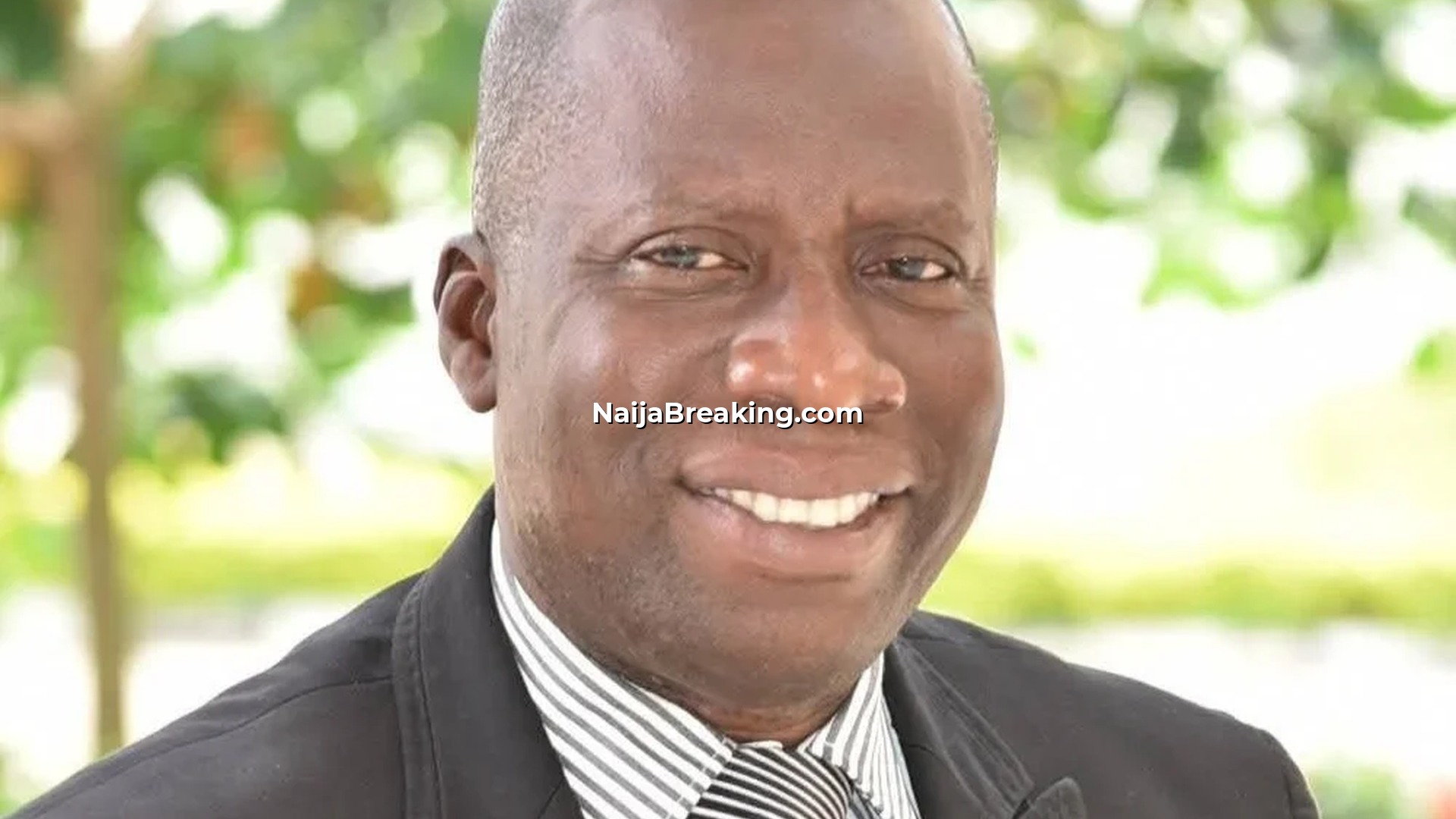
Ondo Governor Appoints Professor Obamuyi as AAUA Vice-Chancellor: Leadership Change Signals New Direction for Southwest University
Ondo State Governor Lucky Aiyedatiwa has approved the appointment of Professor Tomola Obamuyi as the new Vice-Chancellor of Adekunle Ajasin University, Akungba-Akoko (AAUA), marking a significant leadership transition at one of Nigeria’s key public universities in the Southwest. The AAUA Vice-Chancellor appointment follows a rigorous selection process involving 15 candidates, with Obamuyi emerging as the top choice after interviews by the institution’s Joint Council and Senate Selection Board. This development carries implications not just for the university itself, but for the broader trajectory of Nigerian higher education leadership, particularly as universities face mounting pressures around research output, infrastructure decay, and staff welfare. According to the governor’s Chief Press Secretary, Ebenezer Adeniyan, the appointment was made “following the due recommendation of the Governing Council of the institution, chaired by Dr Tunji Abayomi, in line with the University’s Act and extant regulations,” signalling adherence to proper institutional procedures at a time when many Nigerian universities struggle with governance challenges. The appointment of Obamuyi, a banking and finance professor with a track record of international recognition, suggests Governor Aiyedatiwa’s administration is prioritising academic credentials and proven management experience in shaping the institution’s future direction.
Background
Adekunle Ajasin University, Akungba-Akoko, established in 1999 as Ondo State University and renamed in 2006 to honour Nigeria’s former military administrator and civilian governor, has served as a critical node in Nigeria’s decentralised higher education system. The university’s location in Akungba-Akoko, a rural area in Ondo State’s Owo Local Government Area, positions it as an institution designed to democratise access to university education beyond the crowded urban centres where universities like the University of Ibadan and Obafemi Awolowo University dominate the landscape. Since its inception, AAUA has grown to include multiple schools and faculties, with programmes spanning engineering, sciences, social sciences, and management technologies, serving thousands of students annually. The outgoing Vice-Chancellor, Professor Olugbenga Ige, helmed the institution during a period of significant infrastructure expansion and the establishment of new academic programmes, though like many Nigerian public universities, AAUA has not been insulated from the funding challenges, infrastructure deficits, and brain drain that characterise the sector. The university’s governance structure, like other federally and state-funded institutions, operates within the framework of the Universities Act, which mandates that vice-chancellors be selected through transparent processes involving university councils and senate committees. Over the past decade, leadership transitions at Nigerian public universities have become increasingly critical moments, with some institutions using these transitions to reimagine their strategic direction, enhance research productivity, and rebuild stakeholder confidence. Ondo State, as the financial and administrative sponsor of AAUA, wields significant influence over institutional priorities, making gubernatorial approval of vice-chancellors a politically and academically sensitive matter that can either strengthen or undermine university autonomy depending on how it is exercised.
Key Details
Professor Tomola Obamuyi brings a distinguished academic pedigree to the role, having held the position of Head of the Department of Banking and Finance at AAUA before this appointment, demonstrating internal knowledge of the institution’s operations and culture. According to the official statement released by Governor Aiyedatiwa’s office, Obamuyi was the first substantive Dean of the School of Management Technology at the Federal University of Technology, Akure (FUTA), one of Nigeria’s leading technical universities, indicating his capacity to establish and scale academic structures from inception. His international standing is evidenced by his recognition as Best Professor of Banking and Finance in Africa for 2015 by the Africa Education Leadership Awards, a continental recognition that positions him among the continent’s top academic minds in his discipline. Beyond his research and teaching portfolio, Obamuyi has served on the National Universities Commission (NUC) programme accreditation teams, the regulatory body responsible for maintaining quality standards across Nigerian universities—this insider knowledge of NUC protocols and quality assurance frameworks could prove invaluable in navigating regulatory requirements and institutional rankings. Notably, he served as Chairperson and Subject Expert of the Review Panel for Namibia’s National Council for Higher Education, reflecting his influence in continental higher education governance and his ability to benchmark AAUA’s practices against regional standards. The selection process itself involved 15 candidates, a competitive field that suggests AAUA attracted interest from both internal and external applicants, though full details on the selection criteria and other finalists remain undisclosed, typical of university governance processes in Nigeria. According to Punch Nigeria, Obamuyi has presented academic papers at conferences across Europe, North America, East Africa, South Asia, and West Africa, signalling his integration into global academic networks—a network that could benefit AAUA’s international partnerships and research collaborations going forward.
Impact and Analysis
The appointment of Professor Obamuyi represents a deliberate choice to prioritise academic excellence and international exposure in AAUA’s leadership, a signal that contrasts sharply with the pattern in some Nigerian universities where political considerations occasionally override merit in senior appointments. His track record in establishing the School of Management Technology at FUTA—from conception to a functional, accredited school—demonstrates his capacity for institutional building, a skill AAUA will need if it is to expand its footprint and improve its global ranking position among African universities. The timing of this appointment is significant, coming at a moment when Nigerian universities face intensifying competition for research funding from international donors, enrolment pressure from the rising number of secondary school graduates, and a critical need to modernise curricula to align with emerging global employment trends in fintech, renewable energy, and digital transformation. By appointing a Banking and Finance specialist with demonstrated interest in financial sector development—a priority sector for Ondo State’s economic diversification—Governor Aiyedatiwa may be signalling an intention to align AAUA’s academic output more directly with state-level economic development goals, a move that could either enhance the university’s relevance or risk narrowing its broader educational mission. The selection of someone with deep NUC regulatory experience also suggests the incoming vice-chancellor will prioritise institutional compliance and accreditation management, potentially reducing the regulatory friction and accreditation delays that have plagued some Nigerian universities. However, the broader question remains whether academic leadership excellence alone can overcome the systemic challenges facing AAUA and similar state universities—underfunding, brain drain to federal universities and international institutions, ageing physical infrastructure, and competition for talented students from better-resourced counterparts. The appointment’s success will ultimately depend on whether it is accompanied by commensurate improvements in funding, facilities, and staff welfare from the Ondo State government.
Expert Perspectives
Dr Chioma Okonkwo, an education policy analyst at the Lagos Institute for Economic Advancement, offers a cautiously optimistic assessment: “Professor Obamuyi’s appointment signals that Ondo State is taking AAUA’s development seriously by recruiting a leader with both local institutional knowledge and continental stature. His experience establishing academic structures at FUTA provides a proven track record that many vice-chancellors lack. However, the real test will be whether his vision for research-driven excellence can be realised within the funding constraints that have crippled similar institutions across the Southwest.” She adds that his NUC background is particularly valuable for navigating the commission’s increasingly stringent accreditation requirements and potentially unlocking research grants that depend on institutional quality ratings.
Professor Kayode Ajayi, a comparative higher education scholar at the University of Ibadan’s Institute of African Studies, strikes a more cautionary note: “While Obamuyi’s credentials are impressive, we must ask whether appointing yet another banking sector specialist reflects a worrying trend of universities narrowing their mission to economic utility rather than broader intellectual inquiry. His appointment may boost AAUA’s business school rankings, but will it enhance the quality of instruction in engineering, agriculture, or pure sciences? Nigerian universities are not finishing schools for the financial sector alone.” He also raises concerns about whether one individual, however talented, can reverse the structural decline affecting state universities without simultaneous investment in infrastructure, library resources, and competitive staff salaries—issues that extend beyond any single leader’s authority.
What This Means for Nigerians
For undergraduate and postgraduate students at AAUA, the appointment of a internationally-recognised, research-active vice-chancellor could translate into tangible improvements in the quality of teaching and mentorship, access to international research collaborations, and enhanced employment prospects upon graduation, particularly for students in business and finance programmes who may benefit from the vice-chancellor’s networks in continental banking and fintech sectors. However, for students in other faculties—engineering, sciences, humanities—the appointment’s benefits remain speculative unless accompanied by targeted resource allocation to their departments and programmes; without this, they may perceive the leadership change as peripheral to their immediate challenges of outdated laboratories, limited access to current research journals, and overcrowded lecture halls. For academic staff at AAUA, Obamuyi’s track record in academic personnel management suggests potential advocacy for improved conditions of service, research funding, and professional development opportunities—critical issues given the persistent brain drain that sees Nigeria’s best academics migrating to universities abroad or to wealthier federal universities in Lagos and Abuja. For prospective students in Ondo State considering AAUA versus alternatives like Obafemi Awolowo University (OAU) in Ile-Ife, the appointment may enhance AAUA’s reputation and attractiveness, particularly among students seeking specialised programmes in banking, finance, and management technologies, though tuition fees, infrastructure quality, and the university’s capacity to deliver on its academic promise will remain decisive factors in their choice. For parents and guardians paying tuition fees—whether in the form of university levies, accommodation charges, or supplementary educational costs—the appointment offers hope that better leadership may eventually translate into improved value for money, though such improvements typically require multi-year institutional transformation rather than immediate results. For the broader Akungba-Akoko community surrounding AAUA, a stronger, more visible university can generate positive multiplier effects through student spending, staff purchasing power, and the institution’s contribution to local economic activity and civic life.
Editor’s Take
At NaijaBreaking, we believe this appointment represents something increasingly rare in Nigerian public sector leadership: a decision that appears to have prioritised merit, institutional fit, and proven competence over political patronage or factionalism. What’s particularly refreshing is that Governor Aiyedatiwa’s administration has shown restraint in simply rubber-stamping a name but instead allowed the university’s own governance structures to conduct a rigorous selection process—a signal that even within the realities of state control of public universities, institutional autonomy and professional standards can coexist. However, this appointment also reveals a troubling truth about Nigerian higher education: we celebrate a vice-chancellor’s continental recognition and research credentials the way we might celebrate a university merely having reliable electricity or functional internet connectivity. The fact that Obamuyi’s appointment is noteworthy partly because of the rarity of such merit-based leadership in the sector speaks to how far institutional governance in Nigerian universities has deteriorated. What’s missing from the jubilation is any acknowledgement that no vice-chancellor, however talented, can transform an underfunded institution without political will, budgetary support, and the autonomy to make consequential decisions about resource allocation. This appointment will ultimately be judged not by the professor’s pedigree but by whether, five years hence, AAUA’s students have better facilities, its staff earn competitive salaries, and its research output has meaningfully increased.
What to Watch Next
Over the coming weeks and months, monitor these critical developments: First, watch for Professor Obamuyi’s inaugural address or policy direction—will he articulate a clear vision for AAUA’s strategic priorities, or will his tenure begin with caution and maintenance of the status quo? Second, observe whether the Ondo State government backs this appointment with increased budgetary allocations in the 2024-2025 fiscal year; symbolic appointments without financial commitment are merely optics. Third, track staff and student reactions to the new vice-chancellor during his first term—does he engage meaningfully with faculty governance structures and student leadership, or does he operate top-down? Fourth, monitor AAUA’s performance in the next NUC ranking cycle and international university ranking systems like Times Higher Education and QS World Rankings; if the appointment is truly transformative, these metrics should show measurable movement within 18-24 months. Finally, watch for announcements regarding major infrastructure projects or research initiatives under Obamuyi’s leadership—these will indicate whether he is pushing the institution forward or consolidating existing programmes. The key question now is: will Ondo State’s investment in appointing an excellent leader be matched by the financial and political support necessary to translate his vision into institutional reality?
Conclusion
Professor Tomola Obamuyi’s appointment as AAUA Vice-Chancellor represents a moment of institutional possibility for one of Nigeria’s Southwest universities, offering the prospect of renewed focus on academic excellence and international integration. The appointment demonstrates that merit-based selection in Nigerian public sector appointments remains possible when institutional structures are allowed to function with minimal political interference—a lesson other state and federal agencies should heed. Yet this story ultimately reveals a paradox at the heart of Nigerian higher education: we must celebrate basic competence in leadership selection because the bar has fallen so low. What remains to be seen is whether Obamuyi’s credentials, international experience, and administrative skills can overcome the deep structural challenges—funding inadequacy, infrastructure decay, staff retention crises—that have reduced many state universities to shadows of their former selves. The real measure of this appointment’s success will not be press releases or ceremonial inaugurations, but tangible improvements in learning outcomes, research productivity, and the career trajectories of AAUA’s graduates five years hence. Share your thoughts in the comments below—what do you think this means for Nigeria’s future in higher education and institutional leadership?