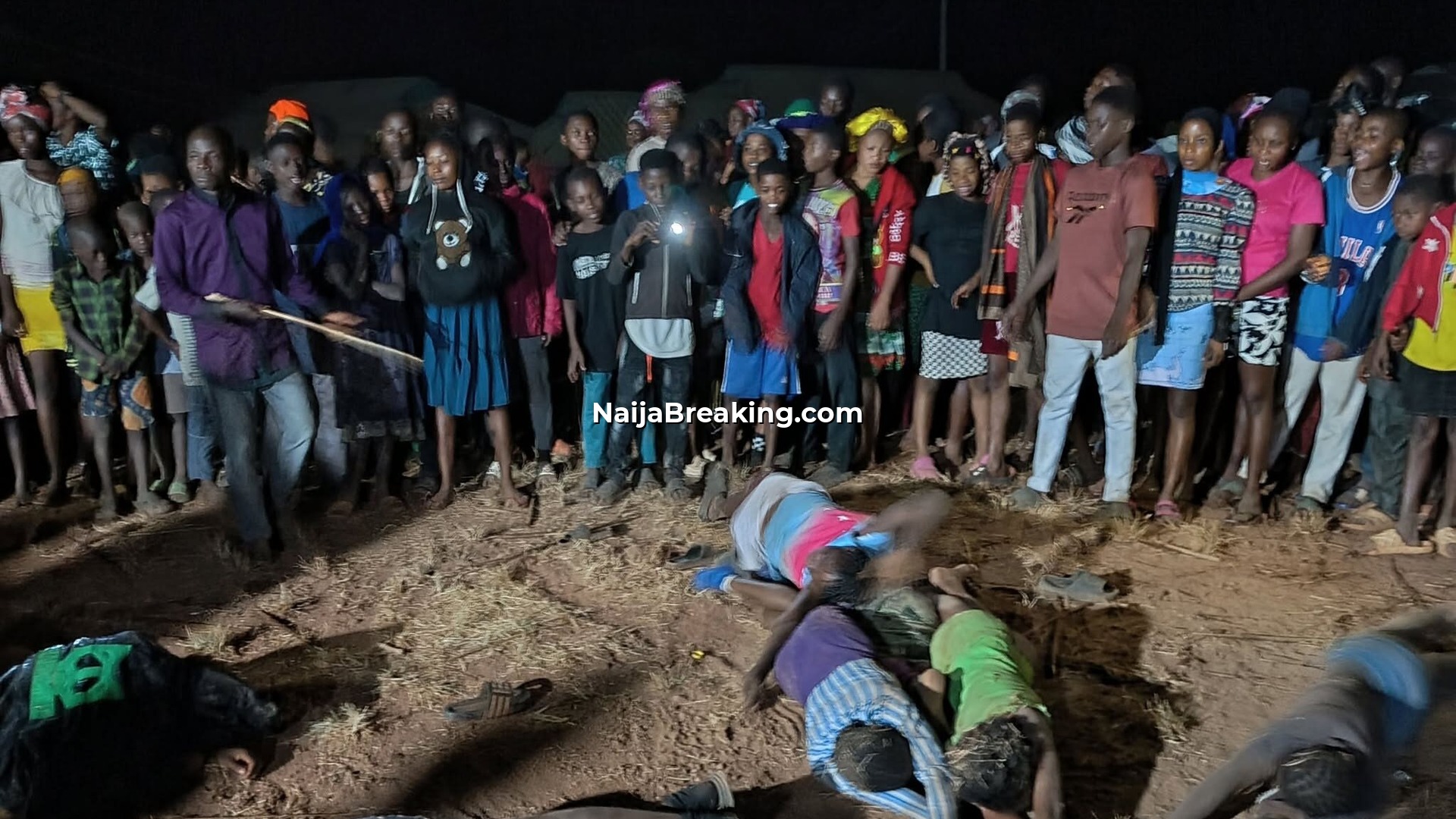
Mob Justice in Nigeria: Religious Crusade Turned Violent Against Accused Woman in Cross River State
On the night of 13 March, a Christian crusade in Cross River State descended into brutal mob justice in Nigeria, leaving devastating consequences for one woman and exposing the dangerous intersection of religious extremism and vigilante violence. According to investigative reporting by PREMIUM TIMES, Grace Ekoi, a woman in her 50s, was publicly assaulted by a crowd of at least eight individuals who took turns flogging her with canes during a religious gathering in Onyadama community, Obubra Local Government Area. The incident raises urgent questions about law enforcement failure, the weaponisation of religion, and the persistent culture of extrajudicial punishment that continues to plague communities across Nigeria’s diverse regions. What is particularly alarming is that weeks after the assault—an incident captured on video with multiple witnesses—no arrests have been made and authorities have remained silent on any investigation. This case represents another tragic example of how mob justice in Nigeria operates with near-total impunity, particularly in rural and semi-urban communities where state authority remains weak and traditional belief systems intersect dangerously with religious extremism.
The concept of mob justice in Nigeria is not new to the national discourse, but its persistence and prevalence remain deeply troubling. For decades, Nigerians have witnessed the troubling phenomenon where communities take the law into their own hands, dispensing what they believe to be justice through extrajudicial means. These actions typically occur when citizens lose faith in the formal legal system, perceive delays in justice delivery, or operate within communities where traditional and customary practices supersede constitutional protections. However, the Onyadama incident demonstrates a particularly dangerous manifestation of mob justice in Nigeria—one where religious organisations become the catalysts for violence, lending what appears to be spiritual legitimacy to physical brutality. This convergence of faith-based rhetoric with actual violence creates a particularly insidious form of communal violence that is difficult to prosecute and even more difficult to prevent, as perpetrators genuinely believe they are conducting a righteous act sanctioned by divine authority.
Understanding the Context: Witchcraft Accusations and Religious Extremism
The assault on Grace Ekoi occurred within a broader context of witchcraft accusations that remain disturbingly prevalent across Nigeria. Despite the country’s modern urban centres and sophisticated educational institutions, beliefs in witchcraft and sorcery continue to influence social relations, particularly in rural communities where traditional worldviews remain dominant. The intersection of these traditional beliefs with evangelical Christianity has created a particularly volatile environment where religious leaders often position themselves as spiritual warriors engaged in battle against alleged witches and sorcerers. This framing transforms violence against accused individuals from simple assault into what perpetrators view as religious obligation or spiritual duty. When mob justice in Nigeria is justified through religious language and framed as deliverance or spiritual warfare, it becomes exponentially more difficult for law enforcement to investigate and prosecute, as defendants may genuinely believe they acted righteously.
Historical documentation reveals that witchcraft-related violence in Nigeria has resulted in numerous deaths and the displacement of thousands of individuals, particularly children and elderly women who are most often accused. The phenomenon gained international attention following several high-profile cases documented by human rights organisations like Amnesty International and local NGOs dedicated to child welfare. In some northern Nigerian communities, accusations of witchcraft against children have led to abandonment, abuse, and in extreme cases, murder. What distinguishes the Onyadama incident from purely traditional witchcraft violence is the explicit involvement of organised religious institutions, suggesting that mob justice in Nigeria is becoming increasingly intertwined with institutional religious authority rather than remaining solely the domain of informal traditional practices.
The Failure of Law Enforcement and State Authority
One of the most troubling aspects of the Onyadama incident is the apparent indifference displayed by Cross River State law enforcement agencies. Despite video evidence of the assault, despite multiple eyewitnesses to the violence, and despite the severity of injuries sustained by Grace Ekoi, no arrests have been made weeks after the incident. This systematic failure to act against documented violence sends a clear message to potential perpetrators: mob justice in Nigeria will proceed with impunity, particularly when it occurs in communities distant from major urban centres where media scrutiny and civil society monitoring are limited. The silence from official channels also suggests either incompetence or complicity—either law enforcement lacks the capacity to investigate and prosecute, or officials have determined that investigating the incident is politically unwise or culturally problematic.
The weakness of state authority in enforcing law equally across all communities represents a fundamental crisis of governance in Nigeria. The Nigerian Constitution guarantees protection from assault, from discrimination, and from extrajudicial punishment. Yet these guarantees ring hollow in communities where police response times are measured in weeks, where officers lack resources for investigation, or where local political elites discourage prosecution to avoid religious or communal backlash. When states fail to enforce the law consistently, citizens naturally turn to alternative justice mechanisms—whether traditional courts, vigilante groups, or mob action. This creates a vicious cycle where mob justice in Nigeria becomes normalised because the formal system has abrogated its responsibility to protect vulnerable citizens and hold perpetrators accountable.
The Weaponisation of Religion and Religious Authority
The involvement of religious leaders and religious institutions in the violence against Grace Ekoi represents perhaps the most concerning dimension of this incident. Religious institutions in Nigeria command extraordinary social influence and moral authority within their communities. When religious leaders frame violence as spiritual duty or frame violence against alleged witches as deliverance ministry, they are not simply making theological arguments—they are mobilising institutional power, community loyalty, and spiritual conviction to justify brutality. This weaponisation of religion for purposes of violence is particularly insidious because it bypasses rational deliberation; violence justified on religious grounds appears non-negotiable to believers and becomes extremely difficult for secular authorities to prevent or prosecute.
Historical precedent demonstrates the dangers of religious institutions becoming vehicles for violence. From the Inquisition to contemporary extremist movements, history shows that violence perpetrated in the name of religion often proves more brutal and more sustained than violence pursued for other motives. The perpetrators of religiously motivated violence often see themselves as heroes engaged in sacred battles rather than as criminals committing assault. When Nigerian communities permit religious leaders to conduct violent “deliverance” operations against accused witches, they are essentially outsourcing policing and judicial functions to institutions fundamentally accountable only to their members and their conception of divine will. The emergence of mob justice in Nigeria as a quasi-religious practice therefore represents not simply a law enforcement problem but a theological crisis within Nigerian Christianity.
Gender Dimensions and Vulnerability
It is critical to note that Grace Ekoi, the victim in this case, is a woman in her fifties. This detail is not incidental but reflects a broader pattern wherein women and girls are disproportionately accused of witchcraft and subjected to violence in Nigeria. Research by human rights organisations has consistently demonstrated that witchcraft accusations fall most heavily on women, particularly elderly women and women living on the margins of their communities. These women often lack powerful male protectors, may be widowed, childless, or economically independent in ways that threaten patriarchal structures. They become convenient targets for mob justice in Nigeria because their vulnerability is compounded by gender discrimination and because communities may view violence against them as more socially acceptable than violence against male community members.
The gendered nature of witchcraft accusations and the violence that follows suggests that mob justice in Nigeria is not simply a law enforcement issue but also a gender equality crisis. When communities permit the assault of women based on unproven accusations of sorcery, they are essentially denying women fundamental human rights and subjecting them to violence because of their gender. This intersectionality—where gender discrimination combines with cultural beliefs about witchcraft and with weak law enforcement—creates a perfect storm of vulnerability for women in Nigerian communities. Addressing mob justice in Nigeria therefore requires not only law enforcement reform but also deliberate efforts to challenge gender discrimination and to strengthen protections specifically for women and girls.
Legal Framework and Constitutional Protections
Nigeria’s legal framework explicitly prohibits assault, battery, and extrajudicial punishment. The Nigerian Constitution guarantees every person the right to life, the right to dignity of the human person, and the right to fair hearing. The Criminal Code provides substantial penalties for assault, causing bodily harm, and conspiracy to commit violence. Yet these legal protections exist largely on paper when communities embrace mob justice in Nigeria as an alternative to the formal legal system. The gap between law as written and law as enforced represents a critical vulnerability in Nigeria’s rule of law architecture.
Several Nigerian states have attempted to address witchcraft-related violence through legislation. Some states have passed laws against harmful traditional practices, against child abandonment based on witchcraft accusations, and against assault motivated by superstition. However, enforcement of these laws remains inconsistent, and prosecutions for mob justice in Nigeria remain rare. This enforcement gap reflects not only resource constraints but also judicial and prosecutorial ambivalence about cases involving witchcraft and traditional beliefs, as if violence motivated by sincere belief in supernatural malevolence ought to be treated differently than violence motivated by other motives.
The Cycle of Impunity and Its Consequences
When perpetrators of mob justice in Nigeria face no consequences for their actions, they and others in their communities are emboldened to commit similar violence in the future. Impunity breeds repetition. Every time law enforcement fails to arrest and prosecute those who participate in mob violence, the message becomes clearer: mob justice in Nigeria is effectively legal within that community, even if formally prohibited by state and national law. This normalisation of extrajudicial violence corrodes the legitimacy of formal legal institutions and deepens community reliance on informal justice mechanisms. Over time, the formal legal system becomes irrelevant to communities that have learned that vigilante action works faster and more decisively than police investigations or court proceedings.
The psychological and social consequences of mob justice in Nigeria extend far beyond the immediate victims. Communities that embrace vigilante violence experience broader social dysfunction, as trust erodes, collective fear rises, and the rule of law becomes replaced by the rule of force. Accused individuals and their families often flee their communities entirely, leading to diaspora and social fragmentation. Economic development suffers when investors perceive communities as lawless and dangerous. Mental health crises emerge as survivors struggle with trauma and communities grapple with collective shame or collective denial about violence committed by their members.
Necessary Reforms and Policy Recommendations
Addressing mob justice in Nigeria requires comprehensive, multi-sectoral approaches rather than single-issue interventions. Law enforcement agencies in states like Cross River must be adequately resourced, trained, and incentivised to investigate and prosecute violence regardless of its religious or cultural justifications. Police must be trained specifically on witchcraft-related violence and on how to handle cases where entire communities participated in assault. Prosecutors must be empowered to pursue charges even in cases where communities view the violence as justified.
Religious institutions must be engaged as partners in preventing mob justice in Nigeria rather than as mere subjects of criticism. Church leaders should be trained on theologically sound arguments against violence and on pastoral approaches to witchcraft accusations that do not involve brutality. Inter-faith organisations can work with religious leaders to establish codes of conduct that explicitly prohibit religiously-motivated violence and that commit institutions to reporting such violence to authorities.
Education initiatives must address both the persistence of witchcraft beliefs and the broader culture of extrajudicial justice. Schools should teach critical thinking about supernatural causation, should provide scientific explanations for misfortune, and should emphasise that formal legal systems exist precisely to prevent mob violence. Community leaders, both traditional and modern, must be engaged in awareness campaigns explaining the human rights violations inherent in mob justice in Nigeria.
Conclusion: Toward Justice and Accountability
The assault on Grace Ekoi in Onyadama represents far more than a local incident of violence—it exemplifies how mob justice in Nigeria persists as a systematic challenge to rule of law, human rights, and the legitimacy of state authority. The involvement of religious institutions, the targeting of a vulnerable woman, the documented nature of the violence, and the apparent impunity of perpetrators all combine to create a case study of everything wrong with Nigeria’s current approach to extrajudicial punishment. Until law enforcement agencies across Nigeria commit to investigating and prosecuting mob justice in Nigeria with the same vigour they apply to other crimes, until religious institutions genuinely repudiate violence regardless of its theological justifications, and until communities receive education and support to trust formal legal mechanisms, cases like Grace Ekoi’s will continue to occur. The path forward requires political will, resource commitment, and a national conversation acknowledging that mob justice in Nigeria is incompatible with democracy, human rights, and the rule of law that Nigerians deserve.