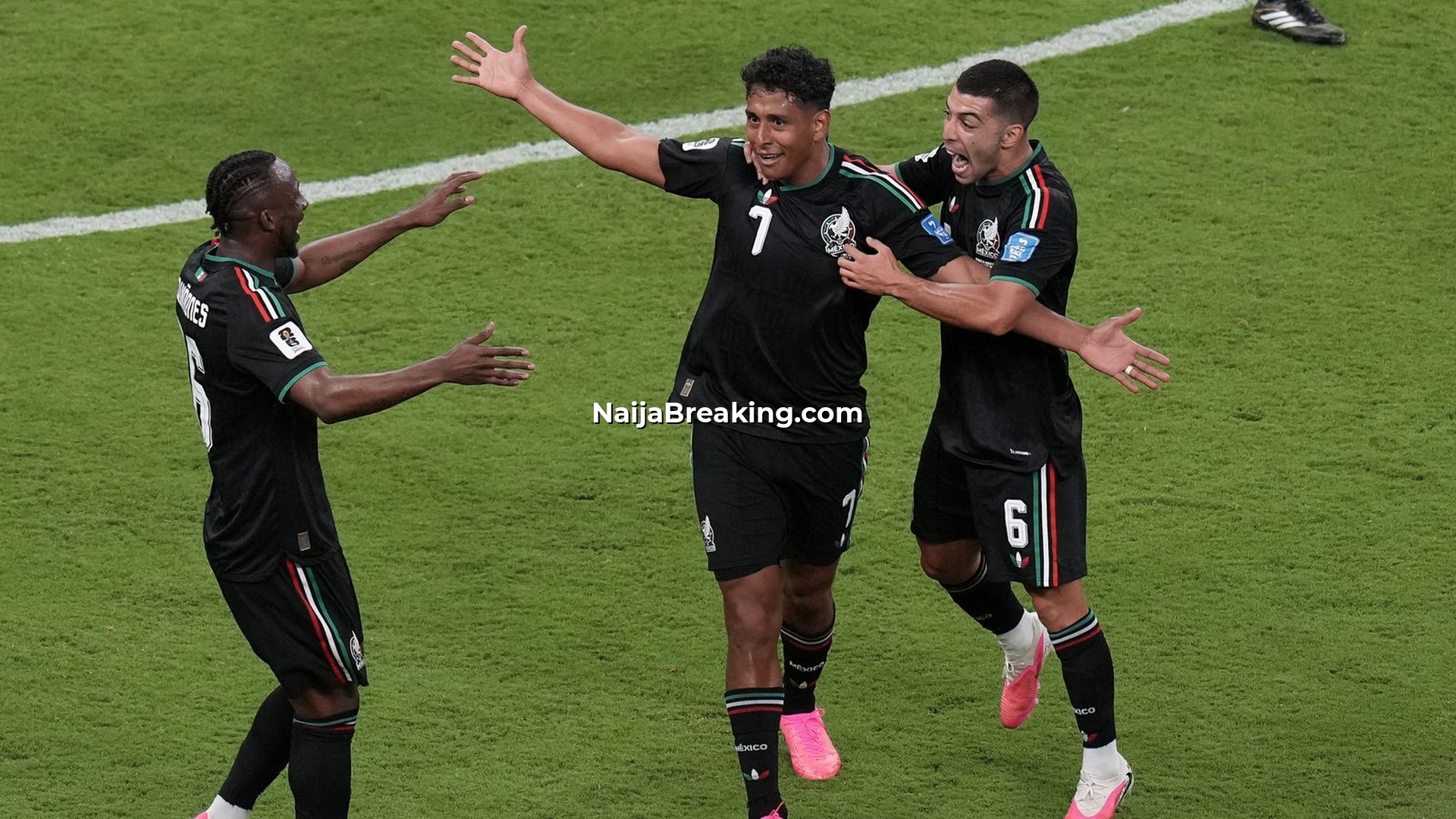
Mexico World Cup Qualification: Mexico Qualifies for World Cup Round of 32 After Beating South Korea 1-0
In a decisive Group A encounter that has rippled through global football conversations, Mexico’s World Cup qualification journey reached a crucial milestone when the Mexican national team became the first nation to secure a spot in the FIFA World Cup round of 32. Mexico achieved this remarkable feat with a hard-fought 1-0 victory over the Republic of South Korea in Guadalajara. The match, played at the prestigious Estadio Chivas before a crowd of 45,522 enthusiastic spectators, proved absolutely decisive in determining the tournament’s early group dynamics and momentum shifts. Mexico’s qualification represents a significant statement of intent about their ambitions throughout this World Cup cycle and their determination to progress beyond the group stages. This stunning victory showcases not just the Mexican national team’s resilience and tactical discipline under pressure, but also underscores how individual moments of goalkeeper error can fundamentally alter a nation’s World Cup destiny and tournament trajectory. For observers following global football development—including those in Nigeria who take keen interest in international competition structures, team performance patterns, and World Cup qualification dynamics—this Mexico victory offers valuable insights into how high-stakes tournament football separates qualified teams from those who fall short. The match was ultimately decided by a critical goalkeeping error from South Korea’s Seung-Gyu Kim, whose momentary lapse in concentration allowed Mexico to capitalise on what proved to be the tournament’s pivotal moment in Group A’s early stages.
Understanding Mexico World Cup Qualification Significance
Mexico’s World Cup qualification for the round of 32 represents far more than simply winning a group stage match. The FIFA World Cup stands as the apex of international football competition, held every four years and attracting the world’s finest players and most disciplined tactical minds from every continent. For Mexico, World Cup qualification and progression beyond the group stage has become an expected outcome rather than a surprise development, with the Mexican national team consistently emerging from group stages in recent tournament cycles with notable success. This consistent performance reflects decades of strategic investment in youth development programs, continuous tactical innovation, and a comprehensive professionalisation of their domestic league structure that has enabled remarkable competitiveness at the international level.
The significance of Mexico’s World Cup qualification cannot be overstated when examining the broader context of Mexican football’s development trajectory. Over the past two decades, Mexico has established itself as one of the most reliable World Cup performers from the North American and Central American regions. This consistency stems from several interconnected factors: robust youth academy systems, regular competitive matches in established international tournaments, and a strong domestic league that produces technically sound players capable of competing at the highest levels. Mexico’s World Cup qualification success reflects the maturity of their football infrastructure and the effectiveness of their player development methodologies.
South Korea, conversely, has carved out a distinctive reputation as an unpredictable tournament competitor—capable of delivering stunning victories against established football powers while equally susceptible to tactical vulnerabilities when facing teams with superior technical execution. The contrast between these two nations’ approaches to World Cup qualification and tournament preparation illustrates different philosophical approaches to international football development. South Korea emphasizes defensive discipline and counter-attacking efficiency, while Mexico typically relies on technically proficient midfield play and coordinated attacking sequences. Understanding these tactical differences provides crucial context for analyzing how Mexico’s World Cup qualification scenario unfolded.
Group A Structure and Pre-Match Context for Mexico World Cup Qualification
The tournament’s Group A featured Mexico, South Korea, South Africa, and another competitive nation, creating a balanced pool where any team’s early performance could establish crucial psychological momentum throughout the remaining group fixtures. The structure of group stage football—where teams compete in a round-robin format, with each team playing every other team once—means that early victories create cascading psychological advantages for subsequent matches. Victory in the opening fixture provides not only three essential points but also significant confidence boosts, improved goal differential positioning, and psychological pressure on remaining opponents.
Mexico’s opening victory against South Africa positioned them perfectly for this critical encounter with South Korea, giving them the substantial psychological advantage of having already secured three points and demonstrated competitive fitness at this tournament level. The psychological dimension of World Cup qualification cannot be underestimated—teams that secure early victories often display greater composure in subsequent matches, while teams seeking to recover from early defeats frequently display heightened anxiety that affects technical execution. Mexico’s World Cup qualification trajectory benefited significantly from their opening match success, which set the tone for their Group A campaign.
South Korea entered this fixture acutely aware that they needed a positive result to maintain their World Cup qualification trajectory. Having understood that one loss in a competitive group of four teams could substantially complicate their passage to the knockout stages, South Korea approached this match with defensive caution. The psychological pressure on South Korea’s squad was intense—a loss would leave them dependent on other results and their final group match performance, rather than controlling their own destiny through accumulated points. This pressure manifested in South Korea’s tactical approach, which emphasized compact defensive shape over attacking ambition.
Match Analysis: The Decisive Moment in Mexico World Cup Qualification
The match itself unfolded as a typical group stage encounter between evenly matched opponents with different tactical philosophies. Mexico controlled possession for significant periods, reflecting their preference for ball-dominant football and structured attacking sequences. South Korea, maintaining their characteristic defensive discipline, absorbed pressure effectively through the early stages while seeking opportunities to exploit Mexico’s defensive transitions. The tactical battle between these sides represented the fundamental contest between Mexican technical proficiency and South Korean defensive organization.
The decisive moment arrived when Mexico converted their pressure into the match’s only goal through a sequence that began with a throw-in in Mexico’s attacking third. The movement that followed showcased Mexico’s capacity to construct attacking opportunities through patient build-up play and intelligent positioning. South Korea’s goalkeeper, Seung-Gyu Kim, found himself in a crucial situation when the ball came to him under pressure. Rather than executing a composed clearance or distribution, Kim’s momentary loss of concentration resulted in a critical error. This lapse allowed a Mexican attacker to regain possession in a dangerous area, leading directly to the goal that would ultimately secure Mexico’s World Cup qualification.
Goalkeeper errors at World Cup level illustrate how individual mistakes, rather than systemic tactical failures, often determine outcomes in closely contested group stage matches. Kim’s error was not indicative of poor overall goalkeeping technique but rather a momentary lapse in judgment under the intense pressure that World Cup football creates. This single mistake crystallized the tournament’s early narrative: Mexico’s World Cup qualification was secured not through overwhelming dominance but through capitalizing on an opponent’s vulnerability at a crucial juncture.
Tactical Implications of Mexico’s World Cup Qualification Victory
From a tactical perspective, Mexico’s World Cup qualification success in this fixture demonstrated their capacity to maintain defensive solidity while patiently constructing attacking opportunities. Mexican football, at its best, emphasizes technical quality in midfield transitions, intelligent movement in attacking third, and defensive discipline that limits opponent counterattacking possibilities. Against South Korea, Mexico executed these principles effectively throughout the ninety minutes, never allowing South Korea’s dangerous counter-attacks to manifest into clear scoring opportunities.
South Korea’s tactical approach, while defensively sound, ultimately lacked the attacking impetus necessary to create significant scoring chances against a Mexico team that controlled the match’s rhythm. This illustrates a common dynamic in World Cup qualification scenarios: defensive discipline alone rarely generates points without accompanying attacking quality. Teams pursuing World Cup qualification must balance defensive security with the capacity to create and convert scoring opportunities. Mexico achieved this balance more effectively than South Korea in this particular encounter.
The physical intensity of the match, typical of World Cup football’s demanding environment, affected both teams’ execution quality as the match progressed. Mexico’s superior depth in attacking midfield positions allowed them to maintain intensity in the final thirty minutes, while South Korea’s more limited attacking resources meant their physical fatigue directly compromised their tactical effectiveness. This difference in squad depth and substitute quality often determines outcomes in closely contested World Cup matches where Mexico’s World Cup qualification scenarios intersect with team resource management.
Broader Implications for Mexico World Cup Qualification Campaign
Mexico’s World Cup qualification achievement through this victory established a powerful foundation for their remaining group stage matches. With six points from two matches and a positive goal differential, Mexico controlled their path through the group stage and could approach subsequent fixtures with enhanced confidence. This position—where a team qualifies early and can subsequently rotate players or implement tactical adjustments—provides significant strategic advantages in tournament football.
The early Mexico World Cup qualification also had psychological ramifications extending beyond Group A. Other teams would recognize Mexico’s competitive strength and technical capabilities, potentially affecting how subsequent opponents approached matches against Mexican sides in later tournament rounds. Furthermore, Mexico’s players gained the substantial psychological benefit of early qualification, which frequently translates into improved performance in knockout stage matches where additional pressure intensifies.
South Korea’s position after this defeat became considerably more precarious. No longer in control of their own World Cup qualification destiny, South Korea faced the pressure of needing positive results in subsequent fixtures while hoping other Group A results favored their progression. This represents the harsh reality of World Cup group stage football: early defeats can substantially complicate qualification prospects despite several matches remaining.
Historical Context of Mexico’s World Cup Qualification Patterns
Examining Mexico’s World Cup qualification success within historical context reveals consistent patterns of competent group stage performance. Mexico has qualified for the World Cup knockout stages in every tournament since 1994, demonstrating remarkable consistency at football’s highest level. This record places Mexico among the world’s most reliable World Cup performers, competing alongside traditional powerhouses like Germany, Italy, Spain, and Brazil in terms of consistent qualification achievement.
The reasons underlying Mexico’s sustained World Cup qualification success include institutional stability within their national football federation, continuity in coaching philosophies, and development of a technical playing style that emphasizes ball possession and technical execution. Mexican football culture values technical competence, tactical discipline, and professional standards that translate effectively to international competition. These cultural factors, combined with systematic player development programs, explain why Mexico’s World Cup qualification has become almost predictable.
However, Mexico’s World Cup qualification success has not translated into deeper tournament progression. While Mexico consistently qualifies from group stages, they have struggled to progress beyond the Round of 16, highlighting that group stage competence does not automatically guarantee knockout stage success. This pattern suggests that while Mexico’s organizational structures and player development create sufficient quality for World Cup qualification, additional elements—perhaps tactical flexibility, individual match-winning talent, or psychological resilience in knockout situations—may be required for deeper tournament runs.
Goalkeeper Errors and World Cup Outcomes
South Korea’s goalkeeper Kim’s critical error that led to Mexico’s decisive goal illustrates a crucial World Cup reality: goalkeeper performance often determines tournament outcomes in closely contested matches. Unlike outfield players who specialize in specific positions, goalkeepers operate in complete isolation when making crucial decisions. A single error can undo ninety minutes of team effort, transforming defeat into Mexico’s World Cup qualification success.
World Cup history contains numerous examples where goalkeeper errors determined tournament outcomes. These moments often haunt players throughout their careers, becoming defining moments in international football narratives. Kim’s error, while affecting his immediate legacy, also represents the unforgiving nature of World Cup competition where mistakes at critical junctures directly translate into elimination scenarios or qualification failures.
From a sports psychology perspective, goalkeeper errors under World Cup pressure reflect the intense psychological demands these players face. Operating in elevated stress environments, goalkeepers must maintain perfect concentration throughout matches, knowing that single mistakes prove instantly consequential. This pressure environment sometimes triggers errors among even experienced, technically proficient goalkeepers, as pressure surpasses their psychological coping mechanisms.
Conclusion: Mexico World Cup Qualification Success
Mexico’s World Cup qualification through their 1-0 victory over South Korea represents both immediate achievement and broader validation of Mexican football’s development trajectory. The triumph, secured through combination of controlled possession, tactical discipline, and opportunistic finishing following an opponent’s error, illustrates how modern World Cup football often unfolds. Mexico’s early World Cup qualification positioned them advantageously for remaining group matches and established confidence heading toward knockout stages. While Mexico’s World Cup qualification success has become almost routine, each achievement reaffirms the effectiveness of their institutional structures and player development methodologies. As the tournament progresses, Mexico’s World Cup qualification will be remembered as the foundation upon which their tournament campaign was constructed, beginning with this crucial victory in Guadalajara.