
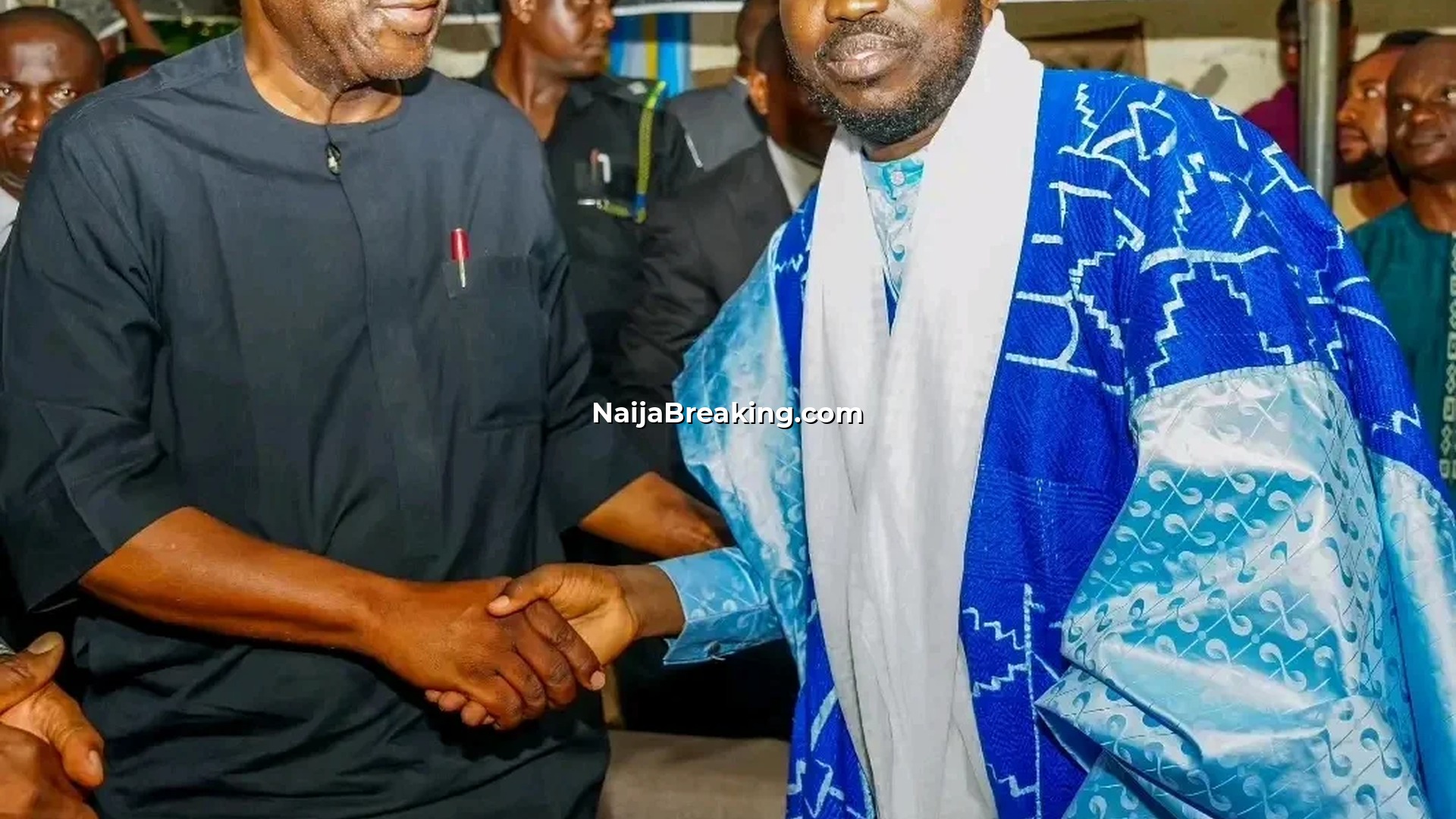
Chief Imam Official Vehicles: Kwara Governor Pledges Brand New Transportation for New Chief Imam of Ilorin
Kwara State Governor Abdulrahman Abdulrazaq has made a significant pledge to provide brand-new chief imam official vehicles for the newly appointed Chief Imam of Ilorin Emirate, Sheikh Muhammad Bashir Dasuki Imam Fulani. The governor’s commitment to furnish the Islamic leader with both a Jeep and a bus represents far more than a routine administrative gesture—it underscores the critical role religious leadership plays in Nigeria’s political and social landscape, particularly in the north-central region where Kwara sits as a pivotal state. During a courtesy visit to the Chief Imam in Ilorin on Tuesday, Governor Abdulrazaq sought prayers for peace, stability, and development, while simultaneously reaffirming his administration’s institutional backing for the Muslim ummah in the state. This promise of chief imam official vehicles reflects a broader pattern of state governments investing in religious leadership infrastructure—a practice that has become increasingly common as Nigerian administrations recognize that religious leaders wield considerable influence over community cohesion, voter mobilisation, and social stability.
The provision of chief imam official vehicles by the Kwara State Government signals that the administration views the appointment of Sheikh Dasuki, described as a young Azhari scholar, as a pivotal moment for intergenerational continuity and unity within Islamic circles. For ordinary Nigerians watching how state resources are allocated, this development raises important questions about governance priorities, the relationship between secular and religious authority, and how public funds are deployed to support institutional leaders outside the formal civil service. The gesture also demonstrates how the executive arm of government utilizes material support and symbolic gestures to solidify relationships with influential religious figures who can shape public opinion and facilitate governmental objectives at the grassroots level.
The Significance of Chief Imam Official Vehicles in Nigerian Governance
The allocation of chief imam official vehicles by state governments represents a deliberate strategy to elevate the status and operational capacity of Islamic leadership institutions. When a governor publicly commits to providing chief imam official vehicles, this decision carries multiple layers of meaning that extend far beyond simple transportation provision. First, it legitimizes the Chief Imam’s authority within the state system by providing the material infrastructure that signals official recognition and institutional support. Second, chief imam official vehicles serve practical purposes—they enable the religious leader to conduct official duties, attend important state functions, and move about the emirate with the mobility befitting someone of their stature and responsibilities.
The provision of dedicated chief imam official vehicles also facilitates the Chief Imam’s ability to respond to emergencies, lead interfaith dialogues, mediate communal disputes, and participate in state-organized developmental initiatives. Without adequate transportation, even the most influential religious leader would face constraints in carrying out their mandate effectively. The Kwara governor’s pledge to provide chief imam official vehicles—specifically a Jeep for personal mobility and a bus for transporting accompanying delegations—demonstrates understanding of these practical realities while also making a public statement about the value the state places on Islamic institutional leadership.
Furthermore, the decision to provide chief imam official vehicles through the governor’s office rather than through the emirate council’s existing budget suggests that the state government is willing to absorb significant financial commitments to support religious institutions. This approach contrasts with traditional systems where emirate councils independently managed resources for their officials. The modern approach of providing chief imam official vehicles through government channels reflects the evolution of Nigeria’s federal and state systems, where secular governments increasingly partner with traditional and religious institutions to achieve developmental and social cohesion objectives.
Background and Historical Context of the Chief Imam Position
The appointment of a Chief Imam in Nigeria’s emirates and emirate councils carries deep historical and cultural significance that extends back centuries into the pre-colonial era. In the pre-colonial period, Islamic scholars held sway over vast swathes of northern Nigeria, and even after British colonisation and Nigerian independence, the institution of the Chief Imam—particularly in major emiral jurisdictions like Ilorin—has remained a repository of spiritual authority and social influence. Understanding the historical importance of this position helps contextualize why modern state governments view providing chief imam official vehicles as a worthwhile investment in institutional stability and religious harmony.
Ilorin, the Kwara State capital, holds particular importance in Nigeria’s Islamic history as a centre of Islamic learning and a gateway between the Yoruba-speaking southwest and the Hausa-Fulani north. The city was founded in the early 19th century by Mallam Alimi, a reformist Islamic scholar, and served as a base for Islamic expansion and education throughout the region. The position of Chief Imam of Ilorin Emirate is not merely a religious office; it carries political weight, community trust, and the ability to mobilise populations on matters ranging from public health campaigns to election advocacy. Throughout Nigerian history, the Chief Imams of Ilorin have wielded considerable influence, and the state government’s commitment to provide chief imam official vehicles reflects recognition of this enduring significance.
Previous Chief Imams of Ilorin have served as advisors to government, mediators in communal disputes, and voices on matters of public interest ranging from security challenges to educational development. The transition to a new Chief Imam, particularly one described as young and vibrant like Sheikh Muhammad Bashir Dasuki, typically requires government endorsement, ceremonial acknowledgment, and practical support. The provision of chief imam official vehicles forms part of this ceremonial and practical support system, signaling continuity and institutional commitment to the Islamic leadership structure that has been central to Ilorin’s identity for nearly two centuries.
Sheikh Muhammad Bashir Dasuki: Profile of the New Chief Imam
Sheikh Muhammad Bashir Dasuki Imam Fulani represents a new generation of Islamic leadership in Nigeria. Described as a young Azhari scholar, Sheikh Dasuki embodies the model of Islamic education that combines traditional Quranic scholarship with formal Islamic institutional training. His background suggests that he has studied at Al-Azhar University in Cairo, one of the most prestigious Islamic educational institutions globally, positioning him as someone who bridges traditional Islamic scholarship with contemporary global Islamic discourse. The governor’s decision to provide chief imam official vehicles for this particular leader suggests that the state government views Sheikh Dasuki as a progressive Islamic voice capable of addressing both traditional community expectations and contemporary developmental challenges.
The appointment of Sheikh Dasuki and the subsequent commitment to provide chief imam official vehicles demonstrates how Nigerian state governments are increasingly investing in the professionalization and modernization of religious leadership. By ensuring that the Chief Imam has adequate transportation through dedicated chief imam official vehicles, the government enables him to function effectively in multiple roles—spiritual guide, community mediator, development advocate, and state partner. This multi-dimensional role requires mobility, visibility, and the kind of institutional backing that chief imam official vehicles provide.
The Role of Chief Imam Official Vehicles in Administrative Operations
When a state government commits to providing chief imam official vehicles, it’s investing in the operational infrastructure necessary for effective religious leadership. The specific vehicles promised—a Jeep and a bus—reveal careful consideration of the Chief Imam’s varied transportation needs. The Jeep provides personal mobility for the Chief Imam to conduct private duties, visit constituents, and move about the emirate with appropriate dignity and security. The bus, meanwhile, enables the Chief Imam to lead official delegations to government functions, lead prayers at major state events, transport clergy and officials on religious missions, and facilitate the movement of larger groups when conducting communal services or interfaith engagements.
The provision of chief imam official vehicles also has security implications. Religious leaders in Nigeria sometimes face security threats, and having dedicated, reliable transportation helps protect them while conducting official duties. The vehicles can be equipped with security features and driven by trusted personnel who understand both security protocols and the dignity required when transporting someone of the Chief Imam’s stature. This dimension of chief imam official vehicles is often overlooked in casual discussion but represents an important aspect of how governments protect and support religious institutional leadership.
Additionally, chief imam official vehicles serve as visible symbols of the Chief Imam’s authority and the state’s recognition of his position. When the Chief Imam arrives at public events in a clearly marked official vehicle, it reinforces his status and legitimacy among the Muslim community and the broader Kwara State population. This symbolic function of chief imam official vehicles contributes to social cohesion by demonstrating that the state respects and supports religious institutional leadership, which can help prevent tensions between secular and religious authorities.
Government Support for Religious Institutions: A Growing Trend in Nigeria
The Kwara governor’s pledge to provide chief imam official vehicles exemplifies a broader trend across Nigerian state governments where administrations increasingly recognize that supporting religious institutions yields significant benefits for governance, social stability, and community engagement. This trend reflects sophisticated understanding of how religious leaders influence public opinion, shape community responses to government initiatives, and serve as bridges between government and grassroots populations. By providing chief imam official vehicles and other material support, state governments strengthen their relationships with religious leaders who can champion developmental projects, promote public health initiatives, and discourage social discord.
Several Nigerian state governments have adopted similar approaches, providing chief imam official vehicles, official residences, allowances, and other support to Islamic and Christian leaders. These investments are often justified on grounds that religious leaders perform quasi-governmental functions—they mediate disputes, mobilize communities, provide moral guidance, and serve as unofficial advisors on matters of social importance. The provision of chief imam official vehicles can thus be understood as recognition that these leaders require material support to function effectively in their expanded roles within the state system.
However, this trend also generates legitimate debate about the appropriate relationship between secular government and religious institutions. Critics argue that providing chief imam official vehicles and other generous support to religious leaders blurs the lines between state and religion, potentially compromising the independence of religious institutions and creating financial dependencies that undermine prophetic witness. Supporters counter that chief imam official vehicles and similar support reflect practical recognition of religious leaders’ contemporary roles and enable them to contribute more effectively to social and developmental objectives. This ongoing discussion shapes how Nigerian governments approach decisions about religious institutional support.
The Ceremony and Political Messaging Behind the Gesture
Governor Abdulrazaq’s courtesy visit to present the chief imam official vehicles pledge was carefully staged to maximize political and symbolic impact. The governor’s explicit request for prayers for peace, stability, and development signals that his administration values religious blessing and spiritual support for its governance agenda. This messaging indicates that the provision of chief imam official vehicles is not merely transactional—it reflects a genuine desire to build partnership with Islamic leadership for achieving broader state objectives. By having the governor personally visit the newly appointed Chief Imam and make these commitments, the state government elevates the significance of the appointment and demonstrates respect for the religious institution.
The public nature of this commitment to provide chief imam official vehicles also serves important political functions. It signals to the Muslim population of Kwara State that their religious institutions have government support and that the governor respects Islamic leadership. This gesture can help build goodwill, encourage Muslim participation in government programs, and create positive political sentiment. In Nigerian politics, where religious affiliations remain significant factors in voting patterns and community mobilization, the governor’s pledge to provide chief imam official vehicles represents strategic investment in relationships with influential constituencies.
Moreover, the timing of this commitment to provide chief imam official vehicles—during the courtesy visit to the new Chief Imam—follows established protocols in Nigerian politics where major announcements about resource allocation to religious leaders are made during such ceremonial occasions. This timing ensures maximum media coverage and community awareness, amplifying the gesture’s political and symbolic impact beyond what quiet administrative decisions might achieve. The governor’s actions reflect sophisticated understanding of how political communication works in Nigerian context where public commitment to support religious institutions resonates powerfully with voters and community members.
Implementation Challenges for Chief Imam Official Vehicles
While the governor’s pledge to provide chief imam official vehicles is welcome news for the newly appointed Chief Imam, implementation of such commitments sometimes encounters practical challenges. Questions naturally arise about vehicle specifications, procurement timelines, maintenance responsibilities, insurance coverage, and personnel assignments. The Kwara State Government will need to establish clear protocols for the chief imam official vehicles—who maintains them, how fuel and maintenance costs are budgeted, what happens if vehicles require repairs, and how security is provided for both vehicles and their occupants.
Additionally, providing chief imam official vehicles raises questions about how the vehicles are registered, what license plates they carry, and whether they receive special privileges on public roads. Nigerian traffic laws typically provide certain vehicle categories with exemptions from certain regulations, and the government must clarify whether the chief imam official vehicles fall into these categories. These implementation details, while seemingly technical, have significant implications for how effectively the vehicles can serve their intended purposes.
There are also budgetary considerations related to sustaining chief imam official vehicles over time. The initial cost of providing the vehicles is one thing, but the ongoing expenses for fuel, maintenance, insurance, and personnel represent recurring financial obligations that the state budget must accommodate. State governments sometimes struggle to maintain such commitments through economic downturns or when administrations change. Ensuring that chief imam official vehicles remain available and functional throughout the Chief Imam’s tenure requires sustained financial commitment and administrative attention.
Broader Implications for Nigeria’s State-Religion Relations
The Kwara governor’s commitment to provide chief imam official vehicles carries implications that extend beyond Kwara State itself, offering insights into how Nigerian government-religion relations are evolving. This gesture suggests that state governments increasingly view investment in religious institutional infrastructure as legitimate and necessary for effective governance. By providing chief imam official vehicles, the Kwara State Government demonstrates that it sees religious leaders as partners in developmental and social objectives rather than as entities separate from government concerns.
This approach to providing chief imam official vehicles reflects broader patterns in Nigerian federalism where state governments have considerable autonomy in determining how to deploy resources for public purposes. The decision to provide vehicles for the Chief Imam—a religious leader outside the formal civil service—illustrates how Nigerian states interpret their mandates broadly to include support for institutions that promote social cohesion and community welfare, even when those institutions are primarily religious rather than governmental.
The provision of chief imam official vehicles also sends messages about the state’s commitment to religious pluralism and institutional recognition. When the government provides these vehicles, it acknowledges that Islam and Islamic institutions are integral to Kwara State’s identity and that the state is willing to invest in their effective functioning. This recognition can contribute to intercommunal harmony by assuring religious minorities that the state values their institutional leadership and supports their ability to serve their communities effectively.
Conclusion: Chief Imam Official Vehicles as Symbols of Institutional Partnership
The Kwara State Governor Abdulrahman Abdulrazaq’s pledge to provide chief imam official vehicles for the newly appointed Chief Imam Sheikh Muhammad Bashir Dasuki represents far more than a simple gesture of material support. The commitment to furnish dedicated transportation through chief imam official vehicles reflects recognition of the Chief Imam’s role in contemporary Nigerian governance, respect for Islamic institutional leadership, and investment in infrastructure that enables effective religious institutional functioning. By promising these vehicles, the governor signals that his administration values partnership with religious leaders and is willing to provide material support that enables them to fulfill their expanding roles in community mediation, social cohesion, and development advocacy.
The provision of chief imam official vehicles exemplifies how modern Nigerian state governments navigate the complex relationship between secular authority and religious institutions. Rather than maintaining strict separation, contemporary administrations increasingly engage in collaborative relationships with religious leaders, supporting their institutional capacity through various means including dedicated transportation. The chief imam official vehicles thus become symbols of this partnership, visible reminders that the state recognizes and values the contributions of religious leadership to social stability and developmental progress.
As Kwara State implements this commitment to provide chief imam official vehicles, the practical success of this initiative will depend on sustained administrative attention, adequate budgeting, and clear protocols for vehicle management. Beyond these practical considerations, however, the pledge to provide chief imam official vehicles contributes to a broader narrative about Nigeria’s evolving state-religion relations and the ways that government and religious institutions can work together to serve public purposes while respecting appropriate boundaries between secular and spiritual authority. For Sheikh Muhammad Bashir Dasuki and the Ilorin Emirate, the chief imam official vehicles represent institutional support that will enable more effective service to the Muslim community and partnership with the Kwara State Government in pursuing shared objectives of peace, stability, and development.


