
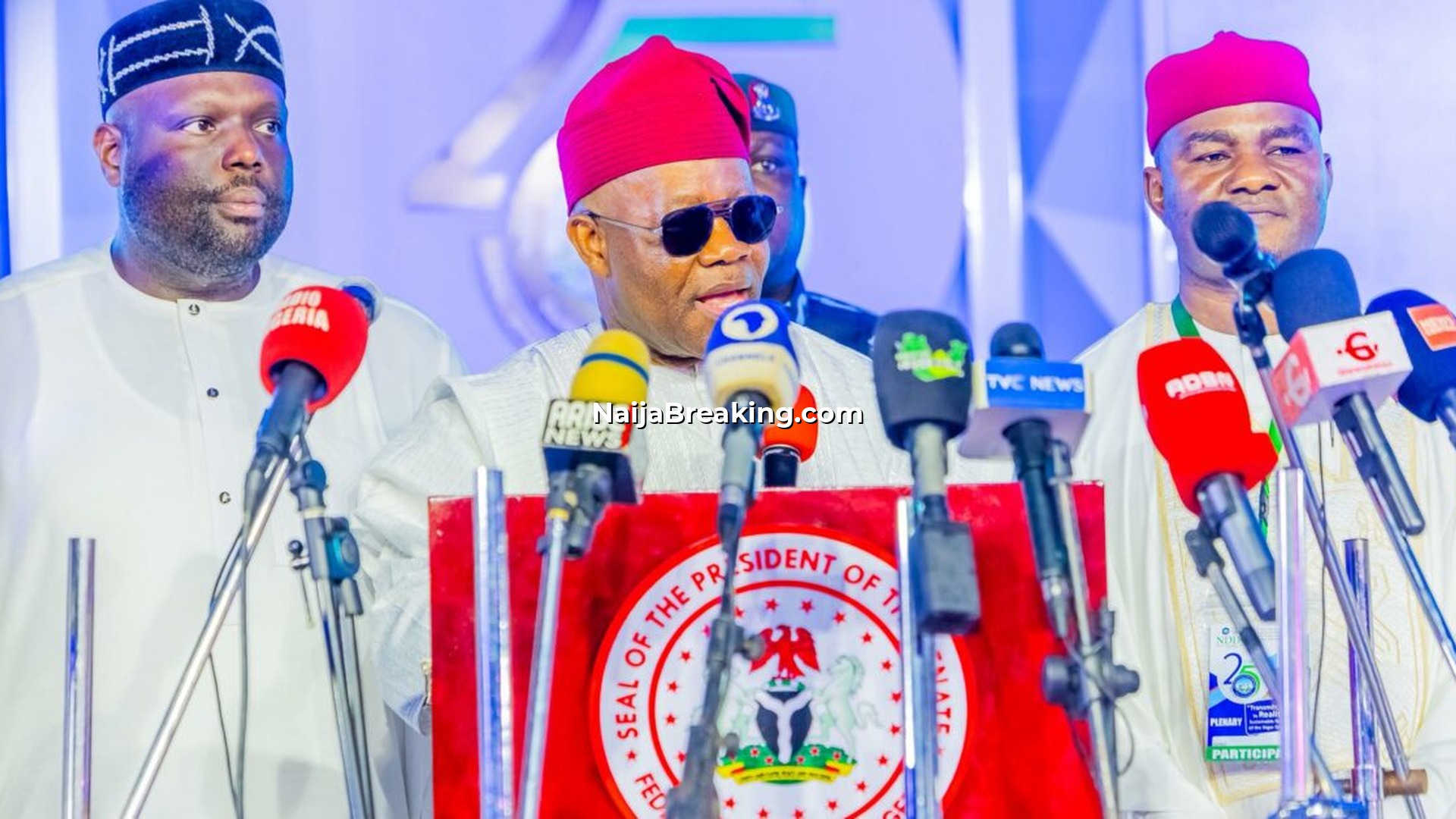
Terrorism Sponsors Nigeria: Akpabio Calls for Exposure of Funding Networks Behind Insecurity Crisis
Senate President Godswill Akpabio’s recent and powerful call for the exposure of terrorism sponsors Nigeria has become represents far more than a Sunday prayer session appeal—it signals deep institutional frustration with the state’s inability to dismantle the financial networks fuelling the nation’s relentless insecurity crisis. Speaking during Democracy Day celebrations at the National Christian Centre in Abuja, Akpabio urged Nigerians to continue praying that those financing terrorism would be unmasked, whether they operate from within government circles or outside institutional structures. This powerful plea, made by one of Nigeria’s most powerful political figures, underscores a critical vulnerability in the nation’s counterterrorism strategy: the persistent gap between identifying terrorist actors and dismantling their funding mechanisms. Understanding the landscape of terrorism sponsors Nigeria must grapple with represents essential knowledge for any serious analysis of the country’s security challenges. For a nation grappling with over 400,000 internally displaced persons according to recent humanitarian assessments, and losing billions of Naira annually to insecurity-related economic disruption, the question of who bankrolls terrorism has become as urgent as the military operations themselves.
Akpabio’s invocation of prayer, while grounded in his personal faith, also reflects an implicit acknowledgement that conventional security apparatus alone has failed to address what many analysts describe as the “hidden hand” financing non-state armed groups across multiple theatres—from the Northeast’s Boko Haram insurgency to the kidnapping syndicates ravaging the Northwest and North-Central regions. The revelation that terrorism sponsors in Nigeria operate with such apparent impunity raises profound questions about the competence, resources, and political will of security agencies tasked with financial intelligence gathering. When the second-highest ranking official in Nigeria’s legislature publicly acknowledges the failure to identify and neutralise these funding sources, it suggests systemic vulnerabilities that extend beyond operational deficiencies into the realm of institutional capacity and possibly political complicity. The issue of terrorism sponsors Nigeria authorities struggle to prosecute has become emblematic of broader governance failures that undermine national security objectives.
The Complex Ecosystem of Terrorism Funding and Terrorism Sponsors Nigeria Cannot Ignore
Understanding the challenge of exposing terrorism sponsors in Nigeria requires comprehending the sophisticated and multifaceted nature of terrorist financing in the contemporary global context. Unlike traditional organised crime or conventional military operations that leave easily traceable financial footprints, modern terrorist organisations have adapted to global financial regulations and sanctions regimes by developing complex networks that obscure the relationship between funders and operational units. The financing of terrorism sponsors in Nigeria occurs through multiple channels that law enforcement agencies struggle to monitor simultaneously, creating what security experts characterize as a persistent enforcement gap.
Kidnapping has emerged as the primary revenue source for multiple terrorist organisations operating across Nigeria’s geography. Boko Haram, the Islamic State West Africa Province (ISWAP), and numerous bandit groups have generated hundreds of millions of Naira through systematic abduction of civilians, students, and high-value targets. These operations, which have traumatised communities and captured global attention through cases like the Chibok schoolgirls abduction and subsequent Dapchi incident, serve dual purposes: they generate immediate operational funds while simultaneously terrorising populations into submission and compliance. Ransom payments, often facilitated through informal money transfer systems and cryptocurrency channels, provide these groups with immediate liquidity to purchase weapons, pay fighters, and expand territorial control. The involvement of terrorism sponsors in Nigeria who facilitate ransom negotiations and payment mechanisms represents a critical vulnerability in counterterrorism efforts that authorities have struggled to systematise and regulate.
Beyond kidnapping-generated revenue, the extraction of natural resources represents another significant funding mechanism for terrorist organisations. In the Niger Delta region and surrounding areas, crude oil theft, illegal refining operations, and control of petroleum infrastructure have generated substantial revenues that flow toward armed groups with varying ideological commitments. Some organisations operating under the banner of resource activism have gradually transformed into profit-driven enterprises where political grievance has become secondary to economic accumulation. This transformation has complicated efforts to identify and prosecute terrorism sponsors in Nigeria, as financial transactions blur the line between legitimate business activity, criminal enterprise, and explicit terrorism financing. The complexity increases when considering that some beneficiaries of these revenue streams operate as legitimate businesspeople in society while simultaneously maintaining financial relationships with designated terrorist organisations.
State and non-state actors represent the most controversial category of terrorism sponsors Nigeria’s security establishment must address. Numerous investigative reports and human rights organisations have documented allegations that elements within government security forces, military units, and intelligence agencies have provided direct or indirect support to terrorist organisations. These allegations range from sharing intelligence about military operations to providing weapons and ammunition, facilitating the safe passage of terrorist operatives, and protecting criminal logistics networks. Some reports suggest that certain elements within state structures benefit financially from the persistence of insecurity through military procurement contracts, security consulting arrangements, and other rent-seeking mechanisms that incentivise prolonged conflict. The political sensitivity surrounding these allegations explains why Akpabio’s call for exposure of terrorism sponsors in Nigeria resonated so powerfully—it implicitly acknowledges that state complicity may represent a significant barrier to resolving the insecurity crisis.
International Networks and External Terrorism Sponsors Nigeria Faces
The globalisation of terrorist financing has created international dimensions to the terrorism sponsors Nigeria must confront. Foreign actors operating from neighbouring countries, diaspora communities, and transnational criminal networks contribute funding to Nigerian terrorist organisations through multiple pathways. Al-Qaeda in the Islamic Maghreb (AQIM) has historically provided financial and material support to Boko Haram, facilitating weapons transfers and sharing operational expertise. The relationship between these organisations, while sometimes strained by ideological disputes and competition for resources, demonstrates how international terrorism sponsors in Nigeria extend beyond domestic actors. Similarly, links between Nigerian terrorist groups and extremist organisations in the Sahel, including the Islamic State in the Greater Sahara (ISGS), have expanded the funding networks available to these groups.
Diaspora communities, particularly in Western nations with substantial Nigerian immigrant populations, represent another source of funding for terrorism sponsors Nigeria’s financial intelligence agencies struggle to monitor. While most diaspora members support legitimate causes and family welfare, some individuals and organisations deliberately or inadvertently facilitate fund transfers to terrorist organisations through formal banking systems, informal remittance networks, and cryptocurrency platforms. The difficulty in distinguishing between legitimate charitable donations, family support transfers, and deliberate terrorism financing creates enforcement challenges that even sophisticated financial intelligence units find difficult to overcome. Enhanced international cooperation through mechanisms like the Financial Action Task Force (FATF) has improved but not resolved these challenges.
Cryptocurrency and Digital Financial Systems: The Modern Challenge to Identifying Terrorism Sponsors Nigeria
The emergence of cryptocurrency and decentralised financial platforms has introduced unprecedented challenges to authorities attempting to expose terrorism sponsors in Nigeria and globally. Bitcoin, Ethereum, and other digital currencies offer transaction pseudonymity and speed that make tracing terrorist financing significantly more difficult than traditional banking channels. Terrorist organisations and their financial intermediaries have increasingly exploited these technologies to move funds across borders, convert ransom payments into assets immune to seizure, and maintain operational capacity even when traditional financial channels face sanctions or restrictions. The sophistication of these operations has grown substantially, with some groups employing specialised financial technicians who understand blockchain technology, mixing services, and privacy-focused cryptocurrencies.
The regulatory environment in Nigeria has struggled to keep pace with these technological developments. While the Central Bank of Nigeria and financial regulators have issued guidelines regarding cryptocurrency transactions, enforcement mechanisms remain underdeveloped. Limited capacity among law enforcement and financial intelligence units to investigate crypto-related terrorism financing has created a gap that sophisticated terrorist organisations have exploited. The involvement of international exchanges and the decentralised nature of cryptocurrency networks means that many transactions flow outside Nigerian jurisdiction entirely, further complicating efforts to identify and prosecute terrorism sponsors in Nigeria who utilise these systems.
The Role of Corruption and Institutional Weakness in Protecting Terrorism Sponsors Nigeria
Widespread corruption within Nigerian security and financial institutions represents perhaps the most significant factor enabling terrorism sponsors in Nigeria to operate with relative impunity. When military officers can be accused of selling weapons to terrorist groups, when customs officials facilitate the smuggling of arms across borders, and when financial regulators fail to investigate suspicious transactions, the entire system designed to expose and prosecute terrorism financing collapses. Akpabio’s reference to terrorism sponsors potentially operating “within government circles” directly addresses this institutional vulnerability that has become increasingly evident through leaked documents, journalistic investigations, and testimony from defectors.
The capacity deficits within Nigeria’s law enforcement and intelligence communities further compound these challenges. Financial investigation units lack adequate training in modern financial forensics, blockchain analysis, and international money laundering detection. Intelligence agencies struggle with information sharing, creating silos where critical financial intelligence fails to reach operational commanders or prosecution authorities. The absence of a dedicated, well-resourced, and politically independent financial crimes prosecution unit means that even when evidence of terrorism financing emerges, institutional machinery to prosecute perpetrators often stalls or fails entirely. These institutional weaknesses have allowed terrorism sponsors in Nigeria to operate with minimal fear of serious legal consequences.
Moving Forward: Strategies for Exposing Terrorism Sponsors Nigeria Must Implement
Addressing the challenge of exposing terrorism sponsors in Nigeria requires comprehensive reforms spanning multiple institutions and policy domains. Enhanced financial intelligence capacity, specialised training for investigators, and international cooperation mechanisms must be strengthened significantly. Nigeria must establish dedicated prosecutorial units specifically focused on terrorism financing, staffed with experts in financial crimes, international banking regulations, and digital asset tracing. Institutional reform should include whistleblower protection mechanisms that encourage security personnel and financial professionals to report suspected complicity with terrorist organisations.
International cooperation proves essential for addressing terrorism sponsors in Nigeria, particularly those operating across borders or utilising international financial systems. Enhanced information sharing with foreign intelligence services, coordinated investigations with international financial authorities, and participation in multilateral efforts to combat terrorist financing must be prioritised. Nigeria should strengthen its implementation of FATF recommendations and subject itself to regular international scrutiny regarding financial crimes and terrorism financing efforts.
The exposure of terrorism sponsors in Nigeria cannot succeed without addressing the underlying governance deficits that have permitted corrupt officials to facilitate terrorism financing. Comprehensive anti-corruption efforts, professional security sector reform, and institutional accountability mechanisms must accompany technical financial investigation improvements. Without these broader governance reforms, efforts to expose terrorism sponsors in Nigeria will remain incomplete and ultimately ineffective.
Senate President Akpabio’s call for exposure of terrorism sponsors in Nigeria represents an important acknowledgement of these systemic failures. Whether this acknowledgement translates into concrete institutional reform and political will to prosecute powerful figures implicated in terrorism financing remains an open question that will significantly shape Nigeria’s security trajectory in coming years.


