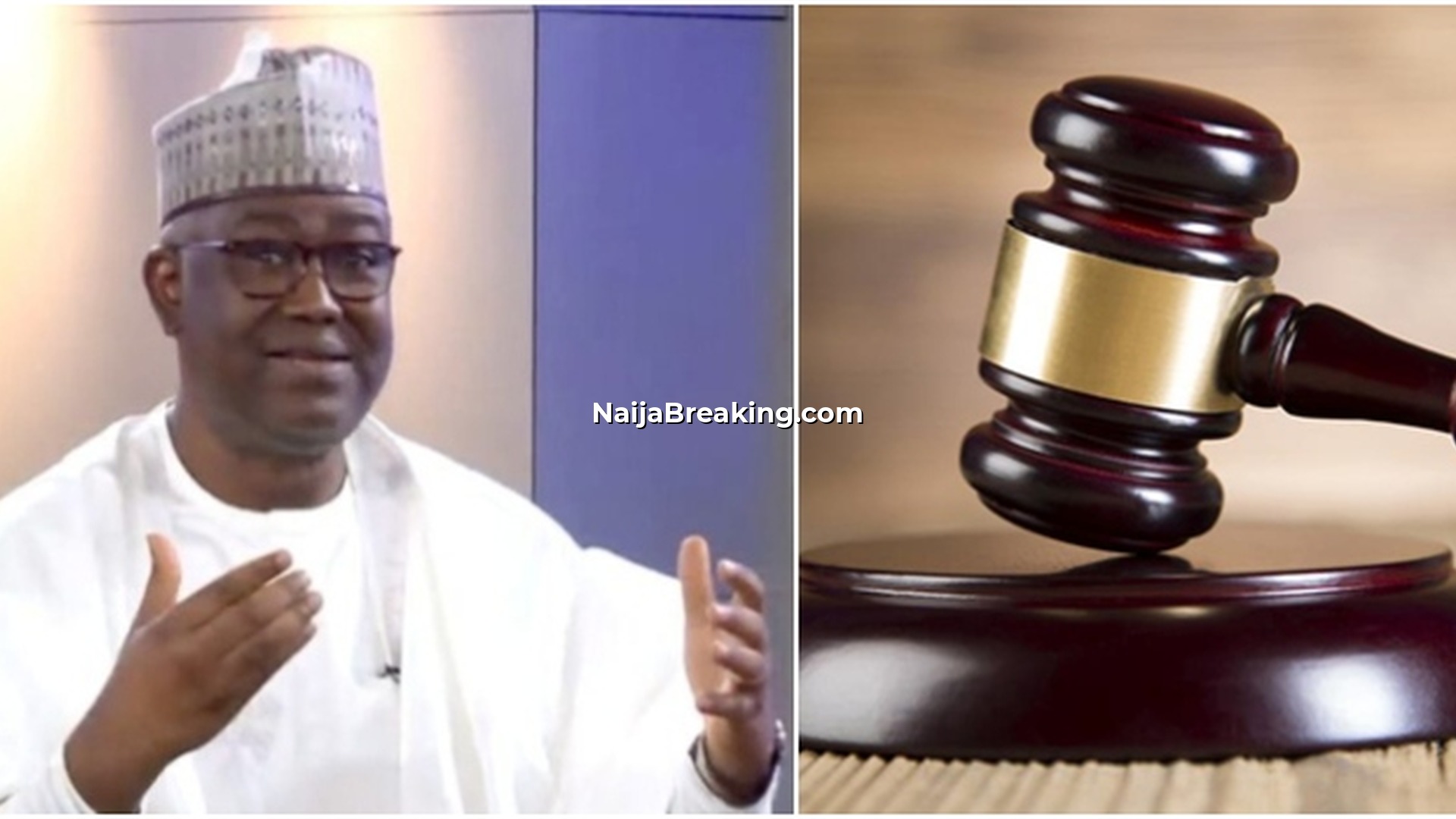
PDP Leadership Dispute Court of Appeal Ruling: Wike’s Faction Demands NBA Sanctions Over Misrepresentation of Judgment
The ongoing PDP leadership dispute and the recent Court of Appeal ruling have intensified an already complex internal battle within Nigeria’s Peoples Democratic Party. The PDP leadership dispute Court of Appeal ruling has now become the focal point of an escalating controversy, with the Wike-backed faction calling for Nigerian Bar Association (NBA) sanctions against lawyers accused of misrepresenting the court’s judgment. This dramatic escalation in the PDP leadership dispute Court of Appeal ruling saga demonstrates how deeply fractured one of Nigeria’s two major political parties has become, threatening its viability as a credible opposition force during a critical period in the nation’s democratic journey.
According to multiple reports and documentation from the Court of Appeal, the recent judgment was expected to provide definitive clarity on the legitimacy of the party’s November 2025 national convention and the validity of the leadership structure it produced. However, instead of resolving the PDP leadership dispute Court of Appeal ruling controversies, the judgment has paradoxically become another source of contention. The Wike faction argues that opposing counsel has deliberately and systematically misinterpreted the court’s holding to advance their alternative claims regarding legitimate party leadership. This accusation of legal misrepresentation has prompted calls for professional consequences, with the Wike-backed group requesting that the NBA launch investigations and potentially sanction the lawyers involved in what they describe as abuse of the legal process.
The broader context of this PDP leadership dispute Court of Appeal ruling controversy reveals deeper institutional dysfunctions within the party. The PDP, which governed Nigeria for sixteen consecutive years from 1999 to 2015 and has struggled to rebuild since losing federal power, now finds itself consumed by internal power battles that consume financial resources, damage party morale, and distract from its fundamental responsibility to serve as an effective check on the ruling All Progressives Congress (APC) administration. Understanding this complex legal and political situation is essential for all Nigerians who value democratic accountability, constitutional governance, and political stability in Africa’s most populous nation.
The Origins of the PDP Leadership Dispute and Court of Appeal Proceedings
The current PDP leadership crisis traces its roots to the party’s internal reorganization processes following its 2023 presidential election loss. The party held what was intended to be a unifying national convention in November 2025 in Ibadan, the Oyo State capital. This convention was meant to elect new party officials and strengthen the party’s organizational structure in preparation for future elections. However, from the convention’s very conception, fundamental disagreements emerged about its legitimacy, proper procedures, and the authority of various party bodies to make decisions about convention modalities.
Multiple factions within the PDP began questioning whether the convention was properly constituted according to the party’s constitution and bylaws. Accusations flew about whether certain delegates were properly accredited, whether proper notice had been given, and whether the convention organizers had followed established procedures. These procedural disputes, rather than being resolved through internal party mechanisms, quickly escalated into the courts. The litigation strategy adopted by different PDP factions reflected a broader pattern in Nigerian politics where internal party disputes are increasingly resolved through judicial intervention rather than through party democratic structures or negotiation.
The most visible and powerful faction opposing the convention outcomes became the group backed by Nyesom Wike, the Federal Capital Territory Minister. Wike, who served as Rivers State Governor from 2015 to 2023 and played a significant role in the 2023 presidential election dynamics, commands substantial personal political resources, financial capacity, and nationwide influence. His faction’s decision to challenge the convention results through the courts represented a major escalation in internal party hostilities. The court cases filed by different factions created a complex web of litigation across various judicial levels, with the Court of Appeal eventually being asked to weigh in on the legitimacy of the convention and the validity of the leadership structure it produced.
Understanding the Recent Court of Appeal Ruling on PDP Leadership Dispute
The recent Court of Appeal judgment in the PDP leadership dispute became a pivotal moment that was supposed to bring finality to the raging internal conflict. The court was asked to determine several critical questions: whether the November 2025 Ibadan convention was properly convened according to party constitutional procedures; whether the convention decisions were binding on all party members; whether the elected officers possessed legitimate authority to speak and act on behalf of the party; and what procedural steps the party should follow going forward.
According to the Wike faction’s interpretation of the PDP leadership dispute Court of Appeal ruling, the judgment contained specific holdings that should have ended the dispute in their favor or, at minimum, required the party to undertake additional procedural steps before the convention’s outcomes could be considered final and binding. However, when the opposing faction’s legal representatives began publicly commenting on the judgment and filing follow-up motions based on their interpretation of the ruling, the Wike faction alleged that these lawyers were deliberately misrepresenting what the court had actually decided.
The specific allegations made by the Wike faction include claims that the opposing lawyers had taken individual sentences or phrases from the PDP leadership dispute Court of Appeal ruling judgment out of context, had ignored the clear ratio decidendi (the central reasoning) of the court’s decision, and had advanced interpretations that contradicted the court’s explicit language. According to the Wike faction’s position, these misrepresentations were not accidental errors or good-faith disagreements about legal interpretation, but rather deliberate distortions designed to mislead party members, the media, and potentially other courts about what the Court of Appeal had actually decided regarding the PDP leadership dispute.
The Escalation: NBA Sanctions Request and Professional Ethics Concerns
In response to what they characterized as systematic misrepresentation of the PDP leadership dispute Court of Appeal ruling, the Wike faction filed a formal complaint with the Nigerian Bar Association, requesting that professional disciplinary proceedings be initiated against the opposing counsel. This escalation reflects the depth of animosity within the party and represents an attempt to shift the battle from the political and judicial arenas into the professional ethics domain.
The NBA, as the regulatory body for legal professionals in Nigeria, maintains a strict code of professional conduct that requires lawyers to represent their clients zealously but within the bounds of the law and professional ethics. The code specifically addresses misrepresentation, fraud, dishonesty, and other conduct that undermines the integrity of the legal profession and judicial process. When the Wike faction’s representatives approached the NBA with their complaint regarding the alleged misrepresentation of the PDP leadership dispute Court of Appeal ruling judgment, they were essentially asking the NBA to determine whether opposing counsel had violated these professional standards.
The NBA complaint raises serious questions about the proper role of lawyers in highly politicized disputes where client interests and public discourse become intertwined. The opposing lawyers would argue, presumably, that they were engaged in legitimate legal advocacy and that disagreements about judicial interpretation are normal aspects of legal practice. However, the Wike faction contends that there is a critical difference between advocating for alternative legal interpretations and deliberately misrepresenting what a court has explicitly decided. This distinction lies at the heart of professional ethical obligations.
The Broader Implications of the PDP Leadership Dispute for Nigerian Democracy
Beyond the immediate legal and professional ethics questions, the ongoing PDP leadership dispute and the Court of Appeal ruling controversy have significant implications for Nigerian democracy and democratic institutions. The PDP has historically played an important role as Nigeria’s primary opposition party, holding the federal government accountable and providing an alternative political vision. However, when a major political party fractures into multiple warring factions that resort to constant litigation rather than internal democratic resolution, the entire system of political accountability is weakened.
The financial costs of the PDP leadership dispute are substantial. Court cases require hiring expensive legal counsel, filing fees, and significant time investment from party leadership who could otherwise be focused on policy development, campaign organization, and political outreach. The Wike faction’s decision to pursue NBA sanctions against opposing counsel represents an additional layer of litigation and institutional engagement that further diverts resources and attention from the party’s core political mission.
Additionally, the constant internal warfare damages the PDP’s public image and credibility. Nigerian voters watching the party tear itself apart through endless litigation may question whether the party has the organizational competence and internal unity to govern effectively if it were to return to power. The spectacle of a major political party unable to resolve its internal disputes without courts, regulatory bodies, and professional associations becoming involved suggests fundamental governance problems within the party structure.
Legal Precedent and the Court of Appeal’s Role
The Court of Appeal, as Nigeria’s second-highest judicial authority, has significant responsibility in cases involving political parties and internal party governance. When courts are asked to intervene in internal party disputes, they must balance respect for party autonomy and self-governance with their duty to ensure that constitutional rights and legal procedures are properly followed. The PDP leadership dispute Court of Appeal ruling presumably attempted to strike this balance, but the subsequent disagreements about the ruling’s meaning suggest that the court’s language may not have been sufficiently precise or that one faction is genuinely attempting to manipulate the judgment’s meaning.
Nigerian courts have established precedents regarding judicial intervention in party affairs. In general, courts have recognized that while they should not micromanage internal party operations, they do have authority to intervene when constitutional rights are violated, when party procedures violate basic principles of natural justice, or when parties act in ways that threaten democratic principles. The Court of Appeal’s decision to hear the PDP leadership dispute case reflected a determination that the issues raised met the threshold for judicial intervention. Now, the dispute over what the court actually decided has become equally contentious as the original party conflicts.
The Path Forward: Resolving the PDP Leadership Dispute
As the PDP leadership dispute continues to escalate through the NBA complaint process and potentially further court proceedings, questions arise about how the party can move forward and heal its internal rifts. Several potential paths exist: the NBA could complete its investigation and issue findings regarding the alleged misrepresentation of the Court of Appeal ruling; the Wike faction and the opposing faction could pursue further litigation seeking clarification from higher courts; or the party could attempt internal reconciliation through dialogue and negotiation.
The ideal resolution would involve PDP leadership finding a way to unite around shared party principles and objectives, setting aside personal rivalries and factional disputes. However, given the depth of animosity and the legal complexities now involved, such internal resolution seems unlikely without external pressure or intervention. The party’s national leadership must recognize that the current trajectory is unsustainable and that continued litigation over the PDP leadership dispute Court of Appeal ruling will only further weaken the party’s political position.
For Nigerian democracy more broadly, the outcome of this dispute will send important messages about how major political institutions handle internal conflict, how the legal profession conducts itself in highly politicized contexts, and whether Nigerian institutions can resolve complex disputes fairly and expeditiously. The PDP leadership dispute Court of Appeal ruling and its aftermath will likely influence how other political parties approach internal governance and dispute resolution going forward.
Conclusion
The PDP leadership dispute and the recent Court of Appeal ruling represent a critical moment for one of Nigeria’s most important political institutions. The Wike faction’s decision to seek NBA sanctions over alleged misrepresentation of the judgment reflects the depth of the party’s internal crisis and the multiple institutional levels now engaged in resolving what should ultimately be an internal party matter. As this complex situation continues to unfold through NBA investigations, potential additional litigation, and ongoing political maneuvering, all stakeholders should recognize that the party’s ability to function effectively as a democratic institution depends on finding a way to move beyond endless legal battles. The PDP leadership dispute Court of Appeal ruling will likely be remembered as a turning point that either precipitated meaningful reform within the party or represented another step in its institutional decline. Nigerian democracy depends on major political parties being able to govern themselves effectively and provide genuine alternative leadership perspectives. The resolution of the current PDP leadership dispute will significantly impact the party’s ability to fulfill this essential democratic function in the years ahead.