E-Bike Expansion in the Gig Economy: How Uber’s Kenya Success Shapes Nigeria’s Future
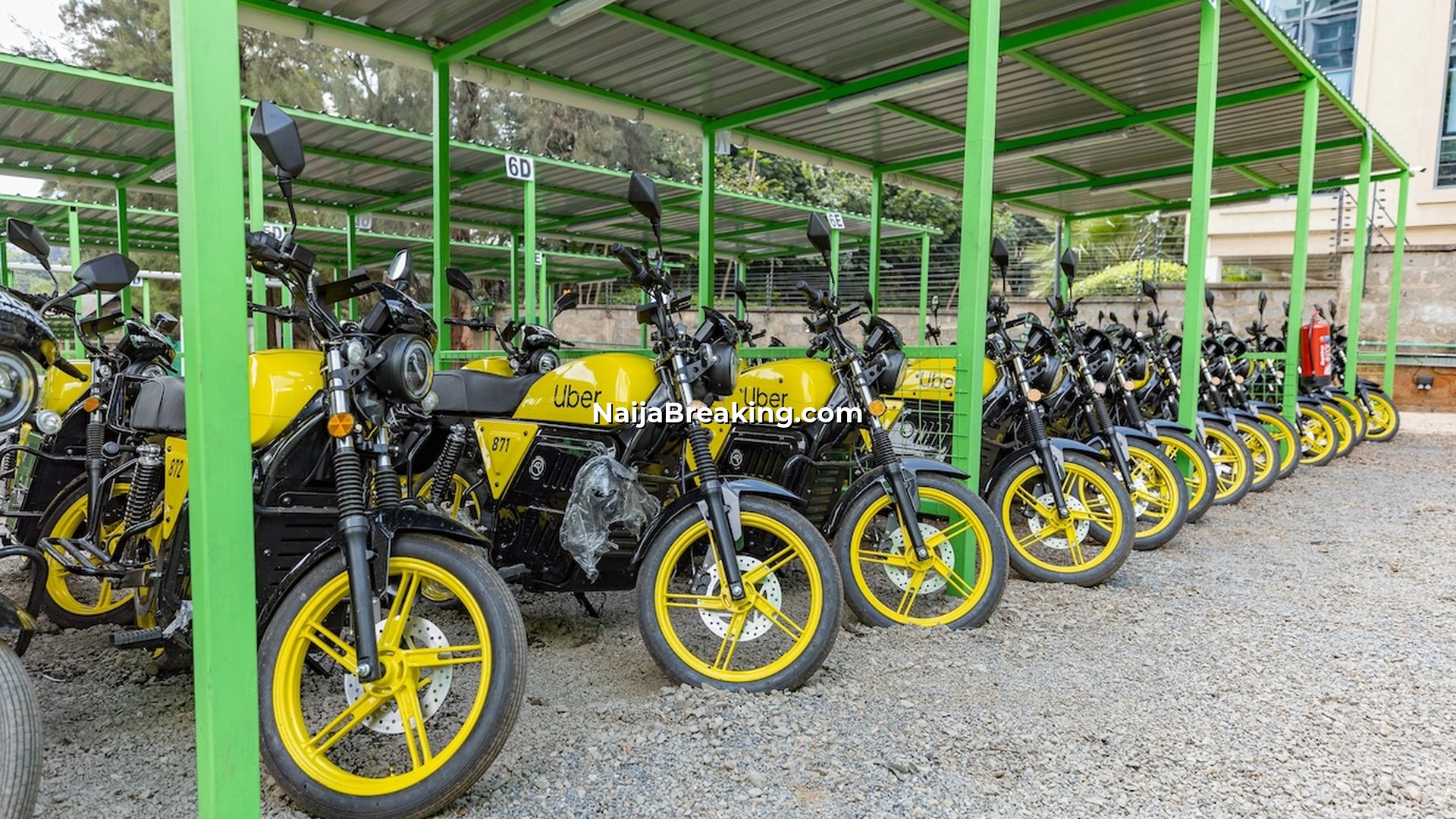
The e-bike expansion gig economy represents one of Africa’s most transformative mobility trends, yet Nigeria remains conspicuously absent from this revolution. When Uber announced plans to double its electric boda (e-bike) fleet in Kenya following extraordinary market uptake, the announcement carried implications that extended far beyond Nairobi’s congested streets. The ride-hailing giant’s aggressive expansion into electric motorcycles signals a fundamental shift in how African cities might solve their mobility and employment crises—and it raises uncomfortable questions about why Nigeria, despite hosting Africa’s largest ride-hailing market with over 1.8 million commercial motorcyclists, has largely remained on the sidelines of the e-bike expansion gig economy revolution.
According to recent industry reports, Kenya’s e-bike adoption has surpassed all expectations, with Kenya Power reporting a staggering 113-fold increase in EV charging revenue between July 2023 and April 2026—rising from minimal levels to KES 382 million ($2.9 million) in just over two years. This explosive growth in the e-bike expansion gig economy isn’t an anomaly or temporary trend; it represents a sustainable blueprint that Nigerian policymakers, ride-hailing platforms, and the millions of gig workers operating in the sector should study with urgency and intentionality. The data shows that where infrastructure and policy support the e-bike expansion gig economy model, adoption accelerates exponentially.
For Nigeria’s estimated 2.2 million gig economy workers—many of whom operate motorcycle taxis (okada) or drive ride-hailing vehicles for platforms like Uber, Bolt, InDriver, and local players—the economics of the e-bike expansion gig economy represent far more than business optimization. For these workers, electrification is a matter of economic survival and health. Operating costs for traditional petrol-powered riders consume roughly 40-50% of daily earnings, a crushing burden that leaves little room for emergencies or savings. When maintenance repairs and replacements are factored in, many gig workers find themselves trapped in a cycle of perpetual financial instability. Kenya’s documented 30-35% reduction in operating costs through the e-bike expansion gig economy model isn’t merely a business metric or environmental talking point—it’s the difference between putting food on the table for a family and going hungry, between affording healthcare and suffering through preventable illness.
Yet Nigeria has made almost no coordinated move to replicate this transformative model at scale. This represents a massive missed opportunity not only for the gig workers themselves but for Nigeria’s cities, environment, and economic future.
Understanding Nigeria’s Gig Economy Landscape
Nigeria’s ride-hailing and motorcycle taxi sectors have grown exponentially since 2015, driven by persistent structural unemployment, critically inadequate public transportation infrastructure, and the smartphone revolution that enabled app-based matching of drivers and passengers. Platforms like Uber, Bolt, InDriver, and homegrown competitors such as Max.ng and Opay have collectively created a gig economy that now employs over 2 million people directly while supporting millions more indirectly through fuel distribution networks, spare parts trading, vehicle maintenance workshops, and ancillary services.
This explosive growth has transformed urban mobility in Lagos, Abuja, Port Harcourt, and secondary cities. However, this growth has come at staggering environmental and economic costs that remain largely unquantified in public discourse. Lagos and other major Nigerian cities now choke under pollution that motorcyclists—the most vulnerable demographic to particulate matter and exhaust fumes—bear disproportionately. Medical studies from the Lagos State University Teaching Hospital and the University of Nigeria have documented elevated respiratory disease rates among commercial motorcyclists compared to the general population, yet this public health crisis receives minimal attention in policy conversations.
The Central Bank of Nigeria (CBN) and the Federal Ministry of Environment have separately acknowledged that transportation accounts for roughly 28% of Nigeria’s greenhouse gas emissions, a figure that places the sector among the nation’s largest contributors to climate change. Despite this clear acknowledgment, neither policymakers nor major ride-hailing platforms have pursued electrification with any urgency or strategic vision comparable to what Kenya’s government and Uber have accomplished. The contrast is striking and deserves serious examination.
Why Kenya’s E-Bike Expansion Gig Economy Model Succeeded
Understanding why the e-bike expansion gig economy took off in Kenya requires examining the specific policy environment, infrastructure investments, and platform strategy that created favorable conditions. Kenya’s government, working in partnership with Uber and other private sector actors, implemented several key initiatives that proved transformative.
First, Kenya established a coherent policy framework for electric vehicle adoption in the gig economy sector. The National Climate Change Council identified ride-hailing electrification as a strategic priority, ensuring that regulatory changes and infrastructure investments aligned toward this goal. This wasn’t achieved through top-down mandates alone but through genuine stakeholder engagement with ride-hailing platforms, worker cooperatives, and technology providers. This collaborative approach meant that regulations didn’t arrive as shocking impositions but as logical conclusions of a dialogue process.
Second, Kenya invested significantly in charging infrastructure. While not yet comprehensive—Kenya has roughly 2,500 public charging points—this represented genuine commitment and forward planning. The government worked with private companies to accelerate charging network deployment, particularly in high-traffic areas where gig workers concentrate. Kenya Power’s massive revenue increases from EV charging reflect the reality that infrastructure investments created new revenue streams while supporting worker transition to the e-bike expansion gig economy model.
Third, Uber itself committed substantial capital to the e-bike expansion gig economy. The platform initially subsidized the purchase price differential between electric and petrol motorcycles, effectively making the upfront cost barrier manageable for individual drivers. This wasn’t charity; it represented a calculation that capturing the rapidly growing electric segment early would provide competitive advantage and alignment with global sustainability commitments.
Fourth, Kenya’s banks and microfinance institutions adapted their lending products to support e-bike purchases. Specialized financing schemes emerged that allowed gig workers to purchase electric motorcycles through installment plans based on predicted earnings improvements. This financial innovation proved critical; without it, even subsidized e-bikes remained inaccessible to most workers.
Finally, Kenya’s embrace of the e-bike expansion gig economy created positive network effects. As more workers adopted e-bikes, the platforms gained scale advantages in routing and matching. Charging infrastructure providers saw growing demand justify their investments. Battery recycling and refurbishment sectors emerged as new economic opportunities. This virtuous cycle accelerated adoption beyond what any single intervention could have achieved.
Nigeria’s Current Position and the Case for E-Bike Expansion Gig Economy Adoption
Nigeria currently stands at a critical juncture regarding the e-bike expansion gig economy. The infrastructure deficits are real and substantial. Nigeria has fewer than 200 public EV charging points across the entire country, concentrated mainly in Lagos and Abuja’s high-income districts. Electricity supply remains inconsistent, with most Nigerians experiencing multiple outages daily, raising legitimate questions about whether domestic EV charging is practical for most gig workers. These barriers are genuine and shouldn’t be minimized.
However, these barriers aren’t insurmountable, and they’re certainly not reasons for complete inaction. Kenya faced similar challenges, with even less reliable electricity infrastructure, yet achieved what Nigeria hasn’t attempted. Moreover, Nigeria’s gig economy is substantially larger than Kenya’s, meaning the potential economic benefits of the e-bike expansion gig economy transformation would be proportionally greater.
Consider the mathematics. If Nigeria’s 1.8 million commercial motorcyclists achieved just 20% adoption of electric models within five years—a conservative target—the operating cost savings would aggregate to approximately $180 million annually across the workforce. For individual workers, this translates to improved livelihoods, better health outcomes from reduced pollution exposure, and enhanced economic stability.
The employment creation potential is equally significant. The e-bike expansion gig economy would generate entirely new sectors: charging infrastructure development and operation, battery manufacturing and assembly, repair and maintenance services specialized for electric motorcycles, and battery recycling. Early analysis suggests that transitioning Nigeria’s ride-hailing motorcycle fleet to electric would create at least 50,000 direct jobs in support sectors within ten years.
Policy Recommendations for Nigeria’s E-Bike Expansion Gig Economy Future
Nigeria should immediately establish a dedicated task force on electric vehicle adoption in the gig economy sector, bringing together representatives from the CBN, Federal Ministry of Power, Federal Ministry of Environment, State governments, ride-hailing platforms, worker organizations, and technology providers. This task force should develop a coherent national strategy for the e-bike expansion gig economy, setting clear targets and timelines.
The federal government should prioritize charging infrastructure investment, allocating specific budget allocations and using public-private partnership models to accelerate deployment. Priority should be given to commercial hubs, ride-hailing bases, and logistics centers where gig workers concentrate. The government should also incentivize private sector investment through tax breaks for charging infrastructure providers and research support for local battery assembly.
Ride-hailing platforms operating in Nigeria must commit to the e-bike expansion gig economy transition, beginning with subsidies for purchase price differentials and financing support. These companies benefit immensely from Nigeria’s gig workforce; they have clear responsibility to support this transition rather than waiting for governments to create perfect conditions.
Financial institutions should develop specialized lending products for e-bike purchases, potentially with government guarantee backing to reduce risk premiums. Banks should also explore innovative models like salary advance programs that allow workers to pre-commit to future earnings improvements for vehicle financing.
Conclusion: Nigeria Cannot Afford to Lag Behind in E-Bike Expansion Gig Economy Transformation
The e-bike expansion gig economy revolution is not coming to Nigeria—it’s already here in Kenya, and gaps are widening daily. Kenya’s success with Uber’s electric boda expansion demonstrates that African cities can successfully transition ride-hailing sectors toward sustainability while improving worker economics. Nigeria’s failure to pursue this path aggressively represents a strategic error with consequences spanning environmental protection, public health, economic opportunity, and climate change mitigation.
Nigeria’s 2.2 million gig workers cannot wait indefinitely for perfect policy conditions or complete infrastructure. Momentum built in Kenya will eventually reach Nigeria, but proactive leadership could accelerate beneficial outcomes substantially. The time to begin the e-bike expansion gig economy transition is now, not five years from now when Kenya’s advantage has compounded further. Nigeria’s policymakers must learn from Kenya’s successes and begin implementing the coordinated strategy that the e-bike expansion gig economy demands.