
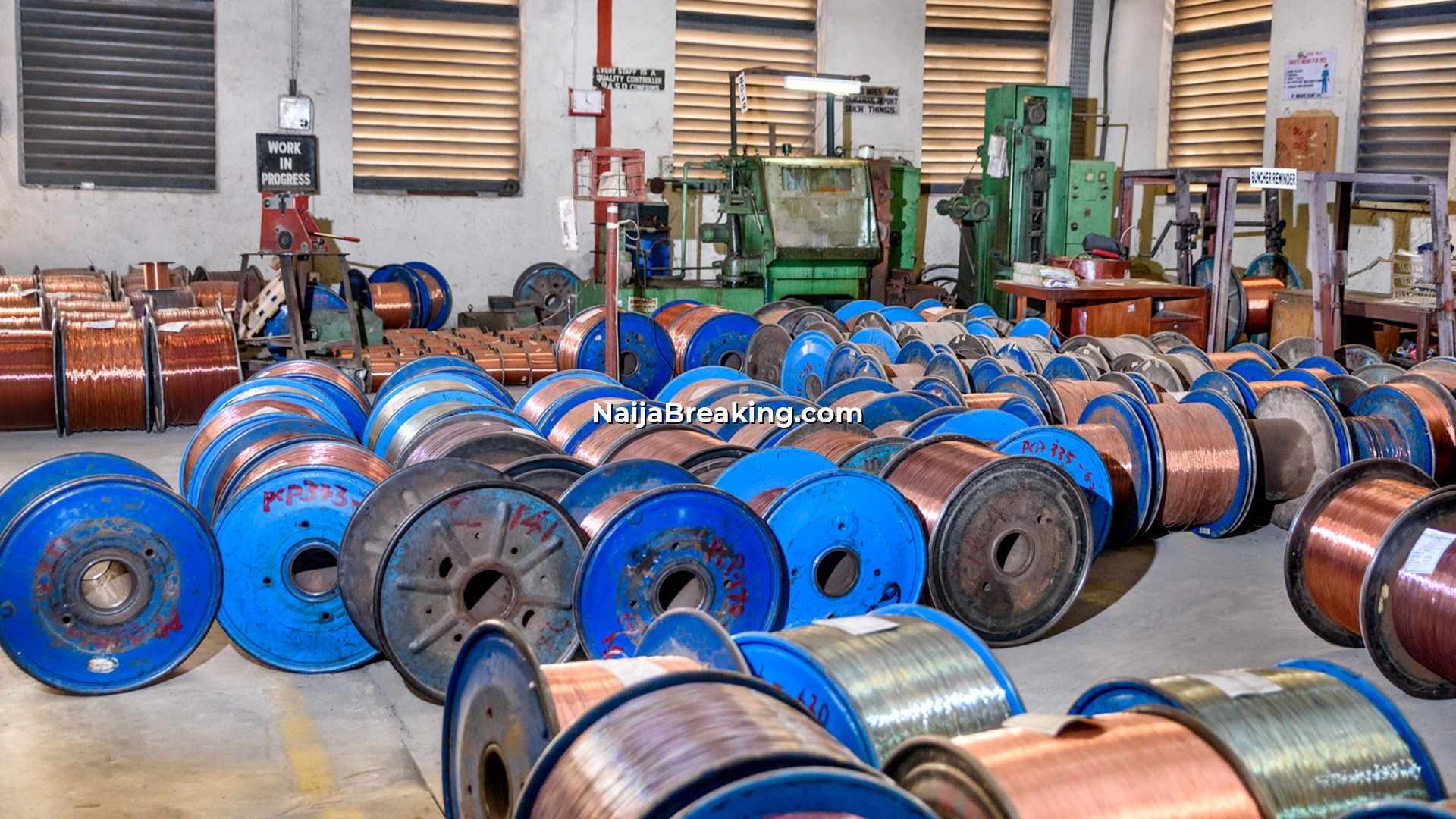
Cutix Pre-Tax Loss Finance Costs: N47.9M Loss as Finance Costs Surge 171%
Cutix Plc, one of Nigeria’s leading cable and wire manufacturers, has recorded a significant Cutix pre-tax loss finance costs situation that demands careful examination. The company posted a devastating N47.90 million pre-tax loss for the financial year ended April 30, 2026, marking a dramatic reversal from the N1.62 billion pre-tax profit it achieved in the corresponding period of 2025. This Cutix pre-tax loss represents one of the most concerning financial developments for the organisation in recent years, signalling serious operational and financial management challenges that demand immediate attention from stakeholders, investors, and the regulatory community. The sharp swing from profitability to loss was primarily driven by an explosive 170.68% surge in finance costs, which skyrocketed to N1.04 billion from just N383.24 million in the previous fiscal year, according to the company’s unaudited financial statements filed with the Nigerian Exchange Limited (NGX). What makes this situation particularly alarming is that the company’s finance costs now substantially exceed its operating profit of N930.29 million, meaning the organisation is spending more on interest payments and debt servicing than it earns from its core business operations. For Nigerian investors, particularly those holding stakes in manufacturing and industrial sectors, this development raises critical questions about corporate debt management strategies, the sustainability of operations in the face of rising borrowing costs across Nigeria’s financial system, and the long-term viability of companies in the manufacturing sector.
Understanding Cutix Pre-Tax Loss Finance Costs Dynamics
The emergence of Cutix pre-tax loss finance costs as a critical issue reflects broader macroeconomic pressures affecting Nigeria’s manufacturing sector. When examining the Cutix pre-tax loss finance costs situation in detail, it becomes evident that the company’s financial distress stems from a combination of declining revenues and exploding financing expenses. The company’s total revenue decreased by 6.35% to N14.77 billion in the fiscal year ended April 30, 2026, compared to N15.77 billion in the previous year, indicating weakening market demand for its products and services. Simultaneously, the company’s cost of sales increased substantially, rising from N9.03 billion in 2025 to N9.26 billion in 2026, which compressed gross profit margins and reduced the company’s ability to cover operational expenses. This dual pressure—declining top-line revenue combined with rising cost of goods sold—created a challenging operating environment that would have been difficult to navigate even without the additional burden of skyrocketing finance costs. The Cutix pre-tax loss finance costs situation is therefore not merely a finance issue but a comprehensive operational challenge that encompasses revenue generation, cost management, and financial leverage decisions made by the company’s management team in previous years.
Background and Industry Context
Cutix Plc has maintained its position as a major player in Nigeria’s cables, wires, and related products manufacturing sector for several decades, serving both domestic and international markets with electrical cables and accessories that are essential to Nigeria’s power distribution infrastructure and industrial operations. The company operates within a highly competitive environment where raw material costs, foreign exchange fluctuations, and access to credit significantly impact profitability and operational efficiency. The cables and wires industry in Nigeria is characterised by moderate competition from both local and international manufacturers, with demand driven primarily by government infrastructure projects, private sector construction activities, and the telecommunications industry’s ongoing expansion. Over the past five years, Nigerian manufacturing companies like Cutix have faced mounting pressure from multiple headwinds, including the persistent weakness of the Nigerian naira against major foreign currencies, which increases the cost of imported raw materials and equipment substantially. The manufacturing sector has also contended with inconsistent electricity supply, high energy costs, inadequate transportation infrastructure, and the lingering effects of global supply chain disruptions that began in 2020 and continued through 2024. Additionally, the Central Bank of Nigeria’s (CBN) monetary policy tightening measures, initiated to combat inflation and stabilise the naira, have significantly increased borrowing costs across the economy, making credit more expensive for companies relying on debt financing for operations and capital investments. Cutix, like many Nigerian manufacturers, has accumulated substantial debt to finance expansion projects and manage working capital requirements during periods of weak demand and challenging macroeconomic conditions.
The Finance Costs Crisis: Cutix Pre-Tax Loss Finance Costs Examined
The most alarming aspect of Cutix’s recent financial performance is undoubtedly the dramatic increase in finance costs that directly contributed to the Cutix pre-tax loss finance costs predicament. Finance costs refer to interest expenses and other costs associated with borrowing money, including bank charges, loan arrangement fees, and the amortisation of borrowing costs. For a manufacturing company like Cutix, these costs are a necessary component of operations when the company uses debt financing to fund capital projects, equipment purchases, and working capital needs. However, when finance costs grow at a rate significantly faster than revenue—as occurred with Cutix’s 170.68% increase in finance costs compared to a 6.35% revenue decline—it indicates that the company’s debt burden has become unsustainable relative to its earnings capacity. The jump from N383.24 million in finance costs to N1.04 billion represents an increase of approximately N656.76 million in additional annual interest and debt servicing expenses. To put this in perspective, this increased finance cost burden alone nearly equals the company’s entire pre-tax loss, demonstrating the profound impact of borrowing costs on the company’s bottom line. Several factors contributed to this dramatic increase in Cutix pre-tax loss finance costs. First, the CBN’s monetary policy tightening throughout 2024 and 2025 pushed policy rates higher, increasing the cost of bank borrowing across Nigeria’s financial system. Second, the company may have taken on additional debt during this period to finance operational needs or capital projects, thereby increasing the absolute amount of interest payable. Third, the depreciation of the Nigerian naira increased the naira cost of any foreign currency-denominated debt the company might have outstanding. The combination of these factors created a perfect storm that transformed what might have been a moderately profitable year into a significant loss-making period.
Revenue Decline and Operational Challenges
While the increase in finance costs is the most dramatic component of Cutix’s financial deterioration, the company’s operational performance also deteriorated significantly, contributing to the overall Cutix pre-tax loss finance costs situation. The 6.35% decline in revenue from N15.77 billion to N14.77 billion suggests weakening demand for the company’s products in the Nigerian market. This revenue decline occurred despite the company’s position as a market leader in the cables and wires segment, indicating broader market challenges rather than simply competitive losses to rival manufacturers. The decline in revenue is particularly concerning because it occurred in an economy that continued to experience various infrastructure development projects and industrial activities that would typically support demand for cables and wires. Several explanations could account for this revenue decline. First, customers may have reduced their capital expenditure and purchases as a response to the challenging macroeconomic environment, high inflation, and uncertainty about Nigeria’s economic future. Second, the telecommunications industry, a significant customer base for cable manufacturers, may have reduced orders as it consolidated operations and focused on efficiency rather than expansion. Third, the company may have faced pricing pressure from competitors or customers seeking lower prices due to their own financial constraints, forcing Cutix to accept lower volumes or margins. Fourth, there could have been supply chain disruptions or production constraints that prevented the company from meeting all customer demand, resulting in lost sales opportunities. Understanding the specific drivers of this revenue decline is crucial for assessing whether the situation represents a temporary cyclical challenge or a more fundamental structural problem with the company’s market position and competitive strategy.
Cost Structure and Gross Margin Compression
Beyond the top-line revenue decline, Cutix’s cost of sales increased slightly, rising from N9.03 billion to N9.26 billion despite lower sales volumes. This represents a concerning trend where costs did not decline proportionally with revenue, indicating that the company failed to achieve adequate cost controls or operational efficiencies during a period of declining demand. In manufacturing operations, companies typically expect that as production volumes decline, certain variable costs should also decline proportionally, while fixed costs remain relatively stable. However, the fact that Cutix’s cost of sales increased while revenue decreased suggests either that the company maintained relatively high production volumes despite lower sales, accumulating inventory, or that the cost of materials and labour increased significantly due to inflation and the depreciation of the naira. The cost of sales increase resulted in gross profit compression, with gross profit declining from N6.74 billion in 2025 to N5.51 billion in 2026—a decrease of approximately N1.23 billion or 18.3%. This significant margin compression substantially reduced the company’s ability to cover operating expenses, administrative costs, and financing expenses. When gross margins compress while absolute finance costs increase, the company finds itself in a particularly vulnerable financial position. This situation also raises questions about the company’s pricing strategy and whether it has been able to pass increased input costs on to customers or whether competitive and demand pressures have forced it to accept lower margins.
Impact of Macroeconomic Factors on Cutix Pre-Tax Loss Finance Costs
The deterioration in Cutix’s financial performance cannot be understood in isolation from Nigeria’s broader macroeconomic environment during fiscal 2026. Nigeria’s economy experienced significant challenges during this period, including persistent inflation that reached double digits, currency depreciation that made the naira weaker against major currencies like the US dollar, and rising interest rates as the Central Bank implemented monetary policy tightening. These macroeconomic conditions created a perfect storm for manufacturing companies like Cutix. The currency depreciation directly increased the cost of imported raw materials, spare parts, and equipment, pressuring the cost of sales. The elevated interest rates increased the cost of bank borrowing, leading directly to the surge in finance costs. The persistent inflation eroded consumer and business purchasing power, reducing demand for industrial products like cables and wires. The combination of these factors meant that Cutix faced simultaneous headwinds on revenue (declining demand), costs (rising input prices and interest expenses), and financing (higher borrowing costs). For a company in the manufacturing sector with significant debt levels, these macroeconomic conditions were particularly damaging. Companies that had entered the period with moderate debt levels suddenly found themselves with substantially higher real debt burdens as interest rates rose and the naira depreciated. The challenging macroeconomic environment also made it difficult for companies to access additional financing at reasonable rates, limiting their ability to invest in new equipment, technology, or marketing to stimulate demand.
Debt Management and Financial Sustainability Concerns
The sharp increase in finance costs raises important questions about Cutix’s debt management practices and the sustainability of the company’s capital structure. The fact that finance costs jumped so dramatically suggests that either the company substantially increased its debt levels during the year, or that refinancing of existing debt occurred at much higher interest rates. Either scenario raises concerns about the company’s financial planning and debt management strategy. For a manufacturing company like Cutix, maintaining an optimal balance between debt and equity financing is crucial for long-term sustainability. While debt financing can be cost-effective when interest rates are low and business is growing, high debt levels during periods of economic weakness can become a significant burden. The company’s current situation, where finance costs exceed 10% of revenue and nearly equal the entire pre-tax loss, suggests that the company may have over-leveraged its balance sheet at unfavourable interest rates. Going forward, the company will need to focus on debt reduction and improving operational profitability. Without significant improvements in revenue and cost management, the company risks finding itself in a situation where it struggles to service its debt obligations. This could eventually threaten the company’s ability to continue paying dividends to shareholders, invest in new equipment and technology, or even maintain current operations if the situation deteriorates further.
Comparative Analysis and Industry Implications
While Cutix’s situation is serious, it is important to note that many other Nigerian manufacturing companies have faced similar challenges during this period. The rise in finance costs has been a widespread problem across Nigeria’s manufacturing sector as interest rates have increased substantially. However, the magnitude of Cutix’s finance cost increase—170.68%—is more severe than many comparable companies have experienced, suggesting that Cutix may have made less prudent debt management decisions than its competitors or may have been exposed to particular vulnerabilities in its capital structure. The company’s experience serves as a cautionary tale for other Nigerian manufacturers and investors about the importance of maintaining conservative debt levels and diversifying financing sources. Companies that relied heavily on naira-denominated bank debt would have experienced particularly severe impacts from the CBN’s interest rate tightening. Those that managed to lock in longer-term financing at fixed rates prior to the rate increases would have weathered the period more successfully. The current situation at Cutix highlights the importance of financial prudence and risk management in Nigeria’s challenging business environment.
Recovery Prospects and Recommendations
For Cutix to recover from its current financial distress and resolve the Cutix pre-tax loss finance costs situation, the company will need to implement a comprehensive turnaround strategy addressing both revenue generation and cost management. On the revenue side, the company should focus on identifying growth opportunities in underserved market segments, improving sales and marketing effectiveness, and potentially diversifying its product offerings. On the cost side, the company needs to implement aggressive cost reduction measures, improve operational efficiency, and optimise its supply chain to reduce raw material costs. Perhaps most importantly, the company needs to address its debt burden through a combination of debt reduction, refinancing of existing debt at lower rates if possible, and improved cash flow generation from operations. The company should also consider exploring strategic partnerships, asset sales, or equity financing options to reduce its absolute debt levels and improve its financial flexibility. Without significant and sustained improvements in operational performance, the company risks finding itself in an increasingly precarious financial position that could threaten long-term viability.
Conclusion
Cutix Plc’s transformation from a profitable company with N1.62 billion in pre-tax profit to a loss-making entity with a N47.9 million pre-tax loss represents a significant reversal of fortunes driven substantially by the Cutix pre-tax loss finance costs explosion. The 170.68% surge in finance costs, combined with declining revenues and margin compression, created the conditions for this dramatic deterioration. The situation reflects broader challenges facing Nigeria’s manufacturing sector in an environment of high interest rates, currency depreciation, and weak demand. While the current situation is serious, it is not irretrievable if the company’s management can implement effective turnaround measures focusing on revenue growth, cost control, and debt reduction. Investors in Cutix should monitor the company’s progress closely in the coming quarters to assess whether management can successfully navigate these challenges and restore the company to profitability.


