
Ramaphosa Links Illegal Immigration to Xenophobic Tensions in South Africa: What Nigerian Migrants Need to Know
South African President Cyril Ramaphosa has directly linked rising xenophobic tensions across the country to the growing challenge of illegal immigration, warning that undocumented migration is placing unprecedented pressure on employment opportunities, public services, and social stability in vulnerable communities. In a statement released on the official website of the South African Presidency on Monday, Ramaphosa addressed the renewed attacks and harassment targeting foreign nationals and foreign-owned businesses in Johannesburg and surrounding areas, establishing a clear connection between illegal immigration xenophobic tensions and the socio-economic frustrations driving these incidents. This development carries significant implications for millions of Nigerian migrants and traders operating in South Africa, as well as broader West African business communities who depend on cross-border economic activities. For Nigerian citizens, whether engaged in informal trade, professional services, or formal employment in South Africa, understanding Ramaphosa’s position on illegal immigration and xenophobic violence is crucial, as it signals a potential shift in government policy toward stricter immigration enforcement and workplace regulations. The South African government’s acknowledgment that undocumented migration distorts labour markets, strains healthcare systems, and destabilises housing infrastructure suggests that immigration crackdowns may intensify in the coming months, affecting both documented and undocumented Nigerian workers across various sectors of the economy.
Background
South Africa has experienced recurring waves of xenophobic violence over the past decade, with attacks on foreign nationals becoming increasingly common in townships and informal settlements across major metropolitan areas. The roots of these xenophobic tensions extend deeper than recent immigration patterns, stemming from decades of unemployment, inequality, and economic marginalisation that disproportionately affect the poorest communities in the country. According to statistics from Statistics South Africa, the unemployment rate reached 34.5% in the first quarter of 2024, with youth unemployment exceeding 45% in many provinces, creating an environment where competition for scarce resources and informal trading opportunities breeds resentment toward foreign nationals. Since the end of apartheid in 1994, South Africa has become a destination for migrants from across the African continent, including substantial populations from Zimbabwe, Malawi, Mozambique, and Nigeria, who came seeking better economic opportunities than available in their home countries.
Previous xenophobic violence waves occurred in 2008, 2015, and 2019, resulting in deaths, injuries, and the displacement of thousands of foreign nationals from their homes and businesses. These incidents were often triggered by perceived competition in informal markets, frustrations over limited job availability, and the perception among local communities that foreign nationals were taking opportunities away from South African citizens. Government responses to these crises have historically been slow and inadequate, with inadequate law enforcement allowing perpetrators to escape accountability in many cases. The 2026 incidents represent a continuation of this troubling pattern, though this time political leadership has explicitly named illegal immigration as a contributing factor to the tensions, marking a significant shift in how the government frames the xenophobia problem.
The economic context underlying these tensions is critical for understanding Ramaphosa’s statement and its potential consequences for African migrants. South Africa’s economy, despite being the most developed on the African continent with a GDP exceeding $400 billion USD, has struggled with sluggish growth, structural inequality, and a declining manufacturing base over the past decade. Youth unemployment, inadequate skills development, and limited economic mobility have created generations of economically excluded South Africans who blame foreign nationals, particularly undocumented migrants, for their inability to secure employment or establish sustainable livelihoods in the informal sector.
Key Details
According to the statement published on the official South African Presidency website on Monday and reported by Nairametrics, President Ramaphosa made several specific claims linking illegal immigration to the recent xenophobic violence. He directly stated that undocumented migration places strain on healthcare, housing, and municipal services, particularly in poor communities where public infrastructure is already overburdened and inadequately resourced. Ramaphosa emphasised that illegal immigration distorts the labour market by encouraging some employers to hire cheaper undocumented foreign labour instead of South African citizens, thereby reducing employment opportunities for local workers in sectors such as retail, hospitality, construction, and domestic services.
The President condemned the recent violence targeting foreign nationals and foreign-owned businesses, stressing that such attacks do not reflect South African values or government policy. However, he attributed the incidents to criminal elements exploiting socio-economic frustrations in poorer communities, suggesting that while the violence itself is unacceptable, the underlying grievances about illegal immigration are legitimate and require government intervention. Ramaphosa stated that illegal immigration poses risks to “social stability, governance and national security,” indicating that the government views undocumented migration as a multifaceted threat extending beyond purely economic concerns. The President announced that government enforcement would be strengthened through the Border Management Authority and other security agencies, with increased action against employers violating immigration and labour laws, signalling an intensification of immigration enforcement efforts across South Africa.
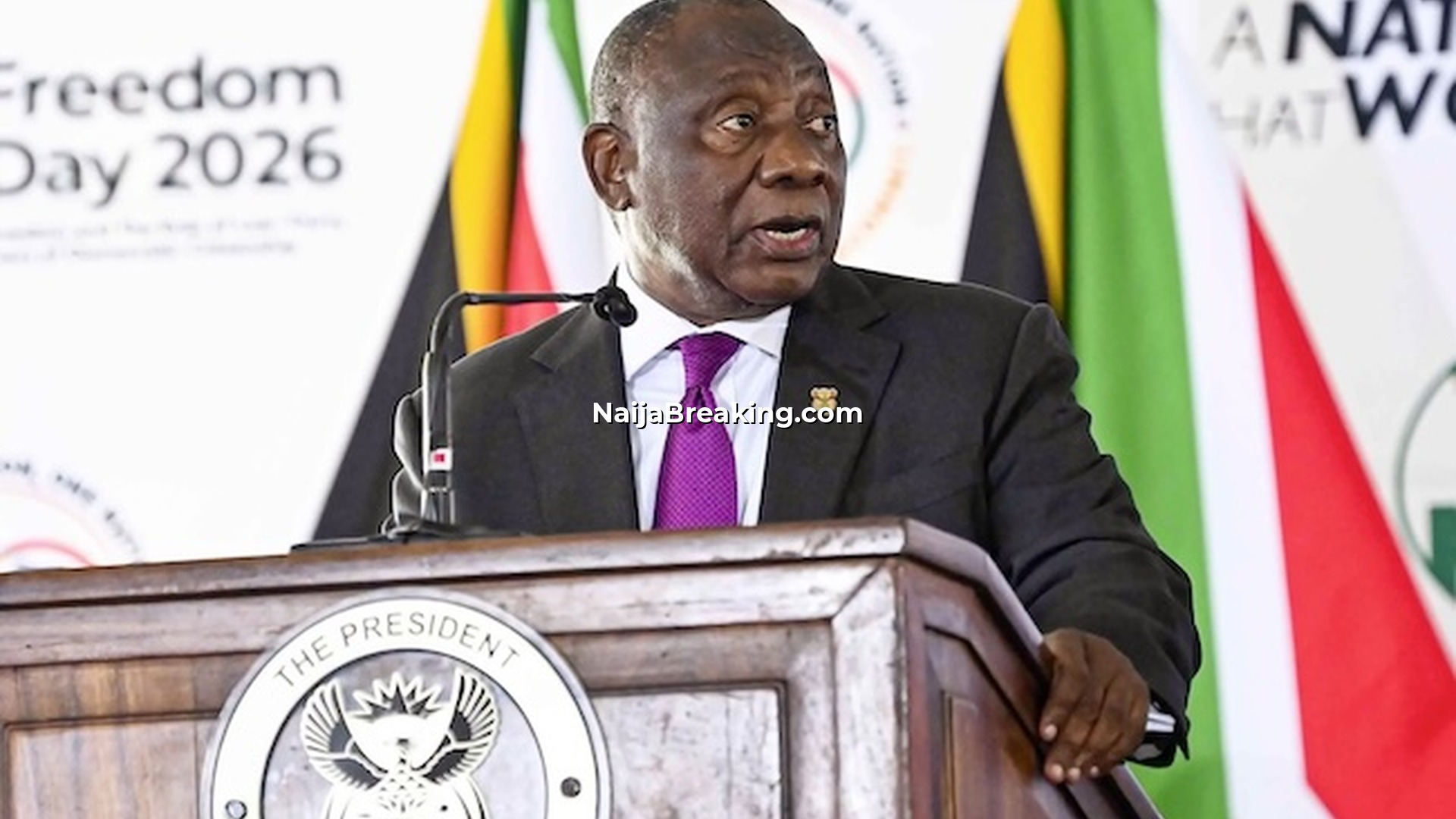
The timing of Ramaphosa’s statement is particularly significant, coming amid Freedom Day celebrations in Bloemfontein on 27 April 2026, where the President was joined by Gayton McKenzie, the Minister of Sports, Arts and Culture, and other government ministers. This official setting provided a platform for articulating government policy on immigration and xenophobia to a national audience, lending considerable weight to the President’s statements. The involvement of multiple ministers indicates that this represents a coordinated government position rather than an isolated presidential comment, suggesting that stricter immigration enforcement policies may be forthcoming across multiple government departments and agencies. The statement’s emphasis on strengthening border management and taking action against employers hiring undocumented workers indicates that implementation of these policies is likely to begin relatively soon, potentially affecting thousands of undocumented migrants currently employed across South Africa’s economy.
Impact and Analysis
Ramaphosa’s linking of illegal immigration to xenophobic tensions is likely to have profound implications for South Africa’s immigration enforcement practices and for the millions of migrants from across Africa currently residing in the country. By attributing xenophobic violence partially to undocumented migration, Ramaphosa has legitimised the concerns of communities experiencing economic hardship while simultaneously setting the stage for more aggressive immigration enforcement policies that could affect both documented and undocumented migrants. This framing risks creating a political environment where anti-immigrant sentiment becomes normalised as a response to economic challenges, potentially emboldening local communities and criminal elements to continue targeting foreign nationals. Research from the International Labour Organisation indicates that migrants in South Africa contribute significantly to the economy, with undocumented workers particularly prevalent in sectors critical to economic functioning, including domestic services, agriculture, and informal trade, meaning aggressive enforcement could disrupt these sectors.
The economic impact of intensified immigration enforcement extends beyond individual migrants to affect broader business operations in South Africa, particularly in sectors with significant undocumented worker employment. Small and medium enterprises operating in retail, hospitality, construction, and services sectors would face increased compliance burdens and potential legal liability if undocumented workers are discovered on their premises. For Nigerian traders and business owners operating in South Africa’s informal economy—estimated to employ over 8 million people and accounting for approximately 6% of GDP—stricter enforcement could disrupt supply chains, increase operating costs through compliance requirements, and reduce the pool of affordable labour. Data from Statistics South Africa shows that foreign nationals, including substantial numbers of undocumented migrants from Nigeria, Zimbabwe, and other African countries, play critical roles in maintaining South Africa’s informal economy, particularly in street trading, informal retail, and service provision in townships and informal settlements.
The statement also carries significant implications for South Africa’s bilateral relationships with neighbouring countries and other African nations, as stricter immigration enforcement is likely to be perceived as hostile to regional migration and could strain diplomatic relationships. Nigeria, which hosts approximately 1.9 million immigrants according to UN data, including many South African nationals, could respond to aggressive enforcement policies against Nigerian migrants with reciprocal measures, potentially affecting South African business interests in Nigeria. The framing of illegal immigration as a threat to “social stability, governance and national security” escalates the political salience of immigration issues, making them central to government policy discussions and potentially influencing electoral politics as the ruling African National Congress faces continued political pressure from rival parties on economic performance.
Expert Perspectives
Immigration policy experts and labour market analysts have offered varied perspectives on Ramaphosa’s statement linking illegal immigration to xenophobic tensions. Dr. Loren Landau, Director of the Wits School of Governance’s Forced Migration Programme, has noted in previous research that while undocumented migration does place pressure on public services in poor communities, attributing xenophobic violence primarily to immigration oversimplifies complex socio-economic dynamics and risks scapegoating vulnerable migrant populations for structural economic failures. Employment economists emphasise that the relationship between immigration and local job availability is more nuanced than political rhetoric suggests, with research from the Centre for Development and Enterprise in South Africa indicating that immigrants often fill labour market gaps rather than displacing local workers, particularly in sectors where local workers lack necessary skills or willingness to work in difficult conditions.
Labour rights organisations have expressed concern that strengthened enforcement against employers hiring undocumented workers, while intended to protect local employment, may instead drive undocumented workers into even more exploitative working conditions and further underground into informal economic sectors where labour protections are minimal. The International Organisation for Migration has consistently warned that enforcement-focused immigration policies without accompanying development initiatives to address underlying poverty and inequality are unlikely to reduce either illegal immigration or xenophobic violence. South African civil society organisations working with migrant communities have called for more comprehensive policy approaches that combine controlled immigration with targeted investment in skills development and job creation for local communities, arguing that security-focused enforcement alone cannot address the deep-rooted economic frustrations driving both migration and xenophobic responses.
What This Means for Nigerians
For Nigerian citizens currently residing in South Africa—whether documented or undocumented—Ramaphosa’s statement signals a potentially more challenging operating environment ahead, with increased risks of immigration enforcement actions, workplace raids, and social hostility. The announcement that government will take “increased action against employers violating immigration and labour laws” directly threatens the livelihoods of undocumented Nigerian workers across various sectors, while also creating compliance risks for employers who may face penalties for employing workers without proper documentation. Nigerian traders engaged in informal commerce in South African townships and informal settlements must anticipate increased scrutiny from both government authorities and local community members, potentially making business operations more difficult and less secure. The broader political legitimisation of anti-immigration sentiment through the President’s statement could embolden xenophobic actors and create an environment where foreign nationals, including Nigerians, face increased harassment and violence in public spaces and commercial areas.
Nigerian business communities in South Africa should be preparing contingency plans for potential immigration enforcement activities, including ensuring proper documentation where possible and understanding legal rights and responsibilities regarding employment practices. The Nigerian Diaspora Commission and Nigerian diplomatic missions in South Africa may need to increase engagement with South African authorities to ensure protection of Nigerian citizens’ rights and to advocate for fair treatment of documented Nigerian migrants. For Nigerians considering migration to South Africa for employment or business opportunities, the environment has become less welcoming, with enforcement risks and social tensions making the country a less attractive destination than in previous years. This could have significant implications for remittances flowing from Nigerian workers in South Africa to families back home—remittances from South Africa represented a crucial income source for many Nigerian households, but increased enforcement could reduce employment opportunities and income-earning capacity for Nigerian migrants.
The situation also has implications for bilateral trade between Nigeria and South Africa, as deteriorating relations and restrictions on African labour migration could affect business relationships and investment flows between the two largest economies in sub-Saharan Africa. Nigerian companies operating in South Africa, particularly in sectors dependent on labour-intensive operations, may face increased operational challenges and compliance costs. The political economy implications extend to broader African integration efforts, as aggressive immigration enforcement in South Africa could undermine regional free movement agreements and create precedents for other countries to adopt similar restrictive policies affecting African labour mobility.
Conclusion and Outlook
President Ramaphosa’s linking of illegal immigration to rising xenophobic tensions represents a significant policy position that is likely to shape South African immigration enforcement practices in the coming months and years. While the government’s identification of undocumented migration as contributing to xenophobic violence addresses legitimate concerns about public service pressures and labour market dynamics, the approach risks scapegoating vulnerable migrant populations for structural economic challenges that require deeper solutions. The announcement of strengthened enforcement through the Border Management Authority and actions against employers hiring undocumented workers signals that the South African government is moving toward more aggressive immigration control measures, with potential consequences for millions of African migrants, including substantial numbers of Nigerians.
Going forward, the effectiveness and human impact of these enforcement policies will depend heavily on implementation details, the extent to which enforcement is coupled with economic development initiatives, and whether government simultaneously takes serious action against the criminal elements perpetrating xenophobic violence. For Nigerian migrants, traders, and businesses operating in South Africa, the immediate priority should be ensuring proper documentation where possible, understanding legal rights and responsibilities, and maintaining close communication with diplomatic representatives. The broader challenge for South Africa involves developing comprehensive immigration and economic development policies that address legitimate community concerns about service provision and employment while protecting the rights and dignity of migrant populations and preventing further escalation of xenophobic violence.
Share your thoughts in the comments below. How do you think South Africa should balance immigration control with protecting migrant rights? What experiences have you had or heard about regarding the situation for African migrants in South Africa?


