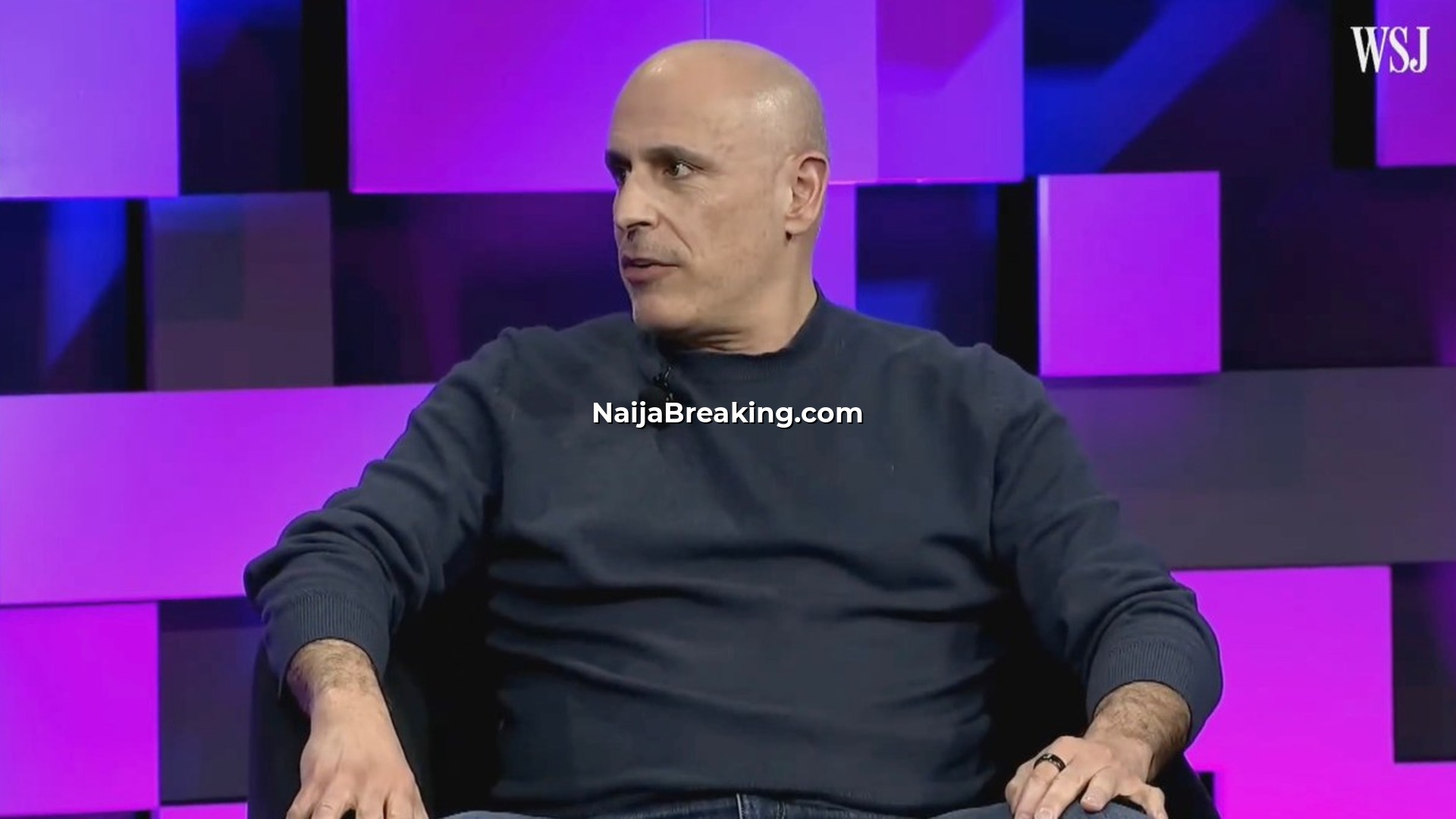
AI-Powered Restaurant Factories: Marc Lore’s Wonder Platform Revolutionises Food Industry
Marc Lore, the visionary e-commerce entrepreneur who built and sold multimillion-dollar ventures to retail giants Amazon and Walmart, is now bringing artificial intelligence into the restaurant industry through his groundbreaking startup, Wonder. The AI-powered restaurant concept represents one of the most transformative shifts in food service technology, with Lore unveiling Wonder Create, an initiative that could fundamentally democratise restaurant ownership across Africa and the world. According to TechCrunch’s coverage of the announcement, anyone — from aspiring food entrepreneurs to social media influencers without prior culinary experience — could soon launch their own restaurant brand using artificial intelligence in under sixty seconds. This breakthrough technology could have profound implications for Nigeria’s burgeoning entrepreneurial ecosystem, where the food and beverage sector currently contributes approximately ₦2.3 trillion annually to the nation’s economy. The AI-powered restaurant model represents a significant departure from traditional restaurant ownership, which typically requires substantial capital investment, deep operational expertise, and years of experience. Instead, Wonder’s “programmable cooking platforms” equipped with robotic arms, conveyor systems, and artificial intelligence algorithms could allow everyday Nigerians to enter the restaurant business with minimal barriers to entry. This development arrives at a critical time when Nigeria’s youth unemployment rate hovers around 42 percent, and innovative solutions in the food technology space could create thousands of new employment opportunities across the nation.
Background
The journey toward AI-powered restaurants did not emerge overnight; rather, it represents the culmination of decades of technological advancement in automation, artificial intelligence, and food service innovation. Marc Lore’s career trajectory provides essential context for understanding how Wonder came to existence. After building and selling his e-commerce ventures to Amazon and Walmart, Lore demonstrated an uncanny ability to identify market inefficiencies and technological solutions to address them. His previous experiences in the e-commerce space — where he successfully democratised online selling for millions of individuals worldwide — directly informed his approach to revolutionising the restaurant industry. According to industry analysts, the global food delivery and restaurant technology market is projected to reach $365 billion by 2028, with artificial intelligence playing an increasingly central role in operational efficiency and customer experience optimisation. In Nigeria specifically, the food tech sector has experienced remarkable growth, with platforms like Jumia Food, Chowdeck, and Bolt Food facilitating billions of naira in transactions annually. However, these platforms primarily addressed logistics and delivery challenges rather than the fundamental challenge of restaurant economics and operational complexity.
The convergence of several technological developments made Wonder’s vision feasible. Advanced robotic systems, once confined to manufacturing environments, have become increasingly affordable and adaptable for food preparation. Artificial intelligence algorithms can now design recipes, optimise ingredient ratios, manage inventory in real-time, and even predict customer preferences based on historical data. Cloud computing infrastructure enables remote management of multiple kitchen locations simultaneously, solving the geographic scalability problem that has plagued traditional restaurant chains. The COVID-19 pandemic accelerated adoption of ghost kitchens and cloud kitchens across Nigeria, with Lagos and Abuja becoming hotbeds for this innovation model. Companies like Airbnb for kitchens emerged to address rising rental costs, whilst food entrepreneurs experimented with operating multiple virtual restaurant brands from single locations. This groundwork laid the foundation for Wonder’s more ambitious vision of AI-enabled, fully automated, and digitally scalable restaurant infrastructure. The technological pieces were essentially in place; what was required was an entrepreneur with sufficient capital, vision, and execution expertise to orchestrate them into a cohesive platform.
Key Details
Wonder Create, the flagship initiative announced earlier this year, represents the practical realisation of Lore’s vision for democratising restaurant ownership through artificial intelligence. According to the TechCrunch report detailing Wonder’s expansion strategy, the system operates remarkably simply from a user perspective. Entrepreneurs would essentially type a prompt describing their desired restaurant concept — for example, “I want to create a modern Nigerian jollof rice restaurant with fusion appetisers” — and the artificial intelligence would handle the remainder of the process. The AI system would design the menu, optimise recipes for the available equipment, calculate ingredient costs, establish pricing strategies, create branding materials, and prepare the kitchen operations for launch. The entire process from concept to operational readiness would take less than one minute, eliminating the traditional eighteen to twenty-four month timeline required to launch a conventional restaurant. Wonder currently operates 120 “programmable cooking platforms” across multiple locations, with plans to expand to 400 facilities within the next twelve months. These are not traditional restaurants but rather what Lore describes as “restaurant factories” — multi-branded kitchen spaces where 25 different restaurant concepts can operate simultaneously from a single location.
The technological specifications underlying Wonder’s platform are equally impressive. Each kitchen contains a 700-ingredient library — an expansive collection of ingredients carefully selected for versatility and cost-effectiveness. The kitchens employ a combination of human staff (typically eight to twelve employees per location) and advanced automation equipment, including robotic arms for precise cooking tasks, conveyor belt systems for efficient food assembly, and intelligent temperature control systems. Wonder recently acquired Spice Robotics, a company that manufactures automatic bowl-making machines previously used by salad chain Sweetgreen, further enhancing operational automation capabilities. Looking forward, the company plans to introduce an “infinite sauce machine” capable of producing approximately 80 percent of all sauce variations found across internet recipes, effectively solving a critical labour bottleneck in kitchen operations. Each kitchen operates as a software-controlled entity, with artificial intelligence managing inventory levels, predicting demand patterns, optimising cooking sequences, and automatically adjusting recipes based on ingredient availability and seasonal variations. This level of technological sophistication would have seemed purely science fictional just five years ago, yet Wonder is operationalising it across its rapidly expanding network of locations.
Impact and Analysis
The potential economic impact of AI-powered restaurants extends far beyond individual entrepreneurs gaining easier access to restaurant ownership. Industry analysts project that successful implementation of Wonder’s model could fundamentally restructure the $1.3 trillion global restaurant industry by reducing operational costs by 30-40 percent whilst simultaneously improving consistency and food quality. For Nigeria specifically, where informal food businesses comprise approximately 65 percent of the food service sector according to the National Bureau of Statistics, this technology could formalise and professionalise a crucial economic segment. The reduced capital requirements for restaurant launch — potentially dropping from ₦5-10 million to ₦500,000-1 million — would democratise entrepreneurship across socioeconomic strata. Restaurants currently represent one of the highest-failure-rate business categories, with approximately 60 percent of independent restaurants closing within the first five years due to operational complexity and cash flow challenges. Artificial intelligence could dramatically improve survival rates by automating scheduling, waste reduction, and financial management. Additionally, reduced labour costs and increased operational efficiency could enable restaurant owners to either improve profit margins or reduce menu prices, potentially expanding market access in price-sensitive emerging markets like Nigeria where affordability significantly impacts food purchasing decisions.
However, the impact extends beyond pure economics into employment and food security domains. Whilst artificial intelligence will certainly reduce demand for certain entry-level kitchen positions, it simultaneously creates demand for different skill categories: AI trainers, equipment technicians, software developers, quality assurance specialists, and brand managers. Food security implications are equally significant — by optimising ingredient utilisation and reducing waste by an estimated 25-35 percent, AI-powered kitchens could contribute meaningfully to food security objectives. The scalability advantages could enable rapid expansion of affordable, consistent food options into underserved communities across Nigeria, where limited access to diverse, affordable nutrition remains a persistent challenge, particularly in rural areas. Data from recent agricultural reports suggests that food waste accounts for approximately 25 percent of agricultural production in Nigeria, representing billions of naira in lost economic value and contributing to malnutrition despite adequate national food production capacity.
Expert Perspectives
Industry experts and technology analysts have responded to Wonder’s vision with considerable enthusiasm, though some have raised important cautionary notes. Dr. Ade Oladele, a senior researcher at the Nigerian Institute of Food Science and Technology, noted that “artificial intelligence in food preparation offers tremendous potential for standardising quality and reducing waste, but successful implementation requires careful attention to local taste preferences and cultural food practices.” This perspective highlights a critical challenge for global food technology platforms adapting to Nigeria’s diverse culinary landscape, where preferences vary significantly across regional and ethnic communities. Technology venture capital analysts point to Wonder’s successful fundraising and operational scaling as evidence of institutional confidence in the model. The company’s trajectory from concept to 120 operating locations represents remarkable execution, though some analysts caution that sustained profitability will require careful management of customer acquisition costs and menu engineering. Several food technology consultants have highlighted the importance of maintaining human oversight in AI-driven food systems, particularly regarding food safety, nutritional accuracy, and compliance with increasingly stringent food regulatory standards. The Nigerian Food and Drugs Authority (NAFDAC) will likely play a critical oversight role as AI-powered restaurants expand into the Nigerian market, requiring transparent protocols for quality assurance and ingredient verification that align with existing regulatory frameworks.
What This Means for Nigerians
For Nigerian entrepreneurs, Wonder’s AI-powered restaurant model presents both extraordinary opportunities and substantial practical considerations that merit careful evaluation. The dramatically reduced barriers to entry could enable thousands of Nigerians — particularly young people with creative ideas but limited capital — to launch restaurant businesses that would otherwise remain inaccessible. A 25-year-old university graduate with ₦500,000 saved could potentially launch a profitable restaurant brand, something virtually impossible through conventional restaurant ownership models. This democratisation aligns perfectly with Nigeria’s entrepreneurial culture and the government’s push toward business creation as an employment solution. However, successful participation in such platforms will require that Nigerian entrepreneurs understand the technology’s capabilities and limitations, develop compelling brand identities in increasingly crowded markets, and navigate digital marketing effectively to attract customers. The reliance on technology platforms also introduces new risks — platform dependency means that if Wonder experiences service disruptions, individual entrepreneurs lose operational capacity completely, unlike traditional restaurant owners who maintain direct control over their kitchens.
For Nigerian consumers, AI-powered restaurants could translate into meaningful improvements in food affordability, consistency, and availability. Reduced operational costs could enable restaurant owners to offer menu items at lower price points whilst maintaining quality standards, expanding access to diverse, professionally prepared foods across lower-income demographics. The technology could solve persistent challenges around food availability in secondary and tertiary cities, where limited restaurant competition restricts consumer choice. However, concerns about job displacement in Nigeria’s informal food sector merit serious consideration. Millions of Nigerians currently earn livelihoods through small-scale food preparation, hawking, and informal restaurant operations. Rapid automation could displace workers faster than alternative employment opportunities emerge, particularly affecting women, who comprise approximately 70 percent of Nigeria’s informal food sector workforce. Forward-thinking policymakers and business leaders should proactively develop transition programmes ensuring that technological displacement includes retraining opportunities and support mechanisms for affected workers. The Federal Ministry of Labour and Employment could establish partnerships with Wonder and similar platforms to develop apprenticeship and upskilling programmes that position workers for success in technology-enabled food businesses.
Conclusion and Outlook
Marc Lore’s Wonder platform and its AI-powered restaurant initiative represent a genuinely transformative development in food service technology with substantial implications for Nigeria’s entrepreneurial landscape and economic development trajectory. The ability to launch restaurant businesses in under one minute, operating with minimal capital requirements and substantially reduced operational complexity, could democratise entrepreneurship in ways that align perfectly with Nigerian aspirations and economic realities. The technology addresses genuine market failures — the excessive capital requirements, operational complexity, and high failure rates that have prevented millions of qualified entrepreneurs from launching food businesses. As Wonder expands its network from 120 to 400 locations and refines its artificial intelligence systems, Nigerian entrepreneurs should carefully monitor developments and consider how participation in such platforms might align with their business objectives. Policymakers should simultaneously develop regulatory frameworks that facilitate innovation whilst protecting food safety, worker welfare, and consumer interests. The future of restaurant ownership in Nigeria may indeed involve artificial intelligence as a foundational technology, enabling individuals with creative vision but limited capital to compete effectively in food service markets. The question now becomes not whether AI will transform restaurant industries, but rather how quickly that transformation occurs and whether Nigeria positions itself to benefit maximally from this technological evolution. Share your thoughts in the comments below.