The design industry is experiencing a significant transformation, and Nigerian creative professionals need to pay close attention to the latest developments happening in the global design space. Canva’s AI assistant has just received a major upgrade that promises to revolutionize how designers and businesses approach content creation. This new iteration of the Canva AI assistant allows users to create fully editable designs simply by describing what they want in natural language, eliminating the need for extensive design knowledge or technical skills.
Understanding Canva’s AI Assistant Revolution
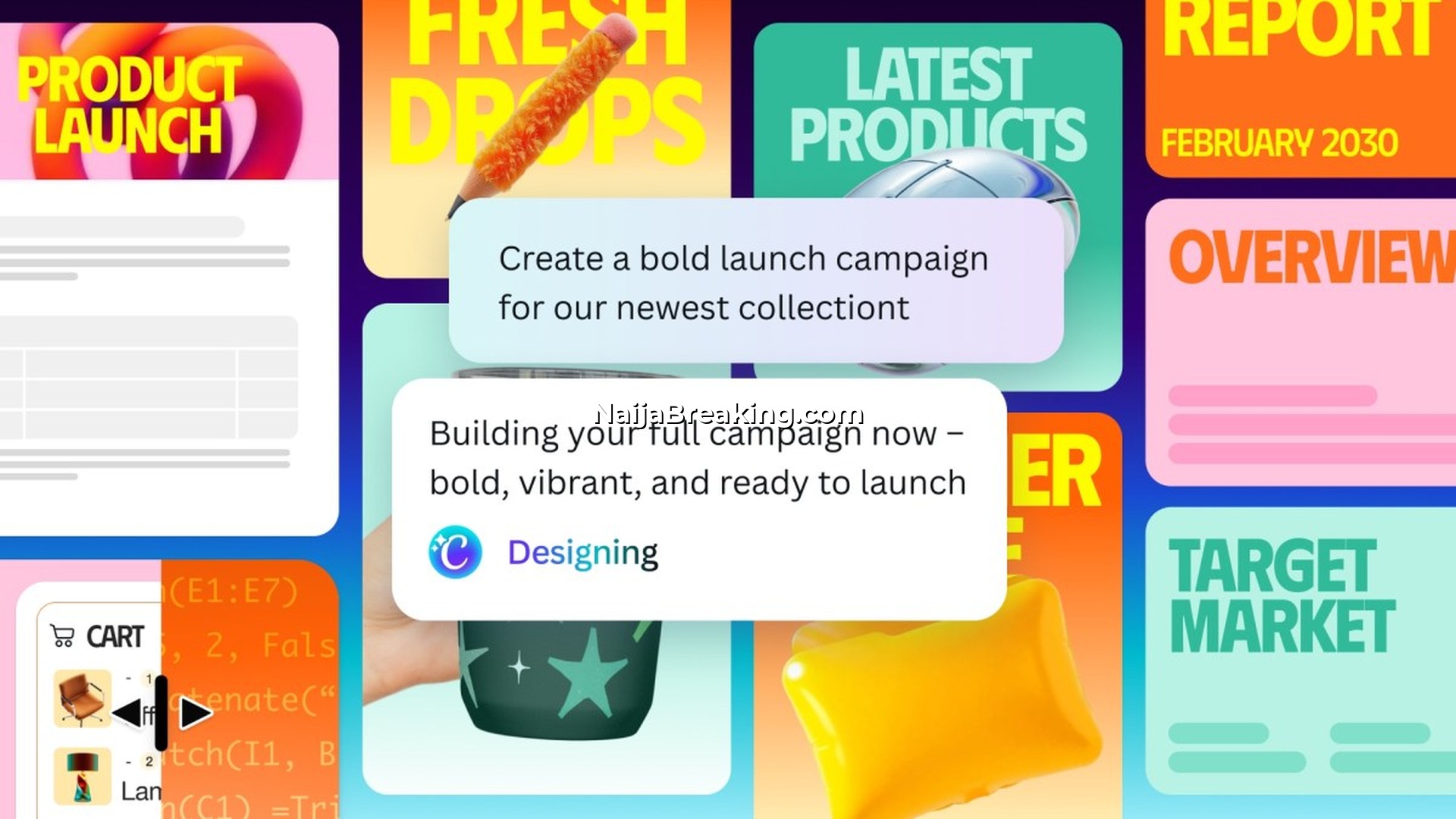
The latest version of Canva’s AI assistant represents a significant leap forward in artificial intelligence integration within design platforms. Rather than requiring users to manually select tools, adjust layers, and fine-tune every element, the Canva AI assistant now handles much of this work automatically. The system works by allowing users to describe their design requirements in plain English, and the AI interprets these instructions to create multiple design options.
What makes this update particularly exciting is that the designs generated by the Canva AI assistant aren’t just static images. Instead, they’re fully editable, layered designs that users can customize further. This hybrid approach combines the efficiency of AI-powered automation with the flexibility that professional designers require. For small business owners in Nigeria who don’t have dedicated design teams, this capability could be transformative.
According to information from TechCrunch (https://techcrunch.com/2026/04/16/canvas-ai-assistant-can-now-call-various-tools-to-make-designs-for-you/), the Canva AI assistant leverages advanced AI models to understand user requests and automatically call the necessary tools within the platform. This means users can get a professional design created in seconds, something that would typically require hours of manual work or expensive freelancer fees.
How the Canva AI Assistant Works in Practice
Understanding the mechanics of how the Canva AI assistant operates is essential for anyone considering adopting this technology. When a user inputs a text prompt describing their design needs, the AI system analyzes the request and determines which design elements, tools, and features need to be utilized. The system then automatically applies these selections to create one or more design options for the user to review.
The layered architecture of designs created by the Canva AI assistant is particularly important. Layers allow users to isolate specific elements of a design—text, images, background colors, shapes, and more—and edit them independently without affecting the entire composition. This means that while the AI handles the initial heavy lifting, users retain complete control over the final product.
For instance, if a Nigerian e-commerce business owner wants to create social media graphics for a product launch, they can simply tell the Canva AI assistant: “Create a vibrant Instagram post for a new fashion collection featuring blue and gold colors, with space for product images and promotional text.” The AI would then generate several design options with appropriate layouts, color schemes, and typography. The business owner can then tweak these designs to match their brand guidelines perfectly.
The flexibility offered by the Canva AI assistant extends beyond just editing existing designs. Users can request variations, ask the AI to adjust specific elements, change color palettes, or redesign certain sections—all through natural language commands. This conversational approach to design makes professional-quality graphics accessible to people without formal design training.
Canva’s Competitive Position in the AI Design Market
Canva is not operating in isolation in this space. The company faces increasing competition from other major technology firms that are integrating AI into their design and creative platforms. Adobe recently launched a Firefly AI assistant that can leverage Adobe’s suite of creative applications to perform complex design tasks. Similarly, Figma has been implementing AI agents into its platform, giving users access to advanced AI-powered design capabilities.
However, Canva’s approach with its AI assistant appears to have distinct advantages. The platform’s focus on making design accessible to non-professionals, combined with its intuitive interface, positions it uniquely in the market. Canva’s co-founder and Chief Operating Officer, Cliff Obrecht, emphasized that while many companies are attempting to integrate workflows across multiple tools, Canva recognizes that users prefer to conduct their final editing, collaboration, and publishing tasks within the Canva platform itself.
Obrecht noted in recent statements that the Canva AI assistant works seamlessly with other AI platforms and language models from companies like Anthropic, Google, and OpenAI. This interoperability means that professionals using agentic workflows in other applications can call upon Canva to generate content and then integrate that content back into their preferred tools. However, Obrecht emphasized that most users ultimately return to Canva for the final stages of design refinement and deployment.
Implications for Nigerian Businesses and Creators
For the Nigerian business community, the emergence of advanced tools like the Canva AI assistant has profound implications. Small and medium-sized enterprises (SMEs) that have traditionally struggled with design costs can now access professional-quality graphics at a fraction of the expense. Content creators, social media managers, and digital marketers across Nigeria can dramatically increase their output while maintaining high quality standards.
The accessibility of the Canva AI assistant is particularly relevant for Nigerian entrepreneurs operating in competitive digital spaces. E-commerce businesses, digital marketing agencies, content creators, and social media influencers can all benefit from the ability to rapidly produce customized, professional designs. This capability directly translates to better brand presentation, improved customer engagement, and ultimately, increased revenue.
Furthermore, as Nigerian businesses increasingly compete on the global stage through online platforms, having access to world-class design tools levels the playing field. A small business in Lagos can now create designs that rival those produced by large international companies with dedicated design departments. The Canva AI assistant democratizes design in a way that benefits the entire Nigerian digital economy.
The Broader Context: AI and Workflow Automation
The introduction of the Canva AI assistant fits into a larger trend in the technology industry toward AI-powered workflow automation. The core promise of modern AI platforms is that users can describe tasks in natural language, allow the AI system to plan and execute those tasks using appropriate tools, and maintain preferences for future interactions. This paradigm represents a fundamental shift in how people work with technology.
Design professionals particularly benefit from this automation because they often need to execute repetitive tasks—creating variations of designs, adapting assets for different platforms, maintaining brand consistency across multiple touchpoints. The Canva AI assistant can handle much of this repetitive work, freeing designers to focus on creative and strategic aspects of their projects.
For Nigerian design professionals, this evolution means they must adapt their skill sets. Rather than focusing exclusively on tool proficiency, successful designers will need to develop strong communication abilities, creative vision, and the capacity to guide and refine AI-generated outputs. The role of the designer is shifting from pure execution to creative direction and quality assurance.
Looking Ahead: The Future of AI-Assisted Design
As the Canva AI assistant continues to develop, we can expect increasingly sophisticated capabilities. Future versions might include better understanding of cultural contexts and design preferences, integration with additional third-party tools and services, and more refined control over design outcomes. These improvements will make the Canva AI assistant even more valuable for professionals and businesses worldwide.
For Nigerian users, staying informed about these developments and adopting these tools early can provide competitive advantages. The companies and creators that master AI-assisted design tools will be better positioned to scale their operations, reach larger audiences, and achieve their business objectives more efficiently.
The Canva AI assistant represents more than just a software update—it’s a symbol of how artificial intelligence is reshaping creative industries globally. By understanding and leveraging these tools effectively, Nigerian professionals and businesses can participate fully in the digital economy and achieve new levels of success.
Share your thoughts below about how you’re using AI tools in your creative work or business, and let us know whether you’re considering the Canva AI assistant for your design needs.