Smart Ring Upgrades: Why Nigerians Should Skip the Oura Ring 5 for Now
The smart ring upgrade cycle is heating up globally, with Oura announcing its latest flagship device, the Ring 5. But here’s the uncomfortable truth for Nigerian technology enthusiasts and early adopters: you probably don’t need it. For those already holding an Oura Ring 4 or the newer ceramic version released within the past year, the incremental improvements don’t justify the cost of upgrading—especially in Nigeria’s current economic climate where purchasing power continues to erode against imported luxury gadgets. According to reviews from The Verge, the Ring 5 is primarily an aesthetic refinement rather than a technological leap forward. This matters significantly for Nigerian consumers who face steep import duties, unfavourable exchange rates, and limited warranty support. The device arrives at a time when Nigeria’s technology market is increasingly stratified—where flagship gadgets become accessible primarily to a narrow high-income bracket. Understanding whether this latest wearable justifies its premium positioning requires examining not just its features, but the economic realities facing potential buyers in Lagos, Abuja, Port Harcourt, and beyond.
Background
The smart wearable market in Nigeria has experienced modest but steady growth over the past five years, driven largely by rising health consciousness among the urban middle class and growing fitness culture in major metropolitan areas. However, the adoption rate remains significantly lower than in developed markets, constrained by price barriers, inconsistent power supply for charging, and limited availability of local support services. The Oura Ring, first introduced to global markets in 2015, positioned itself as a premium alternative to fitness smartwatches, offering elegant design and sophisticated biometric tracking without the bulky screen interface that characterises traditional wearables.
Within Nigeria specifically, the smart wearable sector gained traction around 2018-2019, coinciding with the rise of fitness startups in Lagos and the emergence of health-conscious professionals. Companies like Oura capitalized on this trend by marketing their devices as lifestyle accessories rather than purely functional gadgets. However, adoption remained limited to affluent early adopters, primarily expatriates and high-income Nigerians who could absorb the costs of importing devices without official distributor support. The Central Bank of Nigeria’s (CBN) fluctuating exchange rates have made imported electronics increasingly expensive—the Naira weakened from approximately ₦411 per USD in 2021 to over ₦1,500 per USD by 2024, directly impacting the effective price of devices like the Oura Ring for Nigerian consumers.
The release cycle for Oura devices has accelerated in recent years. The Ring 3 held market dominance for several years before the Ring 4 arrived in mid-2023, followed by a ceramic version in late 2023. This compressed timeline reflects competitive pressures in the broader wearables market, where companies like Samsung, Apple, and newer entrants continuously innovate. For Nigerian buyers, however, each new generation creates a frustrating calculus: pay premium prices for incremental gains, or hold onto existing devices that remain functionally adequate. The Ring 5’s announcement therefore arrives amid broader concerns about sustainability and value in consumer technology purchasing.
Key Details
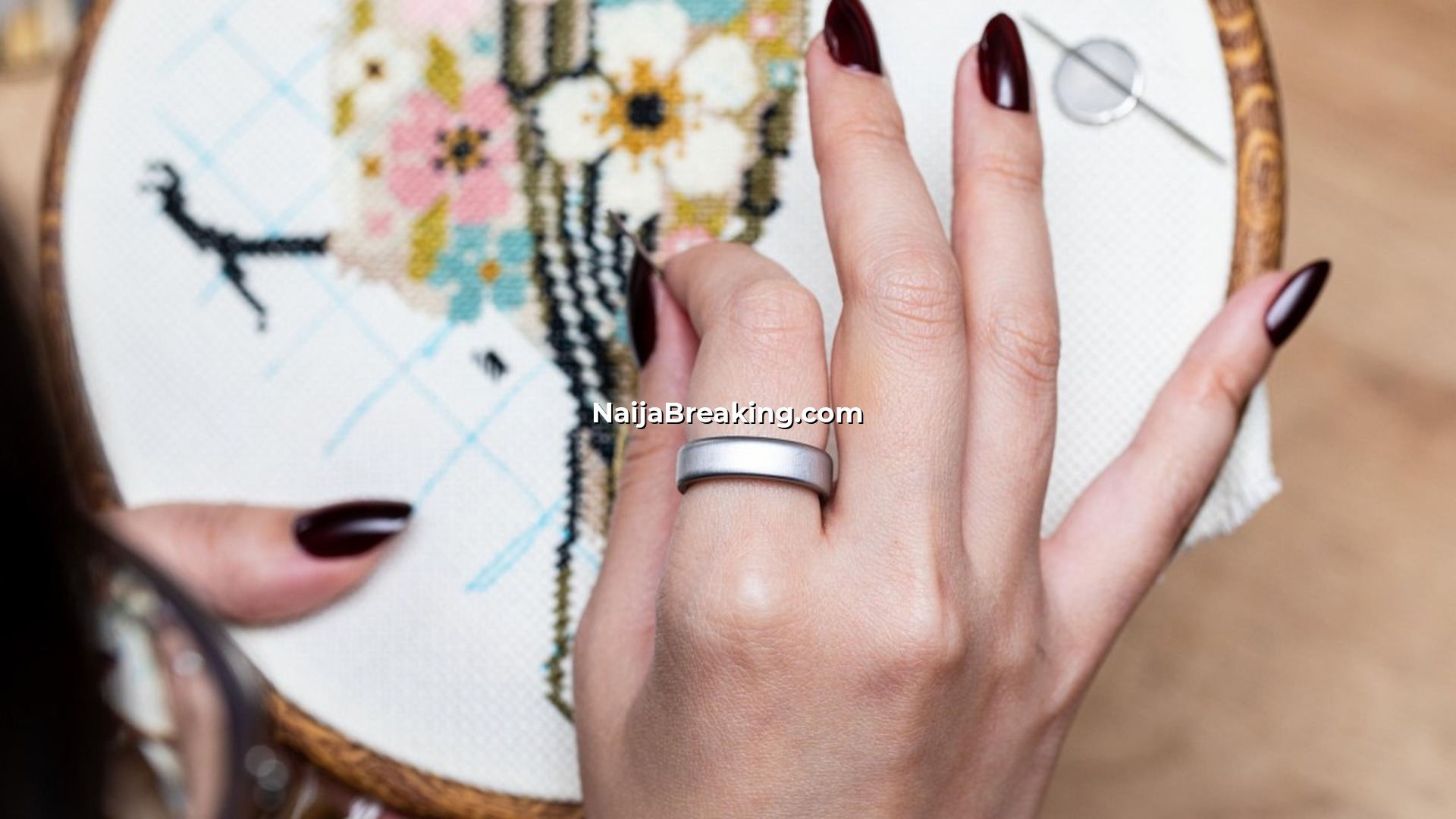
The Oura Ring 5 represents what industry analysts describe as a “refinement generation” rather than a fundamental redesign. According to The Verge’s technical assessment, the Ring 5 maintains identical sensor configurations to the Ring 4—the same infrared LED arrays, temperature sensors, and motion detection hardware that powered its predecessor. The primary improvements centre on physical form factor: the new model is noticeably smaller and lighter, addressing one of the few legitimate complaints users voiced about the Ring 4’s bulk.
Specifications reveal minimal technical advancement. Battery life remains comparable to the Ring 4, offering approximately five to seven days of continuous use depending on individual activity levels and the device’s specific sizing. The Ring 5’s software capabilities—sleep tracking, heart rate variability monitoring, activity recognition, and menstrual cycle prediction—remain functionally identical to the Ring 4. Pricing for the standard version starts at around $299 USD, which translates to approximately ₦450,000-₦470,000 at current Central Bank rates, placing it firmly in the luxury category for Nigerian consumers. The ceramic variant commands premium pricing, reaching ₦600,000+ for imported units through unofficial channels.
What distinguishes the Ring 5 is its aesthetic positioning and accessibility improvements. The device comes in additional colour options and features a slightly refined charging interface. For new users entering the smart ring market, these refinements combined with the latest software version make it the market’s best available option. However, for existing Ring 4 users—particularly those who invested in the ceramic version released just months prior—the lack of sensor upgrades or novel health-tracking features makes upgrading economically irrational. The upgrade proposition essentially asks customers to pay another ₦450,000+ for a device that is physically smaller but functionally interchangeable with what they already own. This represents poor value even in developed markets; in Nigeria, where the effective cost basis is substantially higher relative to average incomes, the proposition becomes genuinely problematic.
Impact and Analysis
The limited upgrade value of the Ring 5 illuminates a broader pattern in how premium technology cycles operate within emerging markets like Nigeria. Manufacturers pursue aggressive release schedules in developed economies, where consumers possess both disposable income and access to financing options. These same devices reach Nigeria months or years later, through unofficial channels, at inflated prices that don’t reflect the devices’ original positioning but rather local scarcity premiums and import costs. By the time Nigerian consumers can reliably purchase a device, the manufacturer has often moved to the next generation, creating a perpetual state of technological “obsolescence” that is entirely artificial.
The Oura Ring 5 exemplifies this dynamic. Nigerian early adopters who purchased the Ring 4 in 2024 now face pressure—largely self-imposed or influenced by tech marketing—to upgrade within months. Yet their existing devices function identically to the new model from a health-tracking perspective. This creates two unfortunate outcomes: first, it encourages wasteful technology consumption among those who can afford it, contributing to electronic waste problems that disproportionately affect developing nations; second, it reinforces the perception that premium tech is an endless treadmill of consumption rather than a sustainable tool investment.
The economic pressure is particularly acute for Nigerian professionals and entrepreneurs who might otherwise benefit from consistent health tracking. A fitness entrepreneur in Lagos considering the Ring 5 must weigh ₦450,000 against competing business investments or household necessities. The device’s marginal improvements don’t justify opportunity cost. Furthermore, the lack of local warranty support, repair infrastructure, or official distributor presence means Nigerian users bear additional risk. If a Ring 5 malfunctions, they cannot visit a local service centre; instead, they must navigate international warranty claims through Oura’s online systems, a process that is often frustrating for devices purchased through unofficial channels.
Expert Perspectives
Dr. Chioma Adeleke, a technology policy researcher at the Lagos Institute for Science and Technology Policy, emphasises that the Ring 5’s limited upgrade value reflects a systemic challenge in how African markets are served by global hardware manufacturers. “What we’re witnessing is a form of technological gatekeeping,” Adeleke explains. “Nigerian consumers pay premium prices for marginal improvements because manufacturers prioritise volume markets. The Ring 5 is optimised for wealthy American consumers who upgrade frequently; it’s not designed with the economic realities of emerging markets in mind. The result is that Nigerians effectively subsidise development costs for products that don’t meaningfully improve their lives.”
Tunde Oluwaseun, a fintech analyst and consumer technology advisor based in Abuja, offers a contrasting but complementary perspective. “The real issue isn’t the Ring 5 itself—it’s a credible health tracking device. The problem is that Nigerians haven’t developed a local ecosystem around wearables,” Oluwaseun notes. “Without local data integration, without compatible health apps built for Nigerian users, and without reliable customer support, even excellent hardware becomes a luxury gadget rather than a practical tool. The Ring 5 remains too disconnected from Nigeria’s actual healthcare infrastructure and consumer needs to justify its cost.”
What This Means for Nigerians
For the average Nigerian professional earning between ₦2-5 million annually, the Ring 5’s ₦450,000+ price point represents a significant discretionary purchase. This places the device firmly in a category alongside high-end smartphones or luxury watches—items that signal status but offer limited practical return on investment. A Lagos-based marketing director considering the Ring 5 might instead allocate that capital to improving home internet quality, investing in business development, or building emergency savings. The device’s health benefits—improved sleep tracking or heart rate variability monitoring—are genuinely valuable, but not sufficiently differentiated from cheaper alternatives (like basic fitness trackers costing ₦20,000-40,000) to justify a tenfold price premium.
For students and younger professionals, the opportunity cost becomes even more acute. A ₦450,000 investment in a smart ring represents approximately three months of rent in desirable Lagos neighbourhoods, or sufficient capital to launch a small side business. The device’s utility—personal health monitoring—is primarily individual benefit, whereas alternative investments could generate income or reduce living costs. This explains why wearable adoption remains concentrated among high-income earners and international companies’ expatriate staff in Nigeria.
For those already holding Ring 4 devices, the clear recommendation is to retain current devices until they malfunction or become genuinely obsolete. The Ring 5 offers no compelling reason to upgrade. Battery degradation in Ring 4 units may eventually necessitate replacement, but that milestone remains years away for most users. Nigerians should resist marketing pressure and upgrade cycles that serve manufacturers’ revenue goals rather than user needs. If considering a smart ring for the first time, the decision calculus shifts slightly—new users would benefit from the Ring 5’s refined form factor and latest software—but even then, careful consideration of actual utility against cost remains essential.
Editor’s Take
At NaijaBreaking, we believe the Ring 5 situation exposes uncomfortable truths about consumer technology in emerging markets. Manufacturers optimise for wealthy economies and then expect Nigerians to pay premium prices for yesterday’s innovations. This isn’t a criticism of Oura specifically—it’s a systemic problem. What troubles us more is how Nigerian tech consumers internalize the upgrade narrative without questioning whether each new generation genuinely improves their lives. We’ve seen this pattern repeatedly: flagship devices arrive in Nigeria months late at inflated prices, their marginal improvements oversold while their compatibility with local infrastructure remains poor. The Ring 5 is objectively a good device. But it’s not worth upgrading to if you already own a Ring 4. And that simple, honest assessment—”don’t upgrade”—is refreshingly rare in technology journalism. We should demand more of this clarity in how devices are reviewed and marketed.
What to Watch Next
Several developments merit close attention in coming months. First, watch for how Oura prices the Ring 5 in explicitly African markets, should they establish regional distribution. Pricing strategy will reveal whether the company genuinely intends to serve growing African populations or simply extract maximum revenue from luxury segments. Second, monitor whether competing smart ring manufacturers (Samsung, Ultrahuman, Movano) launch more aggressively priced alternatives, potentially shifting the market dynamics. Third, observe whether Nigeria’s telecommunications infrastructure improvements—particularly 5G rollout and improved mobile data access—create conditions for better health app integration, which would genuinely enhance smart ring utility.
The key question now is: Will Nigerian consumers continue accepting premium pricing for marginal improvements, or will they demand that manufacturers design genuinely new features that justify upgrade cycles? The answer will determine whether smart rings become mainstream health tools for Nigerian professionals or remain luxury accessories consumed primarily for status signalling.
Conclusion
The Oura Ring 5 is an excellent device that Nigerian technology enthusiasts should avoid upgrading to if they already own a Ring 4. This recommendation reflects not a flaw in the device itself but rather the economic realities of importing premium technology into a market where exchange rate volatility and import duties compound every purchase decision. The Ring 5’s release highlights how global manufacturers optimise for wealthy markets while expecting emerging economies to subsidise their development cycles through premium pricing.
What this story reveals is that Nigerian consumers deserve more honest technology journalism—recommendations that prioritise actual utility over marketing narratives. The proliferation of “latest gadget” coverage often obscures a simple truth: most upgrade cycles serve manufacturer interests, not user needs. As Nigeria’s technology market matures, we should expect both manufacturers and reviewers to acknowledge this reality explicitly. Consumers will benefit from transparency about which upgrades are genuinely necessary and which represent artificial product differentiation.
Share your thoughts in the comments below—what do you think this means for Nigeria’s future in consumer technology? Are smart wearables worth the premium pricing they command in our market, or should Nigerians wait for more affordable alternatives?