
Super Eagles FIFA World Cup Memorable Matches: Nigeria’s Five Greatest Moments and Legacy of Pride
The Super Eagles may be missing from the ongoing FIFA World Cup 2026, but Nigeria’s rich World Cup history continues to command global respect and admiration among football enthusiasts worldwide. The Super Eagles FIFA World Cup memorable matches represent some of the most iconic moments in African football history. Across six appearances at football’s biggest tournament, the three-time African champions have produced unforgettable moments that remain etched in the memories of fans worldwide—moments that transcend sport and speak to Nigerian excellence, courage, and the indomitable spirit that defines our nation’s footballing identity. From a dream debut against Bulgaria in 1994 to the famous victory over Spain four years later, as well as gripping encounters with Argentina, England, and Italy, Nigeria has consistently showcased flair, resilience, and tactical acumen on the grandest stage of world football. These Super Eagles FIFA World Cup memorable matches performances have not only elevated Nigeria’s standing in global football but have also inspired generations of young Africans to believe that success at the highest level is within reach. As we witness the absence of the Super Eagles from Qatar 2022 and the United States 2026, it becomes increasingly important to reflect on these golden moments—not with nostalgia alone, but with a critical understanding of what went wrong and what must be rebuilt.
For Nigerian sports fans and football analysts, the question is no longer simply about celebrating past glories, but about understanding why the Super Eagles have faltered in recent years despite their storied legacy. The current generation of readers—young Nigerians who may not have witnessed these historic Super Eagles FIFA World Cup memorable matches live—deserves to know why their national team once struck fear into world powers and why that level of performance has become elusive. This story matters now because every World Cup cycle presents Nigeria with an opportunity to reclaim its place among football’s elite, yet structural challenges at the Nigeria Football Federation (NFF), inconsistent domestic league quality, and brain drain of talent abroad have complicated that journey. Understanding our greatest moments is the first step toward rebuilding the foundation that once made Nigeria a World Cup powerhouse.
The Significance of Super Eagles FIFA World Cup Memorable Matches in African Football
Nigeria’s journey in the FIFA World Cup represents a watershed moment not just for the country, but for the entire African continent. Before Nigeria’s emergence as a World Cup competitor, African nations had struggled to make meaningful impacts on the global stage. The Super Eagles FIFA World Cup memorable matches changed that narrative forever. When Nigeria qualified for their first-ever World Cup in 1994, it wasn’t merely a sporting achievement—it was a statement that African football had arrived at the highest level of competition. The fact that the Super Eagles didn’t just qualify but actually competed at a respectable level fundamentally altered perceptions of African football on the world stage.
The significance of these matches extends beyond the ninety minutes played on the field. Each Super Eagles FIFA World Cup memorable matches represents a moment when African players proved they could compete with the world’s best teams, showcasing technical ability, tactical intelligence, and mental fortitude that matched or exceeded their European and South American counterparts. These performances provided inspiration for subsequent African nations seeking World Cup qualification and success. The Super Eagles’ achievements demonstrated that African football wasn’t inferior to established footballing nations—it was simply developing and evolving at its own pace.
Furthermore, the economic and social impact of these Super Eagles FIFA World Cup memorable matches cannot be understated. When Nigeria performed well at World Cups, it boosted national pride, united a diverse nation around a common cause, and provided role models for millions of young Nigerians. The visibility of Nigerian players on the world’s biggest stage opened doors for sponsorship deals, international club moves, and commercial opportunities that elevated Nigerian football’s global profile. These matches became cultural touchstones that Nigerians referenced in conversations for decades afterward, showing the enduring power of sports to create lasting memories and national identity.
Background: Nigeria’s Road to World Cup Glory
Nigeria’s World Cup journey began in earnest with the 1994 tournament in the United States—a historic moment when African nations were still breaking through barriers at football’s most prestigious competition. Before Nigeria’s breakthrough, African representation at the World Cup had been limited and largely unsuccessful, with only Egypt, Morocco, Cameroon, and Tunisia having qualified before 1994. The Super Eagles’ emergence as a formidable World Cup force wasn’t accidental; it was built on the back of the golden generation of Nigerian players who had dominated African football throughout the 1980s and early 1990s.
The 1994 FIFA World Cup marked Nigeria’s maiden voyage to the tournament, and the Super Eagles arrived with a talented squad featuring some of Africa’s finest players. Jay-Jay Okocha, the magician with the ball at his feet, represented the creative brilliance that characterized Nigerian football. Finidi George brought pace and technical excellence to the wings, while Taribo West commanded respect with his defensive prowess. In goal, Peter Rufai provided shot-stopping ability that inspired confidence in his defenders. The forward line featured Rashidi Yekini, a prolific scorer who had made his mark in European football, and Daniel Amokachi, whose physical presence and technical skills made him a constant threat to opposing defenses.
The coaching setup under Ernst Happel provided the tactical framework that allowed Nigeria’s individual talents to flourish collectively. Happel, an experienced Austrian coach who had won the World Cup with Argentina in 1978, brought world-class coaching pedigree to the Super Eagles. His understanding of tactical systems and player management proved crucial in preparing Nigeria for the demanding World Cup environment. The Super Eagles FIFA World Cup memorable matches that followed this preparation period demonstrated the value of combining talented players with experienced coaching.
Match One: The Historic Bulgaria Demolition (1994)
Nigeria’s maiden World Cup match against Bulgaria in 1994 remains one of the most dominant performances by an African nation at the tournament. The Super Eagles destroyed Bulgaria with a resounding 3-0 victory that announced Nigeria’s arrival on the world football stage with unmistakable clarity. This wasn’t merely a win; it was a statement of intent that shook the foundations of global football’s established order.
The match showcased everything that made Nigerian football special during this period. From the opening whistle, the Super Eagles dominated possession, orchestrated play with precision, and executed their attacking movements with surgical efficiency. Rashidi Yekini opened the scoring, his predatory instinct in the penalty box highlighting the quality of Nigeria’s strikers. The goals that followed demonstrated the variety and creativity in Nigeria’s attacking play—this wasn’t a team reliant on long balls and physical dominance, but rather a squad capable of intricate passing movements and intelligent positioning.
Bulgaria, despite having qualified for the World Cup, found themselves overmatched and overwhelmed by Nigeria’s technical superiority. The Bulgarian midfield couldn’t contain the dynamism of the Nigerian playmakers, their defense couldn’t handle the pace and intelligence of Nigeria’s forwards, and their goalkeeper was left virtually helpless as chance after chance materialized in front of him. The 3-0 scoreline actually flattered Bulgaria—Nigeria created enough opportunities for a five or six-goal victory, but profligacy in front of goal prevented a cricket-score.
This Super Eagles FIFA World Cup memorable matches performance resonated throughout the football world. European commentators and analysts who had dismissed African football as inferior suddenly found themselves reassessing their prejudices. The fact that this wasn’t a fluke but rather a product of tactical planning, player preparation, and technical excellence made the victory even more significant. Nigeria had definitively proven that African football deserved respect and recognition at the highest level.
Match Two: The Spain Upset Victory (1998)
If the Bulgaria victory announced Nigeria’s arrival, then the 1998 World Cup encounter with Spain represented the Super Eagles’ coming of age on the international stage. The 3-2 victory over Spain in Lyon, France, stands as one of the greatest upset victories in World Cup history and remains the most celebrated Super Eagles FIFA World Cup memorable matches moment for many Nigerian football fans.
Spain entered the match as heavy favorites. La Roja possessed technical sophistication, tactical organization, and world-class players who played for Europe’s biggest clubs. The Spanish federation and media anticipated a routine victory over the African upstarts. Instead, they witnessed one of the most humbling defeats in Spanish football history—a moment that demonstrated the unpredictable nature of football and the danger of underestimating opponents.
Nigeria’s performance against Spain showcased the full range of their abilities. They matched Spain technically, out-thinking them tactically, and out-fighting them physically when necessary. Jay-Jay Okocha provided magical moments of football creativity that left Spanish defenders bewildered. The Nigerian midfield controlled the tempo of the match, preventing Spain from establishing the rhythm that typically defined their football. In attack, Nigeria combined directness with subtlety, mixing pacy wing play with intricate passing combinations.
The 3-2 scoreline reflected an entertaining contest that Spain actually led twice but couldn’t maintain their advantage against a Nigeria side that demonstrated remarkable character and resilience. Each time Spain took the lead, Nigeria responded with composure and intelligence, leveling the score before ultimately taking a lead they held for the remainder of the match. This ability to come from behind against a team of Spain’s caliber illustrated the mental strength and football intelligence that characterized the best of Nigerian football during this era.
The victory reverberated across the football world. Spain’s prestigious media outlets struggled to explain how their team had lost to Nigeria. African nations pointed to the victory as validation of their football development. In Nigeria, the match was celebrated as proof that the nation could compete with and defeat any opponent on any stage. This Super Eagles FIFA World Cup memorable matches moment transcended football, becoming a source of national pride that united Nigerians across regional and ethnic divides.
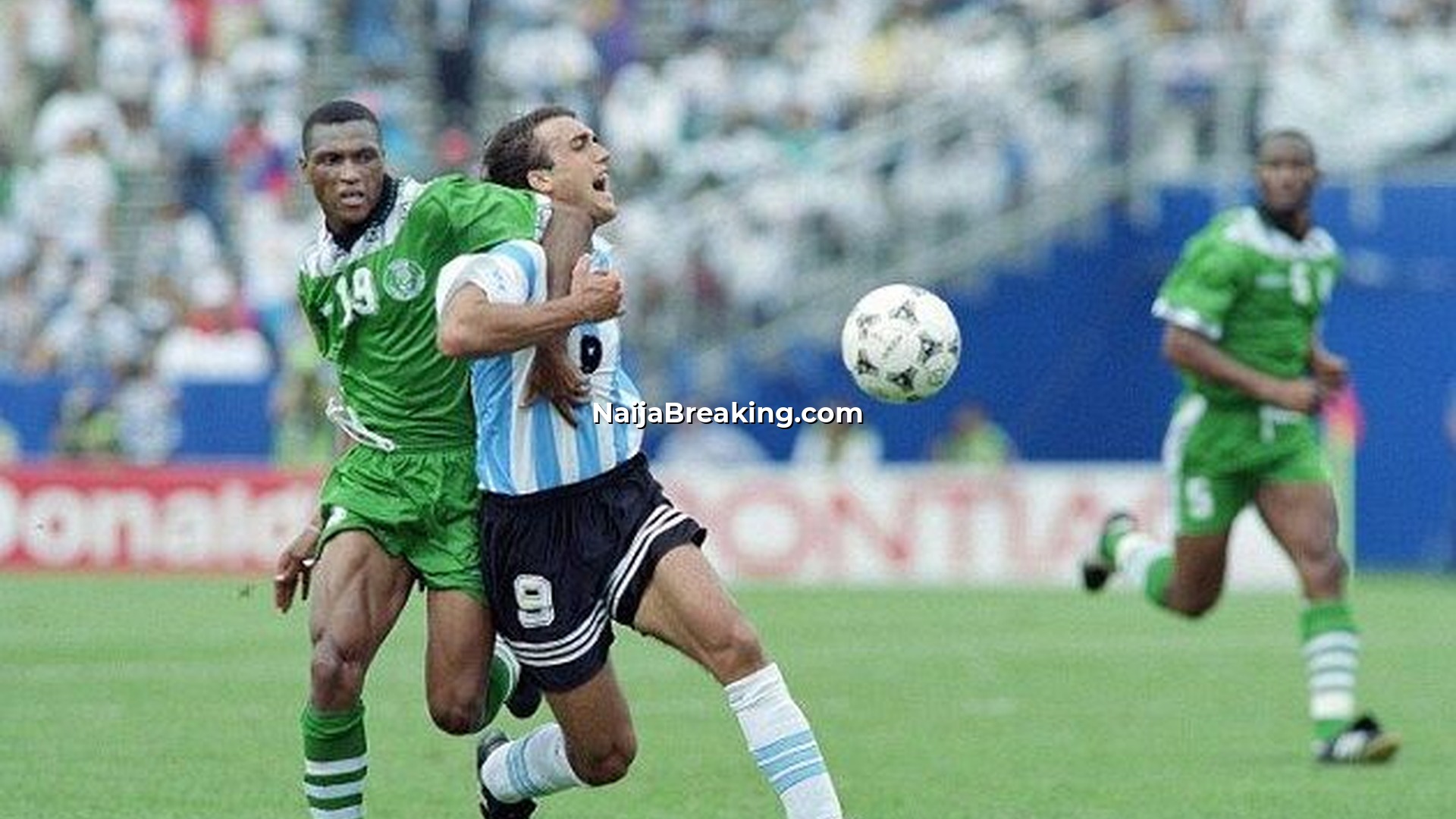
Match Three: The Dramatic Argentina Encounter (1994)
Nigeria’s 1994 group stage match against Argentina represents another of the Super Eagles FIFA World Cup memorable matches that deserves deeper analysis and appreciation. While Nigeria ultimately lost this match, the performance against one of world football’s traditional powerhouses demonstrated the competitive quality of the Super Eagles and their ability to challenge elite opponents.
Argentina, led by Diego Maradona in what would be his final World Cup tournament, arrived as defending champions and among the tournament favorites. Maradona’s presence alone commanded respect and commanded world attention. Yet Nigeria refused to be intimidated by the legendary Argentine and his teammates. The Super Eagles competed fiercely, matched Argentina’s intensity, and created genuine scoring opportunities throughout the match.
The match showcased Nigeria’s tactical flexibility and mental toughness. Despite facing a team with Maradona’s creative genius and other world-class talents, Nigeria didn’t park the bus or adopt an overtly defensive approach. Instead, they attempted to match Argentina’s football while remaining organized and structured. This ambitious approach sometimes left them vulnerable, but it also created space for their own attackers to operate and generate chances.
Nigeria’s performance in this Super Eagles FIFA World Cup memorable matches encounter proved that the nation belonged in the conversation with football’s elite. They didn’t merely survive against Argentina—they genuinely competed and created a match worthy of recollection and analysis. The fact that they came close to scoring against one of the world’s best defenses, marshaled by the legendary Roberto Ayala and others, highlighted the quality of Nigerian football during this period.
Match Four: The England and Italy Group Stage Encounters
Nigeria’s encounters with England and Italy in subsequent World Cup tournaments represent further evidence of the Super Eagles FIFA World Cup memorable matches quality and competitive standing. Against England at the 1998 World Cup, Nigeria delivered another spirited performance that took the match to extra time before eventually succumbing to Rob Dickov’s sudden-death goal. The Super Eagles matched the English technically and physically, creating opportunities and demonstrating they could compete with Britain’s footballing representatives.
Similarly, Nigeria’s matches against Italy showcase the caliber of opposition that the Super Eagles successfully competed against during their golden period. Italian defense, traditionally among world football’s most miserly, found Nigerian attackers challenging to contain. The matches between these two nations provided entertaining football and demonstrated Nigeria’s ability to trouble even the most organized and experienced defensive systems.
The Golden Generation and Their Global Impact
The players who represented Nigeria during these Super Eagles FIFA World Cup memorable matches became icons not just in their home country but across the globe. Jay-Jay Okocha’s technical brilliance inspired players worldwide. Finidi George’s pace and intelligence made him a sought-after talent for Europe’s biggest clubs. The success of these players in top European leagues—Ajax, Chelsea, Monaco, PSV Eindhoven, and others—demonstrated that Nigerian players could thrive at the highest club level.
This global success created a virtuous cycle where more young Nigerians aspired to play professional football, investment in youth development increased, and the talent pipeline strengthened. The visibility of Nigerian players in Champions League matches and European cup competitions elevated Nigeria’s profile and inspired millions of African children to pursue football careers. The Super Eagles FIFA World Cup memorable matches provided the platform and validation for Nigerian football’s global ambitions.
Lessons from These Memorable Encounters
What made the Super Eagles FIFA World Cup memorable matches so special? Several factors combined to create these moments. First, technical excellence and tactical organization allowed Nigeria to compete with teams that had longer footballing traditions and greater resources. Second, the mental toughness and character of the players enabled them to compete fearlessly against more established opponents. Third, the combination of experienced coaching with youthful exuberance created the perfect balance for World Cup football.
Understanding these Super Eagles FIFA World Cup memorable matches provides valuable lessons for contemporary Nigerian football. The golden generation didn’t rely on long-ball tactics or physical dominance alone—they combined intelligence, technique, and tactical awareness. They didn’t fear opponents, instead approaching matches with confidence born from preparation and self-belief. They played attractive, attacking football that entertained crowds while achieving results.
The Current Situation and Future Prospects
The absence of Nigeria from recent World Cups represents a significant departure from the golden era of these Super Eagles FIFA World Cup memorable matches. Structural issues at the NFF, the brain drain of talented players to Europe, domestic league challenges, and inconsistent coaching have complicated Nigeria’s path to World Cup success. Yet the legacy of these Super Eagles FIFA World Cup memorable matches provides a blueprint for rebuilding.
Future Nigerian teams must recapture the technical excellence, tactical intelligence, and mental fortitude that characterized the performances we’ve analyzed. This requires investment in youth development, strengthening the domestic league, ensuring stable coaching environments, and creating a culture of excellence within the national team setup. The memories of these great Super Eagles FIFA World Cup memorable matches should inspire rather than merely comfort Nigerian football.
Conclusion
The Super Eagles FIFA World Cup memorable matches represent the pinnacle of Nigerian football achievement and continue to inspire countless followers of the beautiful game. From the demolition of Bulgaria to the stunning victory over Spain, these matches demonstrated African football’s place in the global game. They provided inspiration for millions of Nigerians and contributed significantly to the nation’s sporting legacy. While the current generation faces different challenges than their predecessors, the legacy of these Super Eagles FIFA World Cup memorable matches serves as a powerful reminder of what Nigerian football can achieve when talent, preparation, coaching excellence, and national support combine. Reclaiming Nigeria’s place among World Cup competitors requires understanding and learning from these golden moments.


