
Why Electric Vehicle Technology Matters to Nigeria’s Future Transport Revolution
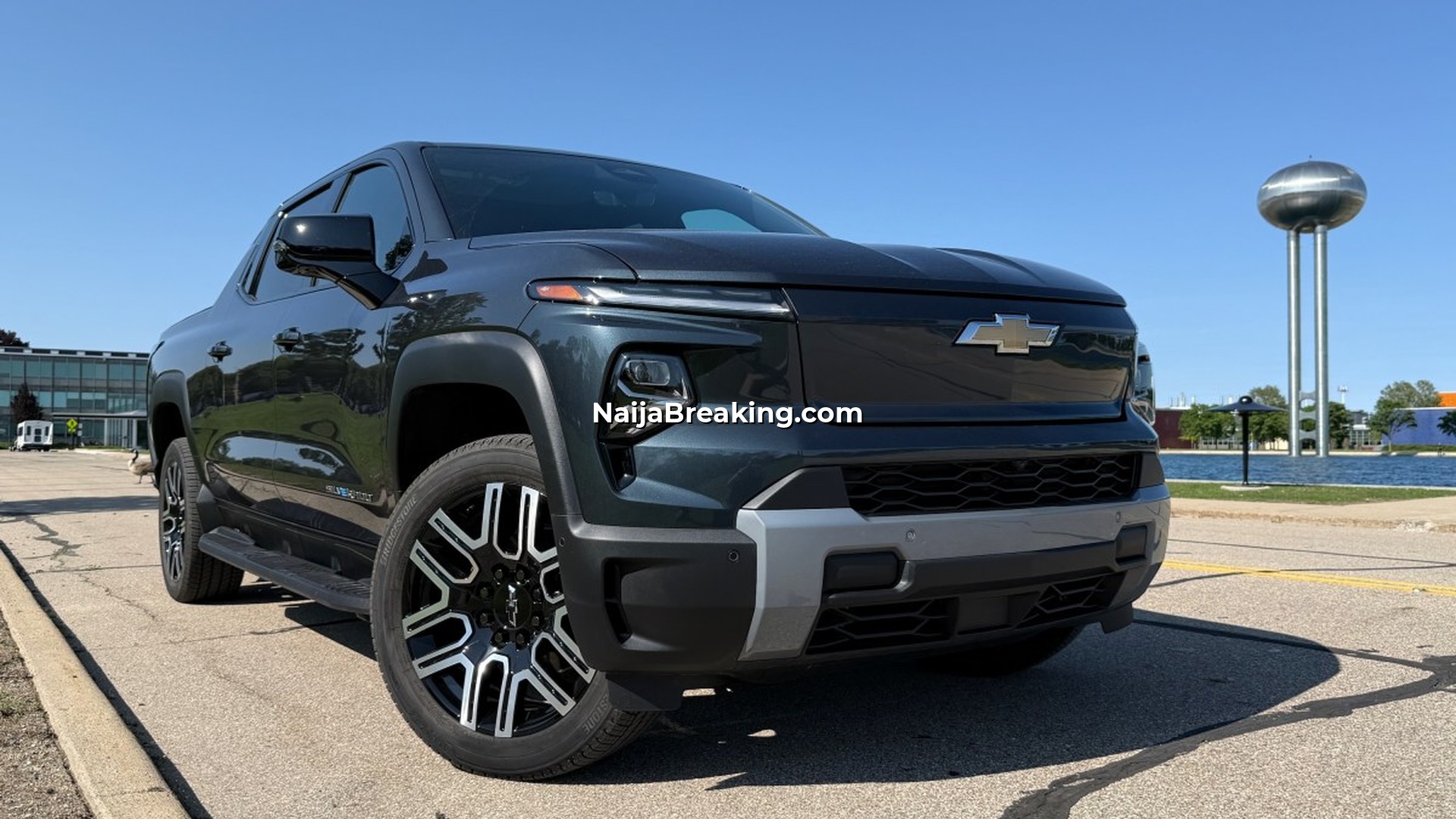
The global electric vehicle technology market is at a critical inflection point, and the story of why Chevrolet’s Silverado EV is failing in the American market holds crucial lessons for Nigeria as it begins to confront its own transportation future. When General Motors launched its all-electric Silverado EV pickup truck with considerable fanfare, analysts predicted it would revolutionise the American truck market—a segment worth hundreds of billions of dollars annually. Yet according to TechCrunch’s analysis, the vehicle has dramatically underperformed expectations, with only 14,000 units sold across the U.S. and Canada in a year, compared to over 140,000 traditional Silverados sold in a single quarter. This staggering gap between engineering excellence and market adoption reveals uncomfortable truths about electric vehicle technology adoption that Nigeria urgently needs to understand as it charts its path toward sustainable transport infrastructure.
For Nigerian policymakers, business leaders, and entrepreneurs, this isn’t merely an American automotive curiosity. Nigeria’s transport sector is at a crossroads. With over 200 million people, rapid urbanisation in Lagos, Abuja, Kano, and Port Harcourt, and an estimated 10 million vehicles already on the roads, Nigeria faces mounting pressure from environmental degradation, fuel subsidies, and foreign exchange pressures tied to petroleum imports. The question of how Nigeria transitions to electric vehicle technology—or whether it can afford to—will define the country’s economic competitiveness and environmental sustainability for the next two decades. Understanding why cutting-edge EV technology fails in mature, wealthy markets provides invaluable warnings about the infrastructure, consumer psychology, and policy frameworks Nigeria must build before electric vehicles can succeed locally.
Background
The global shift toward electric vehicle technology didn’t emerge overnight. For over a decade, international climate agreements, European Union regulations, and corporate sustainability commitments have pushed automakers toward zero-emission vehicles. Tesla’s market dominance, China’s aggressive EV manufacturing investments, and regulatory mandates in California and Europe created an assumption among analysts and executives that the EV revolution was inevitable and imminent. By 2024-2025, major automakers including Ford, Volkswagen, Hyundai, and General Motors had invested billions into electric vehicle technology development, believing consumers would eagerly abandon petrol engines for silent, efficient electric alternatives.
For Nigeria specifically, this global transition represents both opportunity and existential challenge. Nigeria’s petroleum sector has historically been the economic lifeblood—crude oil exports account for over 80 per cent of government revenue and approximately 40 per cent of GDP, according to the Central Bank of Nigeria (CBN). Nigeria currently imports refined petroleum products at enormous cost, depleting foreign exchange reserves that could be deployed toward infrastructure, healthcare, and education. The National Petroleum Corporation (NNPC) has pursued various fuel subsidy schemes, including the controversial subsidy removal in 2023, which sent domestic fuel prices surging. Electric vehicle technology adoption could theoretically reduce Nigeria’s petrol consumption, ease foreign exchange pressures, and lower the fiscal burden of fuel subsidies. Simultaneously, however, Nigeria’s electricity infrastructure remains fragile—with frequent blackouts, low generation capacity, and limited grid reliability—making large-scale EV adoption logistically problematic.
Between 2015 and 2024, Nigeria’s technology sector underwent rapid transformation, with Lagos emerging as Africa’s leading tech hub. However, automotive manufacturing and transport technology remained largely untouched by this innovation wave. Nigerian entrepreneurs and the government, particularly through agencies like the Federal Ministry of Transportation and the National Bureau of Statistics (NBS), recognised the strategic importance of positioning Nigeria within global electric vehicle supply chains. Yet without understanding the barriers that prevent EV adoption even in wealthy, stable markets like America, Nigeria risked repeating expensive mistakes. The Silverado EV’s commercial failure thus becomes an instructive case study in the gap between technological capability and real-world adoption.
Key Details
According to TechCrunch’s detailed analysis, the Chevrolet Silverado EV possesses impressive technical specifications that should, theoretically, appeal to American pickup truck buyers. The vehicle offers over 400 miles of range on a single charge—exceeding most consumer expectations. The Silverado EV features rear-wheel steering, allowing a vehicle nearly 20 feet long to manoeuvre through parking spaces with surprising agility. Its “frunk”—a front storage compartment unavailable on traditional petrol trucks—provides additional cargo capacity. The infotainment system runs on Google’s Android Automotive platform, delivering crisp interfaces and seamless connectivity. The Silverado EV can supply backup power during outages through its vehicle-to-home (V2H) capability, functioning as a mobile power station during emergencies—a feature gaining attention as extreme weather events increase globally.
Performance metrics are equally compelling. The electric truck accelerates with impressive velocity, and the cabin remains remarkably quiet compared to traditional petrol engines. Seating is spacious, with legroom exceeding many sedan competitors. The vehicle’s engineering represents genuine innovation; General Motors invested substantial capital in developing electric vehicle technology platforms optimised for North American driving patterns and consumer expectations. The Silverado EV even surpasses several traditional Silverado variants in user comfort metrics. Yet commercial uptake remains dismal. General Motors sold approximately 14,000 Silverado EVs across the United States and Canada during 2025, whereas traditional Silverado models—powered by conventional internal combustion engines—achieved sales of approximately 140,000 vehicles in a single quarter. This represents roughly a 90 per cent performance gap in the same market segment.
The pricing structure provides additional context. The Silverado EV costs approximately $40,000-$60,000 depending on trim level—positioning it competitively against mid-range traditional trucks, yet substantially above entry-level petrol trucks. Traditional Silverados start around $30,000, offering lower upfront cost despite higher long-term fuel expenses. For American consumers, the economic calculus proves unfavourable. Electricity rates vary regionally, but home charging costs approximately one-third the price per mile of petrol in most U.S. states. However, the higher purchase price, limited charging infrastructure outside urban centres, and persistent consumer anxiety about battery degradation conspire to deter buyers. The psychological barrier—truck enthusiasts’ reluctance to abandon the “authentic truck” experience—also plays a crucial role that engineering excellence cannot overcome.
Impact and Analysis
The Silverado EV’s commercial failure illuminates a fundamental disconnect between technological progress and consumer behaviour. General Motors engineered a vehicle that objectively outperforms traditional trucks in numerous measurable dimensions: acceleration, cabin quietness, cargo capacity, range, and comfort. Yet market forces—particularly consumer psychology, infrastructure limitations, and upfront cost barriers—overwhelmed these engineering advantages. This gap between technical superiority and commercial viability has profound implications for how developing nations like Nigeria should approach electric vehicle technology adoption.
The most critical insight concerns infrastructure dependency. Electric vehicle technology cannot succeed without three interconnected systems: reliable electricity supply, adequate charging infrastructure, and consumer confidence in both. America possesses all three—yet even with these advantages, EV adoption remains sluggish outside urban centers and wealthy demographics. Nigeria’s electricity situation is dramatically more constrained. The NBS reported that Nigeria’s installed power generation capacity stands at approximately 14 gigawatts, yet actual generation averages only 4-5 gigawatts due to ageing infrastructure, gas supply constraints, and maintenance issues. Daily electricity blackouts remain routine in Lagos, Abuja, and other major cities. Charging an electric vehicle requires sustained electricity access—precisely what Nigeria’s grid cannot reliably provide at scale. Attempting to transition Nigeria’s transport sector to electric vehicle technology without first solving the electricity crisis would be economically irrational.
The Silverado EV case also reveals that consumer perception often trumps technical merit. American truck enthusiasts view pickup trucks as vehicles embodying specific cultural values: authenticity, capability, ruggedness, and independence. The shift from engine rumble and gear engagement to silent electric propulsion represents a fundamental identity shift that marketing alone cannot overcome. Nigeria faces similar psychological barriers, though differently expressed. Many Nigerians view their vehicles as status symbols and prestige markers. The emergence of electric vehicles as premium-priced, technology-dependent devices may actually reinforce rather than reduce inequality, as only wealthy Nigerians could afford them. This stands in tension with sustainable transport goals that should benefit all Nigerians, not merely privileged elites.
Expert Perspectives
Dr. Emeka Okafor, a Lagos-based automotive and technology analyst with the Institute for Energy Security, emphasises that Nigeria’s EV challenge differs fundamentally from American market dynamics. “The Silverado EV failure in America demonstrates that even wealthy, technologically sophisticated markets struggle with EV adoption when infrastructure doesn’t support it,” Dr. Okafor observes. “Nigeria’s situation is exponentially more complex. We don’t merely lack charging infrastructure; we lack reliable electricity itself. Introducing electric vehicles at scale without solving the electricity crisis would create a new transport problem layered atop an existing infrastructure crisis. However, this doesn’t mean Nigeria should dismiss electric vehicles entirely. Rather, we should pursue targeted adoption in specific sectors—commercial logistics in Lagos, government fleet vehicles, and urban transport—where controlled charging infrastructure can be guaranteed.”
Contrasting this perspective, Chinyere Adeyemi, a senior policy researcher at the Centre for Democracy and Development in Abuja, argues that Nigeria is approaching the electric vehicle technology question backwards. “The Silverado EV case reveals that consumer adoption requires not just infrastructure, but a fundamental shift in how people perceive their vehicles,” Adeyemi suggests. “Nigeria should learn from this by not attempting to replicate American consumer patterns. Instead, we should design electric vehicle technology solutions specifically for Nigerian contexts. This might mean affordable, practical city vehicles rather than aspirational trucks. It might mean electric motorcycles and taxis rather than private cars. And it absolutely means integrating EV policy with electricity sector reform, not treating them as separate issues. The question isn’t whether Nigeria should adopt electric vehicles, but how Nigeria can design an electric mobility future that serves majority needs rather than elite preferences.”
What This Means for Nigerians
For ordinary Nigerians—whether a Lagos trader navigating congested city streets, a student commuting to university, or a transport operator earning livelihood through commercial vehicles—the electric vehicle technology revolution currently feels distant and irrelevant. This perception is partially accurate. Most Nigerians cannot afford any vehicle, let alone premium-priced electric ones. Yet the decisions Nigeria’s government and private sector make regarding electric vehicles over the next 2-3 years will profoundly shape transport accessibility and affordability for the next decade.
Consider the practical reality for a commercial transport operator in Lagos. Today, she purchases a used petrol-powered minibus, spending approximately ₦3-5 million depending on age and condition. Operating costs include petrol (increasingly volatile in price due to foreign exchange fluctuations), maintenance, spare parts, and toll fees. A hypothetical electric minibus, if available, might cost ₦8-12 million but require reliable electricity access for overnight charging—something most Lagos neighbourhoods cannot guarantee. The calculus becomes impossible. Without government subsidies, charging infrastructure investment, or localised electric vehicle manufacturing reducing costs, electric vehicles will remain aspirational products for wealthy Nigerians only, exacerbating rather than addressing transport inequality.
Additionally, the global shift toward electric vehicle technology creates supply chain implications. Major automakers are reducing petrol vehicle production to concentrate on EVs. If Nigeria cannot manufacture electric vehicles domestically, the country faces escalating import costs for whatever vehicles Nigerians purchase. Nigeria’s automotive manufacturing sector employs approximately 200,000 workers directly; a poorly managed transition to electric vehicles could devastate this workforce if manufacturing capacity doesn’t shift appropriately. The opportunity exists for Nigeria to develop local electric vehicle manufacturing capacity—potentially creating jobs and reducing costs—but only if strategic planning begins immediately.
Editor’s Take
At NaijaBreaking, we believe the Silverado EV’s failure represents a crucial warning that Nigeria should heed immediately. The narrative currently circulating in Nigerian business and policy circles—that electric vehicles represent a straightforward path to sustainable, cheaper transport—fundamentally misunderstands the challenges revealed by American market dynamics. Technology alone doesn’t drive adoption. Infrastructure, consumer psychology, economic accessibility, and policy alignment matter equally.
What this story reveals is Nigeria’s tendency toward aspirational technology adoption without foundational groundwork. We attempt to leapfrog stages of development, importing solutions designed for different contexts, then expressing surprise when they fail. Electric vehicles aren’t inherently wrong for Nigeria; they’re strategically necessary. But Nigeria must pursue electric vehicle technology integration alongside electricity sector reform, localised manufacturing development, and deliberate affordability strategies. Anything less guarantees that electric vehicles become luxury goods for Lagos’s wealthy, while ordinary Nigerians remain dependent on aging, polluting petrol cars. That outcome would represent technological failure dressed up as progress.
What to Watch Next
Three critical developments demand close monitoring. First, Nigeria’s government must clarify its electric vehicle policy framework. Will the government mandate EV adoption timelines? Will it offer manufacturing incentives? Will it integrate EV strategy with electricity sector reform? The Federal Ministry of Transportation and Ministry of Power must coordinate clearly; currently, they operate largely independently. Second, watch for private sector movement. Will Nigerian entrepreneurs and international manufacturers invest in domestic EV assembly? Will local companies develop electric vehicle charging networks? Private sector leadership may ultimately prove more important than government policy. Third, monitor electricity sector progress. Until Nigeria’s electricity generation and distribution improves measurably—targets of 25-30 gigawatts installed capacity by 2030—EV adoption at scale remains impossible.
The key question now is: Will Nigeria learn from global EV adoption failures, or repeat them at enormous cost?
Conclusion
The Chevrolet Silverado EV’s commercial failure despite technical excellence demonstrates that electric vehicle technology adoption requires far more than engineering innovation. It demands functional infrastructure, consumer trust, affordable pricing, and aligned policy frameworks. For Nigeria, this case study offers invaluable lessons about the pitfalls awaiting nations that attempt technological leapfrogging without addressing foundational challenges.
Nigeria’s transport future doesn’t necessarily require electric vehicles—at least not immediately. It requires deliberate, context-specific planning that considers electricity availability, manufacturing capacity, affordability, and workforce transitions simultaneously. The greatest risk isn’t failing to adopt electric vehicle technology; it’s adopting it carelessly, creating new inequalities while claiming environmental progress. Nigeria must choose wisely, learning from others’ mistakes rather than repeating them.
Share your thoughts in the comments below—what do you think this means for Nigeria’s future?