Widows Empowerment Lagos: Zakat Foundation Empowers 185 Widows With N37m Support Initiative
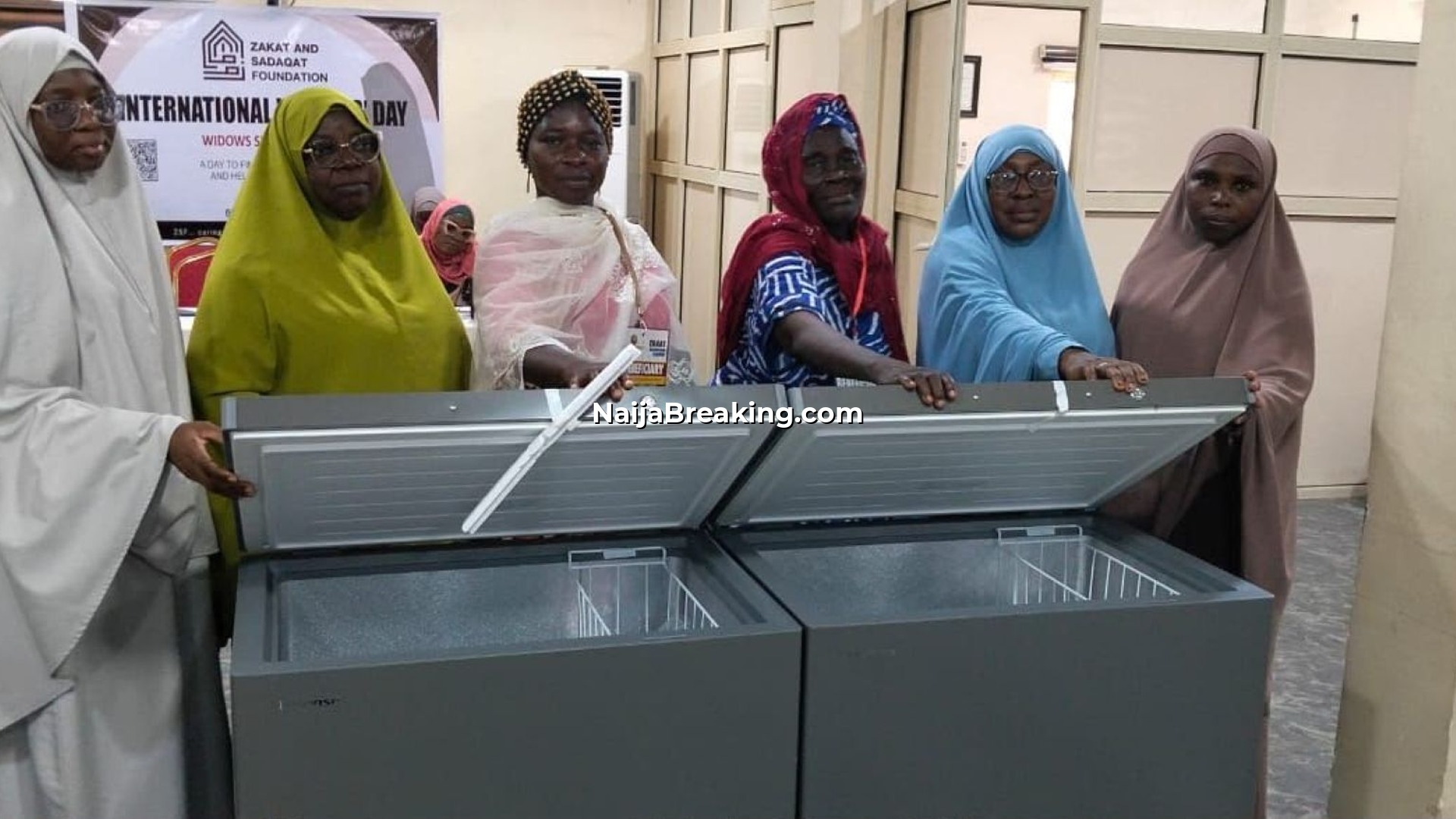
The Zakat and Sadaqat Foundation has disbursed N37.035 million to empower 185 widows in Lagos, marking a significant charitable intervention in a country where widows empowerment Lagos remains a persistent development challenge. This disbursement, announced as part of International Widows Day 2026 celebrations, represents more than a financial transaction—it signals renewed attention to a vulnerable demographic often overlooked in Nigeria’s national development discourse. The initiative arrives at a critical moment: with Nigeria’s unemployment rate hovering around 5% according to the National Bureau of Statistics (NBS), and inflation eroding household purchasing power, the situation for widows—who typically lack dual income sources and face societal discrimination—has become increasingly precarious. The N37 million intervention, while modest against national development needs, offers a concrete example of how religious-based organisations are stepping into spaces where government safety nets remain inadequate. For Lagos, Africa’s fifth-largest city and Nigeria’s economic powerhouse, this gesture underscores the persistent challenge of inclusive economic growth and the essential role of civil society in bridging welfare gaps. Understanding this widows empowerment Lagos initiative requires examining not just what was disbursed, but why widows remain economically vulnerable in Nigeria, what barriers they face, and whether such interventions can catalyse systemic change in how society supports widowed women.
The Context: Understanding Widows Empowerment in Lagos
Widowhood in Nigeria carries profound economic, social and legal consequences that extend far beyond emotional loss. The traditional patriarchal structure of Nigerian society—particularly in northern and southwestern regions—has historically placed widows in precarious positions where property rights, inheritance and social standing are contingent on male presence. When a husband dies, widows often face property dispossession, social ostracism, and limited access to income-generating opportunities. According to research from the Centre for Democracy and Development (CDD), approximately 2.3 million Nigerian women lose their husbands annually, yet fewer than 15% have formal access to structured support systems. The economic consequences are stark: widow-headed households in Nigeria have poverty rates 40% higher than other demographic groups, and many widows revert to subsistence trading or casual labour to survive. In Lagos specifically, where the cost of living is among the highest in Nigeria, this vulnerability is magnified exponentially.
Lagos, as Nigeria’s commercial hub with a population exceeding 21 million people, presents unique challenges for widows empowerment Lagos initiatives. While the state boasts greater access to education, healthcare, and economic opportunities compared to rural areas, the high cost of living in Lagos—from housing to transportation to business capital—creates formidable barriers for widow-headed households. Many widows in Lagos live in informal settlements and slums where they lack secure tenure, access to credit, or reliable social networks that could facilitate economic advancement. The informal economy, which employs over 80% of Lagos residents, offers minimal labour protections or social security benefits, leaving widows particularly vulnerable to exploitation and income volatility. Understanding this context is essential for appreciating why programmes focused on widows empowerment Lagos are critically important for breaking cycles of poverty and marginalisation.
The Formal Welfare System Gap
The formal welfare system in Nigeria has historically marginalised widows from mainstream social protection programmes. The National Social Register (NSR), managed by the Ministry of Humanitarian Affairs, Disaster Management and Social Development, theoretically identifies vulnerable populations for support through the Conditional Cash Transfer (CCT) programme and other safety nets. However, coverage remains patchy, particularly in urban centres like Lagos where informal settlements house millions whose existence remains unmapped by government databases. As of 2024, only approximately 2.3 million households in Lagos have been registered in the NSR, yet an estimated 8-10 million people live below the poverty line in the state alone. This enormous gap means that most vulnerable widows, despite eligibility criteria, never access government assistance programmes.
Furthermore, the criteria for accessing government welfare programmes often disadvantage widows. Many programmes require proof of registration with formal agencies, bank accounts, or documentation that poor widows lack. The bureaucratic processes are slow—sometimes taking 6-12 months for disbursement—leaving widows unable to meet immediate needs. Additionally, the quantum of support offered through government schemes, while well-intentioned, often proves insufficient for meaningful economic transformation. Monthly cash transfers of N5,000-N10,000 through the CCT programme can provide temporary relief but cannot serve as a foundation for lasting economic empowerment. This reality underscores why private organisations and philanthropic foundations have increasingly stepped in to address the widows empowerment Lagos crisis through complementary initiatives.
The Zakat Foundation’s N37 Million Intervention
Against this backdrop of systemic inadequacy, the Zakat and Sadaqat Foundation’s decision to disburse N37.035 million to 185 widows in Lagos represents a strategic intervention timed to coincide with International Widows Day 2026. International Widows Day, observed annually on June 23rd, was established by the United Nations to recognise the challenges and discrimination faced by widows globally and to advocate for their rights and empowerment. The Zakat Foundation’s contribution, disbursed directly to individual widows, translates to approximately N200,189 per person—a significant sum in the context of Lagos where this amount can serve as seed capital for micro-enterprise development, business expansion, or immediate household needs.
The decision to target 185 widows specifically reflects careful beneficiary selection processes. According to foundation officials, beneficiaries were selected from across Lagos’s 20 local government areas, ensuring geographical distribution and reaching widows in both developed and informal settlement areas. The selection criteria prioritised widows who demonstrated entrepreneurial potential, faced extraordinary hardship, or had dependent children requiring immediate support. This targeted approach distinguishes the initiative from blanket welfare programmes and suggests an intentionality toward catalysing economic transformation rather than merely providing temporary relief. The timing of the disbursement—during International Widows Day celebrations—also served a symbolic function, elevating the visibility of widows empowerment Lagos as a development priority deserving sustained attention and resource allocation.
Economic Empowerment as a Pathway Out of Poverty
The concept of widows empowerment Lagos extends beyond financial transfers to encompassing economic agency, skill development, and access to productive resources. Research from organisations like the World Bank and UNDP demonstrates that strategic economic empowerment interventions targeting widows can yield multiplier effects across entire communities. When widows gain access to capital and business support, they typically invest in their children’s education, reinvest profits into their businesses, and contribute to their communities’ economic vitality. Studies from comparable contexts show that every dollar invested in widow-focused economic empowerment generates approximately $5-7 in community economic activity within 18-24 months.
The N37 million disbursement by the Zakat Foundation appears designed to serve this empowerment function. For widows engaged in petty trading—the predominant economic activity among poor widows in Lagos—the capital provided can facilitate business expansion. A widow previously selling items from a pushcart might, with N200,000, secure shop space or purchase inventory at wholesale prices, significantly expanding profit margins. For widows interested in vocational pursuits—hairdressing, tailoring, food processing—the capital can finance equipment and supplies. For others, the funds might enable entrance into more lucrative economic sectors or facilitate transition from subsistence to growth-oriented enterprises.
Challenges and Sustainability Considerations
While the Zakat Foundation’s widows empowerment Lagos initiative is laudable, sustainable economic transformation requires complementary support systems. Capital injection alone, without business training, market linkages, or ongoing mentorship, often fails to generate lasting poverty reduction. Some recipients may lack the entrepreneurial skills or market knowledge necessary to deploy capital productively. Others might face market saturation in their chosen sectors or lack access to reliable suppliers. Additionally, widows often operate within social contexts that may discourage women’s economic participation or constrain their decision-making authority regarding resource deployment.
Experience from similar microfinance and economic empowerment programmes suggests that success rates improve dramatically when capital is paired with complementary interventions. These might include business skills training, financial literacy education, peer support groups, and ongoing mentorship. The Zakat Foundation’s effectiveness in catalysing genuine economic transformation will largely depend on whether the organisation provides such complementary support or whether beneficiaries are expected to navigate entrepreneurship independently. Transparency regarding these support structures would strengthen the initiative’s credibility and help other organisations design more effective widows empowerment Lagos programmes.
Systemic Issues in Widow Empowerment in Nigeria
Despite the importance of initiatives like the Zakat Foundation’s, they represent responses to symptoms rather than root causes of widow vulnerability in Nigeria. Systemic issues—including discriminatory inheritance laws, limited access to land ownership, inadequate legal protections, and prevailing cultural attitudes toward widowed women—remain largely unaddressed. In many Nigerian communities, widows are still subjected to degrading mourning practices, property confiscation, and social isolation following their husbands’ deaths. Legal protections, while existing on paper, are poorly enforced, particularly in informal urban settlements where many widows live.
Addressing widows empowerment Lagos comprehensively requires concurrent efforts at multiple levels. At the legislative level, Lagos State and the federal government must strengthen and enforce laws protecting widow property rights, inheritance, and dignity. Educational initiatives must challenge cultural narratives that marginalise widows. Economic policies must ensure that social protection programmes meaningfully reach the urban poor. Private sector engagement can create employment and market opportunities for widows. Civil society organisations must continue advocacy, service delivery, and community mobilisation. The Zakat Foundation’s financial contribution, while meaningful, must be understood as one component within a broader ecosystem of change required to genuinely transform widow empowerment Lagos.
International Widows Day and Global Momentum
The Zakat Foundation’s timing of its disbursement to align with International Widows Day 2026 reflects growing global momentum around widow empowerment. The United Nations, through Sustainable Development Goal 5 (Gender Equality), explicitly recognises that widows represent a particularly vulnerable subset of women requiring targeted attention. The International Widows Day movement has galvanised governments, organisations, and civil society groups worldwide to assess and improve their responses to widow vulnerability. In India, for instance, the recognition of widows’ rights has advanced significantly, with various states implementing widow pension schemes, educational support for widows’ children, and economic empowerment programmes.
In Nigeria, the adoption of International Widows Day and the increasing visibility of widows empowerment Lagos initiatives suggest evolving social consciousness. However, this consciousness must translate into sustained, systematic change rather than episodic charitable gestures. The Zakat Foundation’s initiative demonstrates the possibility and desirability of widow-focused interventions; the challenge now is scaling such efforts and embedding them within long-term policy frameworks that address root causes of widow vulnerability.
Lessons for Future Widows Empowerment Lagos Initiatives
The Zakat Foundation’s N37 million disbursement offers several lessons for organisations seeking to advance widows empowerment Lagos effectively. First, targeted beneficiary selection—rather than universal approaches—can enhance impact by directing resources to those with greatest need or greatest potential for transformation. Second, aligning interventions with global observances like International Widows Day can amplify visibility and political attention. Third, financial capital, while essential, requires complementary support systems to generate sustainable outcomes. Fourth, working at scale—reaching 185 beneficiaries rather than a handful—signals serious commitment to systemic change.
Future initiatives might consider incorporating elements such as peer learning networks where widow beneficiaries can share experiences and support one another; business skills training and mentorship; facilitated access to supply chains and markets; healthcare and education support for beneficiaries’ children; and legal support regarding property rights and inheritance issues. Organisations might also consider gender-transformative approaches that engage men and community leaders in reframing attitudes toward widow economic participation, reducing cultural barriers to women’s entrepreneurship.
Conclusion: Widows Empowerment Lagos as Development Priority
The Zakat and Sadaqat Foundation’s disbursement of N37.035 million to 185 widows in Lagos represents a significant, if incremental, step toward addressing widow vulnerability in Nigeria’s economic powerhouse. This widows empowerment Lagos initiative acknowledges a reality too long overlooked: that widows, numbering in the millions across Nigeria, possess untapped potential and deserve systematic support in economic transformation. The N200,000+ per beneficiary provides capital that, properly deployed, can catalyse business development and livelihood improvement. Yet the broader imperative remains systemic change—strengthening legal protections, challenging cultural discrimination, integrating widows into formal social protection systems, and creating economic structures where widow-headed households can thrive.
As Lagos continues its trajectory as Africa’s largest city and Nigeria’s primary economic engine, the question of how to ensure inclusive prosperity becomes increasingly pressing. Widows empowerment Lagos must move from charitable intervention to recognised development priority, with dedicated government budgets, coordinated programming, and sustained commitment. The Zakat Foundation’s example, while commendable, should catalyse broader action rather than substitute for it. International Widows Day provides annual opportunity to renew this commitment. Ultimately, Nigeria’s development trajectory will be determined not by the prosperity of its most advantaged but by how effectively it lifts its most vulnerable—including the millions of widows whose economic potential, currently constrained by systemic barriers and societal indifference, represents untapped human capital essential for national transformation.