Elon Musk’s Orbital Data Center Vision Faces Skepticism From Global Tech Leaders
Elon Musk’s ambitious vision for orbital data centers — using networks of satellites to create computing infrastructure in space — is encountering serious pushback from some of the world’s most influential technology executives, particularly SoftBank’s Masayoshi Son. The debate over whether satellites can become viable computing platforms is not merely an academic question for Nigeria; it signals a critical shift in how global technology investment will flow in the coming decade. As Nigeria seeks to position itself as a West African technology hub with aspirations to compete for AI infrastructure projects, understanding why even visionary entrepreneurs like Son are questioning Musk’s orbital data center hype becomes essential. The telecommunications and cloud computing sectors that support Nigeria’s growing tech ecosystem depend on reliable, cost-effective data centre infrastructure — and the direction global capital flows in infrastructure investment will directly shape what options remain available to Nigerian businesses and government agencies looking to build digital capacity. This disagreement between tech titans reveals deeper questions about what truly constitutes the future of computing, and where investment should be directed in a world racing toward artificial intelligence dominance.
Background
The concept of space-based data centers emerged from the convergence of two major technological trends: the rapid advancement of commercial space launch capabilities pioneered by SpaceX, and the exponential growth in global demand for artificial intelligence computing power. Over the past decade, as companies like OpenAI, Google, and Meta have competed aggressively for computational supremacy, data center costs and energy consumption have become defining factors in AI development. Traditional earth-based data centers consume enormous amounts of electricity — according to industry estimates, a single large data center can use as much power as a small city. This energy consumption has become both economically unsustainable and environmentally problematic, pushing tech leaders to explore alternatives.
For Nigeria specifically, this technological evolution carries profound implications. Nigeria’s power infrastructure remains one of the continent’s most significant challenges, with the national grid consistently struggling to meet demand. The Nigerian Electricity Regulatory Commission (NERC) reported that in 2023, Nigeria’s peak electricity demand reached approximately 29,000 megawatts, while actual generation capacity hovered around 13,000 megawatts — a massive deficit that forces manufacturing and technology companies to rely on expensive diesel generators. This electricity crisis has made Nigeria unattractive as a location for conventional hyperscale data centers, despite the country’s enormous population and growing digital economy. Musk’s orbital data center concept, were it to succeed, would theoretically bypass this constraint entirely, offering Nigerian tech companies and institutions access to computing power without dependence on the national grid.
However, the concept remains largely theoretical. No commercially operational orbital data center yet exists, and the technical, regulatory, and economic hurdles are substantial. SoftBank’s Masayoshi Son — himself known for making bold, unconventional bets through his Vision Fund — began publicly questioning whether Musk’s approach makes financial sense in 2024 and 2025, arguing that traditional earth-based solutions remain more practical for the immediate AI infrastructure race.
Key Details
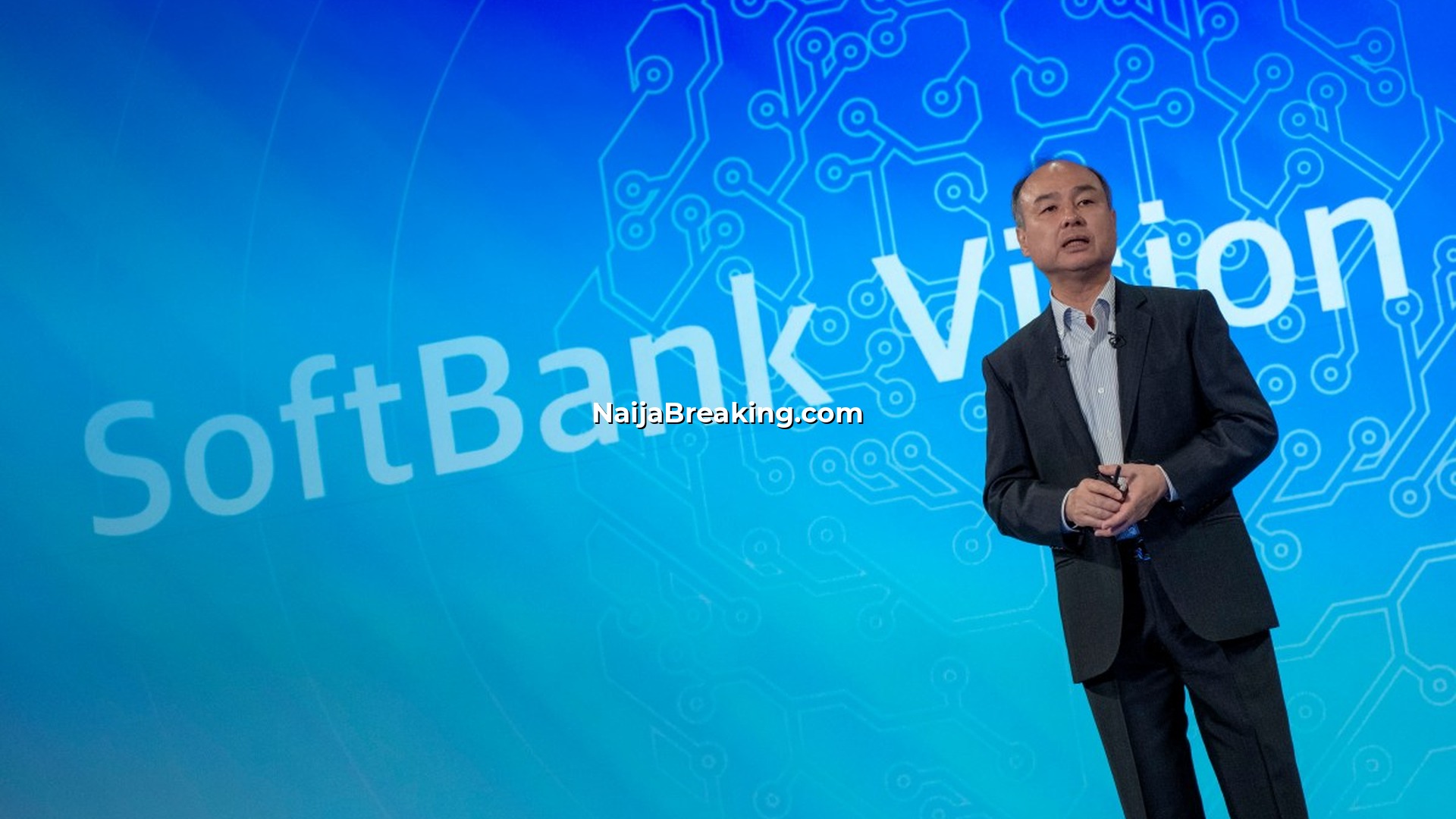
According to TechCrunch’s reporting on this developing story, Masayoshi Son made his skepticism explicit at a recent SoftBank shareholder meeting, arguing that space-based data centers “won’t do much to cut costs and will take too long when in the battle for AI, the next few years will be far more important than what might happen a decade or so from now.” Son’s critique cuts to the heart of a fundamental business reality: even if orbital data centers eventually work perfectly from a technical standpoint, the AI infrastructure race is happening now, not in 2030 or 2035.
The TechCrunch Equity podcast discussion that followed Son’s remarks highlighted a crucial irony: Musk’s satellite constellation proposal — a network of thousands of satellites, each requiring replacement every few years as technology advances — would actually guarantee substantial ongoing revenue for SpaceX itself. Sean O’Kane, one of the podcast panelists, noted that this setup essentially locks in enormous future business for SpaceX’s launch operations. This observation raises an important question about incentive alignment: is Musk genuinely convinced orbital data centers represent the future of computing, or is there an element of corporate interest driving the narrative?
The specifics of Musk’s proposal involve deploying constellations of low-earth orbit (LEO) satellites equipped with computing hardware, creating what he characterizes as a “neural net in the sky.” Proponents argue this approach would offer latency advantages for certain applications and reduce dependence on terrestrial infrastructure. However, the satellite replacement cycle — roughly every 5-7 years as technology obsolescence sets in — means perpetual capital expenditure. For a developing economy like Nigeria, where even basic data centre infrastructure requires significant government subsidies or private sector strain, the orbital model’s replacement costs could prove prohibitively expensive even if the technology matures.
Impact and Analysis
Musk’s orbital data center vision, while technologically provocative, reflects a pattern we see repeatedly in Silicon Valley: the conflation of “possible” with “practical.” Space-based infrastructure sounds revolutionary precisely because it appears to transcend earthly limitations. Yet Son’s critique exposes the mismatch between technological possibility and business economics. When SoftBank — which has invested over USD 80 billion globally through its Vision Fund — declares skepticism about orbital data centers, it signals that even risk-capital investors have thresholds for speculative bets, particularly when immediate market opportunities exist for terrestrial alternatives.
For Nigeria, this debate carries specific implications for how the country will approach its digital infrastructure strategy over the next decade. Nigerian policymakers at the Ministry of Communications and Digital Economy have increasingly emphasised building competitive advantages in cloud computing and AI-driven services. However, these ambitions remain constrained by electricity availability and broadband infrastructure quality. If global technology investment bifurcates — with some capital flowing toward Musk-style space-based solutions and other capital flowing toward conventional data center buildouts — Nigeria risks being sidelined in both categories. The nation might end up unable to attract the resources for conventional data center development (because investors chase Musk’s space narrative), while simultaneously being unready to participate in orbital infrastructure (because such technology requires NASA-level technical capabilities).
Additionally, Musk’s framing of orbital data centers as an answer to AI infrastructure scarcity could distract policymakers in developing economies from the more pressing, solvable problem: expanding terrestrial power generation and broadband connectivity. Nigeria’s Federal Government has allocated resources toward renewable energy expansion through the Renewable Energy Master Plan, but progress remains frustratingly slow. If policymakers become seduced by the promise of space-based solutions, they may deprioritise the unglamorous but essential work of increasing power generation by 5,000-10,000 megawatts annually — the actual requirement to make Nigeria competitive for AI infrastructure investment.
Expert Perspectives
Dr. Akinwande Segun, a Lagos-based technology analyst specialising in infrastructure investment, argues that Son’s skepticism reflects mature financial judgment rather than lack of vision. “What Masayoshi Son understands, and what many technology enthusiasts miss, is that infrastructure capitalism operates on different timescales than innovation hype,” Dr. Segun explains. “A satellite data center might achieve technical viability in 2030, but by then, terrestrial hyperscale operators will have already captured the market, achieved economies of scale, and trained entire workforces. First-mover advantage in infrastructure isn’t technological — it’s economic and operational. Musk is playing a longer game than the AI race actually requires.”
In contrast, Chioma Okafor, an AI policy researcher at the Centre for Strategic and International Studies in Abuja, offers a more nuanced perspective: “Son might be underestimating the potential of orbital infrastructure for developing economies like Nigeria. A terrestrial data center in Lagos requires purchasing land, negotiating with state governments, and depending on NERC’s timeline for power allocation. Orbital infrastructure, if it matures, could bypass all these constraints entirely. For Nigeria, the question isn’t whether Musk is right today — it’s whether we’re prepared to participate if he proves right in ten years.” Okafor’s point highlights a genuine policy dilemma: Nigerian decision-makers must simultaneously invest in immediate solutions (power generation, terrestrial broadband) while remaining alert to transformative technologies that could reshape the infrastructure landscape entirely.
What This Means for Nigerians
For Nigerian technology professionals, business owners, and consumers, this debate translates into concrete questions about the cost and availability of computing services in the coming years. A software developer in Lagos building AI applications today depends on either importing expensive cloud computing credits from AWS, Google Cloud, or Microsoft Azure, or negotiating with increasingly constrained local broadband providers. If Musk’s orbital data centers fail to materialise within the next five years (as Son suggests), and if no alternative mega-infrastructure investment emerges, Nigerian tech startups will continue operating at a competitive disadvantage to peers in India, Kenya, or South Africa who have access to cheaper, locally-proximate computing resources.
For Nigerian businesses in manufacturing, agriculture, and logistics — sectors increasingly dependent on AI-driven analytics for optimisation — the orbital data center skepticism is actually good news in a counterintuitive way. It suggests that global capital will likely concentrate on building practical terrestrial alternatives rather than chasing speculative space infrastructure. This increases the possibility that African technology investors and governments will eventually negotiate for data center facilities in Nigeria, Rwanda, Kenya, or other regional hubs. A Nigerian manufacturing company could potentially process real-time sensor data from factories through a West African data centre within five years, rather than relying on distant US-based infrastructure adding latency and cost.
For government institutions — universities, health services, and development agencies — the outcome of this debate determines whether participation in global AI capabilities remains forever dependent on foreign technology providers, or whether Nigeria can build sovereign domestic infrastructure. The Federal Ministry of Communications and Digital Economy has begun discussing data sovereignty requirements for critical sectors; the orbital data center debate indirectly shapes whether such policies become necessary or obsolete.
Editor’s Take
At NaijaBreaking, we believe this story reveals a crucial truth that extends far beyond Silicon Valley boardrooms: the future belongs not to the most ambitious dreamer, but to the most practical executor. Masayoshi Son’s skepticism about Musk’s orbital vision isn’t a rejection of innovation — it’s a disciplined prioritisation of resources toward problems that can be solved now. What concerns us about Nigeria’s relationship to this debate is the tendency among policymakers and investors to chase shiny technological narratives while neglecting foundational infrastructure. Nigeria needs to hear Son’s message loud and clear: solve the electricity crisis first, build reliable terrestrial data centers next, then — and only then — worry about constellations of satellites. The orbital data center hype, whatever its eventual technical merit, risks becoming another distraction from the unglamorous, essential work of building modern infrastructure in the developing world.
What to Watch Next
Monitor these five developments over the next 18 months: (1) Whether SpaceX actually deploys and tests orbital computing capacity with commercial customers — this would validate Musk’s claims or expose fundamental technical flaws; (2) New funding announcements from SoftBank, Sequoia, or other mega-investors regarding terrestrial AI infrastructure in Africa, particularly Nigeria — a shift in capital patterns would signal market-leading investors are prioritising practical solutions; (3) The Federal Government’s Digital Economy Master Plan revisions, particularly regarding data center policy and power allocation priorities — watch whether orbital concepts appear in policy documents or if focus remains terrestrial; (4) Regional AI infrastructure announcements from competitors Kenya, Rwanda, and South Africa — these nations may capitalise on Nigeria’s uncertainty by attracting data center investment; (5) Technical breakthroughs or setbacks from SpaceX’s satellite operations division, including cost-per-launch data and satellite replacement timelines — hard numbers will determine whether orbital economics work at all.
The key question now is: will Nigeria’s government and private sector recognise that the orbital data center debate is fundamentally irrelevant to the country’s immediate needs, and redirect focus accordingly?
Conclusion
Elon Musk’s vision for orbital data centers captures the entrepreneurial imagination because it promises to transcend earthly constraints entirely. Yet Masayoshi Son’s pragmatic skepticism reminds us that infrastructure investment operates according to economics, not wish-fulfillment. For Nigeria, the real significance of this debate lies not in who is right about space-based computing, but in recognising that the nation’s digital future will be determined by decisions made in the next 24-36 months regarding terrestrial power generation, broadband expansion, and data center development. Orbital infrastructure might eventually matter; what matters urgently is whether Nigeria builds the foundation to participate in whatever computing future actually emerges. Nigeria’s challenge is not to choose between Musk’s vision and Son’s practicality — it is to build the domestic capacity to benefit from whichever proves correct.
Share your thoughts in the comments below — what do you think this means for Nigeria’s future in the global technology competition?