
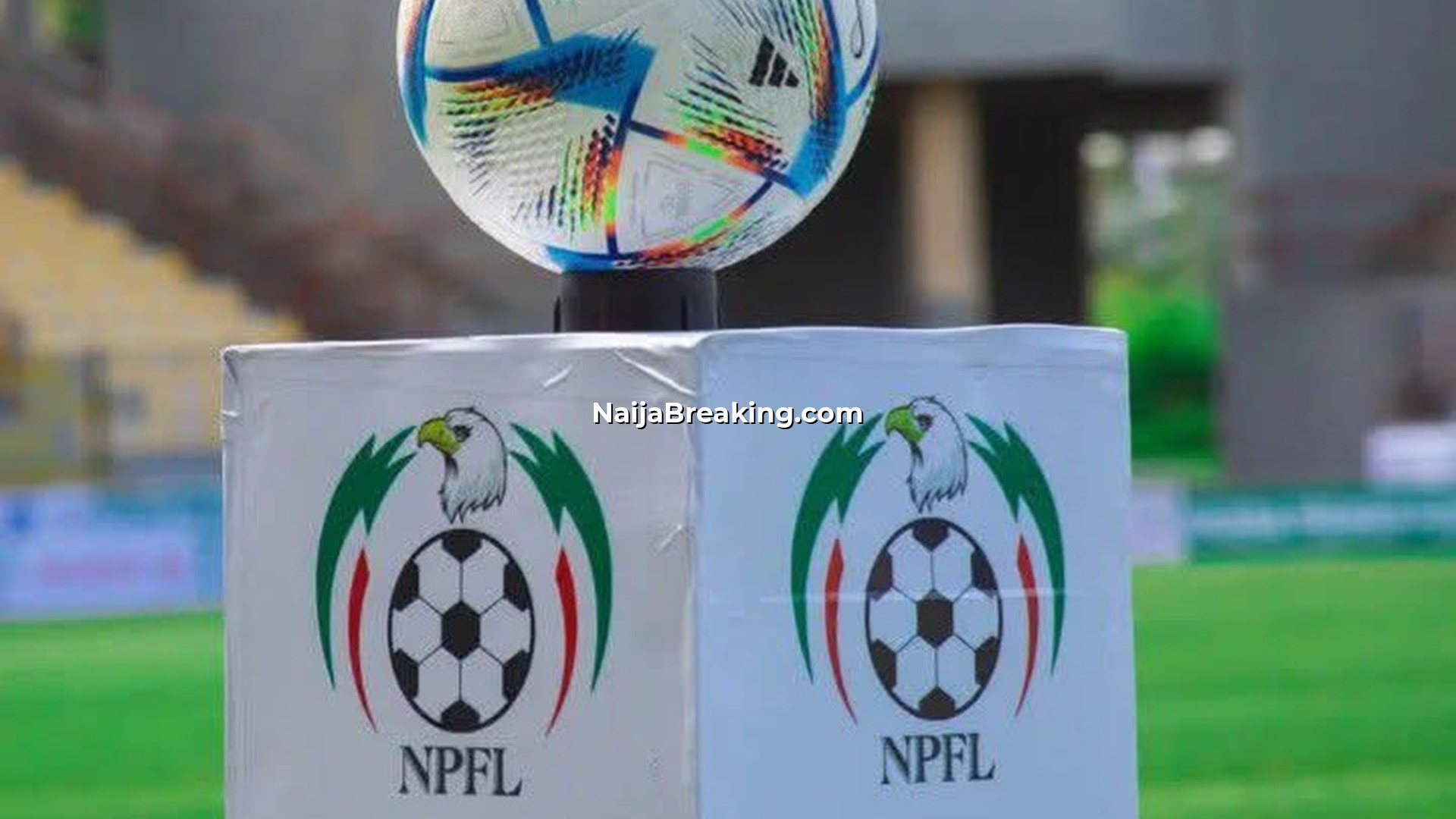
NPFL Prize Money Explosion: N1 Billion For Champions From 2026/27 Season
The Nigeria Premier Football League (NPFL) is about to experience a financial transformation that could fundamentally reshape how professional football operates in the country. Beginning with the 2026/27 season, NPFL prize money will reach historic proportions, with champions earning a record N1 billion — a five-fold increase from the N200 million winners received at the end of the 2025/26 season. This remarkable announcement, made by Alhaji Shehu Dikko, Executive Chairman of the National Sports Commission (NSC), represents more than just prize money increases; it signals a strategic commitment to professionalising Nigerian football at a time when the sport faces intense competition for attention and investment from younger Nigerians increasingly drawn to global leagues. The total prize pool for the 2026/27 season will reach N2.5 billion, with runners-up earning N500 million and third-placed teams taking home N300 million, according to a source reporting the NSC-NFF agreement. For a nation where professional football has historically struggled with funding challenges, irregular player payments, and brain drain to foreign leagues, this development arrives at a critical juncture in the sport’s domestic narrative.
Background
To understand the significance of this prize money announcement, one must first grasp the financial struggles that have defined Nigerian professional football for decades. The NPFL, formally established as the top tier of Nigerian football competition, has long operated under severe budget constraints that forced clubs to rely on inconsistent patronage from wealthy businessmen rather than sustainable revenue models. For many years, league winners received relatively pittance compared to their counterparts in other African nations — a reality that made it increasingly difficult to retain talented players and maintain competitive standards.
The National Sports Commission itself underwent restructuring under the current administration, reflecting a broader government commitment to elevate Nigeria’s sporting profile globally. Alhaji Shehu Dikko, who previously served as Chairman of the League Management Company (the predecessor to the modern NPFL structure), brings institutional memory and understanding of the league’s operational challenges. His return to a position of influence within sports governance suggests a deliberate policy shift toward treating football as a serious economic and social investment rather than merely a cultural pastime.
The context for this announcement also includes Nigeria’s broader economic challenges under the Renewed Hope agenda of President Bola Ahmed Tinubu. With naira volatility, inflation pressures, and concerns about capital flight, the government’s willingness to inject significant public resources into football prize pools indicates a recognition that professional sports can drive investment, employment, and national morale during economically difficult periods. Additionally, the rise of illegal betting syndicates and match-fixing scandals in recent NPFL seasons created urgency around the need for stronger professional structures and better-compensated players who would have less incentive to engage in corrupt practices.
Key Details
The specifics of the NSC-NFF agreement paint a picture of comprehensive reform. Beginning in the 2026/27 season, the prize money distribution will operate as follows: the champions will receive N1 billion, runners-up will earn N500 million, and third-placed teams will take home N300 million, according to Dikko’s announcement. Beyond these headline figures, all participating clubs will receive graded prize money based on their final league positions, creating a differentiated reward system that incentivises consistent performance throughout the season rather than merely competing for the title.
Perhaps equally significant is the commitment to establish a minimum player salary across the NPFL. Dikko disclosed that “the least a player will earn in the league going forward is N2 million,” with implementation targeted for subsequent seasons following the initial rollout. While this salary cap may not commence immediately, it represents a fundamental shift in how the league protects its workforce. Currently, many NPFL players earn irregular wages, sometimes waiting months for payment — a reality that has driven thousands of talented Nigerian athletes to seek opportunities in lower-tier European leagues or completely abandon professional football.
The N2.5 billion total prize pool represents substantial public investment in professional football, particularly when compared to previous seasons where champions received merely N200 million as of the 2025/26 season conclusion. This five-fold increase in champion prize money within a single season demonstrates accelerated commitment rather than gradual reform. The NSC’s framing of this initiative explicitly connects it to President Tinubu’s Renewed Hope and Shared Prosperity agenda, positioning football development as aligned with broader national economic strategy rather than as a peripheral sporting matter.
Impact and Analysis
The practical impact of N1 billion in prize money for NPFL champions extends far beyond the winning club’s bank account. This sum, if properly managed, could fundamentally alter club operations across the league. A typical NPFL club’s annual operating budget ranges from N300 million to N800 million depending on infrastructure and player quality. With N1 billion in prize winnings, a successful club could simultaneously invest in youth development, stadium improvements, medical facilities, and player retention — areas chronically underfunded in Nigerian football.
However, this analysis must confront a critical challenge: the question of sustainability and actual fund availability. While NSC announcements carry official weight, the actual disbursement of such sums depends on budgetary allocation and implementation mechanisms that remain unclear. Nigerian government sports budgets have historically faced challenges with timely fund release, and clubs will rightly demand transparency about funding sources and payment timelines before restructuring their operations around projected revenues. The gap between announced ambition and financial reality has disappointed Nigerian sports entities before, from abandoned stadium projects to delayed national team allowances during international competitions.
Additionally, the N2 million minimum player salary, while progressive, requires contextualisation within Nigeria’s current economic conditions. At current parallel market exchange rates, N2 million translates to approximately $1,200-1,300 monthly — a respectable professional wage in most Nigerian cities but insufficient to fully compete with wages offered by lower-tier European clubs where Nigerian players increasingly migrate. Without complementary improvements to training facilities, medical care, and career development pathways within the NPFL, talented players may still view foreign leagues as more attractive options, limiting the domestic impact of salary increases.
Expert Perspectives
Dr. Chisom Okoro, a Lagos-based sports economist who specialises in African football financing, offered a cautiously optimistic assessment: “What the NSC is attempting represents genuine structural thinking about professional football’s economic model. Moving from N200 million to N1 billion for champions signals that government recognises football as economic infrastructure, not charity. However, the critical variable now is implementation consistency. Nigerian sports initiatives often suffer from announcement fatigue — we declare ambitious reforms, media celebrates briefly, then implementation falters due to bureaucratic bottlenecks or changing political priorities. If the NSC can demonstrate quarterly, transparent prize money disbursement beginning in 2026/27, this could genuinely transform club operations and player retention.”
Contrasting this perspective, Tunde Abiodun, a veteran sports journalist and former editor at a major Nigerian sports publication, offered a more sceptical reading: “The numbers look impressive on paper, but we should interrogate whether N2.5 billion annually in NPFL prize money represents the most efficient use of government sports resources given Nigeria’s broader development challenges. Additionally, these prize pools only benefit the top 3-5 clubs meaningfully. Clubs finishing mid-table or in relegation battles earn considerably less, perpetuating inequalities that have stifled competitive balance in the NPFL. Without accompanying reforms to revenue-sharing mechanisms, licensing requirements, and club governance standards, this money could simply concentrate wealth among already-powerful institutions rather than elevating the entire league.”
What This Means for Nigerians
For the typical Nigerian football fan — whether watching matches at Lagos’s Livetrack field on weekends or following their favourite club’s fortunes on social media — this announcement carries practical significance. Better-compensated, more stable NPFL teams mean more consistent squad retention, which translates to higher-quality football available domestically. A Nigerian teenager in Ibadan or Kano who dreams of professional football now has a clearer domestic pathway: if they excel at U-17 level, they can potentially earn N2 million monthly as an NPFL player rather than facing the traditional binary choice between struggling domestically or emigrating to uncertain foreign opportunities.
The ripple effects extend to Nigerian football families, particularly in football strongholds like Lagos, Enugu, and Kano. Youth academies, which have historically operated on razor-thin margins dependent on wealthy patrons’ caprice, could now attract serious entrepreneurial investment. If NPFL clubs earn substantial prize money and operate under genuine sustainability models, academy owners might invest in better coaching, modern training equipment, and nutritional programmes — infrastructure that has long disadvantaged Nigerian youth development compared to European and South American equivalents. This could accelerate Nigeria’s production of world-class players while keeping them engaged domestically longer.
For working-class Nigerians, the immediate benefit might seem indirect but remains tangible. Professional football has historically served as an aspirational pathway for young people from economically disadvantaged backgrounds. With clearer financial incentives and professionalised structures, NPFL football could reduce push factors toward illegal activities, youth unemployment, and migration desperation. However, this benefit only materialises if transparent governance prevents the prize money from disappearing into corruption or elite capture — a genuine concern given Nigeria’s institutional history.
Editor’s Take
At NaijaBreaking, we believe this announcement reflects something significant about Nigeria’s current sporting moment. Alhaji Dikko’s willingness to articulate a N1 billion vision for NPFL champions, and government’s apparent backing of this initiative, signals recognition that professional football represents more than entertainment — it’s infrastructure for national development, talent retention, and youth opportunity. What distinguishes this from previous grand sporting gestures is the specificity and the explicit salary floor commitment. These are structural reforms, not merely ceremonial investments.
However, what this story reveals is the persistent gap between Nigerian sporting ambition and execution capacity. The real test arrives in 2026/27 when money must actually reach club accounts. We’ll be watching closely whether the NSC demonstrates the financial discipline and bureaucratic efficiency to deliver on these commitments. The stakes are genuinely high — if implemented faithfully, this could represent Nigerian professional football’s watershed moment. If it falters, it risks deepening cynicism about government sports initiatives generally.
What to Watch Next
Three critical developments deserve close monitoring over the next 18-24 months. First, watch for the NSC’s detailed implementation roadmap: specifically, which budgetary allocation will fund the N2.5 billion prize pool, and how will payment schedules work to ensure clubs receive funds promptly after season conclusion? Second, monitor NPFL clubs’ response patterns — do they begin investing immediately in infrastructure and player development based on anticipated revenues, or do they adopt a wait-and-see posture reflecting reasonable scepticism about fund availability? Third, track player migration patterns: do NPFL players, particularly stars like Victor Osimhen’s peers and emerging talents, begin considering domestic opportunities more seriously, or does the salary increase fail to stem the brain drain to Turkish, Saudi, and European leagues?
The key question now is whether this prize money expansion will coincide with genuine governance reforms ensuring transparent fund usage and equitable distribution across all league participants. Will clubs outside the championship race experience meaningful financial support, or will inequality deepen?
Conclusion
The NSC’s announcement of N1 billion in prize money for 2026/27 NPFL champions represents the most ambitious financial commitment to Nigerian professional football in the sport’s modern history. This development matters because it addresses decades of underfunding that has crippled club operations, player retention, and competitive quality. Beyond the headlines, the commitment to N2 million minimum player salaries signals structural ambition rather than mere gesture.
What this story ultimately reveals about Nigeria’s direction is nuanced: government can articulate sophisticated economic policy for professional sports development, but the persistent question is whether implementation will match intention. Nigeria stands at a crossroads in football where either professionalised structures and sustainable funding genuinely transform the domestic game, or announcement fatigue continues disappointing a nation desperately seeking world-class players developed at home. The next 18 months will determine which future materialises.
Share your thoughts in the comments below — what do you think this means for Nigeria’s future in professional football? Will domestic prizes finally keep our best players home?