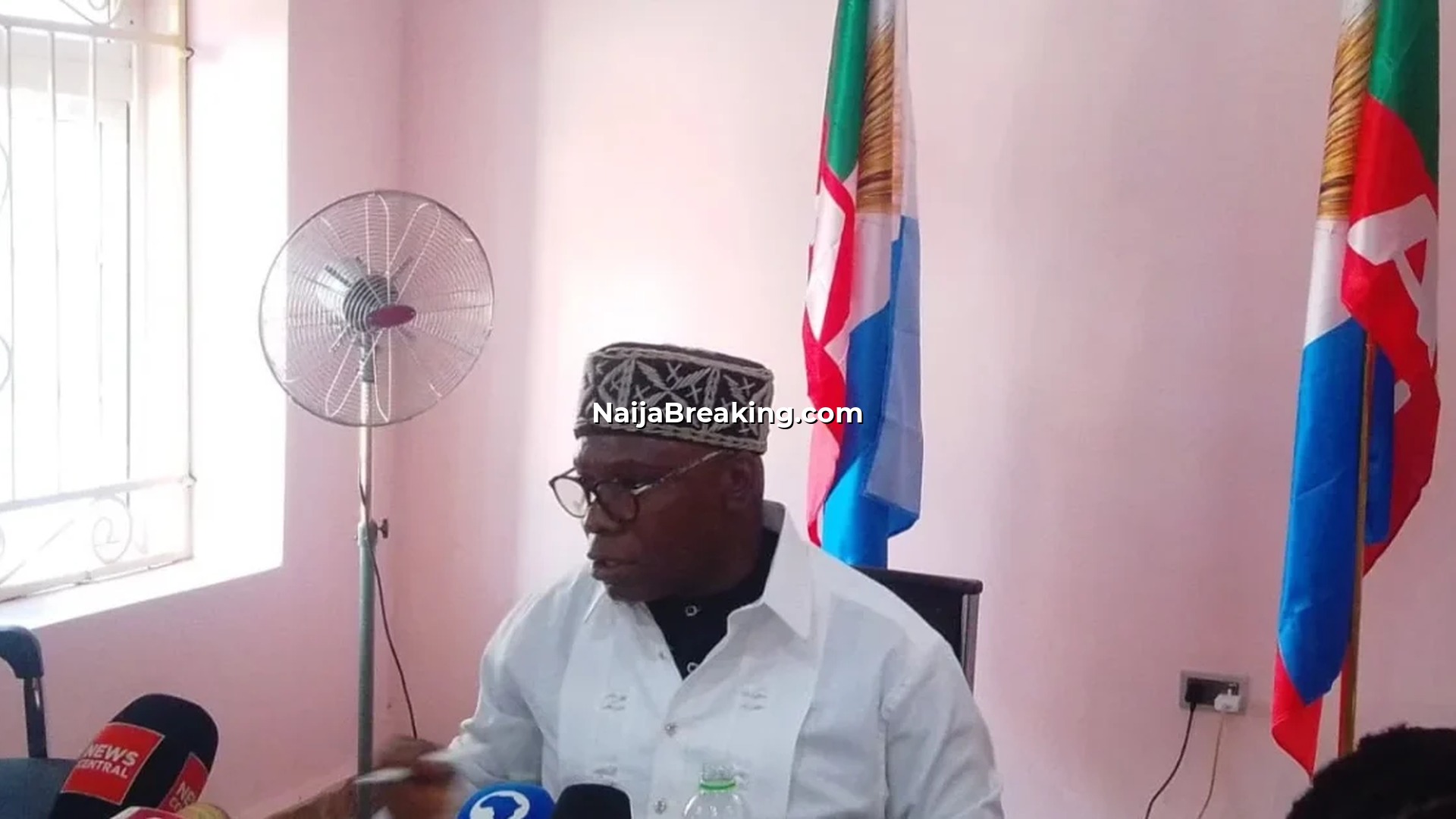
Abia APC Governorship Candidate 2027: Eric Opah Confirmed Amid Internal Party Strife and Henry Ikoh Controversy
The Abia State chapter of the All Progressives Congress (APC) has firmly reaffirmed that Chief Eric Opah remains its official Abia APC governorship candidate 2027, putting to rest months of simmering internal controversy within Nigeria’s ruling party in one of the country’s key southeastern states. The clarification regarding the Abia APC governorship candidate 2027 came as a definitive response to a viral video campaign in which supporters of Chief Henry Ikoh alleged that their candidate had been cheated during the May 2026 primary election and demanded an immediate reversal of results. For Nigerian voters and political observers tracking developments in the Southeast, this development matters significantly because Abia State represents a crucial battleground in the 2027 presidential and gubernatorial race—a state where the APC has been struggling for traction against the dominant Peoples Democratic Party (PDP), which has controlled the governorship since 1999. The internal discord threatens party unity precisely when the Abia APC governorship candidate 2027 selection process should have unified the party structure. Understanding this dispute requires examining not just the numbers from the primary election, but the deeper structural tensions within Abia APC that reflect broader challenges facing Nigeria’s opposition politics and the mechanisms for selecting credible candidates capable of challenging entrenched political dynasties.
The Abia APC Governorship Candidate 2027 Selection Process and Primary Election Results
The process of determining the Abia APC governorship candidate 2027 officially began in early 2026 when the party’s national leadership set guidelines for primary elections across all states. Abia State, as a key southeastern state with significant demographic and economic importance, attracted considerable attention from party stakeholders, politicians, and civil society organisations monitoring democratic processes. The primary election took place in May 2026, following the framework established under Nigeria’s Electoral Act, which mandates transparent and credible primary processes as part of strengthening democracy at the grassroots level. Multiple aspirants contested for the position of Abia APC governorship candidate 2027, each bringing their own political credentials, financial resources, and claim to representing the party’s interests in the state.
Chief Eric Opah emerged as the clear victor in the primary election with an overwhelming 125,977 votes, a margin that appeared to settle the question decisively. This substantial victory should have positioned Opah comfortably as the Abia APC governorship candidate 2027 going forward. However, the wide gap between Opah’s tally and his nearest challenger, Chief Henry Ikoh, who received 5,905 votes, created unexpected controversy rather than unity. In Nigerian political culture, such lopsided results sometimes generate suspicion among losing candidates and their supporters, who question whether the primary process maintained sufficient transparency and whether all delegates had genuine opportunities to exercise their democratic rights without undue pressure or manipulation. The fact that Opah secured approximately 95 percent of votes cast raised eyebrows in some quarters, despite official assurances that the election was conducted fairly and transparently under party supervision and independent observer monitoring.
Background: Abia State Politics and APC’s Strategic Challenges
Abia State politics has been shaped by decades of PDP dominance, with the party producing virtually every governor since the return to democratic rule in 1999. This sustained electoral control reflects deep patronage networks, institutional advantages that come with controlling state resources, and organizational structures built over more than two decades of uninterrupted governance. The APC, as Nigeria’s ruling federal party under President Bola Tinubu, has struggled to break into this stronghold despite their national position, facing a peculiar paradox that many political analysts have noted: while they control the presidency and federal apparatus, translating this advantage into state-level victories in the Southeast has proved elusive and frustrating for party strategists.
The 2023 general elections saw the APC make some gains nationally, particularly in the presidential race where Tinubu secured victory, but Abia remained firmly in PDP hands, with Governor Alex Otti retaining his position comfortably despite predictions of APC advances. This political landscape explains why the APC’s choice of Abia APC governorship candidate 2027 carries enormous weight and strategic importance—selecting the wrong candidate could virtually guarantee continued PDP rule for another four years, while choosing wisely might finally give the party a genuine opening in a state with over 4 million registered voters and significant economic and political influence within Nigeria’s Southeast region.
The southeastern region’s political dynamics have long presented a puzzle for the APC’s national leadership. While the party has made significant inroads in other regions, particularly the Southwest, North-Central, and Northwest, the Southeast remains stubbornly resistant to APC overtures. This resistance stems from multiple factors: historical political alignments, ethnic and regional considerations, the strength of PDP’s organizational machinery, and questions about whether the APC adequately addresses Southeast concerns at the national level. For the 2027 elections, the party recognizes that breaking through in states like Abia is essential if they hope to maintain national relevance and demonstrate that their appeal transcends regional and ethnic boundaries.
Henry Ikoh’s Challenge to Abia APC Governorship Candidate 2027 Selection
The controversy surrounding the Abia APC governorship candidate 2027 selection intensified when Chief Henry Ikoh, despite receiving only 5,905 votes in the May primary election, refused to accept the results and instead alleged serious irregularities in the voting and collation processes. Ikoh’s camp released a viral video campaign presenting their version of events, claiming that the primary election was neither free nor fair, and that party officials had manipulated results to favor Eric Opah. These allegations, if substantiated, would represent serious violations of democratic principles and party regulations, potentially invalidating the entire primary process and raising questions about the legitimacy of the Abia APC governorship candidate 2027 selection.
The specific allegations made by Ikoh’s supporters included claims that certain delegates were prevented from voting, that results from some voting centers were altered before official collation, and that party officials had predetermined the outcome in favor of Opah before voting actually occurred. These are serious charges that, if proven, would undermine the credibility not only of the Abia APC governorship candidate 2027 but also of the APC’s broader commitment to democratic processes and internal party governance. Such accusations, when they gain traction in public discourse, can damage party unity, discourage grassroots activism, and provide ammunition to opposition parties seeking to portray the APC as undemocratic and lacking in internal accountability mechanisms.
Ikoh’s refusal to accept the primary results and his decision to escalate his challenges through media campaigns represented a significant test of the APC’s internal dispute resolution mechanisms. According to party regulations, candidates who contest primary outcomes have established procedures through which they can lodge formal complaints with party leadership, present evidence of irregularities, and seek review of results through appropriate channels. Ikoh’s choice to pursue a public campaign rather than (or in addition to) using formal dispute resolution procedures suggested either a lack of confidence in the party’s internal justice system or a deliberate strategy to build public pressure that might compel party leadership to reverse their decisions.
APC Leadership’s Response and Reaffirmation of Abia Governorship Candidate 2027
In response to Ikoh’s challenges and the growing controversy surrounding the Abia APC governorship candidate 2027 selection, the party’s state and national leadership issued strong statements reaffirming Eric Opah’s legitimacy as the official candidate. Party officials emphasized that the May 2026 primary election had been conducted transparently, with adequate oversight from independent monitors and party officials, and that all results had been verified and documented according to established procedures. The APC’s position on the Abia APC governorship candidate 2027 question was unambiguous: Eric Opah had won the primary decisively, his nomination was valid, and the party would proceed with him as its standard-bearer in the 2027 gubernatorial elections.
Party leadership also issued warnings to dissident members, cautioning against further public campaigns that questioned the primary results or sought to undermine the chosen Abia APC governorship candidate 2027. These warnings reflected concerns that prolonged internal discord could fatally weaken the party’s chances of competing effectively against the PDP in Abia State. Political analysts noted that the APC needed unity and cohesion if it hoped to mount a credible challenge to PDP dominance, and that allowing primary disputes to fester into the 2027 election year would almost certainly guarantee another PDP victory in Abia’s gubernatorial race.
Implications for APC Unity and 2027 Electoral Strategy
The controversy surrounding the Abia APC governorship candidate 2027 raises important questions about how Nigerian political parties manage internal democracy, resolve disputes, and maintain unity around chosen candidates. The APC’s handling of this situation will have ramifications not only for the 2027 Abia gubernatorial election but also for the party’s broader credibility on democratic governance. If the party is perceived as having suppressed legitimate grievances or ignored credible allegations of primary irregularities, this perception could damage party morale and discourage qualified candidates from participating in future primary elections.
Conversely, if the APC’s reaffirmation of Eric Opah as the Abia APC governorship candidate 2027 was based on genuine verification of primary results and transparent investigation of allegations against the process, then the party deserves credit for standing firm against baseless challenges and refusing to allow sore losers to dictate party strategy. The key question for observers is whether the APC conducted a thorough, credible, and transparent investigation into Ikoh’s allegations, or whether they simply dismissed these concerns without adequate inquiry.
Looking ahead to 2027, the success or failure of Eric Opah as the Abia APC governorship candidate 2027 will significantly impact assessments of whether the APC made the correct choice in the primary election. If Opah wins the general election and proves to be an effective governor, the primary process and the party’s handling of Ikoh’s challenge will be vindicated. Conversely, if Opah loses to the PDP candidate, questions will inevitably arise about whether Ikoh might have been a stronger candidate, or whether internal discord resulting from this primary dispute weakened the party’s overall electoral performance in the state.
The Broader Context of Southeast Politics and APC’s Regional Strategy
The selection of the Abia APC governorship candidate 2027 must be understood within the broader context of APC’s efforts to expand its political presence in the Southeast region. For years, the Southeast has been considered an opposition stronghold, dominated by the PDP and other parties that have stronger historical roots in the region. The APC’s national leadership has invested significant resources in attempting to build party structures in southeastern states, recognizing that genuine national dominance requires competitive strength across all regions, including areas where the party currently faces headwinds.
Abia State, as one of the most populous and economically important states in the Southeast, represents a key battleground in this regional strategy. The success or failure of the Abia APC governorship candidate 2027 in winning statewide office will have symbolic and practical importance for the party’s broader Southeast ambitions. A victory would demonstrate that APC can compete and win in traditional PDP strongholds, potentially opening pathways to building strength in neighboring states like Imo and Enugu. A defeat, especially if accompanied by internal strife and party division, would reinforce perceptions that the APC lacks the organizational capability and regional appeal necessary to challenge PDP dominance in the Southeast.
Conclusion
The confirmation of Eric Opah as the Abia APC governorship candidate 2027 represents the APC’s formal position on this important matter, but the underlying tensions highlighted by Henry Ikoh’s challenges remain relevant to broader questions about democratic governance, internal party discipline, and the APC’s capacity to maintain unity while pursuing ambitious electoral objectives. As the 2027 elections approach, the Abia APC governorship candidate 2027 campaign will test whether the party has successfully resolved these internal disputes and mobilized its supporters behind Opah’s candidacy. The outcome in Abia will carry significance extending well beyond one state’s gubernatorial race, influencing assessments of APC’s viability as a truly national party capable of competing across all regions of Nigeria.