Midjourney Medical’s AI Ultrasound Scanner: From Cat Images to Healthcare Revolution
When Midjourney founder David Holz stepped onto the stage to unveil The Midjourney Scanner, he wasn’t just announcing another gadget from the AI image generator that became famous for creating viral cat pictures—he was staking a claim in one of the world’s most consequential markets: medical diagnostics. The Midjourney Medical AI ultrasound scanner represents a dramatic pivot from producing synthetic art to manufacturing what the company claims could be superior to MRI machines in many ways, according to reporting from The Verge. For Nigeria, where healthcare infrastructure gaps remain one of the nation’s most pressing development challenges, this technological leap carries implications that extend far beyond Silicon Valley venture capital circles. Nigeria’s healthcare system already struggles with inadequate diagnostic equipment, limited access to advanced imaging in rural areas, and rising costs that price preventative care out of reach for millions of citizens. Any breakthrough in affordable, accessible medical imaging technology could fundamentally reshape how Nigerians approach health screening, early disease detection, and preventative medicine.
The question isn’t merely whether Midjourney can successfully transition from generative art to medical hardware—it’s whether technologies emerging from such pivots will ever become accessible to developing economies like Nigeria, where the average healthcare spend per capita remains critically low and access to basic diagnostic services remains concentrated in urban centres. This story demands serious Nigerian analysis because it reflects a broader tension in global tech innovation: breakthrough technologies are developed in wealthy markets for wealthy markets, often leaving developing nations as afterthoughts in distribution and affordability conversations.
Background
Midjourney’s journey from text-to-image AI generator to medical device manufacturer is emblematic of how artificial intelligence has infiltrated virtually every sector over the past three years. The company launched its core product—an AI image generator that creates photorealistic images from text prompts—in 2022, and by 2023, it had become one of the most widely recognized AI tools globally alongside ChatGPT and DALL-E. The platform’s accessible interface and remarkable output quality made it mainstream enough that Nigerian content creators, designers, and marketers quickly adopted it for everything from social media graphics to professional marketing campaigns. However, Midjourney’s business model always aimed beyond image generation; CEO David Holz has consistently signaled ambitions to build hardware products and expand into adjacent markets where AI could solve material problems.
The healthcare technology sector has become increasingly attractive to AI companies precisely because diagnostic imaging remains labour-intensive, expensive, and unevenly distributed globally. MRI machines cost $1 million to $3 million, require specialized facilities, trained technicians, and significant ongoing maintenance—infrastructure that most Nigerian hospitals simply cannot afford. Ultrasound technology, by comparison, is older, cheaper, and more portable, but it remains highly dependent on the skill and experience of the sonographer operating the equipment. This is where AI enters the equation: if machine learning can augment or partially replace the interpretive work of human radiologists and sonographers, the cost structure and accessibility of medical diagnostics could shift dramatically. Nigeria’s medical imaging landscape reflects this global divide starkly. Most advanced imaging (CT scans, MRI machines) remains concentrated in private hospitals in Lagos, Abuja, and Kano, pricing out middle and lower-income Nigerians from preventative screening altogether.
Midjourney’s decision to partner with Butterfly Network, an established ultrasound technology company, signals that the company understands the complexity of moving from software to hardware in regulated medical sectors. Butterfly Network has been pioneering portable ultrasound technology for years, making the partnership a logical fit. The collaboration represents what some analysts call “AI-native hardware”—devices built from the ground up with machine learning as a core component, rather than AI being grafted onto existing designs. For context on Nigeria’s healthcare readiness: according to the National Bureau of Statistics (NBS), Nigeria’s healthcare expenditure as a percentage of GDP remains below 3%, significantly lower than WHO recommendations, and diagnostic imaging capacity remains inadequate for a nation of over 223 million people. Any technology that can increase diagnostic capacity while reducing costs per scan could represent a genuine breakthrough for Nigerian healthcare accessibility.
Key Details
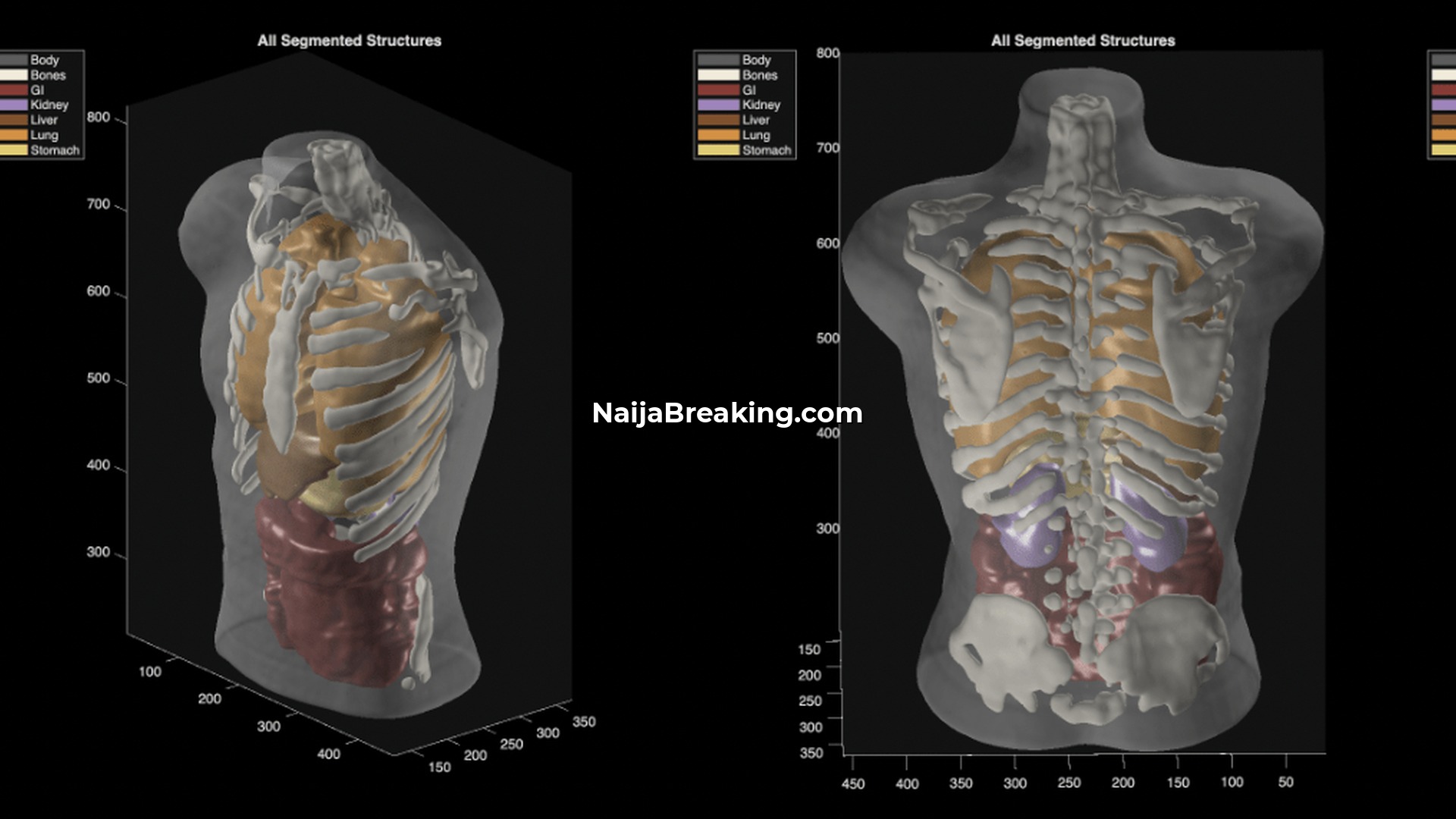
The Midjourney Scanner operates through a distinctly innovative design process. Users step onto a platform that lowers them into water-filled chamber containing a ring of ultrasound sensors. The system uses 40 Butterfly Ultrasound-on-Chip imaging modules per system, according to The Verge’s reporting on the announcement. These sensors capture vertical slices of the body, analyzing muscle composition, fat distribution, bone density, and organ structure. Holz indicated that the device aims for image quality comparable to MRI machines while offering significant advantages in speed, cost, and accessibility. The company plans to eventually deploy these scanners in what it describes as “spa-like” environments—casual wellness facilities rather than clinical hospital settings—making the technology feel accessible rather than intimidating to end users.
Holz’s framing of the product reveals an important strategic insight: he’s positioning this as a wellness and preventative health tool rather than purely diagnostic equipment for disease treatment. This distinction matters because it changes regulatory pathways, market positioning, and pricing strategies. In his own words, Holz stated that he wants to use daily scans to track how his body responds to diet and exercise changes, suggesting the device targets the quantified-self health optimization market popular among affluent, health-conscious consumers. The company is advertising job openings that describe the project as attempting to “build and launch the world’s first full-body ultrasound CT scanner, ultimately bringing safe, fast, and high fidelity preventative scanning to billions via a magical spa experience.” The ambitious language—”billions”—suggests Midjourney believes in genuine global potential, though history suggests premium wellness products rarely reach developing markets at accessible price points.
The technical architecture reveals both promise and limitations. Using 40 imaging modules to create comprehensive body scans represents a significant increase in data capture compared to traditional handheld ultrasound. The water-immersion approach minimizes acoustic interference and allows for consistent sensor-to-body distance, theoretically improving image consistency. However, the technology’s actual diagnostic capabilities remain unproven in peer-reviewed clinical studies. Midjourney has made claims about MRI-comparable image quality, but without published validation, these statements remain largely marketing assertions. For regulatory and clinical acceptance in Nigeria, the device would need to undergo rigorous testing through NAFDAC (National Agency for Food and Drug Administration and Control) if deployed locally. Additionally, the infrastructure requirements—water facilities, electrical systems, software integration—may pose challenges in resource-constrained Nigerian healthcare settings, particularly outside major urban centres.
Impact and Analysis
The deeper significance of Midjourney’s medical pivot lies in what it reveals about AI’s trajectory into physical-world applications. Generative AI proved its commercial viability at scale, attracting enormous capital investment and attracting the world’s most capable researchers and engineers. As that attention matures, the natural evolution moves from software to hardware—from producing images on screens to influencing physical reality through devices and products. For healthcare specifically, this trend could be genuinely transformative if successfully scaled. Currently, diagnostic imaging bottlenecks represent a massive constraint on healthcare delivery globally, but the constraint is most acute in developing economies. A device that dramatically reduces the cost per scan while maintaining or improving diagnostic accuracy would fundamentally alter the economics of preventative healthcare.
However, the question of accessibility shouldn’t be assumed. Midjourney’s framing of the device as a “spa experience” suggests premium pricing for affluent consumers in wealthy markets. Early-stage medical devices typically follow this pattern: they launch expensively in wealthy markets, serve a small patient population, gradually decline in price as manufacturing scales, and only eventually become affordable in developing nations—if they do at all. The timeline for meaningful price reduction could be measured in decades. Meanwhile, the opportunity cost is significant: capital and engineering talent directed toward devices for wealthy health-conscious consumers in San Francisco might have been directed toward solutions for tuberculosis diagnosis in rural Nigeria or portable obstetric ultrasound for maternal health monitoring in underserved communities. This represents an allocation of innovation that reflects global wealth distribution rather than global health needs.
Additionally, AI-driven diagnostic systems introduce new risks that existing ultrasound equipment doesn’t present. Machine learning models can perpetuate or amplify existing health disparities if training data doesn’t adequately represent diverse populations. If Midjourney’s AI was trained primarily on ultrasound images from wealthy, predominantly Western populations, it may perform less accurately for African patients due to differences in skin pigmentation, body composition, and disease prevalence patterns. This isn’t speculative concern—it’s a documented problem in medical AI globally. Without transparent information about training data diversity and validation across different populations, the device’s actual utility for Nigeria and similar markets remains uncertain.
Expert Perspectives
Dr. Oluwaseun Adebayo, a healthcare technology analyst at the Lagos Institute for Economic Development, argues that Midjourney’s announcement represents an important milestone but raises critical questions about equity. “The technology itself is genuinely exciting,” Adebayo explains. “What concerns me is the distribution pathway. Medical devices from Silicon Valley companies often follow a pattern where affluent markets get first access at premium pricing, and developing economies wait for technology to mature and prices to eventually decline. For Nigeria, where diagnostic imaging remains a critical bottleneck in healthcare delivery, we cannot afford to wait a decade for this technology to become affordable. We should be demanding that any company claiming to serve ‘billions’ commit to explicit pricing and distribution targets for low and middle-income markets.”
In counterpoint, Chioma Nwankwo, a biomedical engineer and health technology researcher at the University of Lagos, offers a more optimistic assessment. “Portable ultrasound technology has already begun democratizing medical imaging in ways that weren’t possible a decade ago,” Nwankwo notes. “Butterfly Network’s existing products have reduced the cost barrier significantly compared to traditional ultrasound machines. If Midjourney genuinely improves diagnostic accuracy through AI while maintaining cost advantages, the spillover effects could benefit Nigerian healthcare substantially, even if the premium market gets first access. The important thing is that adoption begins, clinical evidence accumulates, and eventually the technology reaches public health systems through government procurement or NGO initiatives.” Nwankwo emphasizes the importance of clinical validation: “Before celebrating this technology’s potential for Nigeria, we need rigorous studies proving diagnostic accuracy across diverse populations, including Africans, and transparent disclosure of failure modes and limitations.”
What This Means for Nigerians
For the average Nigerian navigating the healthcare system, Midjourney’s medical device announcement feels remote—it’s a Silicon Valley story with distant implications. However, the technology’s potential effects could be surprisingly direct. Consider a middle-class Lagos resident who suspects they might have fatty liver disease or early-stage kidney dysfunction. Currently, that person would need to travel to a private diagnostic centre, pay between ₦50,000 and ₦150,000 for an ultrasound scan, often wait weeks for an appointment, and then pay separately for radiologist interpretation. If AI-enhanced ultrasound technology became widely available through public health facilities, that same person could access diagnostic imaging affordably and conveniently through a government hospital. The economic impact would cascade: earlier disease detection leads to earlier treatment, reducing expensive emergency interventions and hospitalizations.
For rural Nigerians, the implications are even more significant. Many rural communities lack access to any diagnostic imaging beyond basic X-ray equipment. Portable ultrasound technology, especially if AI can augment interpretive capabilities, could be deployed through mobile health clinics or decentralized health centres. A pregnant woman in a rural Kaduna community could receive proper obstetric ultrasound monitoring to detect complications early, potentially preventing the dangerous delays that contribute to Nigeria’s tragic maternal mortality rates. However, this depends entirely on distribution decisions made by Midjourney and its partners—decisions that have not been announced and are unlikely to prioritize rural Nigerian healthcare over profitable urban and international markets.
For Nigerian healthcare workers—radiologists, sonographers, and physicians—AI-enhanced diagnostic imaging presents both opportunity and threat. Enhanced diagnostic tools could reduce their workload on routine scans, freeing them for more complex cases and patient care. Conversely, if AI becomes sufficiently accurate, there’s a real risk that clinical interpretation roles could shrink in scope. Nigerian healthcare already faces serious workforce challenges; any technology adoption must be carefully managed to retrain rather than displace healthcare professionals. The technology question becomes a labour question: how do Nigerian health institutions integrate AI-enhanced diagnostics while ensuring healthcare workers are empowered rather than replaced?
Editor’s Take
At NaijaBreaking, we believe the Midjourney Medical announcement should prompt serious conversations in Nigeria about technology access and healthcare equity that go beyond celebration of innovation. The company’s framing of this as a “spa experience” for wellness optimization reveals the uncomfortable truth: breakthrough healthcare technologies are rarely designed with the 223 million Nigerians in mind. They’re designed for affluent consumers in wealthy markets, with global expansion as an afterthought if it happens at all. What troubles us is not that Midjourney is building medical devices—that’s entirely legitimate—but that there’s zero indication they’re committed to making this accessible to developing economies. The word “billions” in their marketing rings hollow without concrete pricing commitments and distribution partnerships in Africa, South Asia, and Latin America. Nigerian healthcare policymakers and procurement officials should watch this technology closely and demand that if Midjourney wants access to Nigerian markets, they commit to affordable pricing and local partnerships. Otherwise, this is another story of innovation happening for the world’s wealthy while Nigerians remain downstream consumers of yesterday’s technology, paying premium prices for yesterday’s tools.
What to Watch Next
Several critical developments will determine whether Midjourney Medical becomes meaningful for Nigeria. First, watch for clinical validation studies—peer-reviewed publications demonstrating diagnostic accuracy across diverse populations, including Africans. Without this evidence, regulatory approval in Nigeria is impossible. Second, monitor regulatory movements: will NAFDAC engage with Midjourney early, or will the company pursue approval processes only in wealthy markets? Third, track partnership announcements. Does Midjourney partner with African health technology companies or institutions? Partnerships with organizations like the Nigerian Medical Association or health-focused NGOs would signal genuine commitment to accessibility. Fourth, observe pricing announcements when the device becomes commercially available. Will it cost $500,000 per unit (inaccessible for most Nigerian facilities) or $50,000 (still expensive but potentially within reach through government procurement)? Finally, watch the technical specifications: as independent researchers peer-review the technology, will limitations emerge for populations with different skin tones, body compositions, or disease prevalence patterns? The key question now is whether Midjourney’s ambitions for “billions” of users will translate into actual commitments to equity in healthcare technology distribution, or whether this remains another innovation story that bypasses most of humanity.
Conclusion
Midjourney’s pivot from generating cat images to manufacturing medical ultrasound scanners demonstrates AI’s expanding reach into physical healthcare delivery, representing a genuine technological achievement worth acknowledging. However, the announcement also crystallizes a persistent global problem: breakthrough innovations emerge from and are primarily designed for wealthy markets, leaving developing nations like Nigeria perpetually chasing yesterday’s solutions at premium prices. What this story reveals about Nigeria’s direction is both urgent and uncomfortable—our healthcare future remains dependent on decisions made by foreign companies in foreign markets, with little input from Nigerian patients, healthcare workers, or policymakers into technology development priorities. Until Nigeria develops indigenous medical technology innovation ecosystems and demanding healthcare procurement policies that insist on equity, we’ll continue occupying the periphery of global healthcare innovation rather than the centre. The question is no longer whether this technology will exist; it’s whether Nigerians will have meaningful access to it when it does.
Share your thoughts in the comments below—what do you think this means for Nigeria’s future in healthcare technology and medical innovation?