
African Universities Must Build Globally Competitive Workforce, Namibia’s Ex-First Lady Urges
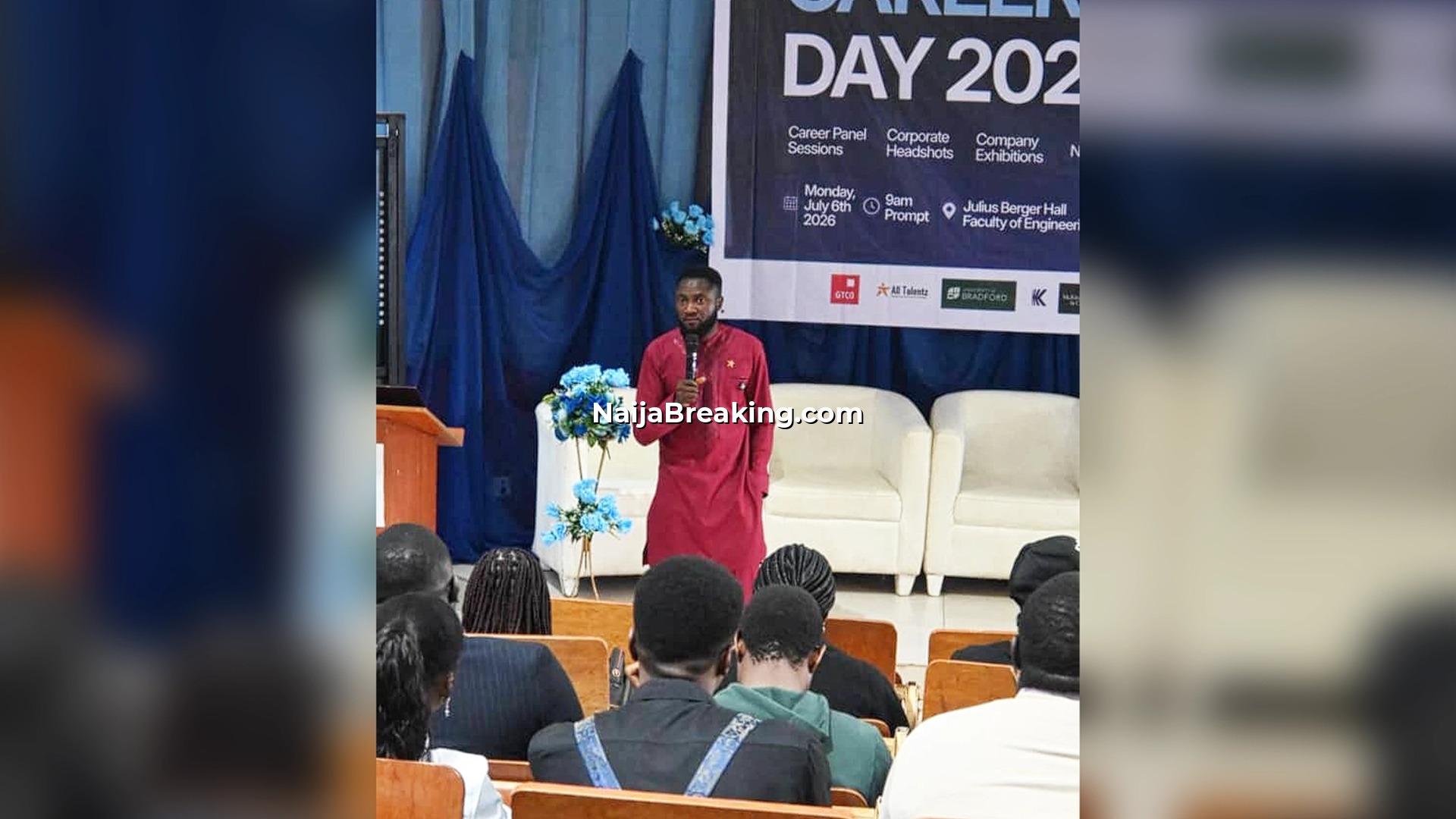
The question of whether African universities are adequately preparing students for the global job market has become increasingly urgent. Recently, Madame Monica Hage Geingos, the former First Lady of Namibia and founder of the One Economy Foundation, delivered a powerful message during a strategic visit to Nigeria’s Federal University of Agriculture, Abeokuta (FUNAAB): African institutions must take the lead in transforming the continent’s growing population into a globally competitive workforce. Her remarks strike at the heart of a crisis that Nigeria has been grappling with for over a decade—the persistent gap between what universities produce and what employers actually need. With Africa’s population expected to reach 2.5 billion by 2050, and one in every four people on earth projected to be African, the stakes for educational transformation have never been higher. For Nigeria specifically, where youth unemployment remains above 30% according to recent National Bureau of Statistics data, Geingos’s challenge to universities resonates as both a wake-up call and a blueprint for action. This article examines why her message matters for Nigeria’s economy, what barriers universities face in meeting this challenge, and what practical steps Nigerian institutions must take to ensure their graduates compete globally rather than struggling locally.
Background
Nigeria’s university system inherited a colonial model designed for a different era and different economy. Since independence, Nigerian higher education has expanded dramatically—from three universities in 1962 to over 170 today—but this growth has largely been quantitative rather than qualitative. The National Universities Commission (NUC) has repeatedly flagged concerns about curriculum relevance, infrastructure decay, and the widening disconnect between academic programmes and industry demands. Most Nigerian universities still emphasise rote learning and theoretical knowledge over practical skills, entrepreneurship, and critical thinking—competencies employers increasingly demand.
The World Economic Forum’s 2023 Future of Jobs Report noted that 50% of the global workforce will need reskilling by 2025, yet most African universities have been slow to adapt. Nigeria’s National Policy on Education, last updated in 2013, acknowledged the need for curriculum modernisation but implementation has been patchy. Universities struggle with outdated laboratories, insufficient funding (often less than 2% of government budgets), brain drain among faculty, and inadequate industry partnerships. Meanwhile, multinational companies operating in Nigeria—from tech firms to manufacturing—frequently report that fresh graduates lack foundational skills in data analysis, digital literacy, communication, and problem-solving.
The youth unemployment crisis reflects this disconnect starkly. According to the National Bureau of Statistics, Nigeria’s youth unemployment rate (ages 15-34) stood at 35.3% in 2023, with underemployment even higher. Many graduates end up in jobs far below their qualifications or remain jobless years after graduation. This pattern repeats across Africa, creating a paradox: growing numbers of degree holders coexist with severe skills shortages in critical sectors. Geingos’s intervention comes at a moment when African nations are increasingly competing not just regionally but globally for foreign direct investment, and investors explicitly cite workforce quality as a deciding factor. Nigeria, despite its size and potential, has consistently ranked below peers on human capital indices.
Key Details
During her visit to FUNAAB, Madame Geingos articulated a clear vision: Africa’s demographic dividend—the expected population surge—is only valuable if the continent invests deliberately in human capital development. “The challenge before Africa is not merely population growth, but preparing that population with the knowledge, competencies and values required to compete and lead in a rapidly evolving global economy,” she stated. This framing is significant because it shifts the conversation from quantity to quality—a distinction many African policymakers still fail to make.
Geingos identified several specific gaps that universities must address. First, she highlighted the widening chasm between what industries expect and what graduates deliver. Second, she stressed the critical importance of ethical leadership and integrity in addressing governance challenges across African economies. Third, she called for strengthened partnerships between universities, governments, businesses, and development organisations. These partnerships, she argued, must be structured to produce graduates equipped with both technical expertise and leadership capacity—not one or the other. According to recent data from the African Development Bank, only 23% of African university graduates possess digital skills at an intermediate level or higher, compared to 45% globally. This gap directly impacts competitiveness in high-value sectors like financial services, technology, and advanced manufacturing.
The One Economy Foundation, which Geingos founded, has been piloting initiatives around the Leadership Lab and the Dr. Hage G. Geingob Presidential Centre, which focus on cultivating integrity, accountability, and public service values among emerging leaders. She drew on these experiences to argue that technical skills alone are insufficient—graduates must also embody ethical leadership to drive sustainable development. This dual emphasis—competency plus character—represents a holistic approach to workforce development that most African universities have neglected. Geingos paid tribute to her late husband, former Namibian President Hage Geingob, whose commitment to education, transparency, and national development serves as a model for the kind of visionary leadership African institutions need to embrace.
Impact and Analysis
Geingos’s message, while delivered in Abeokuta, carries profound implications for Nigeria’s economic future. Nigeria’s 2024 Economic Recovery and Growth Plan explicitly identifies human capital development as a pillar for economic diversification away from oil dependency. Yet the education sector remains chronically underfunded and underperforming. The Federal Ministry of Education’s allocation typically hovers around 6% of the national budget—below the UNESCO benchmark of 6%, and when inflation is factored in, real spending has declined. Universities operate with crumbling facilities, insufficient research funding, and faculty members who often take on teaching positions as secondary income while maintaining primary employment elsewhere.
The impact of this underinvestment manifests clearly in employment outcomes. Graduate tracer studies from institutions like the University of Lagos and Obafemi Awolowo University reveal that 40-60% of graduates take jobs unrelated to their fields of study, and many accept positions far below their qualification levels. Beyond individual hardship, this represents massive waste of national investment and loss of potential economic productivity. When a mechanical engineering graduate works as a retail attendant, the nation loses not just that person’s productive capacity but also the multiplier effects they could have generated through innovation, business creation, and productivity improvements.
The transformation Geingos advocates requires fundamental restructuring: curriculum reform aligned to future-ready skills, investment in digital infrastructure and laboratories, faculty development to teach rather than merely lecture, and genuine industry partnerships where businesses help shape programmes. Some Nigerian universities—notably the University of Nigeria Nsukka’s engineering department and Lagos Business School—have made strides, but these remain exceptions rather than the rule. The broader system remains oriented towards degree production rather than competence development. This matters especially for sectors like technology, where Nigeria has entrepreneurial talent but lacks the technical depth in computer science and data science programmes to support rapid scaling of the tech sector.
Expert Perspectives
Dr. Adekunle Olanrewaju, a Lagos-based labour economist and researcher at the Institute of Social and Economic Research, offers a sobering assessment: “Geingos’s challenge identifies a real problem, but Nigerian universities cannot solve it alone. Without adequate funding from government, without modernised facilities, without faculty incentives to stay engaged in teaching rather than seeking lucrative side hustles, the gap between aspiration and reality will only widen. We’re asking institutions to compete globally while constraining them locally with budgets that haven’t kept pace with inflation.” Olanrewaju argues that universities must also work backwards—engaging employers before curriculum design begins, not after graduation.
Conversely, Professor Chinyere Adeyemi, senior policy researcher at the Centre for Democracy and Development, believes the transformation is possible but requires a different approach: “We don’t need to abandon our identity or pretend Nigerian universities can immediately match MIT or Cambridge. What we need is differentiation. Some universities should focus on vocational-technical training, others on research-intensive programmes, others on professional credentials. Right now, everyone tries to be everything, producing mediocre generalists rather than excellent specialists. Geingos’s point about partnerships is crucial—firms like Microsoft, Google, and Dangote have invested in skilling programmes in Nigeria. Universities should position themselves as partners in these ecosystems rather than competing as if they operate in isolation.”
What This Means for Nigerians
For a 22-year-old graduating from Lagos State University with a degree in accounting, Geingos’s message translates into a hard reality: the certificate alone won’t secure employment in a multinational firm. That student needs programming ability, data analysis skills, and proficiency with accounting software—competencies most Nigerian accounting programmes don’t emphasise. For a business owner in Kano looking to hire skilled technicians, it means continued frustration sourcing competent workers, leading to either importing expensive foreign talent or delaying expansion plans. For parents investing their life savings in their child’s university education, it signals that degree alone doesn’t guarantee upward mobility—and that they should supplement formal education with additional certifications, bootcamps, or apprenticeships, straining household budgets further.
The practical impact extends to job markets and wages. Countries that successfully produce globally competitive workforces—Vietnam, South Korea, Malaysia—experience wage premiums, attracting higher-value investment and creating better-paying jobs across the economy. Nigeria’s average graduate starting salary remains stagnant partly because employers perceive limited differentiation between graduates; most seem interchangeable in basic skills. A truly transformed system would create graduates so distinctly capable that employers eagerly recruit and pay premium salaries, creating competition for talent rather than competition among jobseekers. This benefits the entire economy through productivity gains, increased tax revenue, and reduced unemployment costs.
For entrepreneurs and startup founders, a competitive workforce means access to talent capable of executing complex visions. Nigeria’s tech ecosystem has grown rapidly, but many founders still report difficulty finding developers, data scientists, and product managers with requisite skills without poaching from established firms. Educational transformation would expand this talent pool, accelerating startup formation and economic dynamism. For consumers, more competitive graduates mean better services, innovation, and products as businesses operate more efficiently and profitably.
Editor’s Take
At NaijaBreaking, we believe Geingos’s intervention reveals a hard truth that Nigeria’s education establishment often dances around: our universities are not delivering what the country needs. The problem isn’t lack of effort or lack of smart people within these institutions—it’s systemic underfunding, misaligned incentives, and outdated governance that prioritises credential production over competence development. What’s most revealing is that an African leader from outside Nigeria had to come and articulate this; Nigerian voices have been saying the same thing for years through research reports, policy papers, and media coverage, yet movement remains glacial. The university system resists change because change threatens entrenched interests—ineffective administrators, faculty comfortable with minimal teaching loads, and unions protecting mediocre performers. Real transformation requires political will to restructure, not just rhetorical support for the idea of excellence. The silence from Nigeria’s education minister’s office on this visit is itself telling.
What to Watch Next
Several developments will indicate whether Nigerian universities will genuinely embrace Geingos’s challenge. First, monitor whether FUNAAB and other universities move beyond courtesy visits and actually restructure programmes—expect concrete curriculum changes and industry partnerships to emerge within six months. Second, watch the 2025 federal budget to see whether education spending increases meaningfully; tokenistic 6% allocations signal continued neglect. Third, observe whether the National Universities Commission follows with binding directives requiring universities to adopt competency-based curricula and establish measurable employment outcome targets. Fourth, track graduate employment statistics from 2025 onwards—real transformation manifests in data showing improved graduate placement rates and salary levels. The key question now is whether Africa’s demographic dividend becomes a development asset or a burden, determined entirely by whether institutions like FUNAAB heed this challenge seriously.
Conclusion
Madame Monica Hage Geingos’s call for African universities to build a globally competitive workforce addresses one of the continent’s most urgent crises: a growing population increasingly unable to find productive employment. For Nigeria specifically, where youth unemployment threatens social stability and economic dynamism, the message is unambiguous—transformation is necessary, overdue, and achievable only through deliberate investment, systemic restructuring, and unwavering commitment to excellence over mediocrity. The question facing Nigerian policymakers and university leaders is whether this visit catalyses action or remains another voice in the chorus of calls for change that gets politely acknowledged and promptly forgotten. What this story reveals is that Nigeria’s economic future depends not on population size but on population quality—and that responsibility rests squarely on educational institutions that must choose between comfortable decline and difficult transformation. Share your thoughts in the comments below—what do you think this means for Nigeria’s future?