
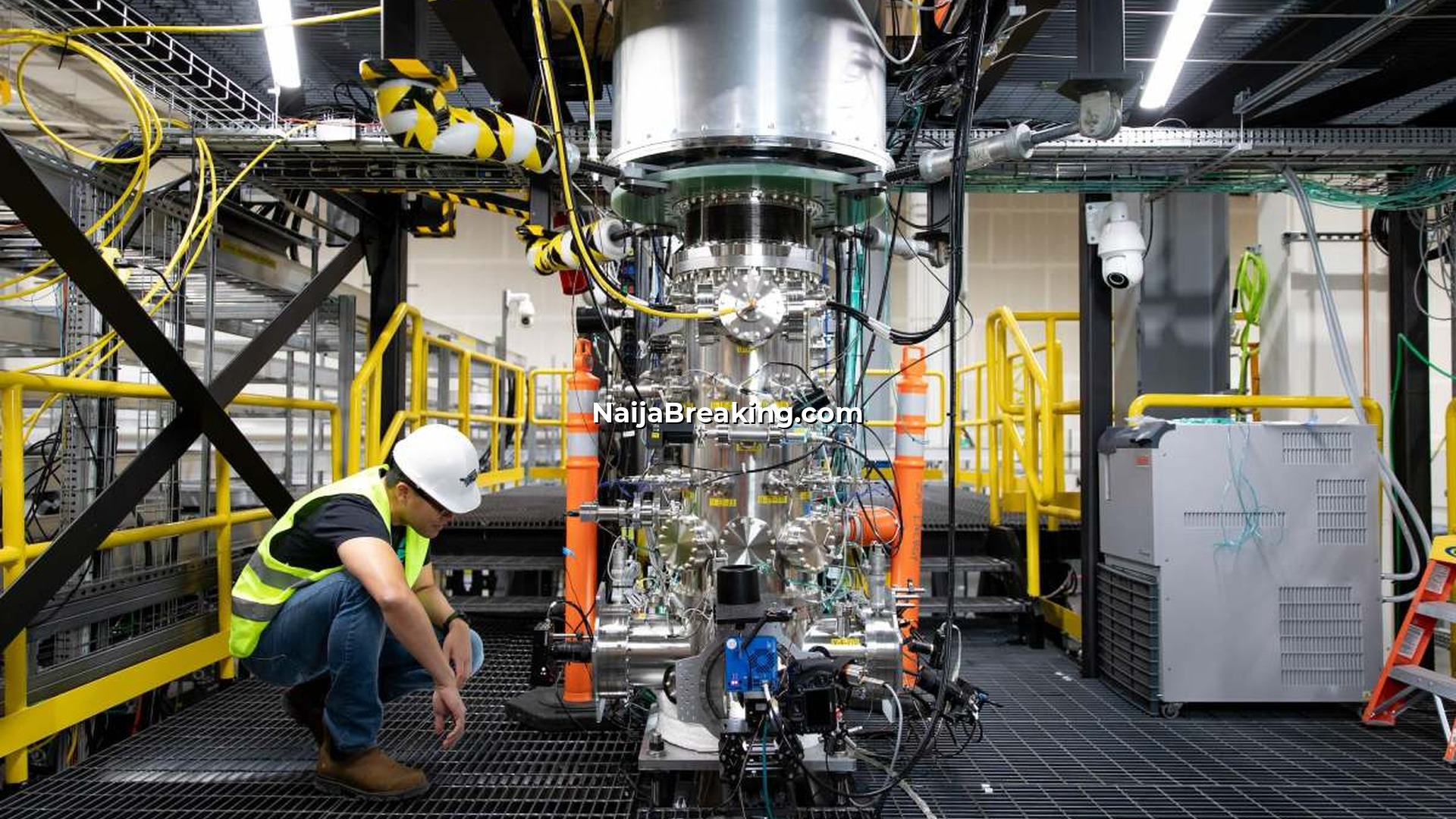
Zap Energy Nuclear Fission Pivot: Fusion Startup’s Strategic Shift Toward Grid Power Today
In a stunning strategic development that has sent shockwaves through the renewable energy and clean tech sectors, fusion startup Zap Energy has announced a pivotal decision: the company will be developing advanced nuclear fission reactors alongside its original fusion technology roadmap. This Zap Energy nuclear fission pivot represents a significant and carefully considered shift for the well-capitalised company, which has raised over $300 million in funding and was previously focused exclusively on achieving commercial fusion power generation. The decision to add nuclear fission to its portfolio demonstrates the mounting pressure on energy technology companies to deliver grid-ready power solutions today, not tomorrow. For the global technology industry facing an unprecedented energy crisis driven by artificial intelligence data centre expansion, the move signals that even the most ambitious fusion ventures recognise the reality that next-generation fusion plants may still be years away from commercial viability.
According to reporting from TechCrunch, Zap Energy’s newly appointed CEO Zabrina Johal stated that the company needed to “get something that’s relevant to the grid today” to address the urgent power needs of technology companies. This strategic recalibration underscores a fundamental challenge facing the clean energy transition: whilst fusion technology promises virtually unlimited clean energy, the timeline for commercialisation remains uncertain, forcing pragmatic companies to pursue intermediate solutions through proven nuclear fission technology. The Zap Energy nuclear fission pivot decision reflects a maturing understanding within the fusion industry that complementary technologies may be necessary to achieve meaningful impact on global energy systems in the near term.
Understanding the Zap Energy Nuclear Fission Pivot Decision
The Zap Energy nuclear fission pivot cannot be understood without examining the broader context of the company’s journey and ambitions. Zap Energy was founded with the mission of achieving commercial fusion power through innovative inertial confinement fusion technology—an approach that uses electrical pulses to compress hydrogen fuel to extreme densities and temperatures, triggering nuclear fusion reactions that release enormous amounts of energy. The company’s original technology platform represented a departure from traditional approaches used by larger fusion projects like ITER and the National Ignition Facility, promising faster timelines and more economical pathways to commercial fusion energy generation.
However, the Zap Energy nuclear fission pivot decision emerged from a recognition that market realities diverged from technological aspirations. Data centre operators, particularly those supporting artificial intelligence infrastructure, require reliable baseload power in the immediate future—within the next five years, not ten or fifteen. These technology companies cannot wait for fusion technology to mature; they need solutions now. The urgency is driven by exponential growth in computational demands, with AI model training and inference consuming electricity at unprecedented rates. Major technology corporations have begun signing long-term power purchase agreements with nuclear operators, signalling their willingness to embrace nuclear energy as a bridge technology while fusion capabilities develop.
This Zap Energy nuclear fission pivot aligns with broader market trends in the nuclear energy industry. After decades of stagnation, nuclear power is experiencing a renaissance, driven by climate concerns and the recognition that nuclear energy represents one of the few proven technologies capable of providing clean, reliable baseload power at the scale required by modern economies. Venture capital firms and technology companies previously sceptical of nuclear power have begun investing heavily in advanced nuclear technologies, including small modular reactors, fast breeder reactors, and other innovative designs. The Zap Energy nuclear fission pivot represents an extension of this broader reawakening of interest in nuclear solutions.
The Background and Context of Fusion Energy Development
The quest for commercial fusion energy has captivated scientists and engineers for more than seven decades, ever since researchers first demonstrated the principles of nuclear fusion in controlled laboratory settings. Throughout the 1970s, 1980s, and 1990s, governments invested billions in dollars into experimental fusion projects, with the National Ignition Facility (NIF) in the United States becoming perhaps the most ambitious public research programme. However, despite these massive investments and genuine scientific breakthroughs, commercial fusion power plants have remained frustratingly elusive. The challenge lies in achieving what scientists call “net positive energy gain” at a scale sufficient to power the electrical grid, meaning fusion reactors must produce more energy than they consume in the process of initiating and maintaining the fusion reaction itself.
In recent years, the emergence of venture capital-backed fusion startups represented a new approach to solving this centuries-old challenge. Companies like Commonwealth Fusion Systems, TAE Technologies, and Zap Energy attracted billions in private investment, leveraging innovations in materials science, computational modelling, and magnet technology that had not existed during earlier fusion research eras. These companies promised significantly faster timelines to commercial fusion energy, with some projecting demonstration reactors within five to ten years and commercial power plants within fifteen years.
Yet despite the optimism and investment, fusion timelines have consistently slipped. Technical challenges that seemed nearly insurmountable in earlier decades remain stubbornly difficult today. Materials that can withstand the extreme neutron bombardment inside fusion reactors for extended periods remain elusive. The engineering systems required to control and sustain fusion reactions continue to present unexpected complications. Supply chain issues and regulatory challenges have further complicated the path to commercialisation. These realities have forced even the most bullish fusion advocates to acknowledge that commercial fusion energy, whilst inevitable, may still be further away than hoped just a few years ago.
Why the Zap Energy Nuclear Fission Pivot Makes Strategic Sense
The Zap Energy nuclear fission pivot decision reflects hardheaded business logic and technological pragmatism. The company recognised that its original fusion-only strategy, whilst scientifically valid, would leave it without revenue-generating products for many years. Meanwhile, the energy market was crying out for solutions. By pivoting toward nuclear fission—a proven technology that can be deployed relatively quickly—Zap Energy positions itself to capture market share and generate revenue while continuing fusion research and development.
This Zap Energy nuclear fission pivot also diversifies the company’s risk profile. If fusion technology faces unexpected hurdles, the company maintains a viable business through fission reactors. If fusion succeeds ahead of schedule, the company possesses established relationships with major customers and operational experience in the nuclear sector. Either way, Zap Energy benefits from a portfolio approach rather than betting everything on a single technological outcome.
The financial implications of this Zap Energy nuclear fission pivot are significant. Data centre operators have begun committing to nuclear power procurement, with some signing agreements for hundreds of megawatts of capacity. These contracts represent substantial and predictable revenue streams. A fusion startup capable of delivering actual megawatts of power to these demanding customers would achieve a competitive position that purely fusion-focused competitors could not match. The Zap Energy nuclear fission pivot therefore represents not a retreat from fusion technology, but rather a strategic expansion into an adjacent market where customer demand is immediate and intense.
Nuclear Fission Technology and Modern Reactor Design
Nuclear fission technology, despite its decades of maturity, continues to evolve. Traditional large-scale light water reactors (the standard design deployed globally) operate at efficiencies and cost points established decades ago. However, advanced fission reactor designs—including small modular reactors (SMRs), fast breeder reactors, and molten salt reactors—promise improvements in safety, efficiency, and manufacturing scalability. These advanced designs align well with the Zap Energy nuclear fission pivot strategy, offering deployment options that suit modern data centre applications requiring distributed power generation and rapid deployment.
Small modular reactors represent perhaps the most promising avenue for companies pursuing the Zap Energy nuclear fission pivot strategy. SMRs produce electrical output ranging from 50 to 300 megawatts, making them suitable for smaller grids or dedicated applications like data centres. Manufacturing SMRs in factories rather than constructing reactors on-site promises to reduce costs, improve quality control, and accelerate deployment timelines. Companies including NuScale Power, X-energy, and Westinghouse have been developing SMR designs for commercialisation, with expected deployments beginning in the late 2020s.
The Zap Energy nuclear fission pivot decision positions the company to participate in this emerging SMR market. By developing fission reactors suited to data centre applications, Zap Energy could establish itself as a leading provider of nuclear power solutions for technology infrastructure. The company’s existing relationships with venture capital firms and technology companies provide distribution channels that more traditional nuclear vendors lack. The Zap Energy nuclear fission pivot thus represents not merely a technological shift, but a strategic repositioning within the emerging landscape of next-generation nuclear energy.
Market Demand for Reliable Energy in AI and Data Centres
Understanding market demand is essential to appreciating why the Zap Energy nuclear fission pivot makes sense. Artificial intelligence infrastructure consumes extraordinary amounts of electrical power. Training a single large language model can require fifty to one hundred megawatts of continuous power for weeks or months. Operating these models continuously at scale requires dedicated power plants. Most crucially, this power must be available continuously—data centre operators cannot tolerate outages measured in hours, much less days or weeks.
Renewable energy sources like solar and wind, whilst increasingly cost-effective, introduce intermittency challenges. A solar panel produces power only during daylight hours, and wind turbines only when wind speeds fall within specific ranges. Whilst battery storage technology continues improving, storing sufficient electrical energy to power data centres for hours or days remains prohibitively expensive at the scale required. For this reason, data centre operators increasingly demand baseload power sources—technologies capable of producing electricity continuously, regardless of weather or time of day.
Nuclear energy, both fission and fusion, represents an ideal baseload power technology. Nuclear plants operate continuously at capacity factors exceeding 90%, compared to solar plants with capacity factors around 25% and wind plants around 35%. This disparity explains why major technology companies have begun signing nuclear power agreements. Google, Meta, Amazon, and Microsoft have all announced plans to procure nuclear power for data centre operations. The Zap Energy nuclear fission pivot directly positions the company to serve this rapidly expanding market segment.
The Fusion Development Path Continues Alongside Fission
An important aspect of the Zap Energy nuclear fission pivot worth emphasising is that it does not represent abandonment of fusion technology development. Rather, the company intends to pursue fusion and fission as complementary technologies serving different time horizons and market segments. The Zap Energy nuclear fission pivot provides immediate revenue and customer relationships, whilst fusion development continues as a longer-term investment. This portfolio approach acknowledges that fusion technology will eventually prove superior to fission—providing virtually limitless clean energy with minimal radioactive waste—whilst recognising that this superior technology requires additional development time.
The Zap Energy nuclear fission pivot strategy allows the company to maintain its fusion research programme with greater financial security. Revenue from fission operations provides funding for fusion research without requiring constant fundraising rounds focused exclusively on fusion timelines. This financial stability may actually accelerate fusion development by allowing researchers to take longer-term perspectives and pursue high-risk, high-reward research approaches that investors might otherwise demand be abandoned.
Regulatory and Safety Considerations
The Zap Energy nuclear fission pivot introduces regulatory complexities that the company did not previously face. Nuclear power generation remains one of the most heavily regulated industries globally, with extensive oversight by governmental agencies, safety requirements, and public consultation processes. In the United States, the Nuclear Regulatory Commission maintains stringent jurisdiction over civilian nuclear power generation. Developing new reactor designs requires obtaining design certifications and construction licences, processes that can require years of interaction with regulatory agencies.
However, regulatory environments are evolving in ways that may facilitate the Zap Energy nuclear fission pivot. Governments worldwide, recognising climate change imperatives and energy security concerns, have begun streamlining nuclear licensing processes. The United States, European Union, and other jurisdictions have introduced expedited pathways for advanced reactor designs, including small modular reactors. The Zap Energy nuclear fission pivot thus occurs within a favourable regulatory context that did not exist just five years ago. This regulatory tailwind may substantially accelerate the timeline from Zap Energy’s fission technology development to actual power generation and revenue generation.
Competition and Market Positioning
The Zap Energy nuclear fission pivot does not occur in a vacuum. Multiple companies are pursuing similar strategies, attempting to develop advanced fission reactors suitable for near-term deployment to data centres and other industrial customers. Companies including Commonwealth Fusion Systems (which has also been developing fusion-fission hybrid concepts), Oklo, Kairos Power, and numerous others are competing for market share in this emerging segment. The Zap Energy nuclear fission pivot therefore represents competitive positioning within a crowded field of companies pursuing superficially similar strategies.
However, Zap Energy possesses certain competitive advantages that may distinguish the Zap Energy nuclear fission pivot from competitors’ offerings. The company’s fusion expertise translates to advanced physics understanding applicable to fission reactor design. The company’s access to venture capital funding provides resources that purely fission-focused competitors must obtain through traditional nuclear industry channels. The company’s existing relationships with technology company executives and venture investors provide distribution advantages. These factors suggest the Zap Energy nuclear fission pivot could succeed in establishing meaningful market position within the data centre power market.
Conclusion: The Zap Energy Nuclear Fission Pivot and the Future of Clean Energy
The Zap Energy nuclear fission pivot decision represents a pragmatic acknowledgement of technological and market realities. Fusion energy will eventually power the world’s grids, but this transition will not happen overnight. Meanwhile, urgent energy demands exist today. By pivoting toward nuclear fission alongside continued fusion development, Zap Energy positions itself to serve immediate market needs whilst advancing the ultimate goal of achieving commercial fusion energy. The Zap Energy nuclear fission pivot exemplifies the kind of flexible, market-responsive thinking that characterises successful technology companies navigating the transition to clean energy. As the renewable energy landscape continues evolving, expect other companies to pursue similar strategies of combining proven technologies with cutting-edge innovation. The Zap Energy nuclear fission pivot may ultimately be remembered as a defining moment when fusion companies recognised that the future would belong to those capable of delivering solutions both tomorrow and today.